Award-Winning Physiology Tutors
serving Rochester, NY
Physiology
Tutors in Rochester
Private 1-on-1 tutoring, weekly live classes for academic support, test prep & enrichment, practice tests and diagnostics, and more to elevate grades and test scores.
Based on 3.4M Learner Ratings
UniversitiesSchools & Universities
DeliveredHours Delivered
ProficiencyGrowth in Proficiency
Who needs tutoring?
No obligation. Takes ~1 minute.
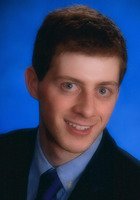
Understanding physiology means tracing cause and effect across organ systems — why a drop in blood pH triggers faster breathing, or how the nephron maintains electrolyte balance under stress. Garrett's biology degree gives him the depth to walk through these feedback loops at the molecular, cellular, and systems level. He connects mechanisms to each other so students aren't memorizing isolated facts.
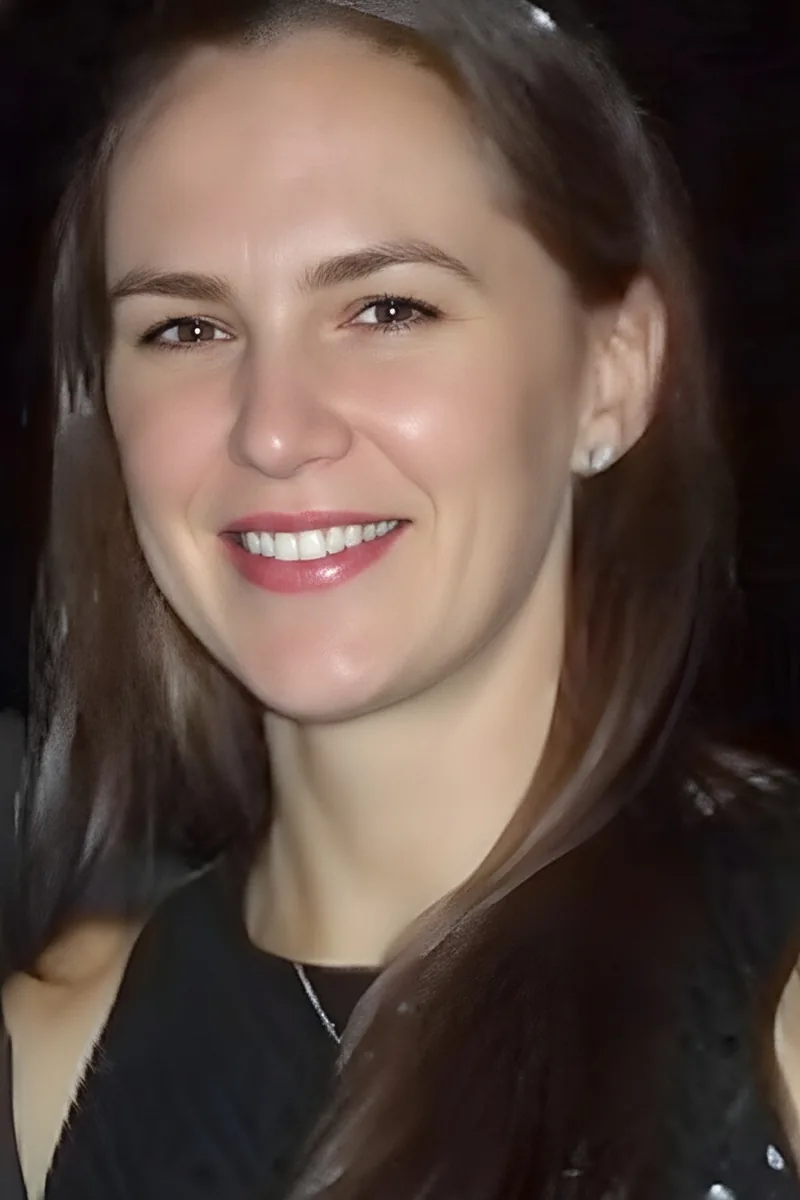
Kelly's cancer biology PhD at Cornell involved deep study of how cells signal, divide, and maintain homeostasis — the same organ-system physiology that dominates undergraduate coursework. She digs into membrane transport, cardiac function, and endocrine feedback loops with the precision of someone who's spent years researching how these systems break down in disease.
Benjamin's pre-med coursework at Duke covered organ-system physiology in depth, from cardiac output and renal filtration to respiratory gas exchange. He unpacks each system by tracing the path a single molecule takes through the body, which turns dense content into a logical sequence rather than a wall of terminology.
Studying physiology means understanding how organ systems talk to each other — why a drop in blood pressure triggers the renin-angiotensin-aldosterone system, or how action potentials propagate along a myelinated axon. Daniel's PhD work in neuroscience at Rockefeller gives him deep, research-level fluency with these mechanisms, and his medical training at Weill Cornell ties every concept back to clinical relevance.
Understanding physiology means moving beyond memorizing organ systems and grasping the feedback loops that keep them running — why baroreceptors adjust heart rate, how nephrons regulate fluid balance, what happens at the neuromuscular junction. As a current medical student, Jamie encounters these mechanisms in clinical context every week and translates that into vivid, analogy-driven explanations that make homeostasis and system integration click.
Understanding how the body actually functions — from cardiac output regulation to renal filtration — is something Josh engages with daily in his dental medicine program at Penn. He teaches physiology by connecting each mechanism to a real clinical scenario, so concepts like action potentials and gas exchange become intuitive rather than just memorized diagrams.
Understanding physiology means tracing cause and effect across organ systems — how a drop in blood pressure triggers the renin-angiotensin pathway, or why the SA node sets heart rate. Leonard teaches these cascades as logical chains rather than isolated facts, asking students to predict what happens when one variable changes. His approach turns dense material like renal filtration or respiratory gas exchange into something students can reason through on an exam.
Medical training gave Rachel a command of physiology that goes well beyond textbook diagrams — she understands how cardiac output responds to hemorrhage, why the nephron's countercurrent multiplier actually works, and how hormonal feedback loops break down in disease. She unpacks these systems step by step, tying structure to function so each mechanism makes sense rather than requiring brute memorization.
Laura's dual biology and anthropology degree from Fordham gave her an interesting vantage point on physiology — she learned human body systems both through the molecular lens of biology courses and through the evolutionary, whole-organism perspective that anthropology demands. Now pursuing her MPH in environmental health sciences at Columbia, she's especially sharp on how external factors interact with physiological processes like respiratory gas exchange or immune response cascades. Rated 5.0 by students.
Studying kinesiology at Rice meant Tori lived in physiology — muscle contraction cascades, cardiac output regulation, renal filtration, respiratory gas exchange — for four years. She teaches these systems by tracing cause and effect through feedback loops, so students can predict what happens when one variable changes instead of memorizing isolated facts. That systems-level thinking is exactly what physiology exams reward.
Understanding physiology means tracing cause and effect through entire organ systems — how a nerve impulse triggers muscle contraction, or how the nephron maintains electrolyte balance. Ian's molecular biology training and medical research career put him right at the intersection of cellular mechanisms and whole-body function, so he can walk students from ion channels all the way up to systemic responses.
Understanding physiology means tracing cause and effect through entire organ systems — how a drop in blood pressure triggers the renin-angiotensin pathway, or why ventilation-perfusion matching matters in the lungs. Sasha's biology background and years of teaching high school science gave her practice explaining these cascading mechanisms in ways that build genuine understanding. She connects each system's anatomy to its function so students can reason through unfamiliar scenarios on exams rather than relying on rote recall.
Lia earned her bachelor's degree specifically in Physiology and Developmental Biology, so topics like membrane potentials, cardiac output, and renal filtration aren't textbook abstractions for her — they're her core training. She connects each organ system's function back to the cellular mechanisms driving it, which makes dense material far easier to organize and remember.
From cardiac action potentials to renal filtration mechanics, Jay teaches physiology the way he learned it in medical school — by connecting each organ system's function to the underlying cellular mechanisms. His ongoing cardiology research at SUNY Downstate means cardiovascular physiology, in particular, is something he can explain with real clinical context that makes the material stick.
Editing math and science textbooks for a major international publisher means Christopher spends his days scrutinizing how complex processes get explained — which diagrams clarify a feedback loop and which ones obscure it, which descriptions of muscle contraction or gas exchange actually hold up under close reading. That editorial eye carries over when he teaches physiology: he's practiced at spotting where a student's understanding has a gap and restructuring the explanation until concepts like homeostatic regulation or organ-system interactions genuinely click.
Understanding how organ systems actually function — from cardiac output regulation to nephron filtration — requires more than memorizing diagrams. Andrew unpacks physiological mechanisms by tracing cause-and-effect chains: what triggers a hormone release, how that alters membrane permeability, and what the downstream effect looks like at the tissue level. His background in environmental science gives him a systems-level perspective that translates naturally to human physiology.
Graham's biology degree and MCAT preparation across all four sections mean he's worked through physiology from multiple angles — the undergraduate textbook version and the integrated, systems-level reasoning the exam demands. That repetition pays off when teaching topics like respiratory gas exchange or cardiac cycle regulation, because he can explain the same concept at different levels of detail depending on what a student actually needs. Rated 5.0 by students.
Earning a Master's in Biomedical Sciences meant Kimberly spent years deep in organ system mechanics — cardiac output equations, renal filtration processes, and the hormonal feedback loops that regulate homeostasis. She approaches physiology through repeated practice with clinical-style questions, breaking each system into cause-and-effect chains that make complex regulatory pathways easier to trace.
Jeffrey taught Gross Anatomy to PA and PT students after his first year of medical school, and physiology was inseparable from that work — explaining how cardiac output changes during exercise or how nephron filtration maintains electrolyte balance. His medical training means he can walk through organ-system physiology with the depth of someone who's applied it clinically. Students get explanations grounded in how the body actually functions, not just textbook diagrams.
Studying neuroscience at the undergraduate level meant Alexey lived inside physiology — membrane potentials, cardiac output equations, renal filtration, endocrine feedback loops. He teaches organ-system physiology by tracing cause and effect through the body, so students learn to predict what happens downstream when one variable changes rather than memorizing isolated facts.
Currently working at Columbia Medical Center and preparing for medical school, Matthew lives physiology daily — from cardiac output and renal filtration to the hormonal feedback loops that regulate homeostasis. He unpacks organ system functions by tying each mechanism back to clinical scenarios, which makes dense material far easier to retain for exams.
Stella's biology background spans anatomy, physiology, and college-level bio, so she can trace a concept like muscle contraction from the neuromuscular junction through the sliding filament mechanism without losing the thread. She's also a dedicated quizzer — most sessions end with rapid-fire recall on topics like membrane transport or endocrine pathways, which builds the retrieval strength physiology exams actually test. Rated 5.0 by students.
Understanding physiology means tracing cause and effect across organ systems — how a drop in blood pressure triggers the renin-angiotensin pathway, or why ventilation-perfusion matching matters in the lungs. Madeline holds a master's in biology and has the depth to walk through these feedback loops at whatever level of detail a student needs, from introductory surveys to upper-division coursework.
I'm extremely motivated to help you succeed
I am an undergraduate student in my final year at Washington University in St. Louis. I graduated this past December with a major in Psychology and minor in Children's Studies, and am now finishing up Physical Therapy Graduate prerequisites. In my spare time, I enjoy performing with the Wash U Dance Team and exploring St. Louis!
I am currently a fourth year medical student at the Albert Einstein College of Medicine, and graduated Suma Cum Laude from Yeshiva College with a BA in Biology and Music. As a Writing Center tutor, I worked with undergraduate and graduate students looking to improve their writing, and have also tutored Regents-level biology and chemistry. Most recently, I tutored for Kaplan, teaching an MCAT preparatory course and working one-on-one with students. When not studying, I like to ride my bike, train Taekwondo, play blues guitar (or bass, or piano, or saxophone, or drums), and read a good book.
I am completing graduate school at University of Medicine and Dentistry (UMDNJ) Graduate School of Biomedical Sciences for an MS degree. I will be starting medical school in 2013, as part of UMDNJ-New Jersey Medical School Class of 2017!
I am currently working in a biochemistry lab at NYU Medical Center and applying to medical school, with hopes of training to be a pediatric surgeon in the future. I have worked as a teaching assistant for a Columbia biology lab course, taught ESL to immigrants from China, and tutored extensively in math, science, and test prep. I especially enjoy tutoring science because I believe that sometimes a little bit of personalized attention can go a long way when students are missing just one or two key points of understanding. I love seeing a concept click and inspiring confidence in my students as they advance through increasingly difficult topics. I also like tutoring test prep because there is no hiding behind the raw numbers, and I enjoy helping my students maximize their potential and achieve their goal scores. Sometimes, a little motivation is all that is needed for a student to excel, and I always work to relate what I am tutoring to a student's interests, both academic and extra-curricular. I rowed varsity crew for three years in high school and one year at Columbia; I also love learning new languages, exploring New York's culinary scene, and (attempting to) recreate some of the dishes on my own!
I am a recent Johns Hopkins University graduate with interests in Biology and Chemistry and plans to attend medical school. I graduated with national neuroscience honors and am a published researcher in the field of orthopedics. I have tutoring experience with all age groups, including pre 6th grade, and including up to college graduates. I am also experienced in essay editing and college application preparation, standardized tests, EMT and resume building. I would love to get to know you and I hope to tutor you soon!
I am currently in graduate school at Hofstra University studying in Health Administration. I graduated from Hofstra with my Bachelor of Science in Biology and a Minor in Forensic Science in the Honors Program there. I started tutoring through the Learning Centers over 5 years ago which helped me realize that teaching others was something I loved to do. This coupled with my passion for Science and a wide range of topics motivated me to excel. I have experience working with a wide range of students from as young as KG to as old as college aged students, in various fields such as science, mathematics, reading and even test preparation. In my free time I love to read and travel.
I am a graduate of Wesleyan University, where I received a Bachelors of Arts in Biology and Music in the spring of 2015. Since graduation, I have participated in science research internships while also preparing to take the GRE and attend a doctoral program in the biological sciences. In the summer of 2015, I participated in behavioral research on chimpanzees, and am now assisting with the skeletal archives at the American Museum of Natural History. I have had experience teaching as a peer mentor for college students in Introductory Biology, as a camp counselor at the Central Park Zoo, and as a tap dance instructor.
I'm sure of, it's that I genuinely enjoy tutoring. I'm also a "professional" student. I say this because absorbing, analyzing, and integrating knowledge from my medical courses are necessary skills for my own academic success. And so, I am more than happy to share my study strategies, techniques, and tips with students.
I am most passionate about psychology, statistics, and writing, and also enjoy helping students learn how to be better test takers. In my experience, preparing for Standardized Tests such as the SAT and ACT can be empowering. By ensuring that students master both the content and format of the test, they will be able to walk in on test day feeling calm and confident. My endeavors, domestic and abroad, have taught me to identify how a student best learns and help them approach conceptual roadblocks with creativity. I strongly believe in the importance of education. I consider it to be not only necessary to one's success, but also something that can be fun and extremely rewarding. When I'm not dancing or teaching, I love to read, visit museums, practice yoga, and watch independent films.
I am a public school teacher (Chemistry and Living Environment) but can tutor most sciences. I truly believe in differentiated learning and once I know the learning style of a student, I tailor my teaching style for optimum time usage. I love to utilize stories from my real life experiences in labs to help students understand the implications of their science education.
I am an experienced multi-subject teacher, who has had the great fortune to have been educated in several countries, and to teach in several countries. I received my education at Manhattan School of Music, Columbia University, the Universitaet Mozarteum, in Salzburg, Austria, University of Virginia, and Oxford. I have taught in the US, UK, Austria and Japan, and lived in all of those countries, plus Iceland, and for a shorter period in both France, and Turkey. My students have ranged in age from kindergarten, to adults, and have spoken many languages. I grew up trilingual, and added quite a few more languages along the way. I have the distinction of being one of the few non-native speakers of fluent Icelandic.
I am currently completing a pre-medical post-baccalaureate with plans to attend medical school in 2017. I have 6 years of tutoring experience in various subjects, primarily high school and college level science courses and standardized test preparation. I have a knack for taking seemingly complicated problems and translating them into easy to understand solutions. I like to cater my teaching methods in accordance to my student's learning style so information is better understood and retained. I also like to make learning fun!
I am a recent graduate of Biomedical Engineering with a minor in Computer Science from Georgia Tech. Teaching is something that I have always enjoyed. It helps reinforce the subject knowledge for myself, while also helping other people. Throughout the years, I have tutored - formally and informally - students of all ages and backgrounds and I feel comfortable helping others fully understand important concepts that they may struggle with.
I am a graduate student at Johns Hopkins University School of Nursing pursuing my Master of Science in Nursing. I obtained my BA from Messiah University in Criminal Justice but shortly after graduating in 2016 I enrolled into an EMT certification program and began working on an ambulance in 2017.
I am a current osteopathic medical student with a strong passion for teaching science in a way that feels approachable and understandable. Throughout my academic journey, I have developed a deep understanding of subjects including biology, biochemistry, anatomy, physiology, immunology, and neuroscience, and I enjoy helping students build both confidence and mastery in these areas. I scored in the 99th percentile on the MCAT Biology section and have experience breaking down complex concepts into simple, memorable explanations tailored to each student's learning style. In addition to tutoring, I have worked in educational settings including academic mentoring and tutoring, where I learned the importance of patience, encouragement, and individualized teaching strategies. My approach focuses on helping students truly understand material rather than memorize facts. I work to create a supportive learning environment where students feel comfortable asking questions, developing critical thinking skills, and gaining confidence in their abilities. Whether a student needs help preparing for exams, strengthening foundational concepts, or improving study strategies, I aim to make learning engaging and less overwhelming. Beyond academics, I have also contributed to scientific research, including publication work involving peripheral peptides and neuroscience-related topics. My background in medicine and research allows me to connect scientific concepts to real-world applications and clinical relevance. I enjoy working with students at many levels, including middle school, high school, college, and pre-medical students, and I am especially passionate about helping students succeed in the sciences and achieve their long-term goals.
I am currently a first-year medical student.
Testimonials
Because the right Physiology tutor makes all the difference.
Average Session Rating – Based on 3.4M Learner Ratings
Nearby Physiology Tutors
Other Rochester Tutors
Related Science Tutors in Rochester
Frequently Asked Questions
Your first session is designed to establish a baseline and build rapport. A tutor will assess your current understanding of key concepts, identify specific areas where you're struggling, and learn about your learning style and goals. This personalized approach helps create a customized plan that addresses your unique needs rather than following a one-size-fits-all curriculum.
Many students struggle with understanding how different body systems interact and depend on each other, as well as memorizing complex anatomical structures and their functions. Additionally, physiology requires strong foundational knowledge in chemistry and cellular biology, which can create gaps if those concepts aren't solid. Personalized tutoring helps bridge these gaps and builds conceptual understanding rather than relying on memorization alone.
Tutors working with students for students in Rochester are familiar with the physiology standards taught across the city's 25 school districts and can adapt to your specific course requirements, whether you're in AP Physiology, honors biology with physiology focus, or a dedicated physiology course. They understand local pacing guides and assessment formats to ensure you're prepared for your particular school's expectations and exams.
Yes. Tutors can help you understand the structures you'll encounter in lab, explain their functions, and prepare you for identifying systems and tissues during practicals. They can also walk through dissection procedures conceptually, explain what you're observing, and help you connect lab observations to the larger physiological concepts you're learning in lecture.
In a typical classroom with a 12.8:1 student-teacher ratio, it's difficult to address individual misconceptions about how systems like the nervous, endocrine, and circulatory systems work together. A tutor can slow down, use targeted examples, and build connections between systems at your own pace, helping you develop deeper conceptual understanding rather than isolated facts.
Many students see noticeable improvement in understanding and grades within 4-6 weeks of consistent tutoring, especially when focusing on specific challenging topics. However, the timeline depends on your starting point, how frequently you meet, and how actively you engage with the material between sessions. Regular practice combined with personalized instruction accelerates progress significantly.
Look for tutors with strong backgrounds in biology, anatomy, or health sciences—ideally with experience teaching or tutoring physiology at the high school or college level. They should be able to explain complex concepts clearly, understand common student misconceptions, and adapt their teaching to your learning style. Varsity Tutors connects you with tutors who have demonstrated expertise in physiology and a track record of helping students succeed.
Absolutely. Tutors can help you review key concepts, practice problem-solving strategies, work through past exam questions, and identify weak areas before test day. For AP Physiology specifically, they understand the exam format and can help you develop the analytical skills needed to answer free-response questions and connect physiological concepts to real-world scenarios.
Let’s find your perfect tutor
Answer a few quick questions. We’ll recommend the right plan and match you with a top 5% tutor.