Award-Winning Microeconomics Tutors
serving Houston, TX
Microeconomics
Tutors in Houston
Private 1-on-1 tutoring, weekly live classes for academic support, test prep & enrichment, practice tests and diagnostics, and more to elevate grades and test scores.
Based on 3.4M Learner Ratings
UniversitiesSchools & Universities
DeliveredHours Delivered
ProficiencyGrowth in Proficiency
Who needs tutoring?
No obligation. Takes ~1 minute.
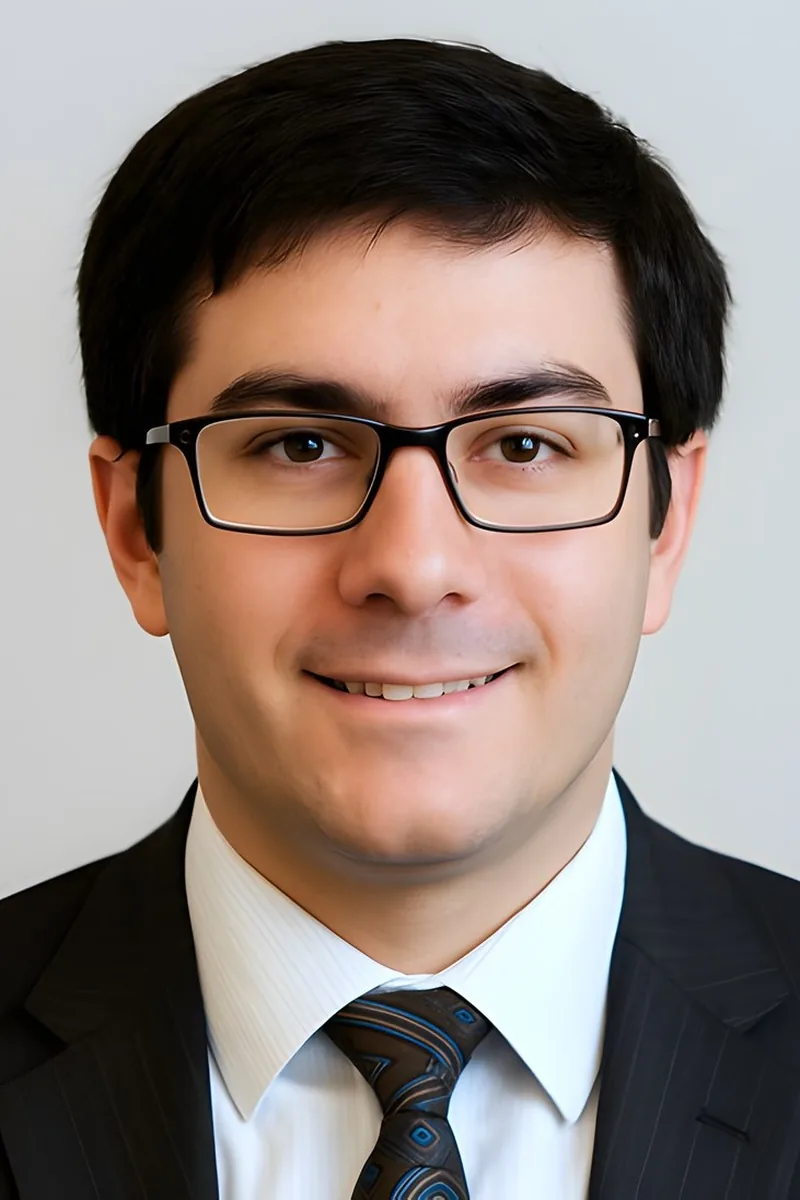
Supply and demand curves are just the entry point — the real challenge in microeconomics is applying them to problems involving market structures, consumer choice, and externalities. Adi's economics training means he can walk through the intuition behind utility maximization or Nash equilibrium without losing students in the math, or without skipping it entirely.

Environmental statistics — Alex's concentration at Rice — is fundamentally about modeling how variables interact under constraints, the same quantitative thinking that drives microeconomic analysis of supply, demand, and resource allocation. His geography training adds a spatial dimension that's surprisingly useful for understanding topics like land markets, location-based pricing, and how regional factors shape firm behavior.
Computer science at Columbia means Jeremy spends most of his time on optimization and decision logic — skills that map cleanly onto microeconomic problems like constrained utility maximization and how firms choose output levels under different market structures. His perfect 1600 SAT reflects the kind of precise, systematic reasoning that keeps the math and the economic intuition connected when students are working through elasticity calculations or game theory setups.
I am currently a rising Senior at Rice University from Alexandria, Virginia. I'm studying Political Science and Latin American Studies with a minor in Politics, Law and Social Thought. After I graduate I hope to go to law school to become an immigration lawyer.
As an economics major at Dartmouth, Eric studies microeconomic models — game theory, firm pricing strategies, consumer optimization — with the formal rigor of a top program, not just a survey-level overview. His strong quantitative background (1520 SAT, heavy calculus coursework) means he can walk through the math behind indifference curves or profit maximization while keeping the economic intuition front and center. Rated 5.0 by students.
David's sociology research at Columbia and Chicago trained him to model how individuals make decisions under constraints — which is exactly what microeconomics formalizes with utility functions, budget lines, and optimization problems. His computer science background adds fluency with the quantitative side, from setting up cost minimization equations to interpreting the slopes of indifference curves. Rated 4.9 by students.
Duy's economics degree means he didn't just pass through micro — he studied the formal models of consumer behavior, firm strategy, and market structure that most students encounter for the first time and find abstract. His rhetoric training adds an unexpected edge: he teaches students to argue through economic reasoning verbally, which is exactly what short-answer and essay-based econ exams demand. That combination of analytical depth and clear communication earned him a 34 ACT composite.
Hi y'all! I hold my Master of Science in Psychology of Sport and my Bachelor of Science in both Psychology and Applied Human and Sport Physiology. I have many years of tutoring under my belt, working with people of all levels from elementary school through college in hard science subjects (Biology, Chemistry, and Mathematics), a few social sciences (History, Psychology, Economics), and language arts. When not tutoring, I love playing soccer and I even coach a youth team. I love encouraging students to learn, grow, and think critically for themselves.
I am qualified to tutor many subjects, my favorite subject by far is math, specifically calculus. Math is a subject almost universally hated, and I believe that is mainly due to the narrow way in which it is taught. I have ADHD, and I often don't understand things the first time they are explained to me, meaning over the years I have had to figure out different ways of looking at information. Oftentimes, all a student needs is for something to be explained in a different way, and I love watching people finally understand a concept. Everyone learns differently, but everyone can learn.
The leap from understanding basic supply and demand to tackling consumer optimization, production functions, and market structure trips up a lot of students. Chikaneme's economics degree from Johns Hopkins means he can unpack concepts like marginal utility, price elasticity, and Nash equilibrium with real precision — showing not just how to solve the problem but why the math represents actual decision-making. He holds a 5.0 rating across his students.
I am a graduate of Barnard College, Columbia University where I received my Bachelor of Arts in Mathematics and Economics. My academic interests while at Barnard were focused on microeconomics and statistical research. I am a believer that a strong education can propel you to achieve your goals. I think that anyone can learn math and logical thinking with a little help. I have experience tutoring high school students in Algebra I and was always helping my fellow classmates with their economics problem sets in college. While working professionally, my job demanded strong technical skills in data programming. Each year, I taught my coworkers the necessary programming skills both through classroom setting lectures and through one-on-one tutoring. In my free time I love going to spin class, learning how to cook, and watching MSNBC!
Elasticity, consumer surplus, and the behavior of firms under perfect competition versus monopoly power — microeconomics asks students to think precisely about how individuals and markets make decisions. David tackles these topics by building up from core intuitions about scarcity and trade-offs, leveraging his economics coursework at Clemson to make the math behind the models feel purposeful.
Classics majors spend years dissecting how ancient societies organized trade, taxation, and resource allocation — the same questions microeconomics answers with formal models. Wyatt applies that historical intuition to concepts like supply and demand, market structures, and government intervention, giving students a narrative thread through material that can otherwise feel like disconnected graphs. He holds a 5.0 rating from students.
Supply curves, marginal cost, and market structures like monopolistic competition can feel like a blur of overlapping graphs if nobody explains the intuition behind them. Tanner approaches micro through the lens of an actual entrepreneur — someone who's priced products, evaluated costs, and watched consumer behavior firsthand across three startups. That real-world grounding makes abstract models concrete.
Elasticity, marginal utility, and market structures each require a slightly different way of thinking, which is where most intro micro students get tripped up. Lee walks through each concept with concrete examples — pricing decisions, consumer trade-offs, cost curves — so students can reason through problems instead of memorizing graph shapes.
I am a avid sports fans: Go Cowboys!
I am an experienced Instructor holding 2 masters degree and finalizing my PhD dissertation. I'm experienced with more than 11 years of teaching all levels from K to university students. You learn with excitement and achieving great results. I'm always committed to my students and follow up committed closely and I care a lot of them. My experience with teaching enabled me to utilise many teaching techniques and strategies that allows students to learn easily and effectively. My academic studies enables me to have great self confidence while teaching since I have many years of instructing experience to many levels. To add more, I have taught in 3 different countries with diversity and knowledge experience.
I am a Harvard University law student, professional composer, and dedicated mentor with a strong academic background. I completed 20+ AP courses, earned multiple AP scores of 5, graduated with a 4.0 GPA, and participated in an Honors College program. I focus on helping students build confidence, master concepts, and develop effective study skills through personalized and engaging instruction.
I am currently a student at Baylor University in the Alpha Lambda Delta Honor Society for exceptional performance. My whole life I have loved helping people learn and am dedicating my life to assisting others in their pursuit of knowledge. This is why I am majoring in All-Level Special Education and will be certified to teach all-level special education, elementary education, and ESL. My SAT score was in the 97th percentile and have received the AP Scholar with Honors award from the College Board. I am a dedicated tutor with a passion for watching my students learn! I have many years experience teaching students and my main goal is always to lead my clients to success.
My name is Raghav and I am excited to be your tutor. With years of experience, I've uncovered valuable strategies that helped me excel, and I'm eager to share them with you. Tutoring is my passion, and I'm dedicated to helping students like you reach their academic goals. Having successfully worked with over 100 students from various countries and subjects for over a year, I'm confident I can assist you in achieving your goals. Since each student learns differently, I adapt my teaching to your unique learning style, ensuring that you grasp the material thoroughly. At the moment, I am studying Aerospace Engineering at the University of Illinois at Urbana-Champaign and I am a private pilot working on my instrument rating(I'd love to chat about it with you). With me as your tutor, you will get someone patient and willing to explain everything in detail. I am particularly specialized in Math such as AP Calculus amd beyond, Sciences such as AP Physics, and AP Economics as well as SAT/ACT.
From elasticity calculations to the subtleties of monopolistic competition, microeconomics demands comfort with both graphical reasoning and mathematical precision. Olivia's dual background — a BA in math and economics from Vanderbilt plus doctoral-level training at UNC Chapel Hill — lets her walk through utility maximization and cost curve analysis with genuine fluency rather than surface-level definitions.
An economics degree from SUNY Albany means James can teach microeconomic concepts — supply and demand curves, elasticity, market structures, consumer choice theory — with the depth of someone who studied them formally. He connects abstract models like marginal utility and cost curves to real-world pricing decisions that make the logic intuitive. His 4.9 rating speaks to how clearly he breaks down graphs and mathematical relationships that trip students up.
At UCLA, Christopher studied economics with a double major that gave him both the quantitative models and the historical context behind how markets actually develop — useful when explaining why perfectly competitive markets rarely exist or how government intervention reshapes incentive structures. His time at Deutsche Bank adds a practical dimension to topics like firm pricing behavior and cost analysis, since he's seen how businesses weigh marginal decisions with real money on the line.
Most microeconomics courses lose students somewhere between indifference curves and game theory — the math feels disconnected from any decision a real person would make. Noel's public policy background lets him anchor every model in actual scenarios: why firms price-discriminate, how externalities justify a carbon tax, what happens to surplus when a city caps rent. That grounding turns problem sets from rote calculation into genuine analysis.
Supply and demand curves are just the starting point — Hari digs into elasticity, marginal utility, and market structures like oligopoly and monopolistic competition to show how firms actually make pricing decisions. His MBA in Finance gives him real-world context for concepts like cost curves and profit maximization that textbooks often present too abstractly. Rated 5.0 by students.
Pursuing a PhD in economics means Jacob isn't just passing through microeconomics — he's building a career on it, with the mathematical rigor from his joint math studies to back it up. He teaches students to think through models like a researcher would, connecting the intuition behind consumer choice or firm behavior to the calculus that formalizes it. Rated 5.0 by students.
Elasticity is where most microeconomics students first feel lost — the formulas seem straightforward, but applying them to tax incidence or consumer surplus problems requires real conceptual understanding. Mustafa tackles these topics by working through progressively harder problems and explaining the economic intuition at each step. Four years of tutoring have given him a sharp sense of where students get stuck between "I memorized it" and "I actually get it."
Introductory microeconomics is where Reed cut his teeth as a tutor — he served as a prefect and TA for Carleton College's micro courses, running both classroom sessions and one-on-one reviews. He digs into consumer and producer theory, cost curves, and market structures with an emphasis on connecting the graphs to the underlying math so each concept reinforces the other.
A political science degree from Williams College means Noah studied how policy decisions ripple through markets — tax incidence, rent controls, minimum wage effects — where microeconomic models meet real-world trade-offs. He teaches students to trace the logic of those models, breaking down why a subsidy shifts a curve or how deadweight loss emerges, rather than treating graphs as shapes to memorize for an exam.
Marginal cost curves, consumer surplus, and Cournot competition all demand comfort with derivatives and optimization — skills Romeo has sharpened through years of advanced mathematics study. He teaches microeconomics by making the math transparent: once a student can set up and solve the constrained optimization problem, the economic intuition follows naturally.
Being inside Michigan Ross's BBA program means Kerry encounters microeconomic thinking in nearly every class — how firms decide what to produce, why pricing strategies differ across market structures, and what drives consumer decision-making under scarcity. That daily immersion in business case analysis gives her a way of teaching concepts like elasticity and profit maximization that's grounded in how companies actually behave, not just how curves shift on a whiteboard.
Cole's master's thesis at the University of Amsterdam focused on monetary policy and banking — work that required building up from micro-level foundations like how individual banks optimize lending decisions and how interest rate changes ripple through firm behavior. That research depth means he can teach concepts like price discrimination, cost minimization, and strategic interaction with the kind of precision that comes from having used them analytically, not just memorized them for an exam. Rated 5.0 by students.
Testimonials
Because the right Microeconomics tutor makes all the difference.
Average Session Rating – Based on 3.4M Learner Ratings
Nearby Microeconomics Tutors
Other Houston Tutors
Related Business Tutors in Houston
Frequently Asked Questions
Microeconomics focuses on how individuals, households, and firms make decisions about production, consumption, and pricing—essentially the economics of smaller units rather than entire economies. Students often struggle because it requires both abstract thinking (understanding supply and demand curves) and practical application (analyzing real-world market behavior). The shift from memorization to conceptual problem-solving trips up many learners, especially when they haven't built strong foundational skills in algebra and graphing.
In a typical Houston classroom with a 16.3:1 student-teacher ratio, teachers must pace lessons for the whole group, which means struggling students often fall behind while advanced students wait. Personalized 1-on-1 instruction lets tutors identify exactly where you're getting stuck—whether it's understanding elasticity, mastering supply-and-demand graphs, or applying concepts to case studies—and adjust the pace and teaching method accordingly. This targeted approach helps you build confidence and mastery rather than just keeping up.
Students typically struggle most with supply and demand curves (especially shifts versus movements along curves), elasticity calculations, consumer and producer surplus, and marginal analysis. Many also find it difficult to connect abstract economic principles to real-world scenarios or to apply calculus-based approaches if they haven't mastered the underlying algebra. Personalized tutoring can break these concepts into digestible pieces and use examples relevant to your interests to make them stick.
Your first session is about assessment and relationship-building. A tutor will ask about your current coursework, which topics feel most confusing, and what your goals are—whether you're aiming for a strong grade, preparing for an exam, or building skills for advanced economics courses. They'll likely work through a problem or concept with you to understand your learning style and where gaps exist, then create a personalized plan moving forward.
Most students notice clearer understanding of specific concepts within 2-4 sessions, especially if they're working on a focused topic like supply-and-demand or cost analysis. Significant grade improvement usually takes 4-8 weeks of consistent tutoring, depending on how far behind you are and how frequently you meet. Regular practice between sessions and active engagement during tutoring accelerates progress considerably.
Varsity Tutors connects you with tutors who have strong backgrounds in economics—many hold degrees in economics, business, finance, or related fields, and many have teaching experience or professional experience applying economic principles. When you're matched with a tutor, you'll see their qualifications and can discuss their specific expertise with microeconomics topics relevant to your course.
Yes. Whether you're preparing for the AP Microeconomics exam (which tests your ability to analyze markets, consumer behavior, and firm decisions) or a college introductory economics course, personalized tutoring can help you master the content and practice applying it to exam-style questions. Tutors can focus on your weak areas, teach test-taking strategies specific to economics, and help you build the reasoning skills needed to tackle unfamiliar scenarios on exam day.
Start by telling us about your microeconomics needs—your current level, which topics you need help with, and your schedule. Varsity Tutors will connect you with a tutor who has expertise in those areas and availability that works for you. You can then discuss your goals and learning style before committing, ensuring it's a good fit for your success.
Let’s find your perfect tutor
Answer a few quick questions. We’ll recommend the right plan and match you with a top 5% tutor.