Award-Winning Korean Tutors
serving Los Angeles, CA
Korean
Tutors in Los Angeles
Private 1-on-1 tutoring, weekly live classes for academic support, test prep & enrichment, practice tests and diagnostics, and more to elevate grades and test scores.
Based on 3.4M Learner Ratings
UniversitiesSchools & Universities
DeliveredHours Delivered
ProficiencyGrowth in Proficiency
Who needs tutoring?
No obligation. Takes ~1 minute.
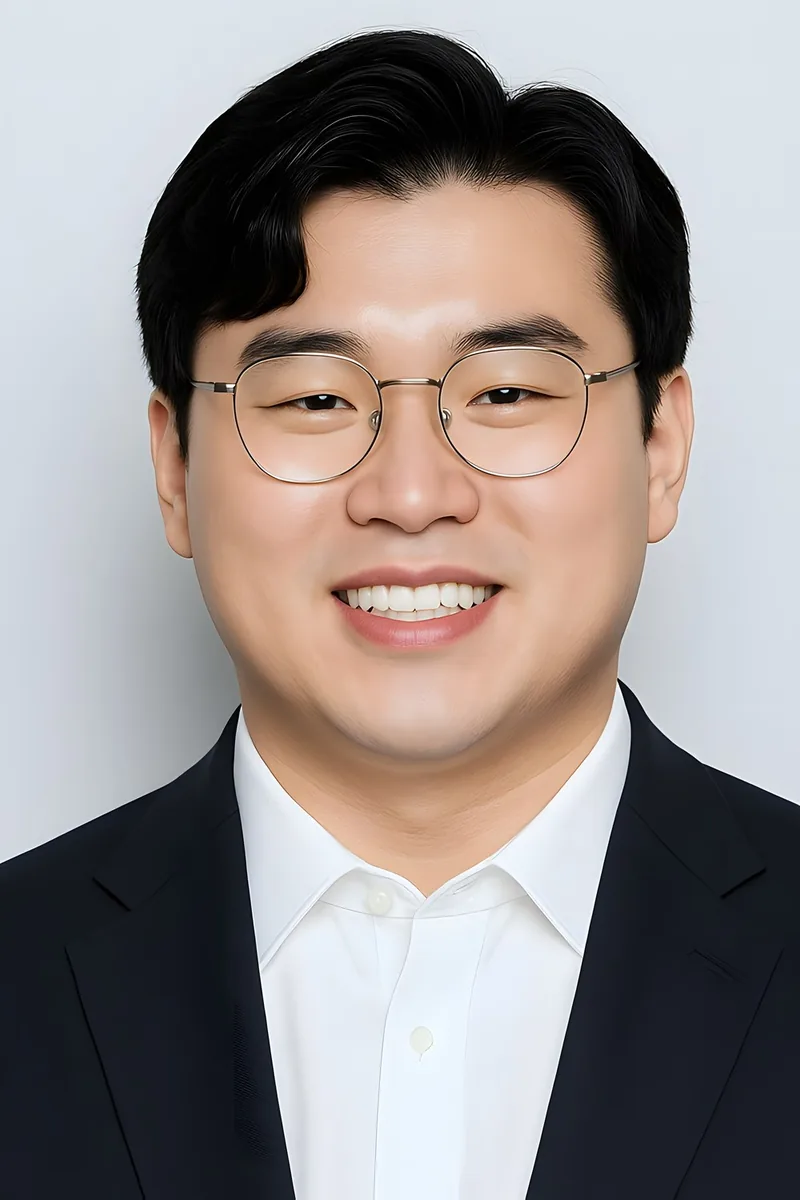
I graduated from Mechatronics Engineering in University of Waterloo located in Canada, and am currently enrolled in Masters program, researching stochastic systems and computational neuroscience in University of Toronto. Currently, I am qualifed to teach computer programming, with a focus on Python language, but am able to transfer my skills to other languages. As someone that started programming later compared to my peers in university, I constantly remind myself on how difficult the initial learning curve was in programming, and aim to use this as an advantage to guide my future students into the world of programming in an interesting way, where they can enjoy the learning process and challenges, instead of being frustrated. Whether you want to learn for school, or just personal reasons, I believe that I can offer a tailored experience for teaching computer programming. I am also hoping to get qualified to teach mathematics, especially linear algebra. As an added bonus, I am also willing to share my knowledge in Machine Learning and Artificial Intelligence as it is the field that I have a lot of experience in. Teaching is not just a trasfer of knowledge, but aiding the students in making a concept their own, so that they have freedom to use it for different applications. I will try my absolute best to make what seems like a difficult topics, your own!
Learning Korean means tackling Hangul, sentence-ending particles, and an honorific system that changes depending on who you're talking to. Andrew's linguistics degree gives him a structural understanding of how Korean grammar works at a deep level, making it easier to explain why particles like 은/는 and 이/가 behave differently even though both can mark a subject.
I am a graduate from UCLA and currently working as a CPA; however, I have been enjoying time to teach the Korean language and culture when I have extra time.
Learning Korean means wrestling with an entirely different sentence structure — subject-object-verb order, honorific levels that change verb endings, and a writing system that looks intimidating but is actually remarkably logical. Suha teaches hangul as a phonetic puzzle students can crack in a few sessions, then builds from there into grammar patterns and everyday vocabulary. As a Korean speaker and trained educator, she bridges the gap between textbook Korean and how the language actually works.
As a Korean speaker, Eunice teaches the language with an emphasis on hangul structure, sentence-building patterns, and the honorific system that trips up so many beginners. She's especially effective at bridging the gap between textbook Korean and how the language is actually spoken, making conversational practice feel natural from early lessons.
I was working as medical doctor and professor for more than 20 years. In the meantime, I have conducted education for medical students, doctors, and patients. I was also involved in developing educational programs. In particular, due to the corona pandemic, he was also involved in conducting online education. In the latter period, programs were developed for the public and patient education, and web cartoons were also developed. Moving to the US in 2023, I am looking for another job for second chapter of my life. Therefore, I think that my experience will be useful.
As a teaching assistant for Elementary Korean at Georgia Tech's School of Modern Languages, Brian taught everything from Hangul character recognition to basic verb conjugation and particle usage. He breaks down Korean sentence structure — subject-object-verb order, honorific levels, topic vs. subject markers — in ways that make the grammar intuitive for English speakers. Rated 5.0 by students.
I am a undergraduate freshman of the University of Michigan, studying business at the Ross School of Business. Working together with students and having a good time while seeing steady improvements has proven to provide me great joy. I believe that communication and relationship building is crucial for students to open up about their struggles and also for me to identify problems they don't realize they can improve on, so this is a key aspect of all of my lessons. During my free time, I enjoy playing sports or snacking on desserts while binge-watching Friends!
Dawoon's master's in Teaching Korean to Speakers of Other Languages (TKSOL) means she's trained specifically in diagnosing where non-native learners break down — and she's put that training to work preparing students for the Korean Proficiency Test and the Defense Language Proficiency Test, where she's moved learners from Level 2 to Level 3 on the DLPT. She weaves cultural context into every lesson, explaining why native speakers choose particular expressions and speech levels so that grammar rules stick to something meaningful rather than floating in the abstract.
As a Korean speaker and language tutor, Eugene teaches everything from Hangul fundamentals and particle usage to the honorific system that trips up so many learners. His psychology background gives him a sharp sense of how language acquisition actually works, so he structures lessons around how the brain retains new vocabulary and grammar patterns.
Sean's mathematics and MBA background might seem unrelated to Korean, but his analytical mindset lends itself well to breaking down the language's logical grammar system — particularly how particles and verb conjugations follow consistent, rule-based patterns. He approaches Korean the way he'd approach a math problem: identify the structure, learn the rules, then apply them in increasingly complex contexts.
Hi! I'm Joyce. I graduated from Washington University in St. Louis with a degree in Global Health and Environment and a minor in Korean, following the pre-med track. I have over five years of tutoring experience working with students of all ages, from elementary and middle schoolers to high school and college students. I specialize in ACT tutoring, particularly in english, reading, science, and writing. I've helped students strengthen their foundational skills, boost their test scores, and approach the ACT with confidence. I know how to pair content mastery with proven test-taking strategies. In addition, I support students with college application essays, drawing on my own experience of gaining admission to top schools like WashU and Boston College. I've also guided students in refining their essays and helped them gain admission to schools such as Purdue. Alongside ACT prep, I tutor Korean, where I've worked with students to build strong language foundations and conversational skills. In addition to private tutoring, I've served as a teaching assistant for college-level Korean courses and have tutored older students looking to strengthen their language skills. I'm passionate about creating a supportive, encouraging space where students feel comfortable asking questions and empowered in their learning. My tutoring style is goal-oriented and engaging, I use active learning strategies and provide clear, constructive feedback to help students retain information and make meaningful progress. Whether you're looking for long-term academic support or targeted help with test prep or essays, I'm happy to work with you. Feel free to reach out with any questions!
Testimonials
Because the right Korean tutor makes all the difference.
Average Session Rating – Based on 3.4M Learner Ratings
Nearby Korean Tutors
Other Los Angeles Tutors
Related Languages Tutors in Los Angeles
Frequently Asked Questions
Your first session is designed to understand your current level, learning goals, and preferred pace. A tutor will assess your Korean proficiency—whether you're starting from scratch or building on existing skills—and discuss what you want to achieve, whether that's conversational fluency, test preparation, or academic coursework. This foundation helps create a personalized learning plan tailored to your needs.
Many students struggle with Korean's writing system (Hangul) initially, though it's actually one of the most logical alphabets to learn. Others find the grammar structure—including particles, verb conjugations, and formal vs. informal speech levels—quite different from English. Pronunciation and listening comprehension can also be challenging, especially distinguishing similar sounds. Personalized instruction addresses these specific pain points with targeted practice rather than one-size-fits-all classroom approaches.
According to the Foreign Service Institute, reaching professional-level proficiency in Korean requires approximately 2,200 hours of study. However, conversational fluency—the ability to handle everyday situations—typically develops much faster with consistent, focused practice, often within 6-12 months of regular study. The timeline depends on your starting point, study frequency, and immersion level, which is why personalized tutoring can accelerate progress by targeting your specific goals.
In a typical Los Angeles classroom with an average student-teacher ratio of 19:1, instruction moves at a set pace that may not match your learning speed. Personalized tutoring allows a tutor to focus entirely on your needs—spending extra time on grammar concepts that confuse you, accelerating through material you grasp quickly, and adjusting teaching methods to match how you learn best. You also get immediate feedback and can ask questions without worrying about holding back the class.
Absolutely. Whether you're in a Korean language course, AP Korean, or an IB program, tutoring can reinforce classroom learning and help you master specific skills like reading comprehension, writing essays, or oral presentations. A tutor can also help you prepare for standardized assessments like the TOPIK (Test of Proficiency in Korean) or AP exams, which have specific formats and vocabulary requirements that benefit from targeted practice.
Speaking anxiety is common when learning a new language, especially with grammar rules and pronunciation concerns. Personalized tutoring creates a low-pressure environment where you practice speaking regularly with immediate, constructive feedback. A tutor can help you build confidence through conversation practice, correct pronunciation issues in real-time, and teach you strategies for handling unfamiliar situations—skills that classroom settings often don't prioritize.
Look for tutors with native or near-native fluency, ideally with teaching experience or background in Korean language instruction. Many expert tutors have lived in Korea, studied Korean linguistics, or taught in language programs. When you connect with Varsity Tutors, you can discuss a tutor's specific experience with your goals—whether that's conversational Korean, test prep, or academic coursework—to ensure the best fit.
Yes. Advanced learners often benefit from tutoring focused on business Korean, formal writing, nuanced grammar, or preparing for proficiency exams like TOPIK Level 5-6. A tutor can also help with cultural context, idioms, and media comprehension—skills that take learners from conversational to truly fluent. Personalized instruction is especially valuable at advanced levels, where classroom options in Los Angeles may be limited.
Let’s find your perfect tutor
Answer a few quick questions. We’ll recommend the right plan and match you with a top 5% tutor.