Award-Winning History Tutors
serving Glendale, AZ
History
Tutors in Glendale
Private 1-on-1 tutoring, weekly live classes for academic support, test prep & enrichment, practice tests and diagnostics, and more to elevate grades and test scores.
Based on 3.4M Learner Ratings
UniversitiesSchools & Universities
DeliveredHours Delivered
ProficiencyGrowth in Proficiency
Who needs tutoring?
No obligation. Takes ~1 minute.

Reading history well means evaluating sources, identifying bias, and constructing arguments from evidence — skills Robert sharpened through years of psychological research methodology. He teaches students to treat historical texts the way a researcher treats data: skeptically, systematically, and with an eye toward what the evidence actually supports.
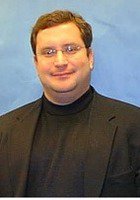
Understanding history requires the same skill Chris used daily at NASA: looking at a massive amount of information and figuring out what actually matters. Whether the topic is ancient civilizations, revolutionary movements, or Cold War geopolitics, he teaches students to build arguments from evidence and write clearly about complex events.
Engineering coursework is built on understanding how complex systems evolve over time — tracing how one variable shifts and cascades through everything else. Morgan brings that same cause-and-effect thinking to history, teaching students to map out how political decisions, resource pressures, and cultural shifts interconnect rather than treating chapters as isolated events. Rated 5.0 by students.
A music education degree trains you to read context — understanding why a piece was composed, what political or cultural moment it responded to, and how audiences received it. Ally brings that same interpretive instinct to history, teaching students to analyze primary sources by asking what circumstances produced them and what purposes they served. Rated 5.0 by students.
Kelly approaches history as a discipline built on argument and evidence, not memorization. She teaches students to read primary sources critically — asking who wrote a document, for what audience, and what it leaves out — skills that overlap directly with the analytical reading and writing she trained in during her Creative Writing program.
A psychology background changes the questions you ask about history — instead of memorizing what happened, Niabari digs into the social pressures, group identities, and decision-making patterns that drove events like reform movements or shifts in public policy. Her graduate work in healthcare delivery adds a concrete lens for topics where politics, science, and human behavior collide, like the history of public health or civil rights-era medical ethics. Rated 5.0 by students.
Galen approaches history the way his philosophy degree trained him to approach any argument: by examining the evidence, questioning the source, and asking who benefits from a particular version of events. Rather than marching through dates and names, he digs into primary documents and competing interpretations, teaching students to construct the kind of evidence-based claims that earn top marks on DBQs and research papers.
Courtney approaches history the way she approaches ecology: by tracing how interconnected systems — economic, political, environmental — produce specific outcomes. She teaches students to analyze primary sources and build cause-and-effect arguments rather than memorize dates, which strengthens both their understanding and their essay writing.
A Religion degree means Alexis spent years tracing how belief systems, institutions, and cultural identity shaped civilizations — from ancient empires to modern nation-states. That background gives her a distinctive angle on history, especially when students need to understand the motivations behind events like the Reformation, the Crusades, or colonial missionary movements. Rated 5.0 by students, she's strong at turning those thematic threads into clear, well-supported essays.
Studying Chinese politics at the graduate level gave Elizabeth a comparative lens that makes world and U.S. history click in ways a single-country perspective can't. She teaches students to analyze cause-and-effect chains across eras — connecting economic pressures, political movements, and cultural shifts — so that essay arguments feel grounded rather than generic.
A history degree shaped how Michelle reads sources, constructs arguments, and connects events across eras — and that's exactly what she brings to her history sessions. Whether the topic is the French Revolution or the Cold War, she teaches students to analyze cause and effect, evaluate competing interpretations, and write clearly about complex events. Her 5.0 rating speaks to how well that approach lands.
Ivanna's master's degree in political science, with a concentration in contemporary democracies, means she doesn't just teach historical events — she unpacks the political systems, economic pressures, and social movements that drove them. Students learn to evaluate primary sources and construct cause-and-effect arguments the way working scholars do. Rated 5.0 by students.
Kristi's undergraduate work in Earth and Planetary Science at Harvard required deep engagement with the history of scientific thought, colonialism's role in exploration, and how societies have understood their place in the cosmos. She teaches students to analyze historical sources as arguments with context and bias, not just facts to memorize for a test.
Two master's degrees in philosophy and religious studies mean Linda reads history the way it was actually lived — through the ideas, beliefs, and power structures that drove people's decisions. She teaches students to analyze primary sources as arguments with agendas, not just facts to memorize. Whether the topic is the Reformation, colonial America, or Cold War ideology, she connects events to the intellectual currents beneath them.
Annelisa's Yale coursework in political journalism gave her deep practice in analyzing how historical events get framed, debated, and reinterpreted over time. She approaches history by teaching students to read sources critically and construct arguments grounded in evidence — skills that translate directly to document-based questions and research papers.
Yale's cellular and molecular biology curriculum trains you to read primary literature critically — evaluating claims, weighing evidence, spotting gaps in reasoning — and Alice brings that same analytical rigor to historical source analysis and essay writing. Her dual strength in biology and English means she's comfortable both with data-driven argumentation and with close reading of texts, two skills that converge when students tackle document-based questions or thesis-driven history essays.
Rather than treating history as a list of dates and names, Jake digs into causation and context — why the Treaty of Versailles created the conditions for WWII, or how economic pressures shaped colonial independence movements. His background across AP US History, AP World History, and AP Comparative Government gives him a wide lens that makes cross-era connections click for students.
While history isn't Daniel's core discipline, his broad reading interests and analytical training bring a useful perspective to the subject. He approaches historical questions the same way he approaches scientific ones — examining evidence, questioning narratives, and constructing arguments that hold up under scrutiny.
Studying history well means evaluating sources the way a philosopher evaluates arguments — asking who wrote it, why, and what assumptions are hiding in the language. Rachelle brings that analytical lens from her Summa Cum Laude philosophy degree at Arizona State, along with her military service in the Arizona Army National Guard, which gave her firsthand perspective on institutions, policy, and civic life. She teaches students to construct evidence-based historical arguments rather than simply memorize dates.
Diana's graduate philosophy training at Brown sharpened her ability to analyze arguments, weigh evidence, and trace how ideas evolve across eras — skills that translate directly to understanding historical causation and interpreting primary sources. She teaches students to read history critically, asking not just what happened but why competing accounts tell different stories.
Twenty-five years working as an engineer and team manager across international companies means Tim has lived the kind of cross-cultural, geopolitical dynamics that history courses describe in textbooks — trade relationships, technological change reshaping societies, globalization's ripple effects. His fluency in both English and Mandarin gives him direct access to how different cultures frame the same historical events, which sharpens students' ability to evaluate perspective and bias in primary sources.
Studying anthropology alongside chemical engineering gave Alex an unusual lens on history — he approaches historical events by examining the cultural, economic, and material forces behind them rather than treating history as a sequence of names and dates. That analytical habit translates well when students need to write cause-and-effect essays or evaluate competing historical interpretations.
Too many students treat history as a list of names and dates to memorize, then wonder why essay prompts feel impossible. John — who holds a history BA and a law PhD — teaches the discipline as an exercise in argument: identifying causes, weighing evidence, and writing claims that hold up under scrutiny. He's rated 5.0 by students.
Approaching history as a discipline built on evidence rather than a list of dates to memorize, Arshia teaches students to analyze primary sources and trace cause-and-effect relationships across events. Her UCLA liberal arts training emphasized critical reading and argument construction — skills that translate directly into writing stronger DBQs and essay responses.
I am Arizona born and raised, my education includes an NYC law school degree with an undergraduate BS degree from University of Miami. In college I majored in Health Sciences with minors in Psychology and Public Health while in law school I leaned into corporate law and finance. Between law school and college I've pretty much covered every topic under the sun! In my spare time, I enjoy reading (especially mystery novels), pretending I'm a chef, and meditating.
Understanding history means learning to evaluate sources, recognize bias, and construct arguments from incomplete evidence. Kyle's international and area studies background trained him to do exactly that across multiple regions and time periods. Whether the topic is the French Revolution or the Cold War, he teaches students to ask why something happened, not just what happened.
Engineering training builds a specific habit of mind — breaking complex systems into inputs, outputs, and feedback loops — that turns out to be surprisingly useful for understanding historical change. Alex applies that systems-thinking approach to topics like revolutions, economic shifts, and political transformations, teaching students to trace how one development triggers the next. Rated 5.0 by students.
I am a graduate student at Arizona State University studying Human and Social Dimensions of Science and Technology, and am passionate about the value of education at all levels. Previously I worked at the US Department of Energy on energy technology in Washington, DC. I have enjoyed setting up roots in Phoenix over the past few years, and am excited about sharing my knowledge and passion for learning with others in the area.I have a knack for explaining complicated ideas to people in simple terms, enjoy deepening people's understandings of issues, and value education highly. All of these characteristics make me an ideal tutor for Varsity Tutors, and I look forward to the opportunity to share my academic experiences and skills with tutees. In addition, I can give an expert's perspective on a wide range of topics including political science, public policy, various topics in science and technology, as well as an academic success-oriented mindset.
Three years teaching at a Kumon Math and Reading Center meant Megan spent hundreds of hours helping students parse complex texts and build arguments from evidence — skills that map directly onto history's document-based questions and essay prompts. Her computer science training at Harvey Mudd adds a systematic edge: she teaches students to outline historical arguments the way you'd plan a program, identifying the key inputs (causes, context, key actors) before writing a single paragraph.
Studying philosophy at Marquette taught Elise to trace how ideas move through time — from Enlightenment political theory to the ethical debates behind modern policy — which gives her a natural framework for teaching history as argument rather than memorization. She connects events to their causes and consequences, showing students how to build document-based essays and analyze primary sources. Her 4.9 rating speaks to how well that analytical approach resonates across subjects.
Rather than treating history as a list of dates and names to memorize, Thara teaches students to ask *why* — why revolutions happen when they do, why certain policies succeed or fail, why one source tells a different story than another. Her background spanning American, European, and cultural history gives her a wide lens to draw connections across time periods.
Jeff earned his bachelor's degree in History, which means he doesn't just know the content — he knows how to think historically. He teaches students to analyze primary sources, trace cause-and-effect chains, and write the kind of document-based arguments that earn top marks on AP and college-level exams.
Computer science trains you to think in systems — inputs, processes, outputs — and Ken brings that same logic to history, teaching students to trace how specific conditions (economic pressure, political alliances, technological change) produced specific outcomes. That systematic approach is particularly useful for essay prompts and DBQs where students need to move past narrating events and instead explain the mechanisms behind them. Rated 4.8 by students.
Jamila approaches history as an exercise in building arguments from evidence, not memorizing dates. Whether a student is tackling the causes of the Civil War or analyzing Cold War foreign policy, she teaches them to read primary sources critically and construct the kind of thesis-driven responses that earn top marks on essays and exams.
Luke treats history less as a catalog of dates and more as a set of competing narratives that need to be evaluated. His background in organizational psychology gives him a unique lens on topics like political movements, labor history, and institutional change — areas where understanding group behavior matters as much as memorizing facts.
Physics trains you to ask 'what caused what' — every problem is a chain of forces, constraints, and outcomes, and Sam reads historical events the same way, pulling apart the political and economic pressures behind turning points rather than treating them as standalone facts. His dual background in physics and mathematics means he's comfortable with both quantitative evidence (demographic data, trade figures) and the argumentative essay structure that history courses actually grade on. Rated 5.0 by students.
Jacob treats history the way he treats a play: every event has competing perspectives, hidden motivations, and consequences that ripple forward. His psychology background makes him especially sharp at teaching students to analyze primary sources for bias and to construct document-based essays that go beyond summarizing what happened into explaining why it mattered.
Strong historical thinking means doing more than recalling facts — it means evaluating sources, recognizing bias, and constructing arguments from evidence. Andrew earned his history degree at Northwestern before going to law school at Tulane, so building and critiquing evidence-based arguments is second nature to him. He teaches students to approach history the way a historian does: by asking what the sources actually prove.
Most students struggle with history not because the facts are hard but because they don't know how to build an argument from primary sources. Amanda, who does this daily as a graduate researcher and college instructor, walks students through document analysis, periodization, and cause-and-effect reasoning that turn a pile of facts into a coherent historical narrative.
I am here because I thoroughly enjoy working with students and watching them succeed in their academic studies. As a Mathematics major at the University of Arizona (currently a junior), I have extensive experience teaching and tutoring: I have been a teacher's assistant for a Calculus II section at my university and have spent a great deal of time assisting students with non-math related subjects as well such as English and essay-writing, time management and study skills techniques, and standardized test prep (SAT).
Testimonials
Because the right History tutor makes all the difference.
Average Session Rating – Based on 3.4M Learner Ratings
Other Glendale Tutors
Related Social Studies Tutors in Glendale
Frequently Asked Questions
Varsity Tutors matches Glendale students with expert History tutors for 1-on-1 instruction. We pair each student with a tutor based on their specific needs, learning style, and goals.
Whether you need homework help, exam prep, or want to get ahead, our History tutors are ready to help.
Common challenges include gaps from earlier material, difficulty with specific concepts, and trouble applying learning to new problems. These issues can snowball quickly in History.
A tutor identifies where you're stuck, fills in gaps, and provides targeted practice. The 1-on-1 format means you get help exactly where you need it.
Tutors work with your student's actual coursework—homework assignments, class notes, and upcoming tests. This keeps tutoring directly relevant to what's happening in the classroom.
When you share information about your student's school and curriculum, we can match you with a tutor who has relevant experience.
All tutors complete background checks, credential verification, and teaching evaluation. Many of our History tutors hold advanced degrees or have years of teaching experience.
You can review tutor profiles to find someone with the right background for your student's level and needs.
Many students see improved grades within a few weeks, along with better understanding of History concepts and more confidence tackling challenging material.
Tutors track progress and adjust their approach to ensure continued improvement.
Most students benefit from 1-2 sessions per week. More frequent sessions help if your student is significantly behind or has an important exam coming up.
Your tutor can recommend a schedule based on your student's specific situation and goals.
Tutoring is purchased in packages of hours, with rates varying by tutor experience. Varsity Tutors offers several options to fit different budgets and needs.
You can discuss pricing during your consultation to find what works best.
Your tutor will assess where your student is, discuss goals, and start working on priority areas. Most students bring current homework or upcoming test material to focus on.
By the end, you'll have a clear sense of how the tutor can help and a plan for moving forward.
Let’s find your perfect tutor
Answer a few quick questions. We’ll recommend the right plan and match you with a top 5% tutor.