Award-Winning Geometry Tutors
serving Shreveport, LA
Geometry
Tutors in Shreveport
Private 1-on-1 tutoring, weekly live classes for academic support, test prep & enrichment, practice tests and diagnostics, and more to elevate grades and test scores.
Based on 3.4M Learner Ratings
UniversitiesSchools & Universities
DeliveredHours Delivered
ProficiencyGrowth in Proficiency
Who needs tutoring?
No obligation. Takes ~1 minute.

Proofs are usually the first place Geometry students feel lost, because the class suddenly demands logical justification instead of just computation. Daniel tackles this by teaching students to build arguments step by step — identifying given information, selecting the right postulate or theorem, and articulating why each conclusion follows. His structured approach turns proof-writing from a guessing game into a repeatable process.
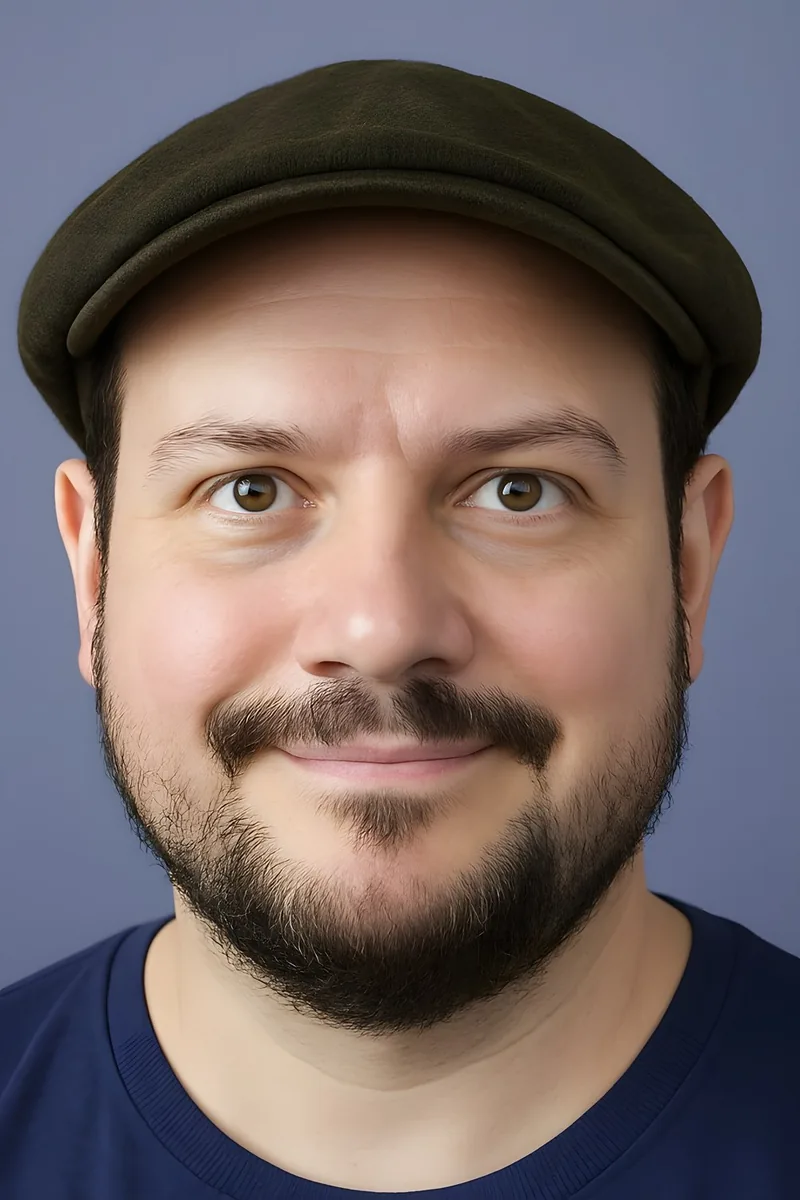
Let me tell you a little bit about myself. I have a Bachelors degree and two Masters degrees in Mathematics from the United States Naval Academy, the University of Pennsylvania, and the University of Georgia. All of my degrees were earned with at least a 3.9 GPA and I earned the honor of being named the top math major from my undergraduate institution when I graduated. I have also had the pleasure of teaching mathematics at two different colleges and started tutoring math and physics over 20 years ago. Please allow me to accompany you on the exciting journey of exploration into math and physics!
Proofs are where most geometry students get stuck — the leap from calculating angles to constructing logical arguments feels like a different subject entirely. Jonathan breaks that transition down by teaching students to identify given information, spot congruence relationships, and build each proof step by step. His 4.9 rating speaks to how well that structured approach clicks.
Proofs and spatial reasoning make geometry feel like a different species of math compared to algebra, and that shift frustrates a lot of students. Steve tackles it by grounding geometric logic in tangible examples — angle relationships in trusses, symmetry in mechanical parts — drawing on his engineering background to make abstract theorems feel concrete.
Materials science is a field where you're constantly thinking about how structures behave — crystal lattices, grain boundaries, stress distributions across shapes — so Jennifer's engineering background gives her a natural fluency with the spatial reasoning geometry demands. She unpacks problems involving angle relationships and properties of polygons by connecting them to the physical intuition she built studying how real materials are structured. Rated 5.0 by students.
Every proof in geometry is really an exercise in building a logical argument from a set of given constraints — a skill Jeffrey sharpened through years of engineering coursework at Notre Dame and his PhD work at Rice. He teaches students to approach triangle congruence, parallel line theorems, and circle properties as puzzles with clear reasoning chains rather than formulas to memorize.
Proofs are where most geometry students start to struggle, because suddenly math requires building logical arguments instead of just computing answers. Margaret's background in both computer science and political science at Stanford means she thinks in structured logic all day — and she brings that same rigor to angle relationships, congruence, and circle theorems.
Proofs are usually where geometry goes from comfortable to confusing — suddenly students need to justify every step with logic instead of just measuring. Matt approaches geometric reasoning as a structured argument, walking through angle relationships, congruence criteria, and parallel-line theorems in a way that makes each proof feel like solving a puzzle rather than following a script.
Most geometry struggles come down to proofs: students can identify that two triangles look congruent but can't articulate why in a logical chain. Sam's engineering and statistics background trained him in rigorous argumentation, and he applies that same structured thinking to walk through two-column and paragraph proofs until the reasoning clicks.
An applied math major at Stanford, Alex approaches geometry problems the way a mathematician would — by asking what's actually true about a figure before deciding which tools to use. That habit is especially valuable when students face problems combining circle theorems, inscribed angles, and arc-length relationships, where jumping to formulas too early usually leads nowhere. Rated 4.8 by students.
Neurobiology at Harvard meant Emma spent years interpreting complex diagrams of neural pathways and brain structures — skills that translate directly to reading the dense, multi-layered figures in geometry where you have to pull out the right angle relationship or identify similar triangles buried inside a larger shape. She tackles the subject from the logic side, treating each proof like a scientific hypothesis that needs step-by-step evidence. Rated 5.0 by students.
Mechanical and aerospace engineering at Princeton means Matthew lives in a world of geometric constraints — fitting components into tight spaces, calculating load-bearing angles, reasoning about three-dimensional shapes on paper before they ever get built. He brings that same step-by-step precision to teaching triangle properties, angle relationships, and the logic behind constructions, typically demonstrating a technique and then handing students progressively harder problems until the reasoning becomes automatic.
Kevin's Philosophy, Politics, and Economics program at Penn is essentially a training ground in structured argumentation — building claims from premises, identifying logical gaps, defending conclusions — which maps directly onto geometric proof-writing. He teaches students to treat two-column proofs the same way they'd treat a debate: state what you know, justify every step, and never skip a link in the chain. His 34 ACT composite reflects the kind of precise, methodical reasoning that makes geometry's logical demands feel manageable.
Proofs are where most geometry students freeze up — the leap from calculating angles to constructing logical arguments feels like a different subject entirely. Paula bridges that gap by connecting each theorem back to something visual and concrete, whether it's triangle congruence or parallel line relationships. Her psychology background gives her a sharp read on where a student's reasoning breaks down.
Testimonials
Because the right Geometry tutor makes all the difference.
Average Session Rating – Based on 3.4M Learner Ratings
Practice Geometry
Free practice tests, flashcards, and AI tutoring for Geometry
Nearby Geometry Tutors
Other Shreveport Tutors
Related Math Tutors in Shreveport
Frequently Asked Questions
Varsity Tutors matches Shreveport students with expert Geometry tutors for 1-on-1 instruction. We pair each student with a tutor based on their specific needs, learning style, and goals.
Whether you need homework help, exam prep, or want to get ahead, our Geometry tutors are ready to help.
Common challenges include gaps from earlier material, difficulty with specific concepts, and trouble applying learning to new problems. These issues can snowball quickly in Geometry.
A tutor identifies where you're stuck, fills in gaps, and provides targeted practice. The 1-on-1 format means you get help exactly where you need it.
Tutors work with your student's actual coursework—homework assignments, class notes, and upcoming tests. This keeps tutoring directly relevant to what's happening in the classroom.
When you share information about your student's school and curriculum, we can match you with a tutor who has relevant experience.
All tutors complete background checks, credential verification, and teaching evaluation. Many of our Geometry tutors hold advanced degrees or have years of teaching experience.
You can review tutor profiles to find someone with the right background for your student's level and needs.
Many students see improved grades within a few weeks, along with better understanding of Geometry concepts and more confidence tackling challenging material.
Tutors track progress and adjust their approach to ensure continued improvement.
Most students benefit from 1-2 sessions per week. More frequent sessions help if your student is significantly behind or has an important exam coming up.
Your tutor can recommend a schedule based on your student's specific situation and goals.
Tutoring is purchased in packages of hours, with rates varying by tutor experience. Varsity Tutors offers several options to fit different budgets and needs.
You can discuss pricing during your consultation to find what works best.
Your tutor will assess where your student is, discuss goals, and start working on priority areas. Most students bring current homework or upcoming test material to focus on.
By the end, you'll have a clear sense of how the tutor can help and a plan for moving forward.
Let’s find your perfect tutor
Answer a few quick questions. We’ll recommend the right plan and match you with a top 5% tutor.