Award-Winning Geometry Tutors
serving Baton Rouge, LA
Geometry
Tutors in Baton Rouge
Private 1-on-1 tutoring, weekly live classes for academic support, test prep & enrichment, practice tests and diagnostics, and more to elevate grades and test scores.
Based on 3.4M Learner Ratings
UniversitiesSchools & Universities
DeliveredHours Delivered
ProficiencyGrowth in Proficiency
Who needs tutoring?
No obligation. Takes ~1 minute.
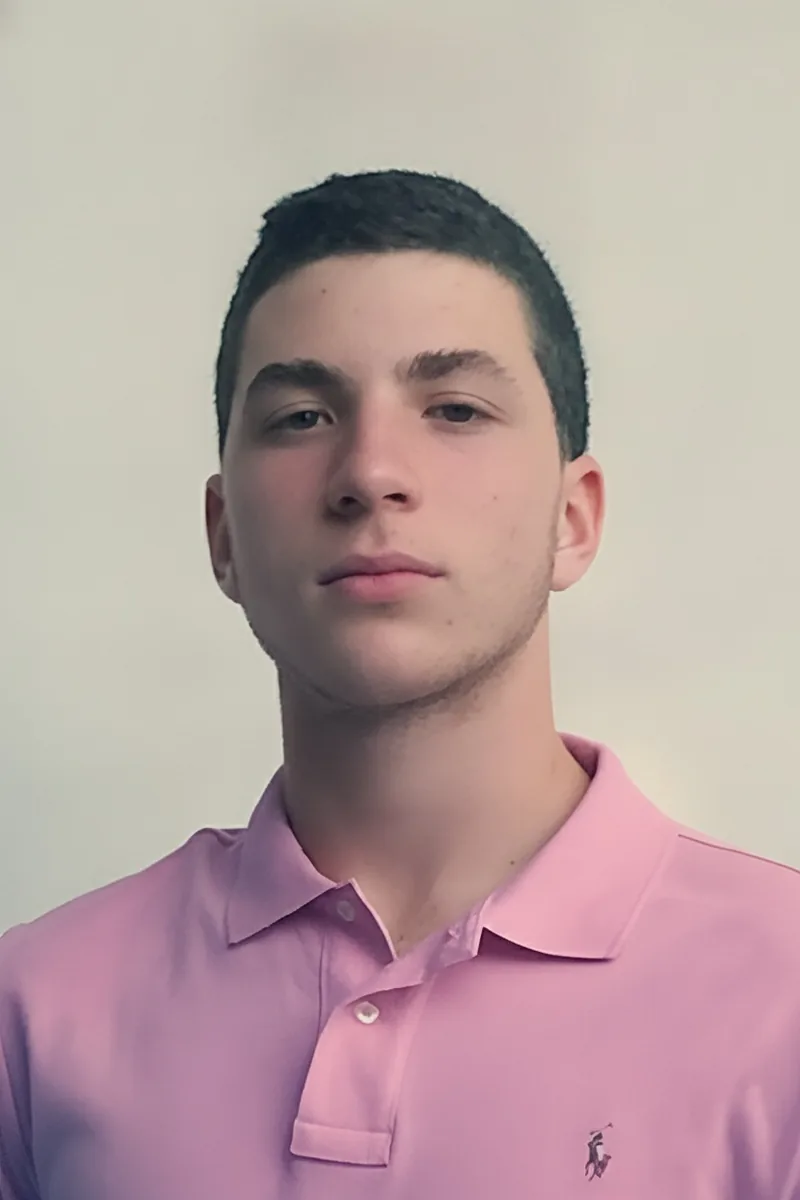
Proofs are usually the first place Geometry students feel lost, because the class suddenly demands logical justification instead of just computation. Daniel tackles this by teaching students to build arguments step by step — identifying given information, selecting the right postulate or theorem, and articulating why each conclusion follows. His structured approach turns proof-writing from a guessing game into a repeatable process.
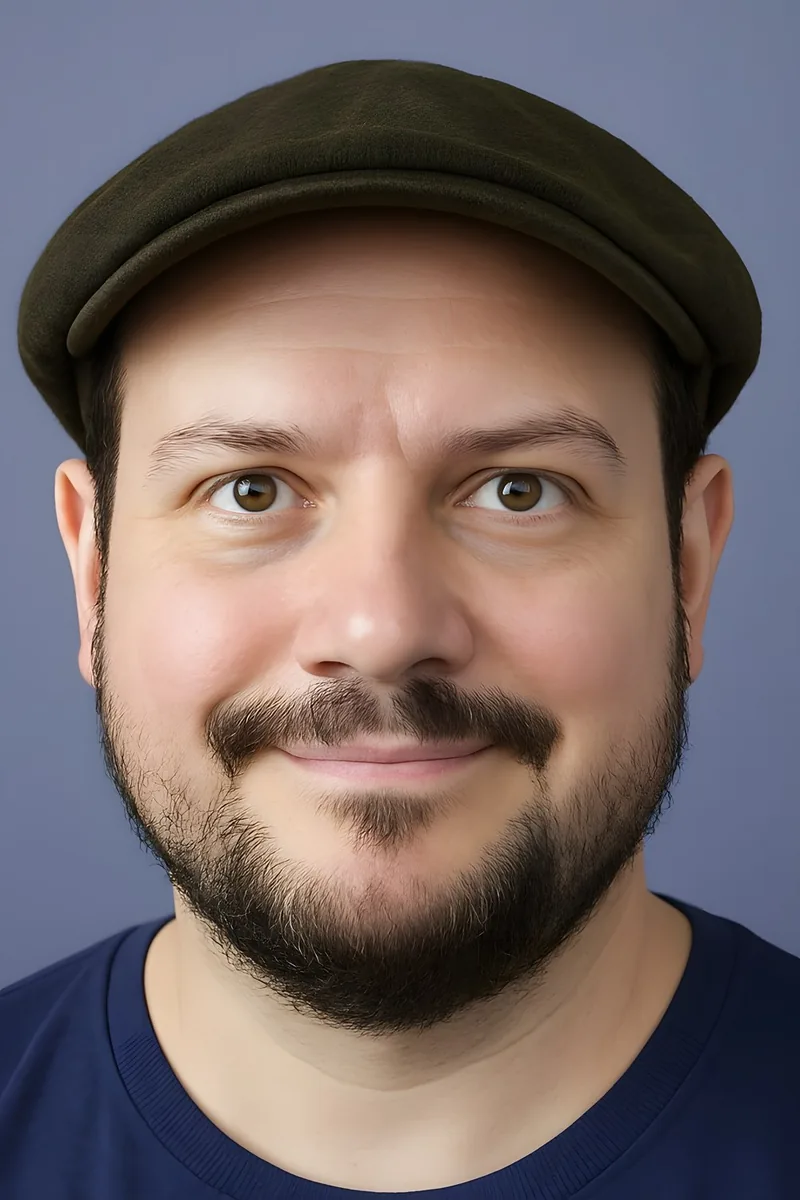
Let me tell you a little bit about myself. I have a Bachelors degree and two Masters degrees in Mathematics from the United States Naval Academy, the University of Pennsylvania, and the University of Georgia. All of my degrees were earned with at least a 3.9 GPA and I earned the honor of being named the top math major from my undergraduate institution when I graduated. I have also had the pleasure of teaching mathematics at two different colleges and started tutoring math and physics over 20 years ago. Please allow me to accompany you on the exciting journey of exploration into math and physics!
Proofs are usually where geometry students panic — the jump from calculating angles to constructing logical arguments feels like a different subject entirely. Isabella's MIT math training means formal reasoning is second nature to her, and she walks students through how to build a proof step by step, connecting geometric intuition to the structured logic on the page. She also covers coordinate geometry and triangle congruence with the same emphasis on understanding over memorization.
Dennis's research into quasicrystals and aperiodic tilings — like Penrose tilings of rhombuses — is geometry at its most fascinating, exploring how shapes fit together under unusual symmetry rules. That deep spatial intuition carries directly into high school Geometry, where he teaches proofs, congruence, and circle theorems by encouraging students to reason visually before writing anything formal.
Proofs trip up a lot of geometry students because they require a completely different kind of thinking — constructing logical arguments instead of just computing answers. Kirstie's liberal arts background actually strengthens her approach here, since she treats geometric proofs the way she'd treat building a persuasive essay: claim, evidence, reasoning. She also covers the computational side, from triangle congruence to circle theorems.
Proofs trip up a lot of Geometry students because they require a completely different kind of thinking — constructing logical arguments instead of just computing answers. Michelle approaches proofs and spatial reasoning the way she approaches scientific problems: systematically, breaking each claim into smaller pieces until the conclusion becomes obvious.
A math major at Washington University with a 35 ACT, Kathleen has the kind of fluency across algebra, trigonometry, and spatial reasoning that lets her spot exactly which prerequisite skill is tripping a geometry student up — whether it's solving equations inside angle relationships or applying trig ratios to right triangles. She teaches the "why" behind each theorem so students can reconstruct steps on their own instead of memorizing proof templates.
Proofs are usually the first place geometry students get stuck, because suddenly math asks them to argue logically instead of just compute. Ian approaches proof-writing the way he approaches physics derivations at Yale — step by step, with each claim grounded in a specific theorem or postulate. He also covers triangle congruence, circle theorems, and coordinate geometry with the same structured clarity.
Proofs are usually the first place geometry students feel lost, because suddenly they're being asked to construct arguments instead of compute answers. Ben teaches proof-writing as a logical skill: identifying what's given, what's needed, and which theorems bridge the gap. His approach turns the frustration of "I don't know where to start" into a repeatable process.
Proofs are where most geometry students get stuck — the leap from calculating angles to constructing logical arguments feels like a different subject entirely. Jonathan breaks that transition down by teaching students to identify given information, spot congruence relationships, and build each proof step by step. His 4.9 rating speaks to how well that structured approach clicks.
Proofs and spatial reasoning make geometry feel like a different species of math compared to algebra, and that shift frustrates a lot of students. Steve tackles it by grounding geometric logic in tangible examples — angle relationships in trusses, symmetry in mechanical parts — drawing on his engineering background to make abstract theorems feel concrete.
Neurobiology at Harvard meant Emma spent years interpreting complex diagrams of neural pathways and brain structures — skills that translate directly to reading the dense, multi-layered figures in geometry where you have to pull out the right angle relationship or identify similar triangles buried inside a larger shape. She tackles the subject from the logic side, treating each proof like a scientific hypothesis that needs step-by-step evidence. Rated 5.0 by students.
Proofs are where most geometry students stall — the leap from calculating angles to constructing logical arguments feels unfamiliar. Camille's interdisciplinary training at Duke and Columbia sharpened her ability to teach that kind of structured reasoning, and she applies it to everything from triangle congruence to circle theorems. Rated 5.0 by students.
Proofs are usually where geometry stops feeling like math and starts feeling like a foreign language. JF breaks down the logic behind two-column and paragraph proofs so students see them as structured arguments, not mysterious rituals. A 5.0 client rating speaks to an approach that makes even angle-chasing problems feel manageable.
Testimonials
Because the right Geometry tutor makes all the difference.
Average Session Rating – Based on 3.4M Learner Ratings
Practice Geometry
Free practice tests, flashcards, and AI tutoring for Geometry
Nearby Geometry Tutors
Other Baton Rouge Tutors
Related Math Tutors in Baton Rouge
Frequently Asked Questions
Many students struggle with the shift from algebra's computational focus to geometry's emphasis on logical reasoning and proofs. Common pain points include visualizing spatial relationships, understanding why geometric theorems work (not just memorizing them), writing formal proofs, and applying concepts to word problems. Personalized tutoring helps students build conceptual understanding by connecting visual, algebraic, and logical approaches—making the "why" behind geometry clear.
Proofs require both logical thinking and clear communication, which can feel overwhelming without guidance. Expert tutors break down the proof-writing process by helping you identify what you know, what you need to prove, and which theorems or properties bridge the gap. Through personalized instruction, you'll develop strategies for approaching different proof types and gain confidence in your reasoning—transforming proofs from intimidating to manageable.
Yes. Geometry courses in Baton Rouge schools may use different textbooks and approaches, but the core concepts—angles, triangles, circles, transformations, and proofs—remain consistent. Varsity Tutors connects you with tutors who understand these standards and can align their instruction with your specific coursework, whether you're working through your textbook, preparing for assessments, or filling knowledge gaps.
Your first session focuses on understanding your goals and identifying where you need support. The tutor will assess your current understanding of key geometry concepts, discuss specific challenges (like proofs or word problems), and learn about your learning style. From there, you'll develop a personalized plan that targets your needs while building confidence and conceptual understanding.
Word problems require translating real-world scenarios into geometric diagrams and equations—a skill that takes practice and strategy. Tutors help you develop a systematic approach: identifying relevant information, sketching accurate diagrams, choosing the right theorems or formulas, and checking your work. With personalized guidance, you'll see patterns across different problem types and build the confidence to tackle unfamiliar scenarios.
Absolutely. Math anxiety often stems from feeling lost or unsupported, but personalized 1-on-1 instruction creates a judgment-free space to ask questions and learn at your own pace. Expert tutors build confidence by breaking concepts into manageable steps, celebrating progress, and helping you see that geometry is logical and learnable. Many students discover that anxiety decreases significantly once they understand the underlying concepts.
Geometry is fundamentally about recognizing and understanding patterns—from angle relationships to properties of similar figures. Personalized tutoring helps you move beyond memorizing facts to seeing how concepts connect. Tutors guide you to discover patterns yourself, relate new ideas to what you already know, and apply concepts across different contexts. This deeper understanding makes geometry feel less like isolated rules and more like an interconnected system.
Pricing depends on factors like tutor expertise, session length, and frequency. Varsity Tutors works with students and families to create flexible arrangements that fit different budgets and schedules. To learn about specific rates and options, connect with an academic advisor who can discuss your needs and help you find a solution that works for you.
Let’s find your perfect tutor
Answer a few quick questions. We’ll recommend the right plan and match you with a top 5% tutor.