Award-Winning Economics Tutors
serving Washington, DC
Economics
Tutors in Washington
Private 1-on-1 tutoring, weekly live classes for academic support, test prep & enrichment, practice tests and diagnostics, and more to elevate grades and test scores.
Based on 3.4M Learner Ratings
UniversitiesSchools & Universities
DeliveredHours Delivered
ProficiencyGrowth in Proficiency
Who needs tutoring?
No obligation. Takes ~1 minute.
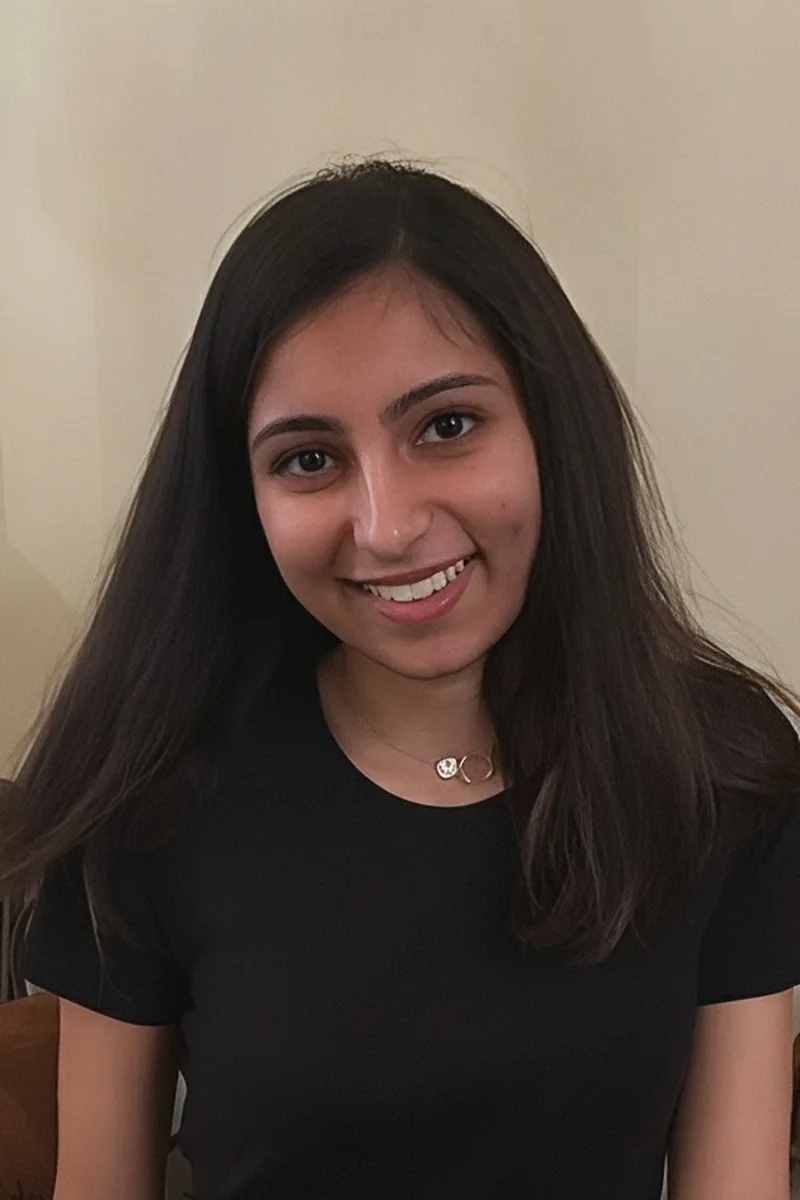
Sarina's International Health degree required heavy coursework in microeconomics — analyzing how incentive structures shape healthcare markets, how scarcity drives resource allocation, and how policy interventions create unintended economic consequences. That public health lens gives her a distinctive way of teaching concepts like externalities and cost-benefit analysis, grounding them in scenarios students can immediately see mattering. Rated 5.0 by her students.

Experienced portfolio manager, strategist and published author with a demonstrated history of working in the financial services industry. Skilled in Asset Management, Equities, Bonds, Investment Strategies, and Capital Markets. Strong finance professional with a MBA focused in Finance, General from University of Southern California - Marshall School of Business. Series 65, 7, 63, 24, CFA, FRM
I am a student at Georgetown University majoring International Politics with minors in Economics and Latin American Studies.
I am a graduate of Cornell University's College of Arts and Sciences. I received my Bachelor of Arts in Chemistry with Distinction in 2015. Since graduation, I was a physics/chemistry teacher and soccer coach at a private school in Virginia for a year, where I led the soccer team to an undefeated season. Before teaching and coaching professionally, I was a Teaching Assistant for the Cornell Math and Physics Departments, where I taught many subjects including calculus, mechanics, electromagnetism. Throughout my time at Cornell and as a teacher, I tutored subjects ranging from the SAT to AP Physics and Algebra II, which is where my true talents lie: in small group or one-on-one settings where I can give students the full attention they deserve and tailor my approach specifically to their learning styles. This is why I am now pursuing tutoring as a part-time occupation at Varsity Tutors. I embrace teaching all math and science subjects, especially physics and calculus, at both the college and high school level and will go above and beyond to make sure all of my students succeed, according to their definition of success. In my spare time, I enjoy playing league soccer, basketball, tennis and guitar, and also like to travel and see as much of the world as I can.
Matt's finance degree means he learned economics not as an isolated academic subject but as the engine behind investment decisions, corporate strategy, and market behavior — so when he teaches concepts like elasticity or market structures, he can show students where the theory actually lands. His SAT score of 1530 also signals the kind of sharp analytical reading that economics coursework demands, especially when students need to interpret dense graphs or parse tricky problem setups.
As an economics major at Northwestern, Sarah digs into the same core principles — scarcity, opportunity cost, market equilibrium, elasticity — that introductory students encounter for the first time. She translates abstract models into concrete examples, making supply-and-demand curves and production possibilities frontiers feel intuitive rather than mechanical.
I am currently working in a Bronx Public School as a teaching apprentice in Algebra. I have four years of experience tutoring one on one with students of all ages.
Studying economics at Dartmouth with a computational emphasis, Eric digs into both the theoretical models and the real-world data that test them. He's particularly effective at unpacking concepts like elasticity, comparative advantage, and market equilibrium — translating the math into plain-language reasoning that sticks.
Studying economics at the University of Chicago — where the discipline's most influential modern ideas were developed — means Benjamin is immersed in microeconomic reasoning and market theory at a school that takes the subject unusually seriously. His 35 ACT and strong math background let him move comfortably between the graphical intuition of supply-and-demand analysis and the algebraic problem-solving that trips up students when courses start introducing equations. Rated 4.8 by his students.
I'm a 24 year old student of life that graduated from Vanderbilt University in 2014. My first experience with tutoring came 5 years ago when I opened a branch of ACT prep tutoring for Revolution Prep. At that time, I taught small classes of 5-9 students and also worked as a private tutor. I absolutely love to learn and am fulfilled by guiding students to reach their maximum potential.
Studying Politics, Philosophy, and Economics at Penn means Esther encounters economic concepts not in isolation but tangled up with the political incentives and philosophical arguments that shape them — why a carbon tax gets framed as market efficiency in one class and as an ethical obligation in another. That interdisciplinary wiring is especially useful for students who need to understand the reasoning behind economic models, not just the graphs themselves. Rated 5.0 by her students.
Three economics degrees deep, Simon lives in supply-and-demand curves, GDP models, and game theory the way most people live in their native language. He unpacks concepts like elasticity, monetary policy, and market equilibrium by tying them to real headlines — tariff debates, Federal Reserve decisions, housing markets — so the math and the intuition reinforce each other.
Carter earned his economics degree at Brown and then taught game theory to advanced middle school students at a Johns Hopkins CTY program in Hong Kong — so he knows how to make concepts like Nash equilibria, marginal analysis, and market structures click for learners at very different levels. He connects economic models to real decisions rather than leaving them as abstract graphs. His approach digs into the intuition behind supply-and-demand shifts, elasticity, and welfare analysis so the math and the logic reinforce each other.
I am highly proficient in other areas in economics, high school mathematics, calculus I and European history.
Supply and demand curves are easy enough to draw — the hard part is understanding elasticity, equilibrium shifts, and what happens when you layer in government intervention. Conor's dual background in mathematics and finance from the University of Pittsburgh means he can walk through both the graphical intuition and the underlying algebra that drives economic models.
Testimonials
Because the right Economics tutor makes all the difference.
Average Session Rating – Based on 3.4M Learner Ratings
Other Washington Tutors
Related Business Tutors in Washington
Frequently Asked Questions
Economics requires students to think abstractly about systems and incentives, which can be challenging without real-world context. Many students struggle with understanding how supply and demand curves work, grasping opportunity cost, and applying economic principles to complex scenarios. Additionally, interpreting graphs, understanding macroeconomic concepts like inflation and GDP, and connecting theory to current events often require more personalized explanation than a classroom setting allows.
With personalized 1-on-1 instruction, a tutor can slow down on confusing concepts, use relevant Washington, DC examples, and help students develop the analytical thinking that economics demands.
Washington, DC's 71 school districts and 292 schools follow different curricula—some emphasize AP Economics preparation, while others focus on personal finance and civics-based economics. Some schools use inquiry-based approaches, while others rely on traditional textbook methods. Varsity Tutors connects you with tutors who understand various DC curricula and can align instruction with your specific school's standards and expectations.
A tutor can review your course materials, understand your teacher's emphasis, and fill gaps in understanding while reinforcing the exact frameworks your school uses.
Yes. AP Economics (both Micro and Macro) has specific content requirements and question formats that benefit greatly from personalized instruction. A tutor can help you master unit-by-unit concepts, practice free-response questions, analyze real FRQ responses, and develop test-taking strategies specific to the AP format. Many students improve their understanding of elasticity, market structures, and fiscal/monetary policy significantly with focused 1-on-1 support.
Tutors can also help you connect current events—Washington, DC's position as the nation's capital makes real-world economic policy particularly relevant—to AP concepts.
Economics relies heavily on visual models—supply and demand curves, production possibility frontiers, cost curves, and aggregate demand/supply graphs. These can feel abstract in a lecture setting, but personalized instruction allows a tutor to draw these step-by-step, explain what shifts them and why, and have you practice interpreting variations until they click. A tutor can also help you move beyond memorization to understanding the economic reasoning behind each model.
This visual-conceptual understanding is crucial for both exams and applying economics to real decisions.
One of the most powerful aspects of personalized tutoring is that a tutor can connect economics to what matters to you—whether that's understanding inflation's impact on your future job market, how DC's housing costs reflect supply and demand, cryptocurrency, climate policy, or sports economics. This makes abstract concepts concrete and memorable.
When you understand why economics matters to your life and goals, you're more likely to engage deeply with the material and retain it for tests and beyond.
With an average student-teacher ratio of 11.7:1 in DC, classroom teachers are doing their best—but they can't provide individualized pacing. Personalized 1-on-1 instruction allows a tutor to identify exactly where your understanding breaks down, spend as much time as you need on opportunity cost or elasticity, use explanations and examples tailored to how you learn, and build your confidence without the pressure of a classroom environment.
Research on learning consistently shows that personalized tutoring produces significantly greater gains than classroom instruction alone, especially in subjects like economics that require deep conceptual understanding.
Getting started is simple. You'll share your current economics level, specific challenges, and goals—whether that's raising your grade, preparing for AP exams, or building foundational understanding. Varsity Tutors will match you with a qualified tutor who has economics expertise and understands DC's educational landscape.
From there, you'll work together on a personalized plan. Most students see noticeable improvement in understanding and confidence within a few sessions.
Let’s find your perfect tutor
Answer a few quick questions. We’ll recommend the right plan and match you with a top 5% tutor.