Award-Winning Geometry Tutors
serving Washington, DC
Geometry
Tutors in Washington
Private 1-on-1 tutoring, weekly live classes for academic support, test prep & enrichment, practice tests and diagnostics, and more to elevate grades and test scores.
Based on 3.4M Learner Ratings
UniversitiesSchools & Universities
DeliveredHours Delivered
ProficiencyGrowth in Proficiency
Who needs tutoring?
No obligation. Takes ~1 minute.

A PhD in condensed matter physics means Remington spends his days thinking about how structures behave in space — crystal lattices, symmetry operations, geometric constraints at the atomic level — which makes high school geometry feel like familiar territory. He's particularly sharp on transformations and proofs involving symmetry, where his physics intuition lets him explain *why* a reflection or rotation preserves certain properties instead of just asserting it. Rated 5.0 by students.
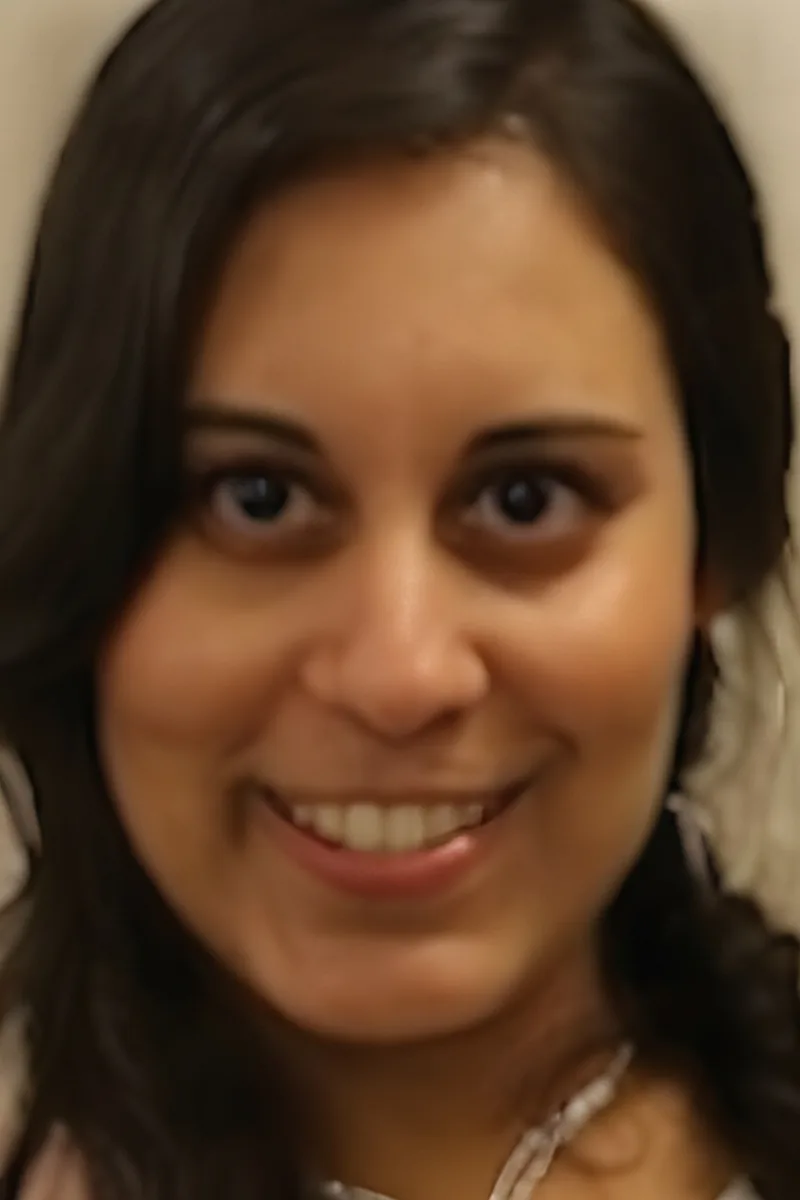
Two years as an Organic Chemistry Lab TA at Johns Hopkins means Maha spent countless hours teaching students to visualize three-dimensional molecular structures — a skill that maps directly onto reasoning about shapes, spatial relationships, and symmetry in geometry. She's especially effective at unpacking proof logic, since organic chemistry requires the same kind of step-by-step deductive reasoning that drives two-column and paragraph proofs. Rated 5.0 by students.
Proofs are usually the make-or-break moment in Geometry, and Adam's philosophy degree gives him a natural edge here — constructing and evaluating formal arguments is literally what he studied at Denison. He brings that same logical rigor to triangle congruence, parallel line theorems, and coordinate geometry problems, making the "why" behind each step explicit.
A political science major learns to build airtight arguments from premises to conclusions — which is exactly what a two-column proof demands. Sebastian applies that same logical structure to geometry, breaking down problems involving angle relationships, triangle congruence, and parallel line reasoning into clear, sequential steps. His 1580 SAT score speaks to the quantitative sharpness he brings to the measurement and calculation side of the subject as well.
Proofs are usually the first time a geometry student has to explain *why* something is true, not just calculate an answer. Vansh teaches proof-writing as a logical argument rather than a mysterious format, walking through triangle congruence, parallel-line theorems, and circle properties with enough patience to make the reasoning feel natural.
Competition math taught Tracy to look at a geometry figure and immediately spot the relationships that matter — which triangles are similar, where auxiliary lines unlock a problem, how a single angle chase can crack open a complicated diagram. That instinct, sharpened through years of math competitions and a 36 ACT, carries over directly when she teaches students to approach proofs and problem-solving with strategy instead of panic. Rated 4.9 by students.
Most geometry struggles come down to proofs: students can identify that two triangles look congruent but can't articulate why in a logical chain. Sam's engineering and statistics background trained him in rigorous argumentation, and he applies that same structured thinking to walk through two-column and paragraph proofs until the reasoning clicks.
Proofs are usually where geometry students panic — the logic feels nothing like the computation they're used to. Rachel spent her Dartmouth engineering program constructing logical arguments from axioms and constraints, so she's comfortable walking students through how to set up two-column and paragraph proofs while also tackling area, volume, and triangle congruence.
Proofs are usually where geometry students hit a wall — the shift from calculating answers to constructing logical arguments feels like a completely different subject. Tom's background in American Studies, which is essentially built on evidence-based argumentation, gives him a unique angle on teaching students to chain geometric theorems into airtight reasoning. He also covers the computational side, from triangle congruence to circle theorems, with the same step-by-step precision.
Cornell's biological engineering program threw Mary into years of modeling physical systems — fluid flow through channels, stress on biomaterials, device dimensions — all of which demand precise geometric reasoning about shapes, cross-sections, and spatial relationships. She brings that practical fluency to topics like circle theorems, properties of quadrilaterals, and area-volume calculations, making abstract definitions feel grounded in real measurement. Rated 5.0 by students.
Proofs are usually the first place Geometry students feel lost, because the subject suddenly asks them to justify every step rather than just compute an answer. Christopher teaches students to treat each proof like an engineering problem: identify what's given, figure out what's needed, and build a logical bridge between the two using congruence, similarity, and angle relationships. His structured approach has earned him a 4.8 rating from students.
Theater training builds a surprising skill for geometry: Amber's background in staging and set design means she's used to thinking about space, angles, and spatial relationships in practical, visual terms — which translates directly to topics like transformations, reflections, and symmetry. She teaches students to sketch and annotate diagrams before jumping into calculations, turning abstract problems into something they can actually see and reason through. Rated 5.0 by students.
Dennis's research into quasicrystals and aperiodic tilings — like Penrose tilings of rhombuses — is geometry at its most fascinating, exploring how shapes fit together under unusual symmetry rules. That deep spatial intuition carries directly into high school Geometry, where he teaches proofs, congruence, and circle theorems by encouraging students to reason visually before writing anything formal.
A political science degree from the University of Chicago means Asta spent four years constructing airtight arguments from premises to conclusions — exactly the skill that makes geometric proofs click. She applies that structured reasoning to two-column proofs and logical chains involving congruence, triangle properties, and circle theorems, treating each one like a case to be built rather than a formula to memorize. Rated 5.0 by students.
Proofs are usually where geometry students panic, so Samantha teaches them as structured arguments rather than mysterious rituals — each statement earns its place with a reason. She also digs into the spatial reasoning behind congruence, similarity, and circle theorems, connecting diagrams to the algebra students already know. Her Duke science background means she's comfortable making abstract relationships concrete.
Proofs are usually the first place geometry students get stuck, because suddenly math requires constructing an argument instead of computing an answer. Samuel's background in algorithmic and combinatorial thinking — he served as a teaching assistant for a discrete math course — translates directly to teaching logical reasoning, from triangle congruence proofs to circle theorems.
Testimonials
Because the right Geometry tutor makes all the difference.
Average Session Rating – Based on 3.4M Learner Ratings
Practice Geometry
Free practice tests, flashcards, and AI tutoring for Geometry
Other Washington Tutors
Related Math Tutors in Washington
Frequently Asked Questions
Many students in Washington, DC find the transition from algebra to geometry challenging because it requires both visual reasoning and logical proof-writing. The most common areas where students need extra support include:
- Geometric proofs – organizing logical arguments and understanding why each step matters
- Coordinate geometry – connecting visual graphs to algebraic equations
- Word problems – translating real-world scenarios into geometric models
- Spatial reasoning – visualizing 3D objects and rotations
Personalized tutoring helps students see the connections between these concepts rather than treating them as isolated topics.
Proof-writing is one of the biggest shifts in geometry, and many students struggle with organizing their thinking logically. Expert tutors work with students to break proofs into manageable steps by:
- Teaching how to identify what's given and what needs to be proven
- Building a toolkit of common proof strategies (SSS, SAS, ASA, etc.)
- Practicing how to justify each statement with a reason
- Working through proofs at different difficulty levels to build confidence
With one-on-one instruction, students can ask questions about *why* a proof works, not just memorize steps, which deepens their understanding for harder problems later.
Not necessarily – success in algebra doesn't automatically transfer to geometry because it requires a different type of thinking. Algebra focuses on procedures and equations, while geometry emphasizes visual reasoning, spatial understanding, and logical proof-writing. Some students who excel at algebra actually find geometry harder because it feels completely different.
A tutor can assess your student's specific geometry skills and help build confidence with the visual and logical components that may be new. Even strong algebra students often benefit from support during this transition to strengthen their conceptual understanding.
Varsity Tutors connects you with expert geometry tutors in Washington, DC who can personalize their approach to your student's learning style and specific challenges. When you work with Varsity Tutors, you can discuss:
- Your student's current geometry curriculum and textbook
- Specific topics where they need the most help (proofs, coordinates, word problems, etc.)
- Whether they learn better visually or through step-by-step explanation
- Your student's schedule and whether they prefer regular sessions or help before a big test
Tutors who specialize in geometry can diagnose exactly where understanding breaks down and build a customized plan to help your student succeed.
Yes. Many students develop math anxiety in geometry because it feels unfamiliar and because proofs can feel intimidating. With personalized one-on-one instruction, tutors can work at your student's pace, answer questions without judgment, and help them see that geometry follows logical patterns they *can* understand.
Building small wins – solving one proof successfully, mastering a challenging topic, improving a test grade – rebuilds confidence. When students understand *why* geometry works, rather than just following steps, anxiety often decreases naturally. Regular tutoring sessions also create a safe space to practice and ask questions before classwork or exams.
In Washington, DC's diverse school system with 71 districts, students use different geometry curricula and assessments. The best preparation strategy depends on your student's specific curriculum, but generally includes:
- Reviewing all major topics (angles, triangles, circles, area/volume, coordinate geometry, proofs)
- Practicing multi-step word problems and real-world applications
- Taking full-length practice tests under timed conditions
- Focusing on weak areas discovered through practice tests
An expert tutor can target the exact standards and problem types your student will encounter, prioritize what to review based on time remaining, and build test-taking strategies for geometry-specific challenges like proof questions.
The ideal frequency depends on your student's needs, timeline, and goals. Students who are significantly behind may benefit from weekly sessions to build foundational understanding, while those preparing for a specific test might need intensive sessions for a few weeks. For ongoing support, many students see improvement with biweekly sessions.
What matters most is consistency and focused practice between sessions. Varsity Tutors can help you determine the right schedule based on your student's current level, the specific geometry topics they're struggling with, and whether there's an upcoming test or deadline. The tutor will also recommend homework practice and resources to maximize progress.
Let’s find your perfect tutor
Answer a few quick questions. We’ll recommend the right plan and match you with a top 5% tutor.