Award-Winning Calculus Tutors
serving Concord, NC
Calculus
Tutors in Concord
Private 1-on-1 tutoring, weekly live classes for academic support, test prep & enrichment, practice tests and diagnostics, and more to elevate grades and test scores.
Based on 3.4M Learner Ratings
UniversitiesSchools & Universities
DeliveredHours Delivered
ProficiencyGrowth in Proficiency
Who needs tutoring?
No obligation. Takes ~1 minute.
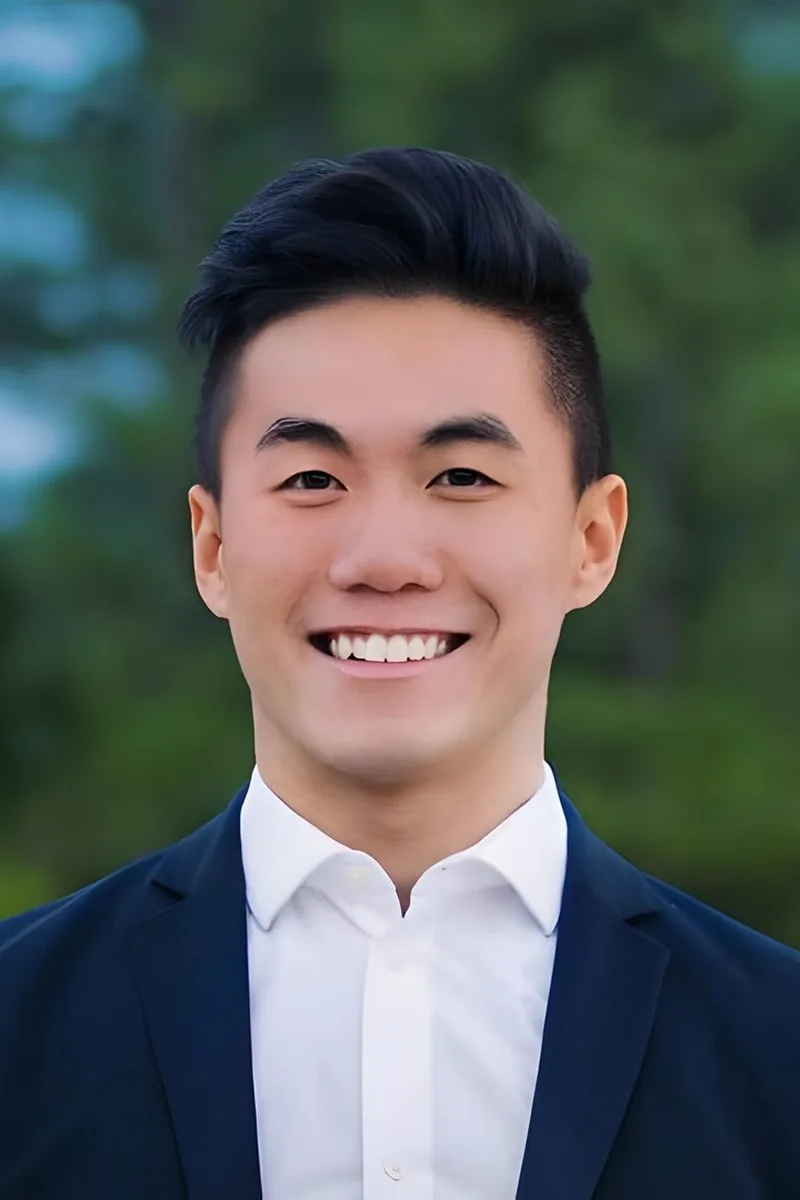
Mechanical engineering grad work is essentially applied calculus — Aaron uses derivatives to model thermal systems, integrals to analyze fluid flow, and differential equations to predict how structures respond to stress, every single day. That daily fluency means he can teach integration techniques or the chain rule by connecting them to problems where the math is doing real physical work. Rated 5.0 by students.
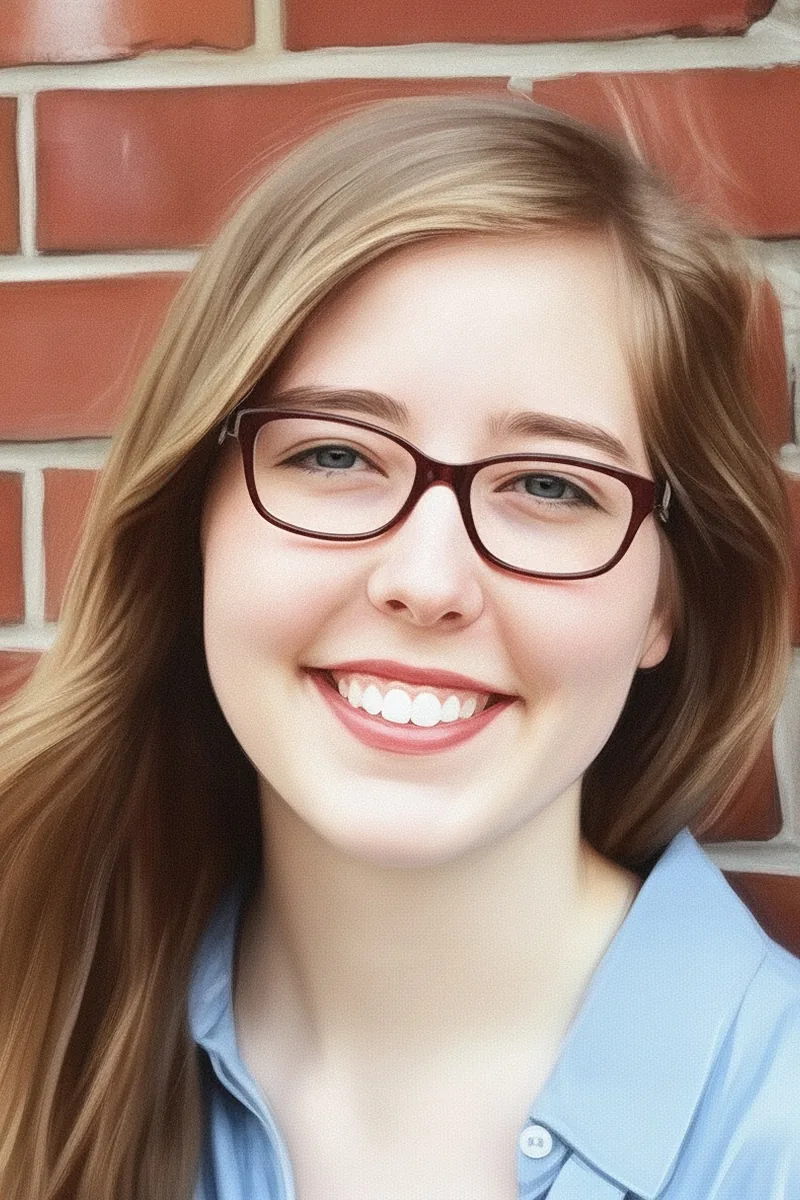
Frances's psychology background at Duke involved statistical modeling and data analysis — work that builds directly on the calculus concepts of rates of change and area under a curve. She teaches early calculus by connecting derivatives and integrals to the kind of quantitative reasoning she used in research, making notation feel purposeful rather than arbitrary. Rated 4.6 by students.
Pre-med coursework threw Sydny into calculus with real stakes — understanding rates of change in drug concentration curves, modeling exponential decay in pharmacokinetics, and applying integration to biological systems. She breaks down limits, derivatives, and integrals by connecting each concept to a concrete problem rather than leaving students adrift in abstraction.
Biomedical engineering at Duke means Eric lives in calculus daily — from modeling drug diffusion rates to analyzing physiological signals, derivatives and integrals are tools he actually uses. He breaks down concepts like the chain rule, related rates, and integration techniques by connecting them to real problems where the math matters.
Environmental studies involves a surprising amount of calculus — modeling pollutant dispersion rates, analyzing resource depletion curves, and optimizing conservation strategies all require fluency with derivatives and integrals. Simon's background in that field, combined with the quantitative reasoning behind his 1590 SAT, means he can ground abstract calculus concepts in systems where rates of change describe something tangible. Rated 5.0 by students.
Doing biomedical research at Duke Medical Center means Callie uses calculus daily — modeling tumor growth rates, analyzing change over time, interpreting area under curves in experimental data. She teaches derivatives and integrals by grounding them in what they actually measure, which makes the chain rule and integration techniques feel purposeful rather than mechanical.
History and religious studies don't scream calculus, but Bethany's 1450 SAT shows she's comfortable with quantitative reasoning, and her project-based teaching style — building understanding through concrete examples rather than abstract drill — adapts well to early calculus concepts like limits and derivative interpretation. She approaches new notation the way she'd approach a primary source: breaking it apart piece by piece until the underlying logic becomes clear. Rated 5.0 by students.
From limits and derivatives through integration techniques, calculus rewards students who understand *why* a method works — not just when to apply it. Florence's physics minor at Duke means she regularly uses calculus to solve real problems in mechanics and electromagnetism, so she can show students what these abstractions actually describe. She holds a 5.0 rating.
Engineering students don't just take calculus — they live in it, and Natalie's civil engineering track at Duke means she's applying derivatives and integrals to real structural problems like load distribution, fluid flow, and stress analysis. That daily fluency with the material lets her teach concepts like related rates or integration techniques as tools with obvious purpose, not abstract exercises. Her 35 ACT composite confirms the quantitative chops behind that engineering lens.
Studying computer science and physics at Duke means Bryce uses calculus daily — whether it's computing gradients for optimization algorithms or modeling motion in classical mechanics. That dual exposure lets him teach concepts like derivatives and integration techniques through the problem-solving lens of someone who actually depends on them, not just someone who passed the course. His 35 ACT composite confirms the quantitative chops to back it up.
Honestly, calculus is a stretch from Alex's religion and theology background — but his 5.0 tutoring rating across 27 subjects suggests he knows how to break down unfamiliar material and make it accessible. His approach leans on the study skills and structured reasoning side, walking through the logic of limits and basic differentiation step by step so the concepts build on each other rather than feeling like disconnected rules.
Neuroscience coursework doesn't just touch calculus — it lives in it, from modeling action potential propagation to quantifying synaptic transmission rates, and Julie's BS in the field means she's solved these problems firsthand rather than in the abstract. Her 1480 SAT confirms sharp quantitative chops, and she teaches derivatives and integrals by connecting each concept to the real systems where rates of change actually matter. Rated 5.0 by students.
Growing up in Rwanda and Kenya, Caleb taught himself mathematics long before he had access to formal schooling — an experience that gave him an unusually clear sense of how calculus concepts like limits and derivatives build from simpler ideas, because he had to construct that progression on his own. Now studying social sciences at Harvard, he lists calculus among his most-tutored and most-loved subjects, bringing a 35 ACT composite and genuine enthusiasm for walking through integration techniques and application problems step by step.
Studying medical sociology at Duke with plans for med school means Zhong is heading straight into territory where calculus matters — epidemiological modeling, dosage curves, and the quantitative reasoning that underpins public health research. A 1590 SAT confirms he has serious mathematical chops, and his approach to calculus leans on connecting the mechanics of derivatives and integration to the real-world rate problems he'll soon encounter in clinical science.
I am a freshman at Vanderbilt University currently pursuing a B.S. in Biochemistry. My inquisitive nature has fostered a love for mathematics, the natural sciences, and how they interact to produce the world we experience every day. This extends to my teaching strategy, where I emphasize the importance of conceptual understanding rather than pure memorization of equations and steps. My recent experience in a wide variety of Advanced Placement courses lends me insight to recent changes in course objectives and exam formatting.
Limits, derivatives, and integrals each introduce a fundamentally new way of thinking about functions, and rushing past any one of them creates problems later. Taariq earned his math degree at Duke and brings that depth to calculus sessions, unpacking the reasoning behind the chain rule or Riemann sums so students can handle unfamiliar problems on their own. He's rated 4.9 across his students.
Years of applying calculus in biochemistry and medical coursework at Duke gave Tammy a concrete sense of what derivatives and integrals actually mean — rate of drug absorption, area under a concentration curve, modeling growth. She teaches the chain rule, integration techniques, and series convergence by tying each back to problems that have real stakes. Her 5.0 rating speaks to how well that approach lands.
Limits, derivatives, and integrals each introduce a new way of thinking about change, and students who rush past the conceptual layer tend to struggle when problems get layered. Alyssa approaches calculus by making sure each idea — what a derivative actually represents, why the chain rule works — is genuinely understood before moving to computation.
Theology graduate work is surprisingly calculus-adjacent — Gregory's Master of Divinity involved the kind of rigorous logical argumentation and sequential reasoning that maps well onto understanding why a limit behaves the way it does or how the chain rule builds from simpler derivative principles. His teaching across math and science subjects means he can walk through early calculus concepts methodically, treating each new rule as an argument that needs to hold up under scrutiny. Rated 5.0 by students.
Studying economics at Duke means Devanshi uses calculus constantly — optimization problems, marginal analysis, and modeling how variables shift in response to each other are baked into her coursework. A 35 ACT composite backs up that quantitative fluency, and she teaches derivatives and integrals by connecting the mechanics to the economic intuition behind them, so the rules feel purposeful rather than arbitrary.
Two degrees in chemical and biomolecular engineering mean Earnest didn't just take calculus — he used it daily, from modeling heat transfer rates to solving mass balance differential equations across reactor systems. That applied fluency lets him teach derivatives, integrals, and series by connecting each concept to the physical intuition behind it, so the math feels like a tool rather than an abstraction.
A PhD in Literature might not scream calculus, but Renee's years directing tutoring programs across subjects — math included — mean she's spent real time walking students through the conceptual hurdles that make early calculus feel impossible. She's especially good at translating dense notation into plain English, treating a derivative definition the way she'd treat a difficult passage: slowing down, identifying what each piece does, and rebuilding understanding from there. Rated 4.9 by students.
History and religious studies at Duke and Yale aren't a typical calculus background, but Justin's economics minor meant working through the quantitative modeling side — marginal analysis, optimization problems, and the derivative logic that underpins economic reasoning. He breaks down early calculus concepts by connecting them to that analytical framework, making the jump from abstract notation to structured problem-solving feel less intimidating. Rated 5.0 by students.
Having taught math before pursuing a Master's in Data Science at Duke, Eric has used calculus on both sides — first breaking down derivatives and integrals for students, then applying them daily in gradient descent, optimization algorithms, and statistical modeling. That dual perspective means he can explain not just how to take a derivative but exactly where that skill lands in real-world data problems. Rated 5.0 by students.
In respiratory therapy and physician assistant training, calculus shows up in unexpected places — ventilator flow-volume curves are essentially integrals, and drug clearance rates depend on derivatives. Emmanuel draws on that clinical math fluency to teach concepts like related rates and accumulation functions in ways that ground the abstraction in something tangible. He holds a 5.0 rating from students.
Having taught calculus to engineering undergrads at UT Tyler, Prakash knows exactly where students stumble — integration techniques that require choosing the right method, limit definitions that feel abstract, and series convergence tests that blur together. He ties each concept to real engineering applications so the math feels purposeful rather than arbitrary.
Economics coursework leans heavily on calculus — marginal analysis, optimization problems, and interpreting how cost and revenue functions behave all require fluency with derivatives. Ify tackles those concepts from the inside, connecting the rules of differentiation to the economic models where they actually get used, which gives the math a purpose students can hold onto. Rated 5.0 by students.
Physics undergrad at Penn plus a PhD in Biomedical Engineering at Cornell means Elizabeth didn't just take calculus — she used it daily, from modeling tumor growth kinetics in gene therapy research to solving the differential equations that govern drug delivery systems. That hands-on fluency lets her teach integration techniques and multivariable concepts by connecting them to the physical problems they were invented to solve, not just the textbook exercises that strip away context.
An English degree and graduate work in religious studies might not scream calculus, but Katherine's tutoring roster includes both algebra and math alongside her humanities subjects, which means she's comfortable bridging the gap between algebraic reasoning and the conceptual leaps calculus demands. She's especially effective at translating dense notation into plain language — a skill sharpened by years of close reading and textual analysis — so that ideas like limits and rates of change make intuitive sense before the formulas pile up. Rated 5.0 by students.
Between a 34 ACT, a 1530 SAT, and a course load that spans math through pre-calculus and beyond, Alisha has the quantitative chops to back up her calculus tutoring — even with a BFA on her transcript. She zeroes in on the transition points that trip students up, like moving from average rate of change to instantaneous rate of change, making sure the conceptual shift lands before the derivative rules pile on.
Roger earned a 5 on the AP Calculus AB exam and has kept building on that foundation through college-level math at Duke. He's especially good at unpacking the conceptual leap from derivatives to integrals — the moment where many students lose the thread between rate of change and accumulation. His approach ties each new rule back to the graphical intuition behind it.
Jennifer's academic path runs through history, law, and education — not pure mathematics — so she's upfront that calculus is far from her deepest subject. Her M.Ed. in Curriculum and Instruction does mean she knows how to break down unfamiliar material into logical steps, and her experience tutoring math at multiple levels lets her support students working through early concepts like limits and basic differentiation with clear, structured explanations.
Biochemistry and medical school don't just use calculus — they depend on it, from modeling enzyme kinetics with Michaelis-Menten equations to calculating the area under drug concentration curves in pharmacology. Jordan's MD training means he's solved these problems under real clinical pressure, so he teaches integration and differentiation as tools with stakes attached, not abstract exercises. Rated 5.0 by students.
Lisa's published work and editorial background are in writing and the humanities, not mathematics, so she's transparent that calculus falls well outside her academic training. That said, her analytical rigor — sharpened through years of scholarly research and logical argumentation — gives her a structured way to break down the reasoning behind limits and early derivative concepts, treating each step like a claim that needs to be earned before moving forward.
Graduate-level test prep is Myles's wheelhouse — his GRE quantitative section required fluency with derivatives, rates of change, and function behavior that overlaps directly with calculus fundamentals. His political science and theology training built the kind of rigorous logical reasoning that makes unpacking the chain rule or integration by parts feel like constructing a careful argument. Rated 5.0 by students.
Isabel's coursework at UNC Chapel Hill spans math from pre-algebra through calculus, so she's walked the full path a student takes before hitting derivatives and integrals — and knows exactly where the conceptual gaps tend to hide. She's especially useful for students who need to shore up their algebra and function fluency while tackling new calculus material, since she can diagnose what's actually causing confusion rather than just re-explaining the current chapter.
Biomedical engineering at Duke means Molly uses calculus daily — from modeling drug delivery rates with differential equations to applying integrals in biomechanics problems. She breaks down concepts like the chain rule and related rates by tying them to real physical systems, which makes abstract notation click faster.
Tutoring at Sewanee's writing center meant Wallis spent years breaking complex, unfamiliar material into manageable steps for students across disciplines — a skill that transfers directly to unpacking calculus notation and the conceptual leap from algebra to limits. Her 1470 SAT confirms solid quantitative reasoning, and she approaches early derivative and rate-of-change problems with the same methodical, step-by-step clarity she brings to editing a thesis draft.
Quantitative policy analysis at Duke — the kind Matt is doing in his Master of Public Policy program — runs on calculus: modeling how tax revenue changes at the margin, optimizing resource allocation, interpreting rate-sensitive economic data. His undergraduate math degree means he isn't translating these tools from another field; he learned the theory first and then watched it drive real decisions. Rated 5.0 by students.
Biomedical engineering at the undergraduate level means Erinn didn't just take calculus — she used it daily, modeling fluid dynamics in biological systems, analyzing stress-strain curves, and applying differential equations to real tissue and device behavior. That engineering fluency lets her teach derivatives and integrals as tools with purpose, connecting each concept to the physical problems it was built to solve.
Testimonials
Because the right Calculus tutor makes all the difference.
Average Session Rating – Based on 3.4M Learner Ratings
Other Concord Tutors
Related Math Tutors in Concord
Frequently Asked Questions
Varsity Tutors matches Concord students with expert Calculus tutors for 1-on-1 instruction. We pair each student with a tutor based on their specific needs, learning style, and goals.
Whether you need homework help, exam prep, or want to get ahead, our Calculus tutors are ready to help.
Common challenges include gaps from earlier material, difficulty with specific concepts, and trouble applying learning to new problems. These issues can snowball quickly in Calculus.
A tutor identifies where you're stuck, fills in gaps, and provides targeted practice. The 1-on-1 format means you get help exactly where you need it.
Tutors work with your student's actual coursework—homework assignments, class notes, and upcoming tests. This keeps tutoring directly relevant to what's happening in the classroom.
When you share information about your student's school and curriculum, we can match you with a tutor who has relevant experience.
All tutors complete background checks, credential verification, and teaching evaluation. Many of our Calculus tutors hold advanced degrees or have years of teaching experience.
You can review tutor profiles to find someone with the right background for your student's level and needs.
Many students see improved grades within a few weeks, along with better understanding of Calculus concepts and more confidence tackling challenging material.
Tutors track progress and adjust their approach to ensure continued improvement.
Most students benefit from 1-2 sessions per week. More frequent sessions help if your student is significantly behind or has an important exam coming up.
Your tutor can recommend a schedule based on your student's specific situation and goals.
Tutoring is purchased in packages of hours, with rates varying by tutor experience. Varsity Tutors offers several options to fit different budgets and needs.
You can discuss pricing during your consultation to find what works best.
Your tutor will assess where your student is, discuss goals, and start working on priority areas. Most students bring current homework or upcoming test material to focus on.
By the end, you'll have a clear sense of how the tutor can help and a plan for moving forward.
Let’s find your perfect tutor
Answer a few quick questions. We’ll recommend the right plan and match you with a top 5% tutor.