Award-Winning History Tutors
serving Bremerton, WA
History
Tutors in Bremerton
Private 1-on-1 tutoring, weekly live classes for academic support, test prep & enrichment, practice tests and diagnostics, and more to elevate grades and test scores.
Based on 3.4M Learner Ratings
UniversitiesSchools & Universities
DeliveredHours Delivered
ProficiencyGrowth in Proficiency
Who needs tutoring?
No obligation. Takes ~1 minute.
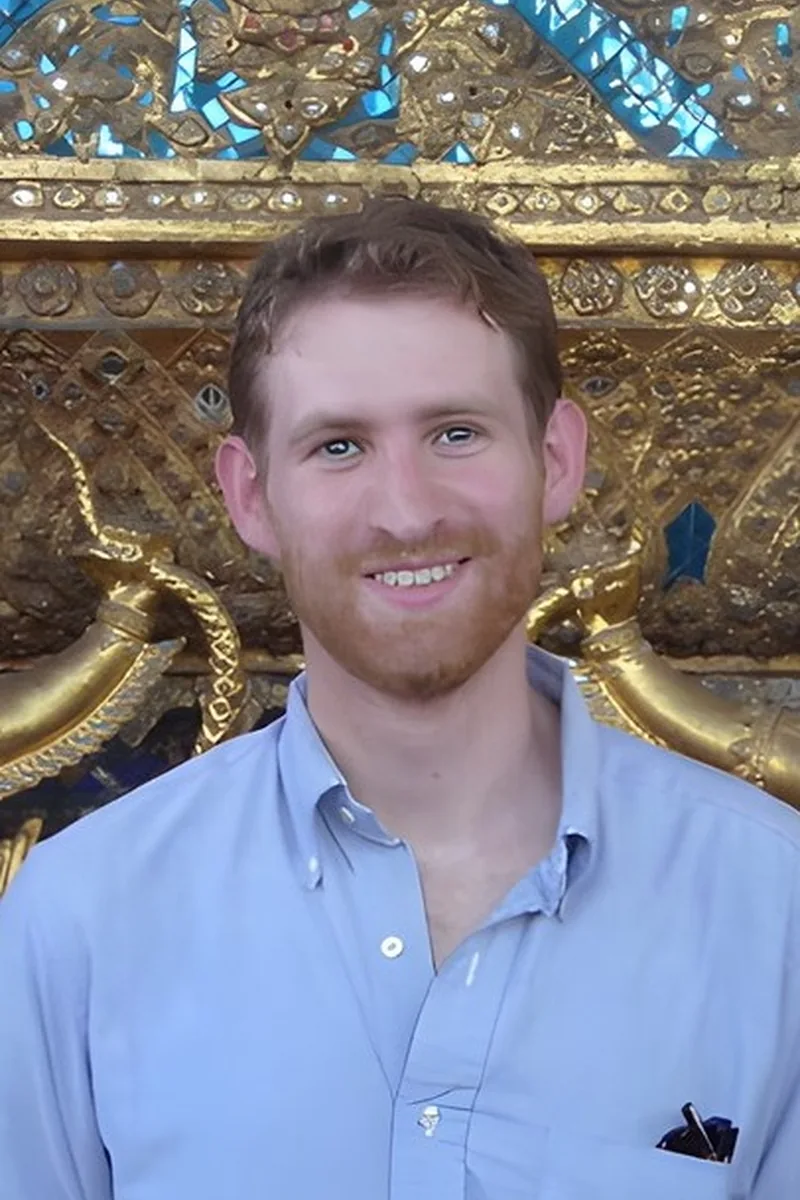
Strong historical writing depends on the same skills Alex teaches in English: constructing a thesis, evaluating sources, and building an argument with evidence. A PhD candidate who scored 1560 on the SAT, Alex approaches history as an exercise in analytical reading and persuasive writing — exactly the combination students need for document-based questions and research papers.
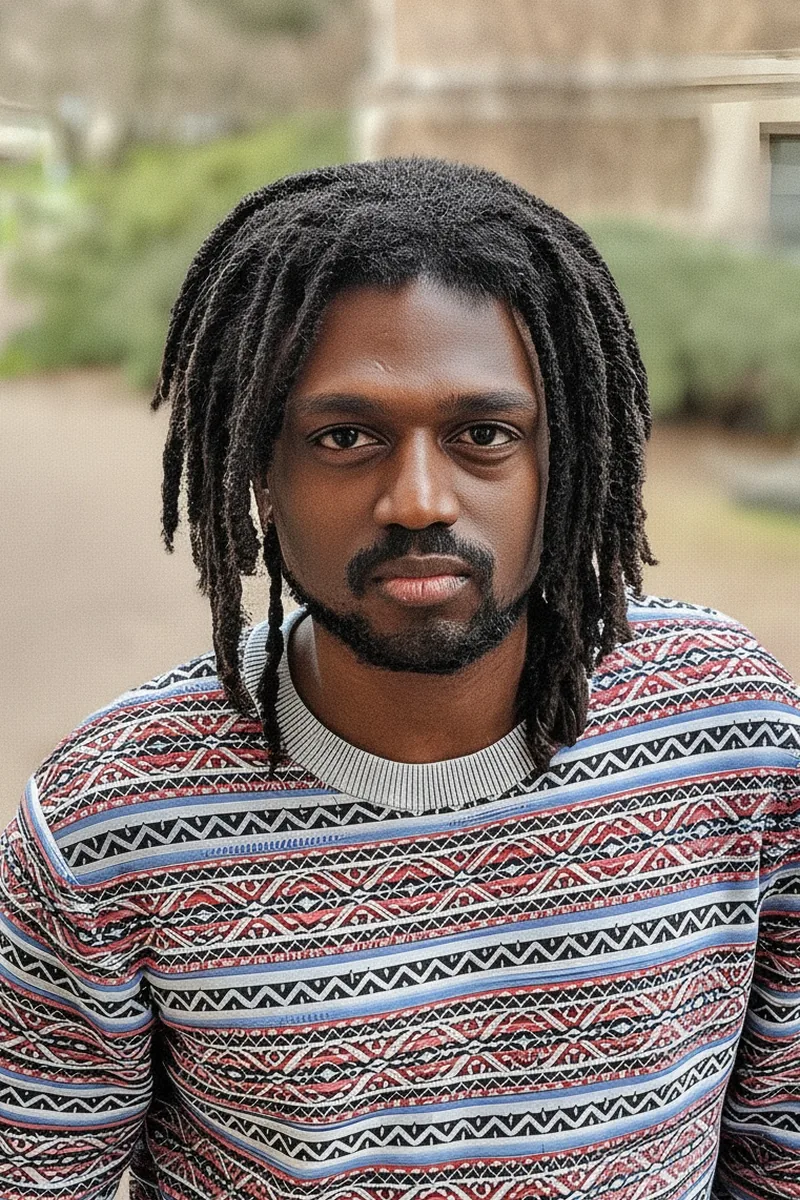
Najja isn't just teaching history — he's actively producing it as a PhD candidate at the University of Washington. That means students get someone who can explain how to analyze primary sources, construct a historiographical argument, and connect events across periods, whether the topic is the French Revolution or the Civil Rights Movement.
Though mathematics is his home field, Moayad's university teaching experience means he's comfortable breaking down cause-and-effect reasoning and helping students construct evidence-based arguments — skills that transfer directly to analyzing historical events and writing document-based responses. He treats history the way he treats applied math: context matters, and every claim needs support.
Engineering coursework at Johns Hopkins drills one thing relentlessly: reading complex technical material and extracting the argument buried inside it. Helen brings that same dissection skill to history, where she teaches students to pull apart primary sources and build cause-and-effect claims for DBQs and essay prompts instead of recounting events chronologically. Rated 4.8 by students.
Pre-med students read a staggering amount of dense material and learn to extract what matters — Alice brings that same discipline to history, where she teaches students to pull arguments from primary sources and build thesis-driven responses instead of reciting dates. Her essay editing background, honed through coaching applicants into schools like CalTech and Northwestern, gives her a sharp eye for the persuasive writing that history courses actually grade on.
An Art History degree from Yale trains you to read objects, images, and architecture as primary sources — to ask what a cathedral's design reveals about medieval power structures or what a propaganda poster tells you about political ideology. Moses brings that same visual and contextual analysis to broader history, teaching students to interpret not just texts but the material culture that shaped and reflected historical moments. Rated 5.0 by students.
Physics trains you to ask 'why does this system behave this way?' — and Cory brings that same causal reasoning to history, pushing students to trace how economic pressures, technological shifts, and political tensions interacted to produce specific outcomes. His conversational teaching style turns document analysis into a back-and-forth investigation rather than a lecture, which is especially effective for students who freeze up when faced with open-ended essay prompts. Rated 4.9 by students.
While English is Marie's primary discipline, strong history skills and strong reading skills are deeply intertwined — analyzing primary sources, evaluating an author's bias, and constructing evidence-based arguments. She brings her English teacher's eye for close reading and persuasive writing to historical texts, which is often exactly what students struggling in history class actually need.
Treating history as an argument rather than a list of dates changes how students engage with it. Maria teaches source analysis and evidence-based reasoning — skills sharpened by her quantitative training at UCLA, where interpreting data and constructing logical claims is second nature. She's especially effective at showing students how to connect economic forces to political events, drawing on her business economics background.
Studying history means evaluating competing accounts of the same event and figuring out which evidence actually supports which conclusion. Clare's MPhil in Philosophy gave her deep practice in exactly this kind of critical reasoning — assessing sources, identifying bias, and constructing arguments from incomplete information. She teaches students to treat historical writing as argumentation, not just chronology.
Econometrics training means Chica spent her undergraduate years building models that explain how populations, markets, and institutions behave over time — which is essentially what history asks students to do in essay form. She brings that quantitative instinct to document analysis and essay structure, teaching students to identify the economic and demographic pressures underneath political events rather than just recounting what happened. Rated 5.0 by students.
Strong history writing isn't about memorizing dates — it's about constructing an argument from evidence and understanding cause-and-effect across complex events. Kourtney's environmental science training gave her deep practice in exactly this kind of analytical thinking, tracing how political decisions, economic forces, and social movements interact over time. She teaches students to read sources critically and write essays that actually prove a claim.
Understanding history means building arguments from evidence, not memorizing dates. Xiansheng approaches the subject by teaching students to evaluate sources, identify cause-and-effect relationships, and write clear analytical responses — skills that transfer directly to document-based and free-response questions. His analytical training in the sciences adds a structured, evidence-first perspective to historical reasoning.
Strong history work depends less on memorizing dates than on constructing arguments from evidence — a skill Elizabeth sharpens constantly through her English program at George Fox University. She approaches historical writing the way she approaches literary analysis: by teaching students to read sources critically, identify an author's perspective, and build claims that hold up under scrutiny.
Public health is fundamentally a history subject — understanding how past epidemics, policy decisions, and social movements shaped the world we live in. Tsering uses that lens to teach students how to read primary sources critically, build cause-and-effect arguments, and see historical events as connected rather than isolated dates to memorize.
Substitute teaching across K-12 classrooms taught Angela something useful about history: younger students need storytelling to stay engaged, while older students need to learn how to argue with evidence. She bridges both instincts, teaching students to build claims around primary sources and historical context rather than just recalling facts. Her environmental science background also gives her a ready-made lens for topics like industrialization, westward expansion, and resource-driven conflicts.
A Political Economy degree from USC means Avalon studied history the way it's actually tested — through the interplay of government institutions, economic forces, and power structures rather than memorized dates. She teaches students to build arguments around those structural forces, which is exactly what DBQ prompts and essay exams reward. Rated 4.9 by students.
Jon approaches history as a subject built on cause-and-effect reasoning rather than rote memorization of dates. He teaches students to trace how political decisions, economic pressures, and cultural shifts connect across eras — the kind of thinking that turns a mediocre essay response into a sharp, evidence-driven argument.
Strong history performance comes down to reading like a skeptic — asking who wrote a source, why, and what they left out. Grant's English background sharpened exactly this kind of analytical reading, and he applies it to document-based questions, historiographical essays, and exam prep. He teaches students to build arguments from evidence rather than retell a chapter's narrative.
This isn't Madyson's core discipline, but her biochemistry training at Northeastern taught her how to read dense source material critically and build evidence-based arguments — skills that transfer directly to analyzing historical documents and writing DBQ-style responses. She's strongest when the assignment requires connecting cause and effect across complex events.
An electrical engineering degree doesn't scream history — but Daniel's training in systems thinking, where every component affects every other, gives him a practical way to teach students how interconnected forces like technology, economics, and politics drive historical change. He's especially useful for students who think in cause-and-effect chains but struggle to translate that logic into thesis-driven essays and document analysis.
I'm a current PhD student in the history department at Georgetown University who is also an experienced instructor with Varsity Tutors. As a recipient of several degrees, the most recent being a BA in history from Hillsdale College and a MA in Russian, East European, and Eurasian Studies from Stanford University, I have long sought to make teaching my profession. Meanwhile, as a volunteer grade school teacher and a tutor with this company, I have many years' experience helping students reach their full potential. I am capable of teaching students in many subjects, including reading, mathematics, test prep, Latin, and especially writing, history, and literature. In practice, I am comfortable adapting to different learning styles and specific student preferences. Outside of my academic and career endeavors, I enjoy cooking, reading, and listening to and making music.
Update: I completed a two-month full-time guest teacher assignment teaching World Languages Spanish to high school students (9th-12th) Spanish 1/2/3. By utilizing a student-centered learning approach, cultural competence, and equitable teaching, I support students with pedagogy rooted in inquiry, hypothesis, information gathering, problem-solving, and action. I encourage all students to adopt an open-minded approach, and provide support to gifted students, students with disabilities, English Language Learners, and Multilanguage Learners with equity. "Not everything that is faced can be changed, but nothing can be changed until it is faced." James Baldwin I am in my second year of grad school, pursuing a dual master's degree in K-8 Elementary Education and K-12 Special Education (Mild to Moderate Disabilities). With my education grad studies and BFA from the Rhode Island School of Design (RISD), I synthesize creativity and best practices in education to find creative ways of supporting learners. My pursuit and purpose is to guide with compassion and enthusiasm. I encourage students to take ownership of their learning. By promoting student agency, students empower themselves to achieve in academic, social, emotional, and behavioral development. As an ADHD adult, I enjoy working with ADHD students and adults experiencing anxiety + depression. What is effortful for our neurodivergent brains is also our superpower! In my career, I have lived and worked in NYC as an editorial photographer, actor, and dancer. I lived in Berlin and pursued performance art + music while honing my communications skills in digital art + copywriting in Marketing. In Los Angeles, I succeeded as a commercial and theatrical actor. My skill set is suited for collaboration with all students to support and develop their passion for learning, exploration, and critical thinking. I live in southeastern Washington State and teach in northeastern Oregon and southeastern Washington State public school districts. I support students in the following subjects: Elementary School Reading Elementary School Math AP English High School English Middle School English Middle School Math Digital Media & Graphic Design Fine Arts & Filmmaking Creative Writing Study Skills & Organization German 1/2 Spanish 1/2/3 Spanish Language Arts English Language Learners English Language Development Algebra 1/2 Special Education (all subjects) High School Math "We all have ability. The difference is how we use it." Stevie Wonder Thank you for reading! Ms. Anna C.
Studying history well means learning to read sources critically, construct arguments from evidence, and understand why interpretation matters as much as facts. Jeff spent his graduate years at UC Berkeley doing exactly that — earning an MA in history and teaching undergraduates how to think historically rather than just memorize dates. Whether the topic is ancient civilizations or the Cold War, he connects events to the larger questions that make history worth studying.
A sociology degree from Wesleyan and a PhD in Education mean Reid reads history the way a sociologist does — tracing how institutions, class structures, and cultural norms shaped the events that textbooks often present as inevitable. That lens is particularly effective for teaching students to write essays that explain social movements, policy shifts, and political upheavals through systemic causes rather than just individual actors. His 32 ACT reflects the kind of analytical reading and argumentation that history coursework consistently rewards.
Epidemiology is essentially detective work through history — tracing how wars, famines, trade routes, and political decisions created the conditions for pandemics and public health crises. Emily's MPH work at Yale in epidemiology and global health means she teaches history through those causal chains, showing students how to connect social, economic, and political forces into the kind of argument that earns top marks on essays and DBQs. Rated 5.0 by students.
Three finance degrees mean Matt instinctively reads history through the lens of money — who controlled it, how it moved, and what happened when it dried up. That financial literacy is particularly useful when students need to explain the economic pressures behind events like mercantilism, industrialization, or the 2008 crisis in essay form. His 1530 SAT underscores the analytical reading and writing skills that make historical arguments land.
Mimi's art history training at Dartmouth taught her to read history through objects — a propaganda poster, a cathedral floor plan, a photograph's framing — which makes her approach to the subject unusually vivid. She teaches students to analyze primary sources the way a museum educator would: examining context, audience, and purpose before drawing conclusions. This builds the kind of evidence-based reasoning that shows up in strong DBQ essays and class discussions alike.
Brittney approaches history the way a literature scholar would: by teaching students to read primary sources critically, identify rhetorical strategies in historical documents, and construct arguments grounded in evidence. Her Comparative Literature background at Princeton required deep engagement with historical and cultural contexts across multiple traditions. That cross-disciplinary lens makes her especially effective for document-based questions and historiographical essays.
A psychology degree from Duke reshapes how you approach history — Frances reads political movements, revolutions, and policy debates through the question of what people feared, wanted, and believed at the time, which is exactly the kind of analysis that earns high marks on essays and DBQs. Her magna cum laude honors and professional writing background mean she's equally sharp on the craft side, coaching students to build tight, thesis-driven arguments from primary source evidence.
A PhD in Biomedical Engineering might seem unrelated to history, but Andrew's dissertation work required him to trace how scientific ideas evolved across decades — understanding the political, economic, and cultural contexts that shaped research priorities. He applies that same contextual thinking to history tutoring, teaching students to build thesis-driven arguments grounded in specific evidence. Rated 4.9 by students.
A good history student doesn't just memorize dates — they read like a detective, asking who wrote a source, why, and what it leaves out. Meghan spent her Northwestern journalism career doing exactly that kind of critical analysis, and she now applies it to teaching students how to evaluate primary sources, trace cause-and-effect chains, and write evidence-based historical arguments.
Succeeding in history requires more than memorizing dates — it demands reading dense primary sources, constructing document-based arguments, and connecting causes to consequences across time periods. Sherry's UChicago education emphasized exactly this kind of analytical writing and close reading, and her experience teaching language arts at every level means she can coach students through the writing-heavy demands of history coursework.
Studying history is really about learning to argue with evidence — evaluating why sources disagree, what context shaped a document, and how to weigh competing interpretations. Brian treats historical analysis as a form of rigorous reasoning, the same skill set he honed studying economics and computer science at Caltech. He's particularly strong at teaching students to move from summarizing events to constructing their own interpretive claims.
A master's in social sciences and a bachelor's in French means Lauren spent years doing exactly what history courses demand — reading primary sources in their cultural context and building arguments about how societies change over time. She's particularly sharp on topics where French and European history overlap with broader social forces, like revolution, colonialism, and cultural exchange. Rated 5.0 by students.
Testimonials
Because the right History tutor makes all the difference.
Average Session Rating – Based on 3.4M Learner Ratings
Other Bremerton Tutors
Related Social Studies Tutors in Bremerton
Frequently Asked Questions
Varsity Tutors matches Bremerton students with expert History tutors for 1-on-1 instruction. We pair each student with a tutor based on their specific needs, learning style, and goals.
Whether you need homework help, exam prep, or want to get ahead, our History tutors are ready to help.
Common challenges include gaps from earlier material, difficulty with specific concepts, and trouble applying learning to new problems. These issues can snowball quickly in History.
A tutor identifies where you're stuck, fills in gaps, and provides targeted practice. The 1-on-1 format means you get help exactly where you need it.
Tutors work with your student's actual coursework—homework assignments, class notes, and upcoming tests. This keeps tutoring directly relevant to what's happening in the classroom.
When you share information about your student's school and curriculum, we can match you with a tutor who has relevant experience.
All tutors complete background checks, credential verification, and teaching evaluation. Many of our History tutors hold advanced degrees or have years of teaching experience.
You can review tutor profiles to find someone with the right background for your student's level and needs.
Many students see improved grades within a few weeks, along with better understanding of History concepts and more confidence tackling challenging material.
Tutors track progress and adjust their approach to ensure continued improvement.
Most students benefit from 1-2 sessions per week. More frequent sessions help if your student is significantly behind or has an important exam coming up.
Your tutor can recommend a schedule based on your student's specific situation and goals.
Tutoring is purchased in packages of hours, with rates varying by tutor experience. Varsity Tutors offers several options to fit different budgets and needs.
You can discuss pricing during your consultation to find what works best.
Your tutor will assess where your student is, discuss goals, and start working on priority areas. Most students bring current homework or upcoming test material to focus on.
By the end, you'll have a clear sense of how the tutor can help and a plan for moving forward.
Let’s find your perfect tutor
Answer a few quick questions. We’ll recommend the right plan and match you with a top 5% tutor.