Award-Winning AP Human Geography Tutors
serving Chesapeake, VA
AP Human Geography
Tutors in Chesapeake
Private 1-on-1 tutoring, weekly live classes for academic support, test prep & enrichment, practice tests and diagnostics, and more to elevate grades and test scores.
Based on 3.4M Learner Ratings
UniversitiesSchools & Universities
DeliveredHours Delivered
ProficiencyGrowth in Proficiency
Who needs tutoring?
No obligation. Takes ~1 minute.

I am a graduate of The University of Colorado, Boulder and Harvard Kennedy School. I received my Bachelor of Arts in Economics and my Master in Public Policy with a focus on international and global affairs. Since graduation, I have worked in investment banking and management consulting, though I also have worked on government relations. While I tutor a broad range of subjects, I am most passionate about History, English Literature, and Math (namely algebra and pre-calc). In my experience helping students prepare for Standardized Tests, I like to focus on the writing and math assessments, as those tend to be challenging to many students. I believe in ensuring students are able to think independently and have the confidence to understand the material. I believe the subjects I tutor are necessary for students to succeed and I want to impart what I know to students. In my spare time, I enjoy reading about history and geopolitics, hiking, and writing.
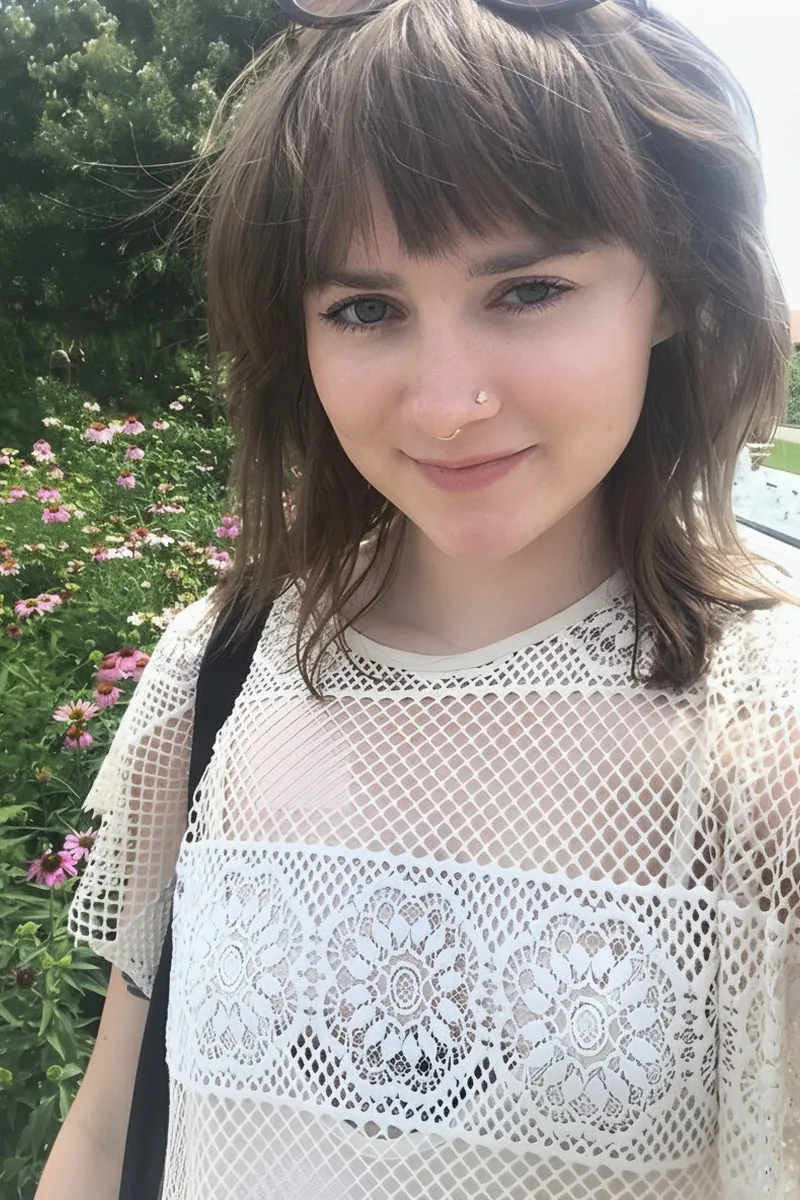
Courtney's French Language and Literature degree means she spent years studying how language, colonialism, and cultural identity intersect across Francophone regions — from West Africa to the Caribbean to Quebec — which maps neatly onto AP Human Geography's units on cultural diffusion, political boundaries, and language patterns. As a freelance writer, she also brings practical clarity to FRQ responses, teaching students to construct tight geographic arguments instead of listing vocabulary. Rated 5.0 by students.
I am a sophomore at Columbia University, studying political science and philosophy. I often like to joke that teaching runs in my blood I come from a family of teachers who instilled in me the passion to help others learn. Since I could grasp concepts I learned in school, I've always gone out of my way to help my fellow classmate. As I got older, that became formalized tutoring through school organizations and I eventually worked for the New York City Department of Education. There, I helped students with their standardized testing for the state assessments and the SAT. I love teaching math because I feel it's the subject where I can gauge the strength of my students best. Math is such a versatile (though widely-hated) subject, where every unique learning style can always result in the same answer. I also get the most freedom when it comes to designing questions to help students grow and practicing alongside them easily the most fun part of a tutoring session with me. I'm never shy when it comes to tutoring anything else, though, whether it be any sort of history, literature, or government-related topic. My goal as a tutor is not all about teaching anything new to my students, but instead drawing out the skills they already have.
UCLA's International Development Studies curriculum puts Claudia right in the middle of the global migration, urbanization, and political boundary questions that AP Human Geography builds its units around — she's studying these processes academically while tutoring students through them on the exam. Her work at UCLA's Writing Center also sharpens a skill most AP Human Geo tutors overlook: teaching students to construct tight, evidence-driven FRQ responses that connect models like Rostow's stages or the Burgess concentric zone theory to stimulus material in a few clear sentences.
A Spanish degree builds the kind of cross-cultural literacy that pays off in AP Human Geography — Sydney has spent years studying how language, identity, and colonial history intersect across regions, which maps directly onto units covering cultural diffusion, language families, and political boundaries. She's also a strong writer (rated 4.9 by students), which she channels into coaching FRQ responses where students need to connect geographic models to stimulus material with clear, structured arguments.
Victoria's U.S. History degree grounds her in the colonialism, westward expansion, and immigration narratives that feed directly into AP Human Geography's units on political organization, migration, and cultural landscapes. She teaches students to trace how historical forces — like industrialization or imperialism — produced the spatial patterns and boundary disputes the exam actually asks about, turning timeline knowledge into geographic reasoning. Rated 4.8 by students.
Population pyramids, the Demographic Transition Model, spatial diffusion — AP Human Geography throws a lot of vocabulary at students and expects them to apply it to real-world scenarios on the FRQs. Liraz teaches students to think geographically, connecting concepts like urbanization patterns and cultural landscapes to places they already know about.
Biology might seem unrelated to AP Human Geography, but Victoria's coursework in human biology at Dartmouth — population dynamics, ecology, resource distribution — overlaps directly with units on population, agriculture, and development models like the demographic transition. She's especially useful for students who struggle to connect scientific data to geographic arguments on stimulus-based questions, since reading charts and interpreting patterns is second nature to her. Rated 5.0 by students.
A Latin American History degree from Duke means Jean spent years studying the exact processes — colonialism, land reform, rural-to-urban migration, political boundary shifts — that AP Human Geography tests across nearly every unit. She unpacks models like Rostow's stages of development or the core-periphery framework using real Latin American case studies that make the content stick far better than textbook definitions alone. Her 1500 SAT also reflects the analytical reading skill that pays off on the exam's stimulus-based questions.
Teaching across math, science, English, and art in classroom settings gave Danielle an unusual cross-disciplinary habit — she naturally connects economic patterns to cultural shifts to environmental constraints, which is exactly the kind of thinking AP Human Geography's FRQs demand when students must link models like Rostow's development stages to real-world stimulus material. Her English literature training also sharpens the written argumentation side, where students often lose points by listing vocabulary instead of building a coherent geographic explanation. Rated 4.9 by students.
Double-majoring in Digital Journalism and Political Science means Alyssa spends her coursework analyzing how media, governments, and cultural forces shape communities — the same dynamics that drive AP Human Geography units on political organization, cultural patterns, and urbanization. She's strongest with the K-6 through middle school crowd, but her social studies background and knack for making dense vocabulary accessible translate well to walking through concepts like sovereignty, devolution, and supranationalism in ways that go beyond flashcard memorization.
Engineering students learn to think in systems — how inputs, feedback loops, and spatial constraints shape outcomes — which is exactly the reasoning AP Human Geography rewards when students tackle topics like urbanization models or agricultural land-use patterns. Kashish applies that analytical mindset to help break down stimulus-based questions, teaching students to extract geographic arguments from maps and data sets the way she'd approach a technical problem at Brown. Rated 5.0 by students.
Elena's Child Development studies at Vanderbilt give her a sharp understanding of how population dynamics, family structures, and cultural practices vary across regions — concepts that map directly onto AP Human Geography units covering population, migration, and cultural patterns. She pairs that with strong SAT performance (1540) and a knack for teaching younger students complex ideas in accessible ways, which translates well to breaking down dense models like the demographic transition or Zelinsky's migration framework for exam prep. Rated 5.0 by students.
The trickiest part of AP Human Geography for most students isn't the content — it's learning to write FRQ responses that explain geographic concepts rather than just describe them. Samantha's writing and essay-editing expertise makes her particularly sharp at teaching students how to structure those responses, connecting models like the gravity model or Rostow's stages to specific evidence. Rated 5.0 by students.
Testimonials
Because the right AP Human Geography tutor makes all the difference.
Average Session Rating – Based on 3.4M Learner Ratings
Practice AP Human Geography
Free practice tests, flashcards, and AI tutoring for AP Human Geography
Other Chesapeake Tutors
Related Social Studies Tutors in Chesapeake
Frequently Asked Questions
Varsity Tutors matches Chesapeake students with expert AP Human Geography tutors for 1-on-1 instruction. We pair each student with a tutor based on their specific needs, learning style, and goals.
Whether you need homework help, exam prep, or want to get ahead, our AP Human Geography tutors are ready to help.
Common challenges include gaps from earlier material, difficulty with specific concepts, and trouble applying learning to new problems. These issues can snowball quickly in AP Human Geography.
A tutor identifies where you're stuck, fills in gaps, and provides targeted practice. The 1-on-1 format means you get help exactly where you need it.
Tutors work with your student's actual coursework—homework assignments, class notes, and upcoming tests. This keeps tutoring directly relevant to what's happening in the classroom.
When you share information about your student's school and curriculum, we can match you with a tutor who has relevant experience.
All tutors complete background checks, credential verification, and teaching evaluation. Many of our AP Human Geography tutors hold advanced degrees or have years of teaching experience.
You can review tutor profiles to find someone with the right background for your student's level and needs.
Many students see improved grades within a few weeks, along with better understanding of AP Human Geography concepts and more confidence tackling challenging material.
Tutors track progress and adjust their approach to ensure continued improvement.
Most students benefit from 1-2 sessions per week. More frequent sessions help if your student is significantly behind or has an important exam coming up.
Your tutor can recommend a schedule based on your student's specific situation and goals.
Tutoring is purchased in packages of hours, with rates varying by tutor experience. Varsity Tutors offers several options to fit different budgets and needs.
You can discuss pricing during your consultation to find what works best.
Your tutor will assess where your student is, discuss goals, and start working on priority areas. Most students bring current homework or upcoming test material to focus on.
By the end, you'll have a clear sense of how the tutor can help and a plan for moving forward.
Let’s find your perfect tutor
Answer a few quick questions. We’ll recommend the right plan and match you with a top 5% tutor.