Award-Winning AP Psychology Tutors
serving Killeen, TX
AP Psychology
Tutors in Killeen
Private 1-on-1 tutoring, weekly live classes for academic support, test prep & enrichment, practice tests and diagnostics, and more to elevate grades and test scores.
Based on 3.4M Learner Ratings
UniversitiesSchools & Universities
DeliveredHours Delivered
ProficiencyGrowth in Proficiency
Who needs tutoring?
No obligation. Takes ~1 minute.
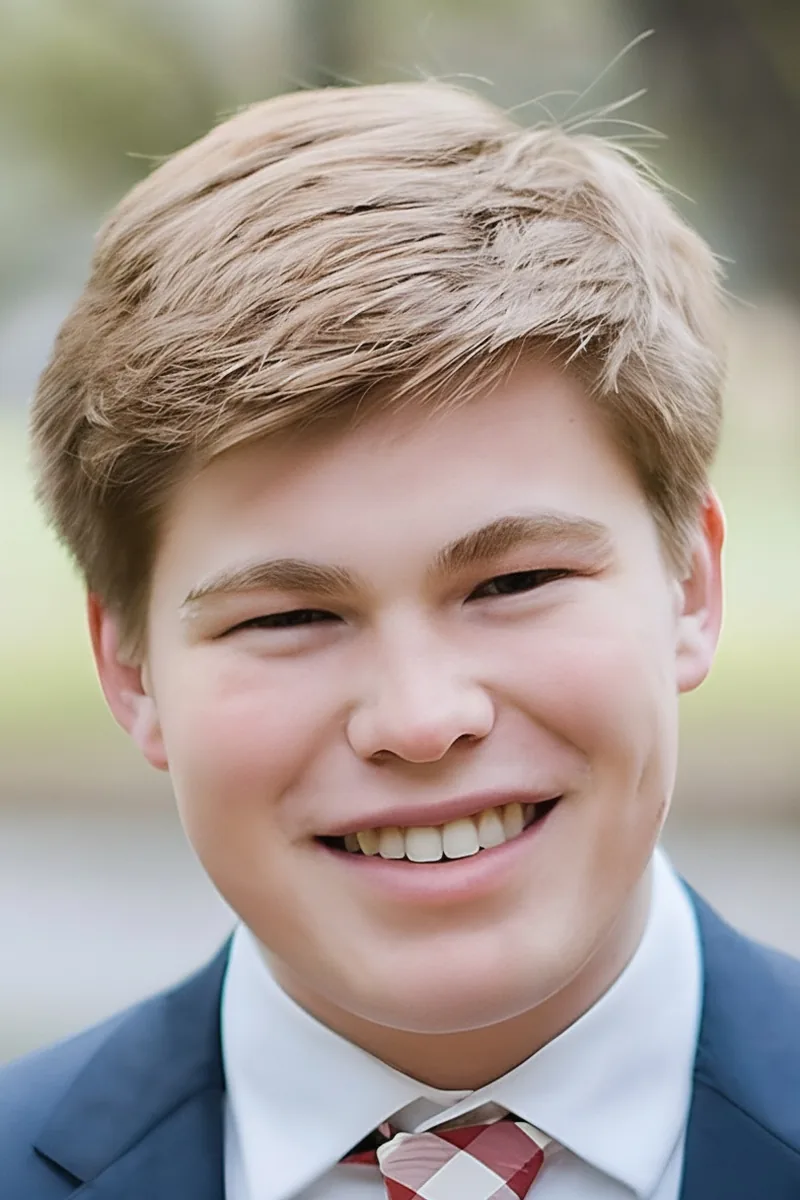
Cognitive science at Rice meant Adam studied the AP Psych curriculum from the inside out — perception, memory, language processing, and the neural underpinnings of behavior were core coursework, not elective reading. That training makes him especially sharp on the cognition and biological bases units, where he connects concepts like dual-process theory and neural plasticity to the real research behind them rather than treating them as isolated vocabulary terms.

Studying cognitive science on a pre-med track at Rice, Natalie digs into the overlap between brain structure and behavior every day — exactly the territory AP Psych tests hardest. She's especially sharp on the cognitive and biological units, breaking down topics like memory models, perception, and states of consciousness in ways that go beyond vocabulary flashcards and into the kind of conceptual reasoning the exam's scoring rubrics actually reward.
Hi y'all! I hold my Master of Science in Psychology of Sport and my Bachelor of Science in both Psychology and Applied Human and Sport Physiology. I have many years of tutoring under my belt, working with people of all levels from elementary school through college in hard science subjects (Biology, Chemistry, and Mathematics), a few social sciences (History, Psychology, Economics), and language arts. When not tutoring, I love playing soccer and I even coach a youth team. I love encouraging students to learn, grow, and think critically for themselves.
Anuj earned his degree in psychology, so the AP Psych curriculum — from classical conditioning paradigms to the DSM's diagnostic categories — draws on material he studied firsthand rather than picked up from a prep book. He's especially effective at teaching students how to structure free-response answers that earn full credit by precisely defining terms and linking them to specific studies or scenarios. Rated 4.8 by students.
Ysatris earned her psychology degree with Magna Cum Laude honors from UIUC, so the AP Psych curriculum maps directly onto coursework she already aced — from developmental and social psychology to the statistical reasoning behind the research methods unit. Her Spanish fluency also gives her a practical edge when explaining cross-cultural psychology concepts in units where the exam pushes students beyond a single cultural lens.
Katherine's Special Education training at Baylor gave her a deep understanding of how different learners process and retain information — concepts like memory encoding, attention, and cognitive development that she studied as pedagogy but that show up directly as exam content in AP Psych's learning, cognition, and developmental units. Her AP Scholar with Honors award signals firsthand experience with how the College Board structures its exams, and she applies that to drilling students on the precise term-definition-application format the free-response section demands. Rated 4.9 by students.
A cognitive science degree is essentially half the AP Psychology curriculum come to life — neuroscience, perception, memory, learning theory, and research methods are topics Snipta studied in depth at UT Dallas. That firsthand knowledge of experimental design and biological bases of behavior makes the trickiest units on the AP exam feel concrete rather than abstract. Rated 5.0 by students.
Biochemistry gives Don a molecular-level understanding of neurotransmitters, neural signaling, and the genetics of behavior — the backbone of AP Psychology's biological bases unit — but his real edge is connecting that science to the rest of the curriculum, where concepts like stress physiology and sensation-perception become concrete rather than definitional. His 35 ACT and strong reading-writing background also sharpen his approach to the free-response section, where he coaches students to define terms precisely and apply them to scenario prompts without leaving points on the table.
Growing up as the go-to homework helper for her siblings gave Ana early practice in breaking down complex ideas for different learners — a skill she now applies to AP Psychology's terminology-heavy units like learning theory and states of consciousness. Her engineering training at Texas A&M also sharpens her approach to the research methods unit, where interpreting experimental designs and understanding variables comes naturally to someone who thinks in systems and data. Her AP Statistics teaching rounds out that quantitative edge when students hit statistical reasoning on the exam.
AP Psychology's free-response questions trip up students who know the concepts but can't articulate them clearly under time pressure. Binny pairs her psychology knowledge with a Master's-level command of written argumentation, teaching students to define terms precisely and apply them to scenarios in ways that earn full rubric points.
Teaching across biology, anatomy, physiology, and environmental science gives Devon a concrete grounding in the biological bases of behavior unit — neurons, neurotransmitters, brain regions, and the genetics of behavior aren't abstract vocabulary for someone who teaches those systems in other contexts every day. That science fluency carries into the rest of the AP Psych curriculum too, where she connects concepts like sensation-perception and memory to the underlying biology students already understand. Rated 4.9 by students.
Pursuing a psychology degree at UT Dallas means Daniel is learning the AP Psych material — from classical conditioning to abnormal psychology's diagnostic categories — in his own coursework right now, which gives him an unusually current grasp of what clicks and what confuses at the introductory level. His two years teaching adult ESL classes also sharpened a skill that matters more than content knowledge in this course: breaking down dense, jargon-heavy material for people encountering it for the first time. Rated 4.9 by students.
Aleksandar's degree is literally in Philosophy-Neuroscience-Psychology, which means AP Psych territory — from neural signaling and brain anatomy to cognitive biases and research methods — is his academic home turf. He breaks down the trickiest units (like sensation vs. perception, or the overlapping learning theories) by connecting them to the neuroscience that underlies them, giving students a deeper framework for the exam's application-heavy questions.
As a medical student with a biology degree, Brianna tackles AP Psychology's biological bases of behavior unit — neurotransmitters, brain anatomy, neural signaling — with the fluency of someone who studies those systems in a clinical context daily. That science backbone also strengthens her approach to the sensation-perception and states of consciousness units, where she grounds abstract psychological concepts in the physiology students can visualize. Rated 4.9 by students.
Neuroscience gives Megan a direct line into the AP Psych units that trip students up most — biological bases of behavior, sensation-perception, and the neurotransmitter-heavy material that feels like a foreign language without someone who actually studied those systems in depth. She also tutors organic chemistry, anatomy, and MCAT prep, so she's used to translating dense scientific content into something a student can hold onto during a timed exam. Rated 5.0 by students.
Kiara studied psychology at both the undergraduate and graduate level, so she doesn't just teach AP Psych vocabulary — she unpacks the experiments behind the terms. Whether it's breaking down Milgram's obedience studies, distinguishing classical from operant conditioning, or tracing how the DSM categorizes disorders, she ties each concept back to the research methods the AP exam actually tests.
Christa's Kinesiology degree required deep coursework in the same material that drives the AP Psychology exam — neuroscience, sensation and perception, developmental psychology, and research methods. She breaks down dense units like biological bases of behavior by connecting them to real examples from human movement science, making abstract processes like synaptic transmission and neural plasticity easier to visualize and retain.
A biology degree gives Suzy a leg up on the AP Psych units that trip up students who came for the social science and didn't expect hard science — neural anatomy, neurotransmitter systems, and the genetics of behavior all draw on knowledge she built through her undergraduate coursework. She also brings a cross-subject connector's instinct to the memorization-heavy units like learning theory and memory, teaching students to link terms to each other rather than study them in isolation. Rated 4.9 by students.
Having passed over 10 AP exams — including navigating the kind of terminology-dense, scenario-based content AP Psych is built on — Crystal knows what it takes to move from memorizing definitions to actually applying them under timed conditions. Her chemistry background gives her a concrete edge in the biological bases of behavior unit, where neurotransmitter chemistry and neural signaling demand real science literacy, not just flashcard recall. Rated 5.0 by students.
Wyatt's Classics degree involved heavy engagement with ancient philosophical and rhetorical traditions — Aristotle's theories of persuasion, Stoic models of emotion, early debates about nature versus nurture — which happen to be the intellectual roots of concepts AP Psychology students encounter in units like cognition, motivation, and social psychology. He leans on that background to give historical depth to theorists and frameworks that otherwise feel like disconnected vocabulary, and his strong writing instincts sharpen students' free-response answers where precise definition and application earn the points. Rated 5.0 by students.
Kayley's biology degree gives her a real advantage in the units most AP Psych students find driest — biological bases of behavior, sensation-perception, and the neuroscience woven through motivation and emotion — because she learned the underlying systems (neurons, neurotransmitters, brain anatomy) in depth, not as vocabulary to memorize for one exam. She also leans on her statistics background from AP Stats tutoring to demystify the research methods unit, where experimental design and data interpretation questions quietly make or break free-response scores.
A biochemistry background might seem like an unusual fit for AP Psychology, but Claire's deep knowledge of neuroscience, cellular signaling, and brain chemistry gives her a real edge in the biological bases of behavior unit — one of the most content-dense and heavily tested sections of the exam. She also connects that science fluency to units on sensation-perception and research methods, where students who think analytically tend to thrive. Rated 5.0 by students.
Gabriela didn't just take intro psych — she earned her degree in it, which means the AP curriculum from classical conditioning through the DSM classifications maps directly onto coursework she's already completed at the college level. Her additional background in neuroscience and neurobiology gives her a tangible way to explain the biological bases of behavior unit, breaking down neurotransmitter systems and brain regions with specificity that turns rote vocabulary into something students actually picture and remember.
Medical school immerses Evelyn in the very systems AP Psychology tests — neurotransmitter pathways, brain anatomy, stress physiology, abnormal behavior classifications — so she teaches the biological bases and abnormal psychology units with clinical specificity rather than flashcard-level definitions. Her experience learning English as a second language also gives her a practical understanding of the language-and-cognition topics in the curriculum, from Whorfian linguistic relativity to how memory encoding shifts across languages.
Josh's AP Statistics training gives him a practical edge in the research methods unit of AP Psych, where interpreting experimental design, correlation vs. causation, and statistical significance trips up students who treat it as pure vocabulary memorization. He also tutors AP Micro and Macroeconomics, which means concepts like decision-making heuristics, motivation, and behavioral economics in the social psychology and cognition units come with built-in real-world examples rather than abstract definitions.
Robert is currently completing his Master's in Psychology, which means the AP Psych curriculum — from Piaget's stages to the nuances of the DSM — covers ground he's actively working in at the graduate level, not material he's revisiting from an intro course. His research background is especially useful for the research methods unit, where he breaks down concepts like operational definitions, control groups, and statistical significance with the precision of someone who designs studies and is currently working toward publication in peer-reviewed journals.
Matthew's pre-med track at Yale pairs biochemistry with philosophy — a combination that pays off in AP Psychology, where the biological bases of behavior unit demands real science fluency and the free-response section rewards precise, logically structured arguments. His hands-on work with tools like CRISPR-Cas9 in a research lab gives him a concrete way to explain neural signaling, genetics of behavior, and neurotransmitter pathways that most students only encounter as textbook diagrams. Rated 5.0 by students.
Having earned both a psychology degree and a Doctor of Medicine, Sydny has studied the AP Psych curriculum from two distinct angles — the theoretical frameworks in units like developmental and abnormal psychology, and the biological underpinnings of behavior that her medical training made tangible. She breaks down the interplay between neurotransmitters, brain structures, and clinical diagnoses with the specificity of someone who carried those concepts from a psych lecture hall into anatomy labs and clinical rotations.
Kristen is a psychology major on the pre-med track at UIC, which means she's not just reviewing AP Psych material — she's actively studying it at the college level. She breaks down tricky units like biological bases of behavior and research methods by tying them to real experiments and clinical examples that make the content click on exam day.
Sally's CLEP Introductory Psychology background and her science-technology-culture concentration at Georgia Tech give her a solid handle on the research methods, biological bases of behavior, and cognitive psychology concepts that dominate the AP exam. She teaches students to distinguish between similar-sounding theories — like the difference between classical and operant conditioning — so they can tackle free-response questions with confidence.
Working in a genetics lab and as an EMT gives Evan an unusual double lens on AP Psychology — he understands the biological bases of behavior unit from his research in genetics and neuroscience, and he's seen concepts like stress response, decision-making under pressure, and abnormal behavior play out firsthand in emergency medicine. That real-world clinical experience makes units like motivation, emotion, and abnormal psychology feel concrete rather than theoretical. Rated 5.0 by students.
A psychology major at the University of Chicago with a neuroscience specialization, Emerson lives and breathes the material that shows up on the AP Psychology exam — from Piaget's developmental stages to action potentials and neurotransmitter pathways. He connects textbook concepts to the actual research studies that College Board loves to test, making free-response questions far less intimidating. Rated 5.0 by students.
Dental school requires mastering the same biological foundations that underpin AP Psychology's toughest unit — Nik knows neurotransmitter pathways, neural signaling, and brain anatomy from his predentistry and biology training, not from flashcards. His 32 ACT also means he's familiar with the kind of timed, high-stakes testing where precise terminology and quick recall matter, which he channels into coaching students through the vocabulary-dense units like learning theory and memory. Rated 4.9 by students.
Jacob's biology degree from Wesleyan included deep study of behavioral science — he even conducted behavioral research on chimpanzees — which maps directly onto AP Psychology topics like learning theory, biological bases of behavior, and research methodology. He teaches students to think like scientists when designing experiments and interpreting data, skills that show up heavily on the AP exam's free-response questions.
I am a sophomore at Duke University with a strong academic background and a passion for helping students build both confidence and mastery in challenging subjects. Having recently completed AP coursework myself, I understand not only the content but also the strategies needed to succeed under time pressure, particularly on exams and free-response questions. My approach to tutoring is highly structured but adaptable. I focus on breaking down complex concepts into clear, manageable steps while reinforcing patterns that help students recognize how to approach different types of questions. I also emphasize active learningworking through problems together, identifying mistakes, and developing efficient study methods that students can apply independently. In addition to content review, I help students improve test-taking skills, including time management, question interpretation, and organization of written responses. I aim to create a supportive environment where students feel comfortable asking questions and engaging with the material at a deeper level. I am reliable, responsive, and committed to meeting students where they are, whether they need ongoing support or targeted help before an exam. My goal is not only to improve grades but to help students feel more confident and capable in their academic work.
Testimonials
Because the right AP Psychology tutor makes all the difference.
Average Session Rating – Based on 3.4M Learner Ratings
Practice AP Psychology
Free practice tests, flashcards, and AI tutoring for AP Psychology
Nearby AP Psychology Tutors
Other Killeen Tutors
Related Social Sciences Tutors in Killeen
Frequently Asked Questions
Varsity Tutors matches Killeen students with expert AP Psychology tutors for 1-on-1 instruction. We pair each student with a tutor based on their specific needs, learning style, and goals.
Whether you need homework help, exam prep, or want to get ahead, our AP Psychology tutors are ready to help.
Common challenges include gaps from earlier material, difficulty with specific concepts, and trouble applying learning to new problems. These issues can snowball quickly in AP Psychology.
A tutor identifies where you're stuck, fills in gaps, and provides targeted practice. The 1-on-1 format means you get help exactly where you need it.
Tutors work with your student's actual coursework—homework assignments, class notes, and upcoming tests. This keeps tutoring directly relevant to what's happening in the classroom.
When you share information about your student's school and curriculum, we can match you with a tutor who has relevant experience.
All tutors complete background checks, credential verification, and teaching evaluation. Many of our AP Psychology tutors hold advanced degrees or have years of teaching experience.
You can review tutor profiles to find someone with the right background for your student's level and needs.
Many students see improved grades within a few weeks, along with better understanding of AP Psychology concepts and more confidence tackling challenging material.
Tutors track progress and adjust their approach to ensure continued improvement.
Most students benefit from 1-2 sessions per week. More frequent sessions help if your student is significantly behind or has an important exam coming up.
Your tutor can recommend a schedule based on your student's specific situation and goals.
Tutoring is purchased in packages of hours, with rates varying by tutor experience. Varsity Tutors offers several options to fit different budgets and needs.
You can discuss pricing during your consultation to find what works best.
Your tutor will assess where your student is, discuss goals, and start working on priority areas. Most students bring current homework or upcoming test material to focus on.
By the end, you'll have a clear sense of how the tutor can help and a plan for moving forward.
Let’s find your perfect tutor
Answer a few quick questions. We’ll recommend the right plan and match you with a top 5% tutor.