Award-Winning Organic Chemistry Tutors
serving Denton, TX
Organic Chemistry
Tutors in Denton
Private 1-on-1 tutoring, weekly live classes for academic support, test prep & enrichment, practice tests and diagnostics, and more to elevate grades and test scores.
Based on 3.4M Learner Ratings
UniversitiesSchools & Universities
DeliveredHours Delivered
ProficiencyGrowth in Proficiency
Who needs tutoring?
No obligation. Takes ~1 minute.
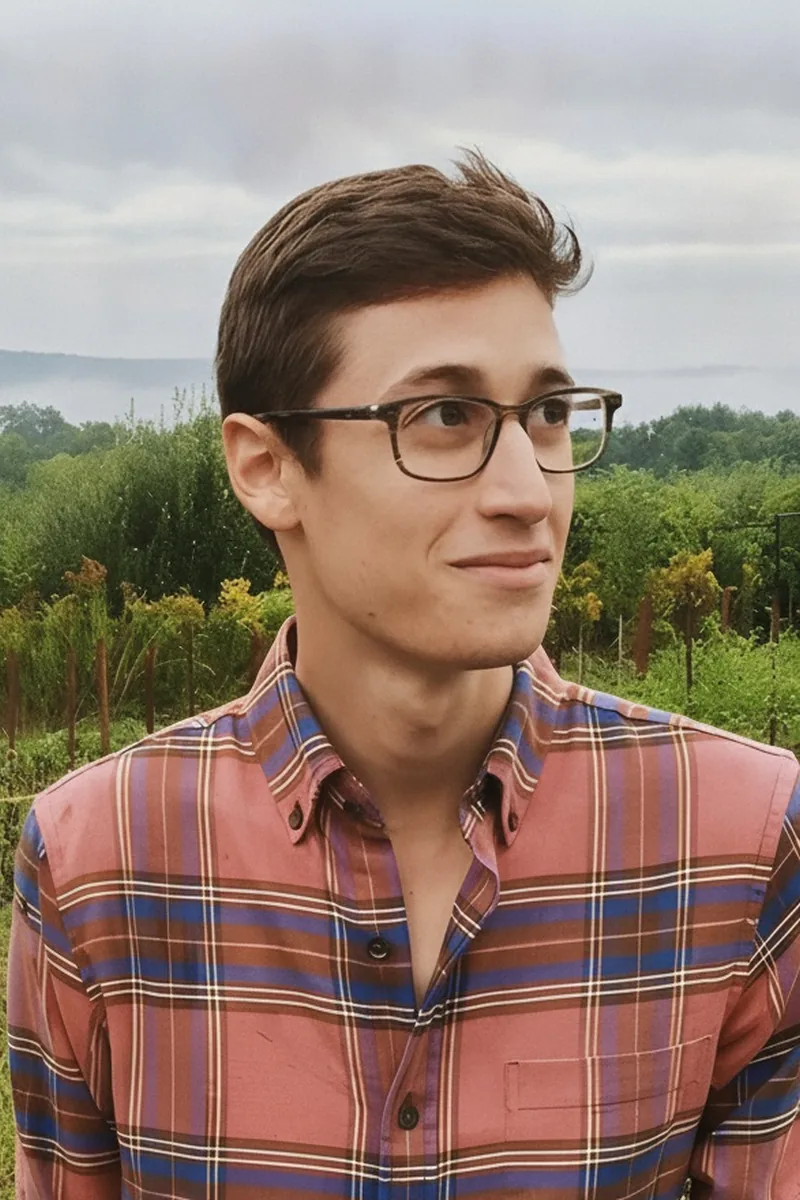
Jonathan's human biology degree and pre-med track at Cornell meant organic chemistry wasn't just a prerequisite — it was the course that connected molecular structure to everything he'd later study in physiology and biochemistry. He tackles synthesis problems and spectroscopy interpretation by linking functional group behavior back to biological relevance, which gives students a reason to care about each mechanism. Rated 4.9 by students.

Studying biochemistry and molecular biology means Raj encountered organic chemistry not as a single course but as the language underlying everything from enzyme kinetics to metabolic pathways — so he teaches functional group reactivity and stereochemistry with that bigger picture always in view. His 5.0 rating and a perfect 36 ACT reflect someone who thinks systematically, which translates directly into how he walks students through multi-step synthesis problems: identify the transformation, trace the electron flow, then confirm the regiochemistry.
Reaction mechanisms are the heart of organic chemistry, and they only make sense when a student can track electron movement and predict how functional groups behave. Malcolm is studying biochemistry and cell biology at Rice, where organic chemistry is foundational — he knows which arrow-pushing patterns show up repeatedly and teaches students to recognize them instead of memorizing hundreds of individual reactions.
Reaction mechanisms are the language of organic chemistry, and Casey reads them fluently after years of bioengineering coursework that demanded constant fluency in electron-pushing, stereochemistry, and functional group transformations. She teaches students to recognize patterns across reaction types — why nucleophilic additions behave the way they do, how leaving groups dictate substitution vs. elimination — so each new chapter feels like a variation on something familiar rather than a fresh nightmare.
Reaction mechanisms are the backbone of organic chemistry, and Enoch teaches them by building a visual logic: tracking electron movement, recognizing nucleophile-electrophile patterns, and predicting products from functional group behavior. His biomedical science background means he also connects orgo to real biochemical contexts — amino acid chemistry, drug metabolism, lipid structures — which makes the material stick for premed students especially.
Reaction mechanisms are the backbone of organic chemistry, and most students struggle not because the material is impossibly hard but because they try to memorize hundreds of reactions instead of recognizing patterns. Manpinder approaches orgo by teaching students to trace electron movement through arrow-pushing — once that skill clicks, predicting products for substitution, elimination, and addition reactions becomes systematic rather than overwhelming.
Biomedical engineering at Rice means Aurnab encounters organic chemistry not as an isolated course but as the bridge between molecular structure and how drugs, biomaterials, and diagnostic tools actually work. That applied perspective sharpens his teaching of topics like functional group transformations and stereochemistry — he can explain why a specific reaction pathway matters in designing a biocompatible polymer, which gives the material real stakes. Rated 4.9 by students.
Reaction mechanisms click once you stop memorizing arrow-pushing and start seeing the electron density that drives each step — that's the lens Asad brings from his Rice University chemistry training. He breaks down substitution, elimination, and carbonyl chemistry by connecting molecular structure to reactivity, so students can predict products they've never seen before.
Reaction mechanisms are the backbone of organic chemistry, and the difference between memorizing hundreds of them and actually understanding a handful of core patterns is enormous. Toshiki taught organic chemistry at the college level for years, walking students through arrow-pushing, stereochemistry, and retrosynthetic analysis until the logic clicks. His 4.9 rating speaks to how well that approach lands.
Over a year of tutoring organic chemistry through UT Austin's Engineering Student Services — plus using it daily in biomedical engineering coursework — means Felipe knows exactly where students get stuck on arrow-pushing, stereochemistry, and multi-step synthesis. He teaches reaction mechanisms by connecting them back to the biological systems a pre-med student actually cares about, like drug metabolism and enzyme kinetics, so the logic has somewhere to land.
Reaction mechanisms are the language of organic chemistry, and Srikar teaches students to read them by tracking electron movement arrow by arrow. His college chemistry coursework and neuroscience background — where drug interactions and receptor binding depend on organic principles — give him a practical lens on topics like nucleophilic substitution, carbonyl chemistry, and stereoselectivity. He's rated 5.0 by students.
Reaction mechanisms in organic chemistry only click when you stop memorizing arrow-pushing patterns and start understanding why electrons move where they do. Roozbeh's science background and experience as a DAT instructor for Kaplan mean he's spent years breaking down substitution, elimination, and addition reactions for students preparing for high-stakes exams. He connects functional group reactivity to underlying principles so the logic carries from one chapter to the next.
Reaction mechanisms are the heart of organic chemistry, and most students struggle because they try to memorize arrow-pushing patterns instead of understanding why electrons move where they do. Snipta unpacks each mechanism by connecting it to fundamental ideas about nucleophilicity, sterics, and orbital interactions. Her research experience at NIH gave her hands-on familiarity with the organic reactions that show up in both coursework and lab settings.
Reaction mechanisms are the storytelling of organic chemistry — each arrow push has a reason rooted in electron density, sterics, and thermodynamics. Chikaneme unpacks those reasons so students can predict products for substitution, elimination, and addition reactions instead of memorizing hundreds of individual outcomes. His Natural Science background at Johns Hopkins means he's comfortable going as deep into the "why" as a student needs.
Reaction mechanisms click when you can see the electrons move, not just memorize arrow-pushing rules. Shyon's biochemistry background in the UT-Austin BME program means he teaches organic chemistry through the lens of biological relevance — connecting nucleophilic additions and carbonyl chemistry to the molecules students will encounter again in upper-level courses.
Reaction mechanisms are the storytelling of organic chemistry — each arrow push has a reason, each intermediate has a fate. Naushaba, who holds a Bachelor's in Chemistry, teaches students to read mechanisms as logical sequences driven by electronegativity, sterics, and stability rather than treating each reaction as a separate thing to memorize. She covers everything from substitution and elimination to carbonyl chemistry with that same cause-and-effect framework.
Reaction mechanisms can feel like arbitrary arrow-pushing until someone explains the underlying logic — why nucleophiles attack where they do, how steric effects redirect a synthesis. Alex approaches organic chemistry by building intuition for electron behavior, drawing on the quantitative rigor of his environmental science background at Rice.
Reaction mechanisms are the language of organic chemistry, and Tal learned to speak it fluently while preparing for the MCAT and teaching general chemistry as a supplemental instruction leader at UT Dallas. He unpacks arrow-pushing, stereochemistry, and functional group reactivity by emphasizing the "why" behind each step — electron density, steric effects, thermodynamic versus kinetic control — so patterns emerge instead of requiring brute memorization.
Reaction mechanisms are the language of organic chemistry, and most students struggle because they try to memorize arrows instead of understanding electron behavior. Chioma's pre-med track at Rice required two semesters of organic, and her current medical coursework in pharmacology keeps those nucleophilic substitutions and carbonyl additions sharp. She walks through each mechanism step by step, connecting functional group reactivity to patterns students can predict on their own.
Reaction mechanisms click when you understand electron movement — why a nucleophile attacks here and not there, how leaving groups dictate substitution vs. elimination pathways. Effie's biochemistry degree and current medical training mean she's worked through these mechanisms in both classroom and lab settings, connecting organic reactions to the biological systems they drive.
A cell and molecular biology degree followed by a master's in pathology means Salman encountered organic chemistry not as an isolated course but as the language underlying every biochemical pathway he studied — from amino acid side-chain reactivity to enzyme active-site mechanisms. He teaches functional group behavior and arrow-pushing by tying each reaction to the biological context that makes it meaningful, which turns rote memorization into pattern recognition. Rated 4.8 by students.
Reaction mechanisms are the language of organic chemistry — arrow pushing, stereochemistry, and functional group transformations all follow patterns that become predictable once you know what to look for. Megan's science training taught her to approach orgo as a puzzle rather than a memorization marathon, and she walks through each mechanism step by step until the logic is clear.
Birinder's biochemistry coursework at the University of Houston means she's working through organic chemistry mechanisms alongside the biological systems they feed into — amino acid chemistry, metabolic intermediates, and the functional group transformations that show up again on the MCAT. That dual perspective lets her teach arrow-pushing and reactivity patterns as tools with a purpose, not just abstract exercises to survive and forget. Rated 5.0 by students.
Reaction mechanisms are the backbone of organic chemistry, and Samir's biochemistry training means he spent years tracing electron movement through metabolic pathways and enzyme-catalyzed reactions. He teaches students to read curved-arrow notation like a language — recognizing nucleophilic attacks, leaving groups, and carbocation rearrangements as patterns rather than isolated steps to memorize.
Reaction mechanisms are the language of organic chemistry, and most students struggle because they try to memorize hundreds of reactions instead of learning the handful of electron-pushing patterns that explain nearly all of them. Sazid teaches students to read curved-arrow notation fluently — nucleophilic attacks, leaving groups, resonance stabilization — so that predicting products becomes a reasoning exercise, not a memory test.
Reaction mechanisms in organic chemistry are essentially stories — each arrow push has a reason, and learning to read that logic transforms a seemingly impossible memorization task into something manageable. Megan pairs her biology background with strong analytical thinking to unpack topics like nucleophilic substitution, elimination pathways, and stereochemistry. She's especially effective with students who feel overwhelmed by the sheer volume of reactions to learn.
Having taught college-level chemistry labs through Organic II as a mechanical engineering student at UT Austin, Jaxon knows exactly where students hit walls — the shift from memorizing functional groups to actually predicting reactivity in multi-step mechanisms. He tackles arrow-pushing by slowing down at each decision point, making sure students can articulate why electrons move before worrying about where they end up.
Reaction mechanisms are essentially stories — each arrow push has a reason, and once you learn to read the logic behind nucleophilic attacks and leaving groups, synthesis problems become solvable rather than terrifying. Nathan's undergraduate chemistry training at TCU keeps organic chemistry fresh in his mind, and he digs into topics like stereochemistry, substitution vs. elimination, and carbonyl chemistry with the detail they demand.
Hi, I'm Kristen! I help students build real confidence, not just get through the next assignment, but truly understand the material so it sticks. I specialize in Math (K-12, Geometry, Algebra, test prep), Writing and Essay Structure (college-level, APA/MLA), Study Skills, and Digital Marketing for adult learners. My approach: I break complex topics into clear steps and teach you how to think through problems on your own. I adapt to every learning style, whether you need whiteboard visuals, step-by-step walkthroughs, or pa That's what I bring to every session. What I specialize in: Math (K-12, including Geometry, Algebra, and I test prep), Writing and Essay Structure (college-level academic writing, argument essays, APA/MLA formatting), Study Skills and Organization (especially for students who feel overwhelmed or behind), and Digital Marketing and Business Fundamentals (for adult learners and professionals).
I am a recent graduate in biomedical engineering from Brown University, an Ivy League institution, with a strong passion for science, problem-solving, and helping others learn. Throughout my academic journey and hands-on experiences, I developed a deep understanding of complex concepts in biomedical engineering, biology, and related sciences (chemistry/math/physics). I believe everyone learns best when lessons are personalized and connected to real-world applications, so I focus on breaking down challenging material into clear, manageable parts tailored to your learning style. I'm patient, approachable, and eager to help you build confidence, master your coursework, and reach your academic goals. Let's work together to make learning both effective and enjoyable!
I am now working at Walgreens as a Pharmacy Technician.
Penn's pre-health track put Brittany through rigorous chemistry coursework alongside her psychology degree, and she spent her undergraduate years tutoring General Chemistry I and II at the university's Tutoring Center — building the kind of fluency with reaction fundamentals that carries directly into organic mechanisms. She approaches topics like nucleophilic substitution and carbonyl reactivity by connecting them back to the foundational principles of electron behavior and molecular structure, making each new reaction type feel like an extension of something students already know.
Reaction mechanisms click when you understand electron movement — why a nucleophile attacks one carbon over another, how steric hindrance redirects a pathway, what drives an elimination versus a substitution. Enric's PhD in Chemistry means he's spent years thinking at the mechanistic level and can unpack arrow-pushing, stereochemistry, and retrosynthetic analysis in ways that make each reaction type feel logical rather than arbitrary.
Reaction mechanisms are the backbone of organic chemistry, and learning to predict products means recognizing electron-density patterns, not memorizing hundreds of individual reactions. Alec's approach — honed through years of TA work in Cornell's chemistry department — emphasizes arrow-pushing logic and functional group reactivity so that substitution, elimination, and addition reactions start to feel like variations on a theme rather than separate things to memorize.
Decades of running an organic chemistry research lab and teaching it at the college level mean Wyatt has explained arrow-pushing mechanisms, retrosynthetic analysis, and spectroscopy interpretation thousands of times — and learned exactly where students get stuck on each one. His PhD in the subject gives him the depth to trace a tricky multi-step synthesis back to the underlying electronic principles, then rebuild it at whatever pace clicks. Rated 4.9 by students.
Most students dread organic chemistry because it feels like a new language, but the logic underneath reaction mechanisms is surprisingly consistent once someone lays it out clearly. Ade approaches each reaction type — substitution, elimination, addition — by teaching students to read electron movement and predict products rather than memorize hundreds of individual reactions.
Max spent much of high school independently pursuing organic chemistry through coursework and projects well beyond what was required — the kind of deep, self-driven study that builds real fluency with reaction types and synthesis logic. His chemistry degree from MIT and mathematical instincts mean he approaches problems like retrosynthetic analysis and multi-step mechanism design as structured puzzles, breaking each one into clear decision points. Rated 5.0 by students.
Reaction mechanisms in organic chemistry reward the same kind of systematic thinking that drives engineering design: track the electrons, identify the functional groups, and predict what happens next. Lee teaches students to read mechanisms as stories with cause and effect — nucleophile attacks electrophile, leaving group departs — instead of memorizing hundreds of individual reactions. His biomedical background adds context for why specific organic reactions matter in drug design and biochemistry.
Reaction mechanisms are the language of organic chemistry, and Amin earned an entire master's degree becoming fluent in them. He teaches students to read electron flow the way you'd read a sentence — identifying nucleophiles, leaving groups, and stereoelectronic effects so that predicting products becomes a reasoning exercise, not a memorization marathon. Rated 4.5 by students.
I am a freshman at Vanderbilt University studying biochemistry and involved in analytical chemistry research. Despite my studies being very science oriented, I also enjoy studying English and the humanities. I'd be happy to tutor you in any of these areas!
Testimonials
Because the right Organic Chemistry tutor makes all the difference.
Average Session Rating – Based on 3.4M Learner Ratings
Practice Organic Chemistry
Free practice tests, flashcards, and AI tutoring for Organic Chemistry
Nearby Organic Chemistry Tutors
Other Denton Tutors
Related Science Tutors in Denton
Frequently Asked Questions
Organic Chemistry is notoriously challenging because it requires visualizing 3D molecular structures and understanding reaction mechanisms that aren't always intuitive. Students often struggle with memorizing reaction types, predicting products, and connecting abstract concepts like resonance and stereochemistry to real molecules. Personalized 1-on-1 instruction helps break down these complex ideas into manageable pieces, allowing you to build a strong foundation before tackling advanced topics.
While Organic Chemistry does involve learning reaction types and functional groups, true mastery comes from understanding the underlying principles—like electron movement, bond formation, and molecular stability. When you focus on the "why" behind reactions rather than just memorizing outcomes, you can predict new reactions and solve unfamiliar problems. Tutors help you develop this conceptual understanding so you're not just memorizing, but actually thinking like a chemist.
Visualization is key to Organic Chemistry success, and many students benefit from drawing structures repeatedly, using molecular models, and working through mechanisms step-by-step. Personalized tutoring includes hands-on practice with 2D and 3D representations, helping you internalize how bonds rotate, break, and form. Regular practice with visual problem-solving builds the mental models you need to tackle complex reactions on exams.
Organic Chemistry labs reinforce lecture concepts and teach you practical skills like synthesis, purification, and characterization of compounds. Tutors can help you understand the theory behind lab procedures, predict outcomes, interpret results, and connect what you're doing in the lab back to the mechanisms you're learning in class. This bridge between theory and hands-on work deepens your understanding of how organic chemistry works in practice.
In your first session, a tutor will assess your current understanding of foundational concepts like bonding, molecular structure, and basic reaction types. They'll identify specific areas where you're struggling—whether it's mechanism prediction, stereochemistry, or synthesis problems—and create a personalized plan to address those gaps. This foundation helps your tutor tailor future sessions to your learning style and pace.
The best time to connect with a tutor is as soon as you feel confused or fall behind, rather than waiting until exam time. Many students benefit from starting tutoring in the first few weeks of the course to build a strong conceptual foundation, which makes later topics much more manageable. If you're already struggling, starting now will help you catch up and prevent gaps from compounding.
Look for tutors with strong chemistry backgrounds—ideally with advanced coursework or degrees in chemistry, biochemistry, or a related field. Experience teaching or tutoring Organic Chemistry is valuable, as is familiarity with different curricula and exam formats (like AP Chemistry or college-level courses). Varsity Tutors connects you with expert tutors who have proven expertise in Organic Chemistry and a track record of helping students master challenging concepts.
Denton's schools and universities often have chemistry labs, study groups, and office hours that can supplement your tutoring. Your tutor can recommend which resources will be most helpful for your specific needs and help you maximize what's available locally. Combining personalized tutoring with school resources creates a comprehensive support system for mastering Organic Chemistry.
Let’s find your perfect tutor
Answer a few quick questions. We’ll recommend the right plan and match you with a top 5% tutor.