Award-Winning Calculus Tutors
serving Myrtle Beach, SC
Calculus
Tutors in Myrtle Beach
Private 1-on-1 tutoring, weekly live classes for academic support, test prep & enrichment, practice tests and diagnostics, and more to elevate grades and test scores.
Based on 3.4M Learner Ratings
UniversitiesSchools & Universities
DeliveredHours Delivered
ProficiencyGrowth in Proficiency
Who needs tutoring?
No obligation. Takes ~1 minute.
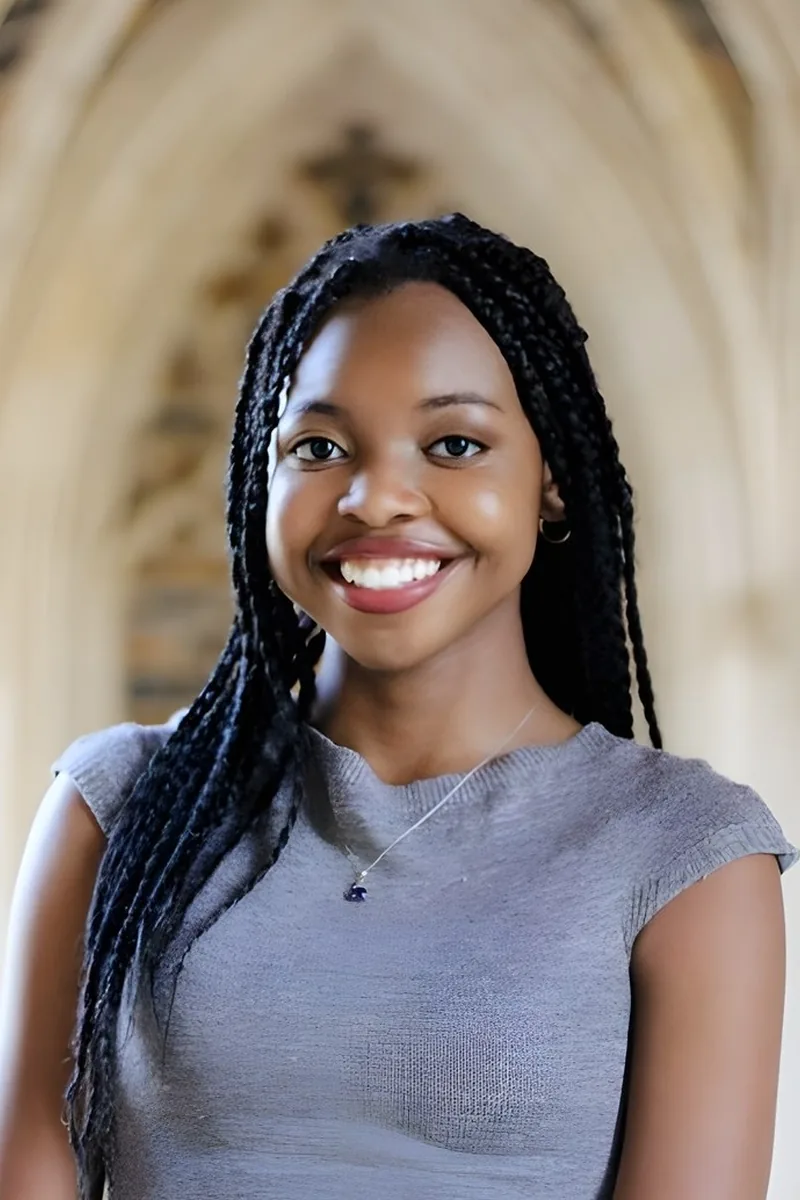
Pre-med biology at Duke means Lenique spent semesters applying calculus to real problems — enzyme kinetics, population growth models, and the rate equations that underpin pharmacology and physiology. That hands-on scientific context gives her a way to teach derivatives and integrals as tools that describe how biological systems change, not just abstract rules on a worksheet. Her upcoming medical training at Yale only deepens that connection between calculus and the life sciences.

Instructing general chemistry and organic chemistry labs at UGA meant Katheryn was constantly applying calculus — reaction rate equations, enthalpy curves, and the integration work behind kinetics all demand fluency with derivatives and integrals in a scientific context. That hands-on experience lets her teach calculus concepts by connecting them to the quantitative reasoning she used daily in the lab, making abstract rules feel purposeful. Rated 4.8 by students.
Biology coursework at the college level is full of calculus in disguise — growth rate equations, enzyme kinetics curves, diffusion models — and David's BS in Biological and Physical Sciences means he's worked through that material firsthand. He teaches derivatives and integrals by connecting them to the systems where they naturally appear, making the abstraction feel grounded. Rated 5.0 by students.
Nursing students don't just take calculus — they use it, calculating IV drip rates, modeling drug absorption curves, and interpreting how vital signs change over time. Rachael's BSN coursework at Seattle University means she can ground derivatives and integrals in the kind of applied, real-stakes problems that make abstract rules feel purposeful. Her 31 ACT composite confirms the quantitative chops to back up that clinical perspective.
Teaching across the full math sequence from pre-algebra through calculus gives Kelly an unusual vantage point — she knows exactly which algebra gaps cause students to stumble when they hit limits and derivative rules for the first time. Her approach tackles those weak spots directly, connecting new calculus notation back to the function behavior and slope concepts students already understand. Rated 5.0 by students.
Mechanical engineering coursework means Saad uses calculus every day — from setting up integrals for moment-of-inertia problems to applying differential equations in dynamics. He breaks down concepts like the chain rule, related rates, and integration by parts by connecting each one to a physical situation that makes the math feel purposeful. Rated 4.9 by students.
Engineering majors don't just take calculus — they live in it, applying derivatives and integrals to model everything from fluid dynamics to bioelectric signals. Janay brings that applied perspective to limits, differentiation techniques, and integration, showing students how each concept connects to tangible problems. She's especially effective at walking through the chain rule and u-substitution in ways that make the logic transparent.
Garrick is the kind of math student who genuinely lights up when explaining why the chain rule works or how integration by parts connects to the product rule in reverse. He unpacks calculus concepts step by step, paying close attention to the algebra and trigonometry foundations that trip students up mid-problem. That combination of enthusiasm and precision keeps sessions productive even when the material gets dense.
I am currently pursuing a degree in Chemical Engineering and Spanish at Virginia Tech. I have a strong academic record in my fields. I enjoy sharing knowledge and helping others overcome learning challenges. Through previous tutoring, I have developed excellent communication, organization, and problem-solving skills. I am comfortable using online learning technologies and am committed to providing engaging, supportive lessons that help students reach their full potential.
I'm a Structural Engineering graduate from UC San Diego with a passion for helping students in the math and science fields, as well as SAT/ACT test prep. I've had experience tutoring all subjects up to the high school level, and I strive to create a fun and rewarding environment for students. I've worked with a variety of age groups as a member of the Big Brothers Big Sisters program, and I find it easy to relate to all types of students. When I'm not studying or tutoring, I enjoy playing chess and basketball.
Limits, derivatives, and integrals all build on each other, so one shaky concept can derail an entire semester. Akarsh approaches calculus by making sure each layer is solid before moving on — walking through chain rule applications or Riemann sums until the logic behind the formulas becomes second nature.
Every week in his Harvard engineering courses, Christopher applies calculus to real systems — computing moments of inertia, modeling fluid flow, analyzing stress distributions. That constant use means he can unpack topics like the chain rule, improper integrals, and convergence tests with a fluency that goes well beyond textbook examples. He pinpoints the specific conceptual gaps holding a student back and addresses those directly rather than re-teaching entire chapters.
Doctoral-level research in clinical psychology demands constant fluency with statistical modeling, derivatives, and rates of change — concepts that sit at the heart of calculus. Shelley breaks down problems like related rates and integration by connecting each step to a concrete, real-world scenario so the logic behind the math clicks. Rated 5.0 by students.
Philosophy, Politics, and Economics at Penn isn't a math degree, but the PPE program's quantitative economics track means Kevin has worked through optimization problems, marginal analysis, and the derivative-driven reasoning that underpins microeconomic theory. His 34 ACT composite backs up that quantitative ability, and he teaches calculus concepts by connecting them to the economic models where they actually do something — finding maximum profit, minimizing cost, interpreting what a rate of change means in context.
Elena's academic path runs through government, Spanish, and law — not mathematics — so calculus isn't her deepest subject. That said, a perfect 1600 SAT demonstrates serious quantitative ability, and her tutoring philosophy of listening to students work through problems and pinpointing exactly where their reasoning breaks down applies especially well to early calculus, where a single misunderstanding about limits or continuity can derail everything downstream.
Between a biology degree heavy on quantitative coursework and a perfect 36 ACT, Emily has the mathematical chops to teach calculus with real depth — not just procedure but the reasoning behind integration techniques and derivative applications. Her epidemiology training at Yale's School of Public Health meant working with rate-of-change models constantly, from disease transmission curves to survival analysis, so she can ground abstract calculus concepts in problems where the math actually drives decisions. Rated 5.0 by students.
Comparative literature trains you to hold multiple complex systems in your head simultaneously and trace how they interact — a skill that maps surprisingly well onto the conceptual side of early calculus, where understanding what a limit *means* matters more than grinding through computation. Jacob's 1550 SAT confirms strong quantitative chops, and his teaching background at UC Berkeley means he knows how to break down intimidating new notation for students encountering it for the first time.
Limits, derivatives, and integrals each introduce a fundamentally new way of thinking about change and accumulation — and rushing past the intuition behind them is the fastest way to hit a wall. Sung unpacks each concept by connecting it to concrete problems, like how rates of reaction in chemistry are really just applied derivatives. His chemistry degree gives him a natural fluency with the kind of quantitative reasoning calculus demands.
A PhD in Education means Reid thinks deeply about *how* people learn abstract concepts — and calculus, where students must shift from computing answers to reasoning about rates and accumulation, is exactly where that expertise pays off. His sociology and math tutoring background gives him a knack for translating the conceptual leap from algebra into limits and derivatives, breaking down the notation barrier that trips up so many students encountering calculus for the first time.
Yu's political science degree and education policy work involve more quantitative analysis than people expect — regression models, rate-of-change interpretations in policy data, and the kind of mathematical reasoning that underpins early calculus concepts like derivatives and accumulation. His Master's from Harvard's Graduate School of Education also means he knows how to break down the conceptual leap from algebra to calculus in a way that builds genuine understanding, not just procedural shortcuts.
Biostatistics at the master's and doctoral level means Nina uses calculus constantly — integration for probability density functions, derivatives for maximum likelihood estimation, and multivariable chain rules that underpin regression models. That daily fluency lets her teach concepts like Riemann sums or related rates by connecting them to the statistical machinery they actually power. Rated 5.0 by students.
The jump to Calculus demands comfort with abstraction — understanding what a derivative actually represents, not just how to apply the power rule. Jessica tackles limits, integration techniques, and rate-of-change problems by connecting them to concrete scenarios, drawing on the quantitative reasoning she sharpened through her science-heavy coursework at Penn and in medical school.
Testimonials
Because the right Calculus tutor makes all the difference.
Average Session Rating – Based on 3.4M Learner Ratings
Nearby Calculus Tutors
Other Myrtle Beach Tutors
Related Math Tutors in Myrtle Beach
Frequently Asked Questions
Varsity Tutors matches Myrtle Beach students with expert Calculus tutors for 1-on-1 instruction. We pair each student with a tutor based on their specific needs, learning style, and goals.
Whether you need homework help, exam prep, or want to get ahead, our Calculus tutors are ready to help.
Common challenges include gaps from earlier material, difficulty with specific concepts, and trouble applying learning to new problems. These issues can snowball quickly in Calculus.
A tutor identifies where you're stuck, fills in gaps, and provides targeted practice. The 1-on-1 format means you get help exactly where you need it.
Tutors work with your student's actual coursework—homework assignments, class notes, and upcoming tests. This keeps tutoring directly relevant to what's happening in the classroom.
When you share information about your student's school and curriculum, we can match you with a tutor who has relevant experience.
All tutors complete background checks, credential verification, and teaching evaluation. Many of our Calculus tutors hold advanced degrees or have years of teaching experience.
You can review tutor profiles to find someone with the right background for your student's level and needs.
Many students see improved grades within a few weeks, along with better understanding of Calculus concepts and more confidence tackling challenging material.
Tutors track progress and adjust their approach to ensure continued improvement.
Most students benefit from 1-2 sessions per week. More frequent sessions help if your student is significantly behind or has an important exam coming up.
Your tutor can recommend a schedule based on your student's specific situation and goals.
Tutoring is purchased in packages of hours, with rates varying by tutor experience. Varsity Tutors offers several options to fit different budgets and needs.
You can discuss pricing during your consultation to find what works best.
Your tutor will assess where your student is, discuss goals, and start working on priority areas. Most students bring current homework or upcoming test material to focus on.
By the end, you'll have a clear sense of how the tutor can help and a plan for moving forward.
Let’s find your perfect tutor
Answer a few quick questions. We’ll recommend the right plan and match you with a top 5% tutor.