Award-Winning Calculus Tutors
serving Charleston, SC
Calculus
Tutors in Charleston
Private 1-on-1 tutoring, weekly live classes for academic support, test prep & enrichment, practice tests and diagnostics, and more to elevate grades and test scores.
Based on 3.4M Learner Ratings
UniversitiesSchools & Universities
DeliveredHours Delivered
ProficiencyGrowth in Proficiency
Who needs tutoring?
No obligation. Takes ~1 minute.
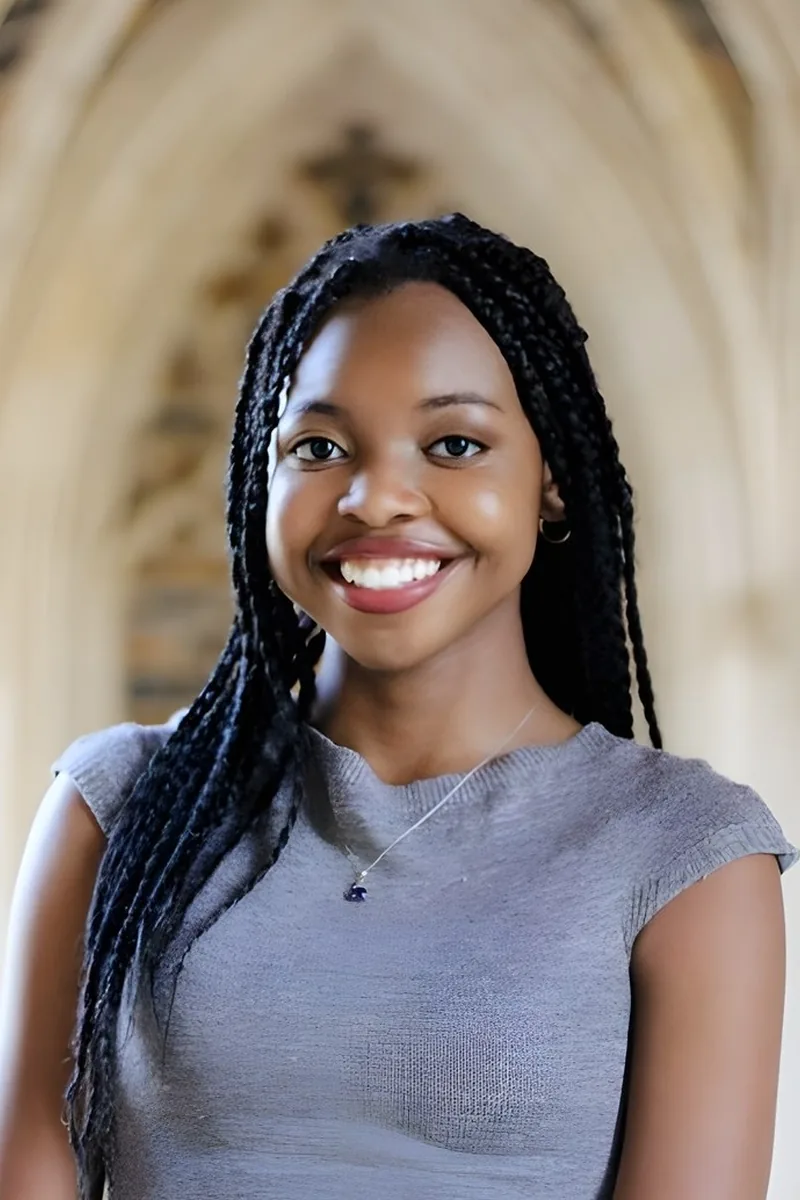
Pre-med biology at Duke means Lenique spent semesters applying calculus to real problems — enzyme kinetics, population growth models, and the rate equations that underpin pharmacology and physiology. That hands-on scientific context gives her a way to teach derivatives and integrals as tools that describe how biological systems change, not just abstract rules on a worksheet. Her upcoming medical training at Yale only deepens that connection between calculus and the life sciences.

Instructing general chemistry and organic chemistry labs at UGA meant Katheryn was constantly applying calculus — reaction rate equations, enthalpy curves, and the integration work behind kinetics all demand fluency with derivatives and integrals in a scientific context. That hands-on experience lets her teach calculus concepts by connecting them to the quantitative reasoning she used daily in the lab, making abstract rules feel purposeful. Rated 4.8 by students.
Nursing students don't just take calculus — they use it, calculating IV drip rates, modeling drug absorption curves, and interpreting how vital signs change over time. Rachael's BSN coursework at Seattle University means she can ground derivatives and integrals in the kind of applied, real-stakes problems that make abstract rules feel purposeful. Her 31 ACT composite confirms the quantitative chops to back up that clinical perspective.
Biology coursework at the college level is full of calculus in disguise — growth rate equations, enzyme kinetics curves, diffusion models — and David's BS in Biological and Physical Sciences means he's worked through that material firsthand. He teaches derivatives and integrals by connecting them to the systems where they naturally appear, making the abstraction feel grounded. Rated 5.0 by students.
Teaching across the full math sequence from pre-algebra through calculus gives Kelly an unusual vantage point — she knows exactly which algebra gaps cause students to stumble when they hit limits and derivative rules for the first time. Her approach tackles those weak spots directly, connecting new calculus notation back to the function behavior and slope concepts students already understand. Rated 5.0 by students.
Engineering majors don't just take calculus — they live in it, applying derivatives and integrals to model everything from fluid dynamics to bioelectric signals. Janay brings that applied perspective to limits, differentiation techniques, and integration, showing students how each concept connects to tangible problems. She's especially effective at walking through the chain rule and u-substitution in ways that make the logic transparent.
Mechanical engineering coursework means Saad uses calculus every day — from setting up integrals for moment-of-inertia problems to applying differential equations in dynamics. He breaks down concepts like the chain rule, related rates, and integration by parts by connecting each one to a physical situation that makes the math feel purposeful. Rated 4.9 by students.
Garrick is the kind of math student who genuinely lights up when explaining why the chain rule works or how integration by parts connects to the product rule in reverse. He unpacks calculus concepts step by step, paying close attention to the algebra and trigonometry foundations that trip students up mid-problem. That combination of enthusiasm and precision keeps sessions productive even when the material gets dense.
I am currently pursuing a degree in Chemical Engineering and Spanish at Virginia Tech. I have a strong academic record in my fields. I enjoy sharing knowledge and helping others overcome learning challenges. Through previous tutoring, I have developed excellent communication, organization, and problem-solving skills. I am comfortable using online learning technologies and am committed to providing engaging, supportive lessons that help students reach their full potential.
I'm a Structural Engineering graduate from UC San Diego with a passion for helping students in the math and science fields, as well as SAT/ACT test prep. I've had experience tutoring all subjects up to the high school level, and I strive to create a fun and rewarding environment for students. I've worked with a variety of age groups as a member of the Big Brothers Big Sisters program, and I find it easy to relate to all types of students. When I'm not studying or tutoring, I enjoy playing chess and basketball.
Art history and education aren't the usual path to calculus, and Mimi is straightforward about that — but her 1560 SAT demonstrates real quantitative strength, and her Masters in Education from Harvard means she knows how to design a learning sequence that actually builds understanding. She brings that inquiry-based instinct to early calculus, walking through what a derivative means conceptually before jumping to computation, so the rules feel like they follow logically rather than appearing out of nowhere.
An MIT math degree followed by PhD work in Operations Research at Georgia Tech means Isabella has used calculus as a daily tool — optimization problems, convergence proofs, and the kind of rigorous analysis where understanding integration techniques and multivariable derivatives isn't optional. She's TA'd college-level math courses and taught gifted middle and high school students, so she can adjust the depth from first encounters with limits all the way through series and differential equations. Rated 5.0 by students.
Between a biology degree heavy on quantitative coursework and a perfect 36 ACT, Emily has the mathematical chops to teach calculus with real depth — not just procedure but the reasoning behind integration techniques and derivative applications. Her epidemiology training at Yale's School of Public Health meant working with rate-of-change models constantly, from disease transmission curves to survival analysis, so she can ground abstract calculus concepts in problems where the math actually drives decisions. Rated 5.0 by students.
Four years of volunteering as an SAT tutor sharpened Renee's quantitative skills — her 1530 SAT confirms that — but her real strength is translating abstract notation into language that clicks, a skill she built as a Writing Consultant breaking down complex ideas for diverse learners. She applies that same clarity to early calculus concepts like limits and continuity, walking through the reasoning behind each step so the logic holds up long after the session ends.
Ellie doesn't just study calculus — she teaches it. As a weekly tutor for a Differential Equations course at Yale, she regularly walks students through integration techniques, series convergence, and the conceptual leaps that textbooks tend to rush past. Her engineering background means she can show exactly where derivatives and integrals appear in real modeling problems, giving abstract rules a concrete purpose.
Anthropology and human evolutionary studies might not scream calculus, but Victoria's coursework involved quantitative modeling of population dynamics and morphological change over time — territory where rates of change and accumulation aren't abstract concepts but tools for answering real questions. Her 1520 SAT confirms strong quantitative chops, and she brings that same analytical rigor to breaking down derivatives and integrals into steps that actually make sense.
Mechanical engineering grad work is essentially applied calculus — Aaron uses derivatives to model thermal systems, integrals to analyze fluid flow, and differential equations to predict how structures respond to stress, every single day. That daily fluency means he can teach integration techniques or the chain rule by connecting them to problems where the math is doing real physical work. Rated 5.0 by students.
Both of Matthew's parents are university math professors, so calculus was dinner-table conversation long before it was a college course. That upbringing gave him an intuitive way of explaining limits, derivatives, and integration techniques that connects the visual logic of a graph to the formal notation students struggle with. Rated 4.9 by students, he's especially sharp at walking through related rates and optimization problems step by step.
Maya's Yale degree is in the arts and religious studies, not mathematics, so she's straightforward that calculus isn't her deepest subject. That said, her 34 ACT composite shows real quantitative ability, and her approach to tutoring — slowing down, finding what motivates each learner, and building from there — translates well to demystifying early concepts like limits and the intuition behind what a derivative actually represents.
Between a physics bachelor's and a PhD in biomedical engineering, Andrew has used calculus as a daily working language — from modeling tissue mechanics to solving the differential equations that describe biological systems. That depth means he can teach derivatives, integrals, and multivariable concepts not as isolated procedures but as tools with clear physical meaning. Rated 4.9 by students.
Limits, derivatives, and integrals each introduce a fundamentally new way of thinking about change and accumulation — and rushing past the intuition behind them is the fastest way to hit a wall. Sung unpacks each concept by connecting it to concrete problems, like how rates of reaction in chemistry are really just applied derivatives. His chemistry degree gives him a natural fluency with the kind of quantitative reasoning calculus demands.
Biology at the pre-health level is surprisingly calculus-heavy — enzyme kinetics, membrane transport rates, and the pharmacology models Shayan encounters in his Penn coursework all depend on derivatives and integrals behaving predictably. That daily exposure to calculus as a tool for solving real biological problems gives him a concrete vocabulary for explaining chain rules, related rates, and integration techniques without leaning on pure abstraction. Rated 5.0 by students.
Testimonials
Because the right Calculus tutor makes all the difference.
Average Session Rating – Based on 3.4M Learner Ratings
Nearby Calculus Tutors
Other Charleston Tutors
Related Math Tutors in Charleston
Frequently Asked Questions
Many students struggle with the transition from algebra and precalculus to calculus's conceptual focus on rates of change and limits. Common pain points include understanding why derivative and integral rules work (not just memorizing them), tackling multi-step word problems that require translating real-world scenarios into mathematical language, and connecting abstract concepts like limits to concrete applications. Personalized tutoring helps students build conceptual understanding alongside procedural skills, making calculus feel less like a collection of formulas and more like a coherent system.
During an initial session, a tutor will assess your current understanding of calculus fundamentals—including limits, derivatives, and integrals—and identify specific areas where you need support. They'll ask about your learning style, goals (whether you're preparing for an AP exam, college placement, or just aiming for a strong grade), and any particular topics causing frustration. From there, you'll work together to create a personalized plan that addresses your gaps while building confidence and momentum.
Tutors help you develop clear problem-solving strategies by walking through each step and asking you to explain your reasoning aloud—this builds the habit of articulating your thinking, which is essential for exams and real understanding. They can show you how to organize multi-step problems so your work is easy to follow, and help you recognize common patterns so you understand not just how to solve a problem, but why that approach works. Strong communication of mathematical ideas is a skill that tutors specifically develop alongside computational accuracy.
Word problems are one of the biggest hurdles in calculus because they require translating English into mathematical language, then solving, then interpreting your answer in context. Tutors break this process into manageable steps: identifying what you're looking for, setting up the right equations or derivatives, solving, and checking if your answer makes sense. With practice and guided problem-solving strategies, students develop confidence recognizing problem types and building solutions systematically rather than feeling overwhelmed by the reading.
Graphing is a powerful way to understand calculus—seeing how a derivative represents slope, or how an integral represents area under a curve—but many students struggle to connect the visual and algebraic sides. Tutors use graphs, diagrams, and technology to help you see these connections, showing how changes in a function's equation appear on its graph and vice versa. This visual-algebraic bridge transforms abstract concepts into intuitive understanding, making calculus feel more concrete and less intimidating.
Yes—tutors for students in Charleston work with learners preparing for both AP Calculus AB and BC exams. They can help you master the core concepts tested, practice multiple-choice and free-response questions under timed conditions, review past exam questions to identify patterns, and build test-taking strategies specific to how AP calculus is assessed. Starting prep several months before the exam gives you time to build conceptual understanding and test confidence rather than cramming formulas.
Math anxiety is real and common, especially in a subject as conceptually demanding as calculus—but personalized tutoring in a low-pressure, one-on-one setting helps rebuild confidence quickly. Tutors work at your pace, celebrate small wins, and help you see that struggling with a concept doesn't mean you're not a math person; it means you need a different explanation or approach. As you experience success solving problems you previously found impossible, anxiety decreases and genuine confidence grows.
Absolutely—tutors for students in Charleston are experienced with different calculus textbooks and teaching approaches, whether your school uses Stewart, Larson, or another standard curriculum. When you connect with a tutor, let them know which textbook and topics your class is covering, and they'll tailor sessions to match your course's pacing and emphasis. This alignment ensures tutoring reinforces what you're learning in class rather than introducing conflicting methods or notation.
Let’s find your perfect tutor
Answer a few quick questions. We’ll recommend the right plan and match you with a top 5% tutor.