Award-Winning AP Computer Science A Tutors
serving Reading, PA
AP Computer Science A
Tutors in Reading
Private 1-on-1 tutoring, weekly live classes for academic support, test prep & enrichment, practice tests and diagnostics, and more to elevate grades and test scores.
Based on 3.4M Learner Ratings
UniversitiesSchools & Universities
DeliveredHours Delivered
ProficiencyGrowth in Proficiency
Who needs tutoring?
No obligation. Takes ~1 minute.
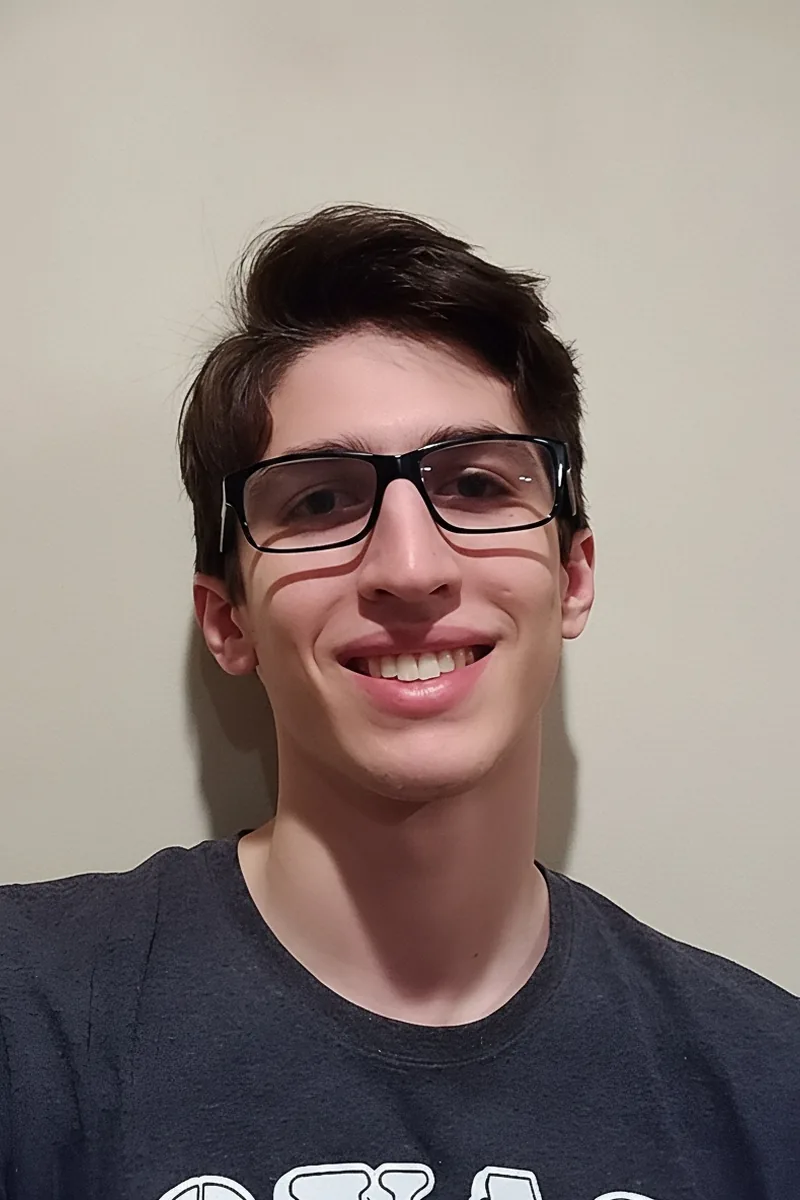
Java's object-oriented structure trips up a lot of AP CS A students right around inheritance and polymorphism, when the logic stops being intuitive. Matthew programs in Java professionally and academically, so he can unpack concepts like recursion, array manipulation, and class hierarchies using examples that actually click. Rated 4.9 by students.
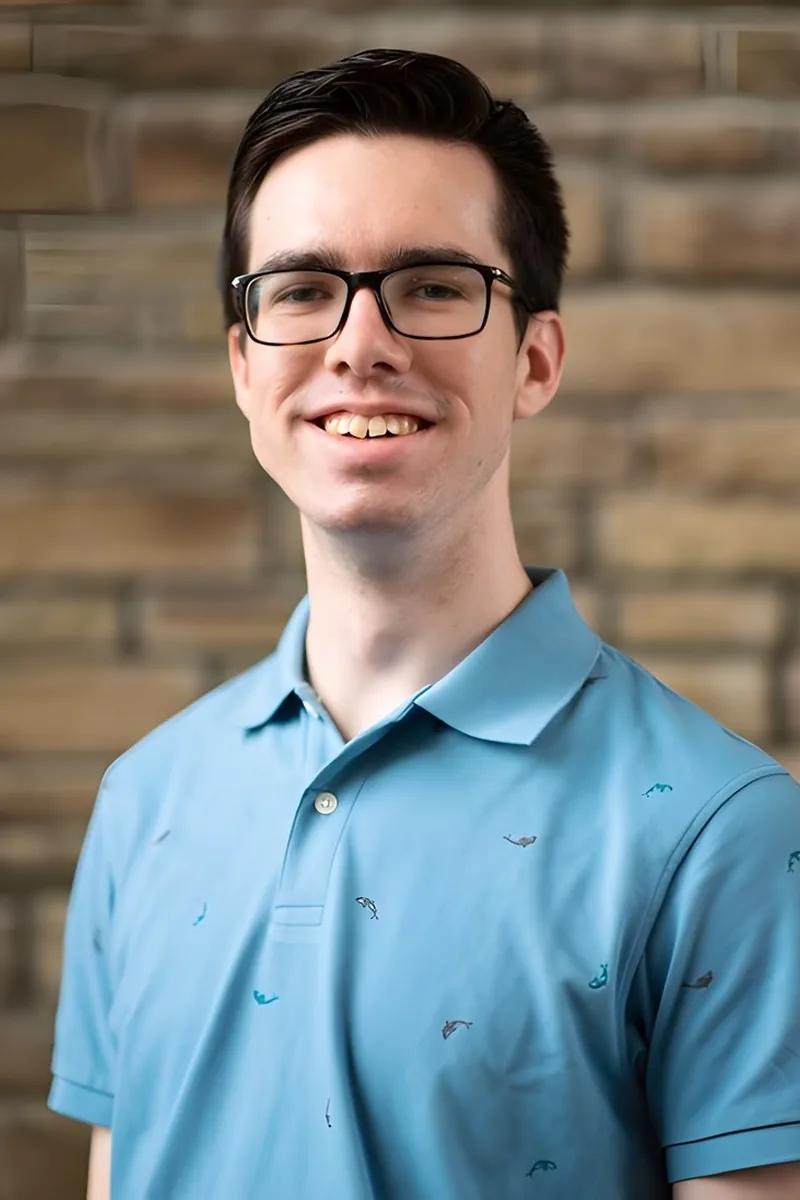
Working as a software engineer while finishing a CS degree at Pitt means Timothy writes Java in both professional and academic contexts — he knows the gap between how textbooks present object-oriented concepts and how they actually play out in production code. He uses that dual perspective to teach AP CSA topics like class design and array manipulation in ways that prepare students for the exam and for real programming beyond it. Rated 4.8 by students.
Leading sessions at Code Ninjas meant Lucas wasn't just teaching kids to code — he was diagnosing misconceptions in real time across Java, Python, and JavaScript, which is exactly the skill that matters when an AP CSA student can't figure out why their loop runs one too many times. His CS degree with an AI focus at Penn State means he thinks about Java's object-oriented structure as a foundation for bigger ideas, so he teaches class design and array logic with an eye toward where those patterns show up next. Rated 4.9 by students.
Teaching AP CSA to underserved students who'd never written a line of code before gave Kevin a knack for building up from zero — explaining why Java uses classes and objects before jumping into syntax, so that inheritance and polymorphism feel like natural next steps rather than arbitrary rules. His CS major with a data science concentration means he connects AP CSA's array and ArrayList problems to the real data manipulation work those structures were designed for.
The jump from writing simple programs to tackling AP Computer Science A's free-response questions is where most students struggle — suddenly they need to trace through nested loops, manipulate 2D arrays, and design classes from scratch. Steven's deep Java experience means he can pinpoint exactly where a student's logic breaks down and rework their approach on the spot. He treats each practice problem as a chance to internalize patterns, not just memorize syntax.
Jared's MS in Computer Science and professional software engineering work mean he's written enough Java to know exactly where AP CSA students get tripped up — especially on topics like recursive methods, 2D array traversal, and the nuances of how references behave versus primitives. His interest in machine learning and NLP also gives him real-world examples of object-oriented design in action, which makes abstract concepts like inheritance and interface design feel purposeful rather than academic. Rated 5.0 by students.
I am a graduate from Rochester Institute of Technology with a master's in Game Design and Development. My passions lie in everything related to games and mathematics. In the past, I have tutored various subjects in mathematics throughout high school and college, including but not limited to Algebra, Algebra II, Trigonometry, Calculus, Discrete Mathematics, Mathematics of Graphical Simulation, and Linear Algebra. As for technology, I am more than happy to reach out for help in Web Development (HTML, CSS, Javascript) or C# programming. I believe that every person can learn any topic. While every individual has different tastes, strengths, and weaknesses, there is no such thing as an "incapability" to know a subject. Education often possesses a guise of anti-fun, but I can promise you that all topics can be engaging, and I am willing to show you how engaging mathematics and technology can be. As a Game Designer, I have a deep interest in both playing games and making games. This includes games of all kinds: video games, board games, tabletop role-playing games, trading card games, miniatures, and even some sports like tennis or ping pong. Games act as a fantastic teaching tool. They teach by design without users recognizing. It is always a satisfying moment when somebody says "I learned that word from Magic" or "D&D taught me that." Remember: you can succeed. If something is important to you, then it's always worthwhile.
Hello, my name is Paul, and I am passionate about helping students in the areas of computer science and math and making sure that no question goes unanswered! I can guarantee a safe environment where hard work and creativity will be the basis for success! Let's have some fun solving problems!
With a strong background in STEM education and administration, I am passionate about helping students achieve academic success through personalized learning. My experience as a high school STEM teacher has allowed me to guide students in subjects such as artificial intelligence, machine learning, renewable energy technology, supply chain management, and manufacturing systems. Additionally, my administrative expertise has honed my ability to provide structured and efficient support to learners of all levels. I have earned certifications from the Massachusetts Institute of Technology, International Business Machines (IBM), and the New York Institute of Finance, dedicating years to making complex concepts more engaging and accessible. My tutoring style is adaptive, ensuring that each student's unique learning needs are met with patience and clarity. I believe in creating a supportive learning environment where students feel confident in tackling challenges and mastering new skills. While I tutor a broad range of subjects, I am particularly passionate about STEM-related fields, as they shape the future of technology and innovation. Beyond academics, I enjoy exploring advancements in artificial intelligence, renewable energy solutions, and automotive technology. My goal is to inspire curiosity, critical thinking, and a lifelong love of learning in every student I work with.
Studying computer science at Cornell means Mohammed lives in Java — it's the language his program uses to teach data structures, algorithms, and the object-oriented thinking that AP CSA tests on every free-response question. He breaks down topics like array manipulation and recursive tracing by showing students how to read code the way he learned to: line by line, predicting exactly what happens at each step before running anything.
I am graduated from Penn State University in Industrial Engineering in 2017. I've tutored ever since I was in high school, and I love helping people! I like to help my students understand math (and other topics) instead of just doing it blindly. My goal is to help my students improve their math (and other topics) and build skills that will help them find learning easier in the future! Fun fact, I used to work for Disney and I like to salsa dance!
iOS and game development projects at Vanderbilt mean Kerr writes in Swift and C# regularly, but that cross-language fluency is exactly what makes Java's quirks — type casting, scope rules, the way interfaces differ from abstract classes — easier to explain from first principles. He digs into AP CSA's trickier free-response territory by having students build and trace small programs in real time, catching logic errors before they become habits. Rated 4.9 by students.
Years of professional software development give Utsav a working programmer's perspective on Java — he's written, debugged, and shipped real code, so AP CSA topics like object design, array manipulation, and recursive logic aren't academic exercises but daily tools. His Stanford math background also means he can unpack the formal reasoning behind why an algorithm works, which is exactly what the free-response section rewards.
Double-majoring in physics and computer science at Stony Brook means Kiran writes Java and C++ not just for coursework but for computational physics problems — simulations, data analysis, algorithm design — where sloppy code means wrong answers, not just compiler errors. That habit of precision carries directly into AP CSA, where he teaches students to think carefully about how objects interact and why a method behaves differently than expected before rewriting a single line.
Studying CS in Cornell's College of Engineering means Ravnoor writes Java alongside lower-level languages daily, giving him a clear sense of how object-oriented concepts like encapsulation and inheritance actually work in memory — not just on paper. He teaches AP CSA by having students build small programs piece by piece, adding complexity only after each layer makes sense, which turns intimidating free-response prompts into manageable steps. Rated 5.0 by students.
Jake codes in Java, C++, Python, and JavaScript across both professional and teaching contexts, so when an AP CSA question asks students to trace through nested loops or design a class from scratch, he's drawing on real fluency rather than textbook familiarity. His electrical engineering training at the university level means he learned programming the hard way — writing code that has to work correctly in hardware-adjacent systems where bugs aren't just wrong answers but broken circuits. Rated 5.0 by students.
Engineering students at UC Irvine don't get through MATLAB, data processing, and lab simulations without picking up serious programming logic — and Wesley's biomedical engineering degree means he learned to think in the structured, modular way that Java's object-oriented design rewards. He applies that same systematic approach to AP CSA topics like array traversal and method writing, treating each problem like a system to be engineered rather than code to be memorized.
Cornell's pre-med track doesn't typically include Java, and AP Computer Science A isn't Pratik's core teaching area — his strengths sit squarely in chemistry, biology, and standardized test prep. That said, the disciplined, logical problem-solving he brings to organic chemistry mechanisms and ACT Science (he scored a 35 composite) translates well to walking through basic programming logic and structured thinking when a student needs support.
Studying computer science at MIT while scoring a perfect 1600 SAT, Brice brings the kind of rigorous, first-principles thinking to AP CSA that turns vague intuitions about Java into precise understanding — particularly when students hit the wall of writing multi-class programs with interacting objects. He's spent years tutoring peers through exactly those sticking points, teaching students to architect their code on paper before writing a single line.
Four years of tutoring and a computer science major at Boston University mean Irene is actively immersed in Java — writing it for her own coursework while teaching it to others, which keeps her tuned into exactly where AP CSA students get tripped up on concepts like loop logic and object interaction. She's especially sharp at catching the small misunderstandings in how students trace through code, the kind that lead to wrong answers on free-response questions without anyone realizing why. Rated 4.8 by students.
Testimonials
Because the right AP Computer Science A tutor makes all the difference.
Average Session Rating – Based on 3.4M Learner Ratings
Practice AP Computer Science A
Free practice tests, flashcards, and AI tutoring for AP Computer Science A
Nearby AP Computer Science A Tutors
Other Reading Tutors
Related Technology and Coding Tutors in Reading
Frequently Asked Questions
Varsity Tutors matches Reading students with expert AP Computer Science A tutors for 1-on-1 instruction. We pair each student with a tutor based on their specific needs, learning style, and goals.
Whether you need homework help, exam prep, or want to get ahead, our AP Computer Science A tutors are ready to help.
Common challenges include gaps from earlier material, difficulty with specific concepts, and trouble applying learning to new problems. These issues can snowball quickly in AP Computer Science A.
A tutor identifies where you're stuck, fills in gaps, and provides targeted practice. The 1-on-1 format means you get help exactly where you need it.
Tutors work with your student's actual coursework—homework assignments, class notes, and upcoming tests. This keeps tutoring directly relevant to what's happening in the classroom.
When you share information about your student's school and curriculum, we can match you with a tutor who has relevant experience.
All tutors complete background checks, credential verification, and teaching evaluation. Many of our AP Computer Science A tutors hold advanced degrees or have years of teaching experience.
You can review tutor profiles to find someone with the right background for your student's level and needs.
Many students see improved grades within a few weeks, along with better understanding of AP Computer Science A concepts and more confidence tackling challenging material.
Tutors track progress and adjust their approach to ensure continued improvement.
Most students benefit from 1-2 sessions per week. More frequent sessions help if your student is significantly behind or has an important exam coming up.
Your tutor can recommend a schedule based on your student's specific situation and goals.
Tutoring is purchased in packages of hours, with rates varying by tutor experience. Varsity Tutors offers several options to fit different budgets and needs.
You can discuss pricing during your consultation to find what works best.
Your tutor will assess where your student is, discuss goals, and start working on priority areas. Most students bring current homework or upcoming test material to focus on.
By the end, you'll have a clear sense of how the tutor can help and a plan for moving forward.
Let’s find your perfect tutor
Answer a few quick questions. We’ll recommend the right plan and match you with a top 5% tutor.