Award-Winning AP Chemistry Tutors
serving Reading, PA
AP Chemistry
Tutors in Reading
Private 1-on-1 tutoring, weekly live classes for academic support, test prep & enrichment, practice tests and diagnostics, and more to elevate grades and test scores.
Based on 3.4M Learner Ratings
UniversitiesSchools & Universities
DeliveredHours Delivered
ProficiencyGrowth in Proficiency
Who needs tutoring?
No obligation. Takes ~1 minute.

Thermochemistry, equilibrium, and electrochemistry each demand a different kind of thinking, which is part of what makes AP Chem so challenging. Kate tackles each unit by connecting the math to the molecular-level story — explaining why Le Chatelier's principle works, not just how to apply it. Her engineering coursework in chemistry gives her a practical fluency that translates well to exam prep.
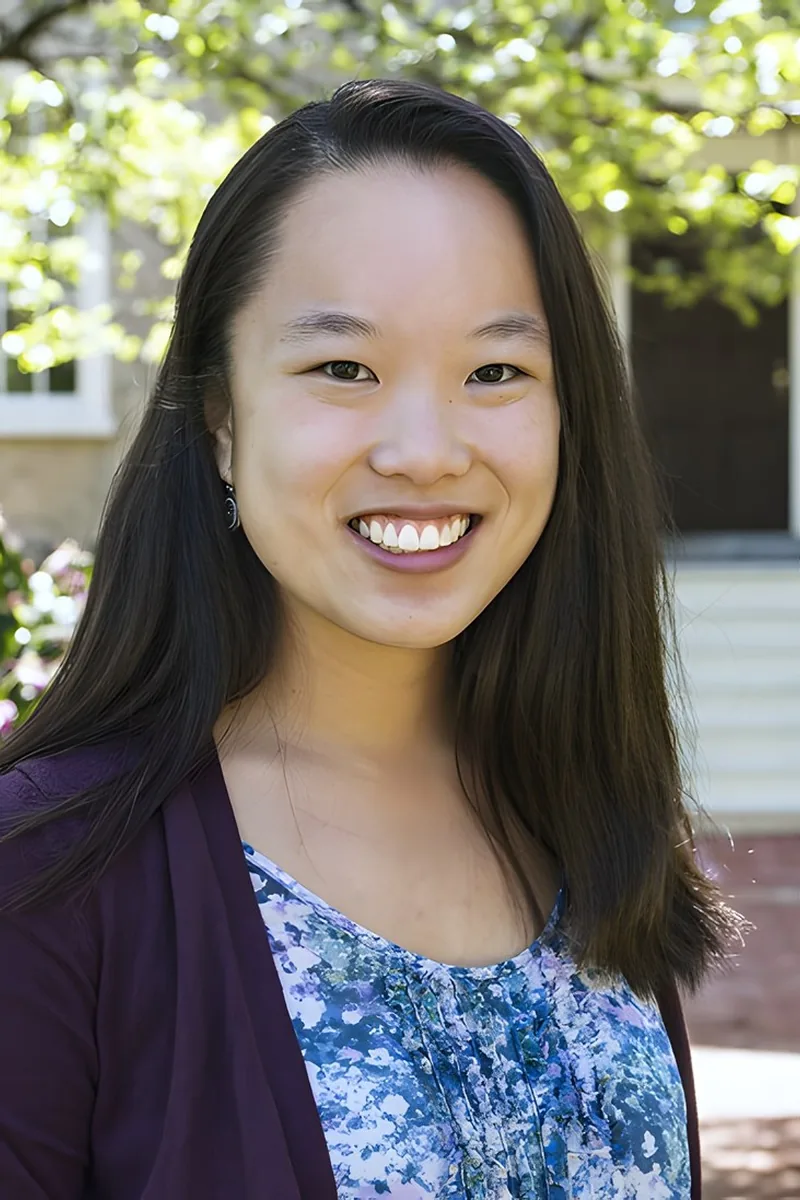
Teaching 12th grade Chemistry at a high-performing Philadelphia magnet school means Kathleen sees exactly which AP Chemistry concepts — from equilibrium reasoning to periodic trends — trip students up on exams, and she's built classroom-tested strategies for each one. Her Penn M.S.Ed in Secondary Science Education and her chemistry degree give her both the content depth and the pedagogical training to explain why a reaction proceeds the way it does, not just how to get the right answer. Rated 5.0 by students.
Cornell's biology curriculum required Viraj to work through college-level chemistry — from reaction energetics to molecular interactions — in courses where chemical reasoning underpins everything from cellular metabolism to pharmacology. He applies that cross-disciplinary perspective to AP Chemistry topics like intermolecular forces and solution chemistry, teaching students to predict behavior at the molecular level instead of memorizing isolated rules. Rated 5.0 by students.
The jump from regular chemistry to AP Chemistry usually hits hardest around equilibrium, thermodynamics, and electrochemistry, where problems demand both quantitative precision and conceptual reasoning. Rebecca pairs her biology degree's deep chemistry coursework with a knack for walking through multi-step free-response questions so students learn to show their thinking clearly under exam pressure.
Thermodynamics, equilibrium, and electrochemistry tend to be the units where AP Chemistry students hit a wall — the math gets heavier and the conceptual leaps get bigger. Amanda tackles these topics by connecting abstract chemical principles to biological systems she knows deeply from her medical training, which makes ideas like Gibbs free energy or Le Chatelier's principle feel less arbitrary. Rated 4.7 by students.
Hello! My name is Danica and I am an incoming sophomore at the University of Pennsylvania majoring in Neuroscience and Psychology. As the founder of my high school's Chemistry Club, I worked to make challenging scientific concepts approachable and engaging for students of all grade levels. I developed educational materials, organized meetings, and created an environment where students felt comfortable asking questions and exploring their curiosity. I tailor my tutoring approach to each student's learning style, whether that involves working through practice problems, reviewing test corrections, creating study resources, or breaking down complex topics into manageable steps. I believe every student is capable of growth when provided with patience, guidance, and the right support. As a tutor, my goal is not only to help students improve their grades but also to foster confidence, independence, and a genuine appreciation for learning.
Organismal physiology at Drexel meant Steven spent semesters deep in the chemistry that governs biological systems — acid-base balance, reaction thermodynamics, and the molecular interactions that keep organisms alive. He brings that applied lens to AP Chemistry topics like equilibrium and enthalpy, teaching students to reason through why a reaction behaves the way it does instead of just memorizing which formula to grab. Rated 5.0 by students.
A master's in chemical engineering means Benjamin has spent years working with reaction kinetics, thermodynamics, and mass balance problems at a graduate level — exactly the concepts that underpin AP Chemistry's most demanding free-response questions. He digs into topics like enthalpy calculations and chemical equilibrium by connecting them to the industrial-scale processes he studied, giving students a concrete sense of why these principles matter beyond the exam. Rated 4.9 by students.
AP Chemistry's free-response questions punish students who memorize formulas without understanding the models behind them — especially in thermodynamics, kinetics, and electrochemistry. Mary taught general chemistry as an undergraduate TA at the University of Pittsburgh and holds a minor in chemistry, so she knows exactly where the conceptual gaps tend to form and how to close them before exam day.
AP Chemistry's free-response questions demand more than memorized formulas; they require students to explain equilibrium shifts, justify thermodynamic predictions, and connect atomic structure to macroscopic behavior. Lena earned a 35 ACT and holds a master's in biomedical sciences, giving her the depth to unpack both the quantitative and conceptual sides of the AP exam. Rated 5.0 by students.
Michael holds a PhD in Materials Chemistry and scored a 33 on the ACT, so he knows both the deep science and the test-taking discipline that AP Chemistry demands. He breaks down high-stakes topics like equilibrium, electrochemistry, and thermodynamics by tying them to real-world energy applications — the kind of conceptual understanding that earns 5s on the exam. Rated 5.0 by students.
As a dedicated tutor with a Master's in Bioengineering from the University of Pittsburgh and dual Bachelor's degrees in Biomedical and Electrical Engineering from the University of Arizona, I am passionate about helping students connect their academic goals to real-world applications. With over two years of tutoring experience, I specialize in subjects such as AP Biology, AP Chemistry, College Physics, and Calculus, utilizing a hands-on approach that fosters engagement and understanding. My teaching philosophy centers on building strong relationships with students, tailoring lesson plans to their unique interests and aspirations. I believe that by making complex concepts relevant to their prospective careers, I can inspire students to excel. Additionally, my experience as a teaching assistant has honed my ability to communicate effectively across diverse learning styles and in online environments, ensuring that every student feels supported on their educational journey.
Working as a research technician at Michigan and then as a CNA at Lurie Children's Hospital gave Thomas a hands-on understanding of how chemistry operates in living systems — the kind of context that makes topics like acid-base equilibria and reaction thermodynamics feel purposeful rather than abstract. Now in medical school at Jefferson, he teaches AP Chemistry's toughest quantitative sections by connecting what's happening on paper to what's happening in a cell. Rated 5.0 by students.
The jump from general chemistry to AP Chemistry usually hits hardest around thermodynamics, kinetics, and electrochemistry, where conceptual reasoning and quantitative skills have to work together. Kimberly's college chemistry background at UNC Chapel Hill — paired with her 1590 SAT — means she's comfortable unpacking both the math-heavy calculations and the deeper reasoning the AP exam's experimental-design questions require.
AP Chemistry's jump from stoichiometry to thermodynamics and equilibrium is where most students start losing confidence. Alexander teaches both biology and chemistry courses as a university TA, so he's comfortable unpacking everything from VSEPR theory to electrochemistry at the level the AP exam demands. His 5.0 rating speaks to how clearly he communicates those tougher concepts.
Hi, I'm Vishal, a PhD chemist and postdoctoral researcher at Penn State. I specialize in helping students truly understand chemistrynot just memorize it. My background spans general chemistry, organic chemistry, biochemistry, and inorganic chemistry, and I've spent years studying how reactions actually work at a mechanistic level. That means I can break down even the most complex topics into simple, intuitive ideas. In my sessions, I focus on three things: clarity, problem-solving, and confid
AP Chemistry's toughest sections — equilibrium, thermodynamics, electrochemistry — demand both conceptual understanding and fast quantitative reasoning. Brian brings strong analytical instincts from his Caltech science training, where rigorous problem-solving across disciplines was the norm. He breaks down multi-step free-response problems into the kind of logical chains that earn full credit on exam day.
Rice University's biology curriculum gave Perry a college chemistry foundation built around real applications — understanding how Le Chatelier's principle governs physiological buffering, or why Gibbs free energy determines whether a metabolic pathway runs forward. He brings that applied lens to AP Chemistry's free-response questions, teaching students to reason through problems rather than pattern-match from practice sets. Rated 5.0 by students.
Equilibrium calculations and thermodynamics tend to be the units where AP Chemistry separates students who understand the 'why' from those running on memorized procedures. Sharan digs into the conceptual logic behind Le Chatelier shifts and Gibbs free energy so that quantitative problems feel like extensions of ideas, not isolated formulas. Her premed science background at Cornell keeps her sharp on exactly the kind of rigorous problem-solving the AP exam rewards.
Equilibrium, thermodynamics, and electrochemistry form the backbone of AP Chemistry's toughest units, and they're also central to Phillip's biomedical engineering coursework at Brown. He tackles these topics by connecting abstract equations — like the Nernst equation or Le Chatelier's principle — to concrete lab scenarios students can visualize. His 5.0 rating speaks to how well that approach lands.
Studying cellular and molecular biology at Yale on the pre-med track, Shreya has gone deep into the chemistry that underpins life at the molecular level — making topics like intermolecular forces, Lewis structures, and VSEPR geometry feel less like abstract rules and more like tools for understanding how molecules actually behave. She teaches AP Chemistry's conceptual questions by grounding them in the molecular reasoning she uses daily in her own coursework. Rated 5.0 by students with a 36 ACT.
Georgia Tech's chemical engineering curriculum threw Aimee into college-level thermodynamics, kinetics, and reaction engineering years before most students encounter those ideas — which means she can teach AP Chemistry's toughest conceptual leaps, like connecting enthalpy diagrams to spontaneity or interpreting rate law data, from genuine fluency rather than textbook familiarity. Her 4.9 rating and experience as a teaching assistant show she can translate that depth into clear, patient explanations when a student is stuck on a free-response problem at 9 p.m. the night before the exam.
AP Chemistry's toughest questions — equilibrium calculations, electrochemistry, thermodynamic spontaneity — demand both math fluency and chemical intuition. Rithi's neuroscience and biotechnology training means she's applied these principles in real research contexts, not just on paper. Her 4.9 rating speaks to how clearly she breaks down even the most abstract reaction dynamics.
Blake's neuroscience studies at Vanderbilt required college-level chemistry where concepts like molecular bonding, reaction energetics, and acid-base chemistry weren't electives — they were foundations for understanding how the brain works at a chemical level. That background means he can teach AP Chemistry's trickiest quantitative problems, from stoichiometry to gas laws, while explaining the molecular logic behind each step. His 34 ACT and 5.0 rating speak to the rigor and clarity he brings to exam preparation.
A PhD student at UT Southwestern with a Master's in Biotechnology from Johns Hopkins and a biochemistry degree from SMU, Pauline has lived the full chemistry pipeline — from general chem through organic and into the graduate-level biochemistry that AP Chemistry is preparing students for. She zeroes in on the conceptual leaps that cause the most trouble, like connecting Le Chatelier's principle to actual equilibrium math or translating Lewis structures into predictions about molecular polarity. Her experience tutoring across Algebra, Chemistry, and Organic Chemistry means she can catch when a student's real gap is mathematical rather than conceptual — and fix both.
Cornell's engineering curriculum put Ravnoor through rigorous college-level chemistry, and his computer science training sharpened the algorithmic thinking that pays off when students need to systematically work through multi-step problems like limiting reagent calculations or electrochemical cell setups. He teaches AP Chemistry's quantitative sections by treating each problem like a debugging exercise — isolating variables, checking units at every step, and building toward answers methodically rather than jumping to formulas. Rated 5.0 by students.
A mechanical engineering degree from WashU (Magna Cum Laude) and refinery work at ExxonMobil mean Caroline has applied thermodynamics, kinetics, and gas behavior in industrial settings where precision isn't optional — that real-world fluency translates directly to AP Chemistry's most calculation-heavy units. She teaches concepts like enthalpy changes and reaction spontaneity by connecting them to the energy systems she actually engineered, giving students a concrete anchor for abstract ideas. Rated 5.0 by students.
Cornell's chemical engineering program put Rahul through physical chemistry, thermodynamics, and reaction engineering courses where AP Chemistry concepts like enthalpy, equilibrium, and kinetics were just the starting point — so he can teach those topics with the depth that makes free-response questions feel manageable. He's especially sharp on thermochemistry, his self-described favorite, and connects energy diagrams and Hess's law to the industrial-scale processes he studied as an engineer. Rated 4.9 by students.
Testimonials
Because the right AP Chemistry tutor makes all the difference.
Average Session Rating – Based on 3.4M Learner Ratings
Practice AP Chemistry
Free practice tests, flashcards, and AI tutoring for AP Chemistry
Other Reading Tutors
Related Science Tutors in Reading
Frequently Asked Questions
Varsity Tutors matches Reading students with expert AP Chemistry tutors for 1-on-1 instruction. We pair each student with a tutor based on their specific needs, learning style, and goals.
Whether you need homework help, exam prep, or want to get ahead, our AP Chemistry tutors are ready to help.
Common challenges include gaps from earlier material, difficulty with specific concepts, and trouble applying learning to new problems. These issues can snowball quickly in AP Chemistry.
A tutor identifies where you're stuck, fills in gaps, and provides targeted practice. The 1-on-1 format means you get help exactly where you need it.
Tutors work with your student's actual coursework—homework assignments, class notes, and upcoming tests. This keeps tutoring directly relevant to what's happening in the classroom.
When you share information about your student's school and curriculum, we can match you with a tutor who has relevant experience.
All tutors complete background checks, credential verification, and teaching evaluation. Many of our AP Chemistry tutors hold advanced degrees or have years of teaching experience.
You can review tutor profiles to find someone with the right background for your student's level and needs.
Many students see improved grades within a few weeks, along with better understanding of AP Chemistry concepts and more confidence tackling challenging material.
Tutors track progress and adjust their approach to ensure continued improvement.
Most students benefit from 1-2 sessions per week. More frequent sessions help if your student is significantly behind or has an important exam coming up.
Your tutor can recommend a schedule based on your student's specific situation and goals.
Tutoring is purchased in packages of hours, with rates varying by tutor experience. Varsity Tutors offers several options to fit different budgets and needs.
You can discuss pricing during your consultation to find what works best.
Your tutor will assess where your student is, discuss goals, and start working on priority areas. Most students bring current homework or upcoming test material to focus on.
By the end, you'll have a clear sense of how the tutor can help and a plan for moving forward.
Let’s find your perfect tutor
Answer a few quick questions. We’ll recommend the right plan and match you with a top 5% tutor.