Award-Winning College Physics Tutors
serving Allentown, PA
College Physics
Tutors in Allentown
Private 1-on-1 tutoring, weekly live classes for academic support, test prep & enrichment, practice tests and diagnostics, and more to elevate grades and test scores.
Based on 3.4M Learner Ratings
UniversitiesSchools & Universities
DeliveredHours Delivered
ProficiencyGrowth in Proficiency
Who needs tutoring?
No obligation. Takes ~1 minute.
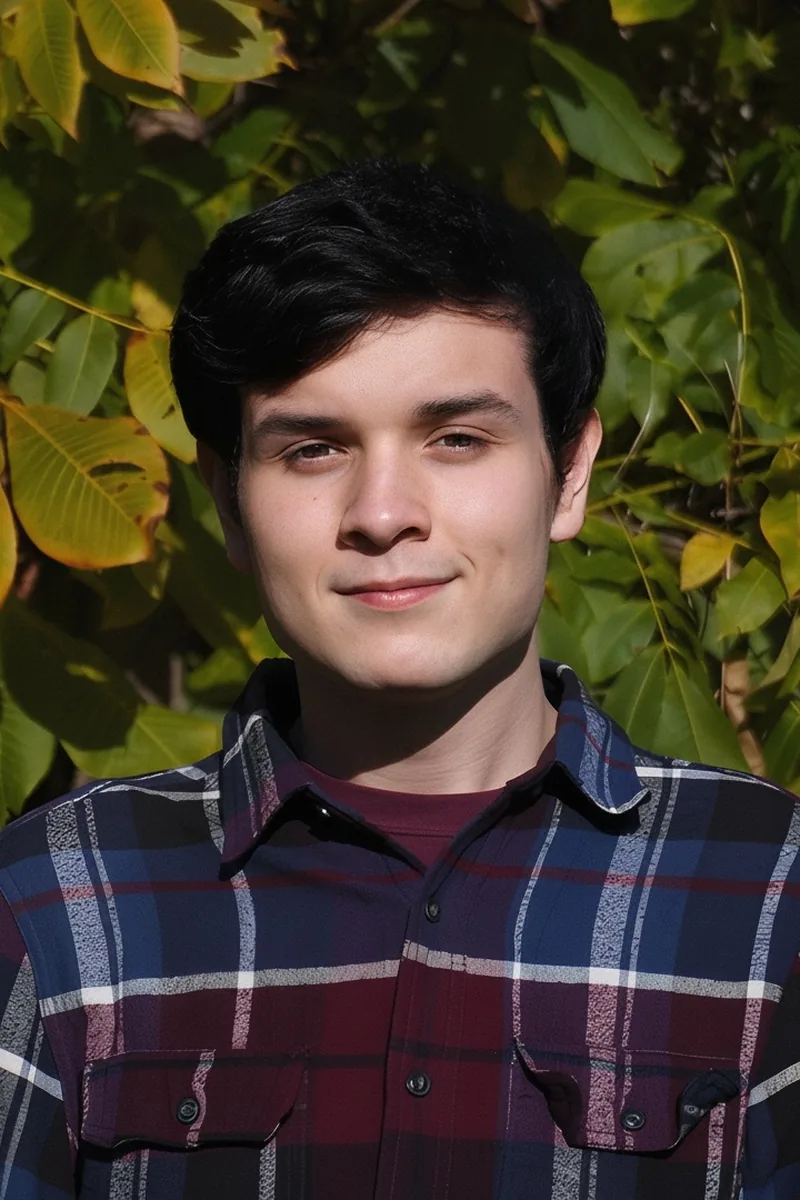
Studying civil engineering at Cornell means Ryan solves physics problems for a living — calculating load distributions, analyzing force vectors in structural systems, and applying fluid mechanics principles that come straight out of college physics coursework. He scored a 35 ACT, which speaks to the quantitative precision he brings when breaking down mechanics or electromagnetism problems step by step. Rated 4.7 by students.

Environmental engineering is essentially physics with consequences — Kate's master's work required her to model fluid flow, heat transfer, and pressure systems in real infrastructure, which means she's solved the same types of problems that show up on college physics exams but with actual design constraints attached. That applied perspective makes her particularly effective at teaching students to set up force balances and energy equations from a physical scenario rather than reverse-engineering from a formula sheet. Rated 4.9 by students.
Statics, dynamics, circuits, electromagnetics — Steve didn't just take these courses, he took them twice over, earning degrees in both mechanical and electrical engineering before working as a practicing engineer. That dual perspective is especially useful in college physics, where a problem about induced EMF or stress in a beam benefits from someone who's designed real systems around those principles. Rated 4.9 by students.
Molecular biology might seem like a different world from physics, but Annabel's coursework lives in the overlap — understanding diffusion requires thermodynamics, membrane potentials are voltage problems, and imaging techniques depend on wave optics and electromagnetism. She brings that life-sciences lens to college physics topics like energy conservation and fluid dynamics, making the material click for pre-med students who need to see why these concepts matter beyond the problem set.
Fluid dynamics, thermodynamic cycles, stress analysis — Ashley didn't just study these topics for exams, she built a PhD in mechanical engineering around them, which means she can walk through the calculus-based physics behind pressure, heat transfer, and force systems with the depth of someone who's applied them in research. She's particularly strong at connecting the abstract math in a problem set to the physical behavior it describes, so students stop treating equations as black boxes.
Studying mathematics and physics at Harvard means Matthew tackles college physics problems with the formal rigor that most introductory courses demand but rarely teach well — setting up integrals for continuous mass distributions, applying vector calculus to electric fields, or deriving equations of motion from first principles rather than pattern-matching to a formula sheet. His computer science background adds a systematic, algorithmic approach to multi-step problems that keeps the physics from turning into guesswork. Rated 4.9 by students.
Between a biology degree and a 34 ACT, Ade has the scientific literacy and quantitative chops to tackle the physics concepts that overlap heavily with life sciences — pressure in fluids, optics in microscopy, energy transfer in biological systems. He breaks down force diagrams and conservation laws by connecting them to the biological contexts where they actually matter, which tends to make the abstract click faster.
A doctoral music student might seem like an unlikely college physics tutor, but Jackson's SAT math performance and years teaching both calculus and algebra mean he's fluent in the quantitative reasoning that drives mechanics and electromagnetism problem sets. He zeroes in on the problem-reading skill most students lack — decoding what a question is actually testing and selecting the right principle before touching an equation, a habit he picked up by thinking like an instructor rather than a student.
Chemical engineering coursework at Pitt meant Olivia spent years applying physics to real systems — fluid dynamics, thermodynamics, heat transfer, and mechanics problems that demanded more than formula memorization. She breaks down force diagrams, energy conservation, and wave behavior by connecting each concept to tangible engineering scenarios. Rated 4.9 by students.
A physics degree means Vaughn didn't just take college physics — he kept going, tackling upper-division mechanics, electromagnetism, and mathematical methods that put introductory concepts in sharper context. He breaks down problems by starting with the physical picture first, sketching force diagrams or field lines before translating anything into equations. Rated 4.7 by students.
Erik's dual bachelor's degrees — one in arts, one in physics — mean he's comfortable on both sides of the conceptual divide that makes college physics hard: the mathematical formalism and the intuitive physical reasoning that tells you what the math actually means. He zeroes in on the translation step most students fumble, like turning a word problem about pulleys or charged plates into a correct free-body diagram or field sketch before any algebra starts. His background teaching statics, dynamics, and thermodynamics means he's seen firsthand where the gaps tend to hide.
A Stanford biology degree might seem like an unusual path into physics, but Abhinav's cross-disciplinary training means he's fluent in the mechanics, electromagnetism, and thermodynamics that trip up pre-med and life-science majors taking physics as a requirement. He unpacks problems by starting with the physical scenario — sketching force diagrams, identifying conserved quantities — before translating into the calculus, which is exactly where most college students lose the thread.
Switching from mechanical engineering to chemistry at Princeton meant Noelle had to master college physics from two different angles — first as an engineering student solving force and energy problems in applied contexts, then as a chemistry student where thermodynamics and electromagnetism underpin everything from molecular behavior to spectroscopy. That double exposure gives her a sharp sense for where conceptual gaps form, especially in mechanics and energy conservation. Her 35 ACT reflects the quantitative precision she brings to calculus-based problem solving.
A PhD in Chemistry from the University of Chicago and a BA in Physics from Lafayette College means Mary has spent years solving problems that live at the intersection of force, energy, and thermodynamics. She brings real-world R&D experience to topics like fluid dynamics, heat transfer, and electromagnetic theory — concepts that click faster when tied to how materials actually behave in industrial applications.
Preparing for the MCAT (and scoring in the 94th percentile) forced Aleksandar to master the physics that pre-med students often dread — optics, fluid dynamics, forces, and energy — through a conceptual lens rather than a purely equation-driven one. His molecular and cell biology concentration at Penn means he naturally ties physics problems back to biological contexts, like pressure gradients in circulation or lens behavior in the eye, which makes abstract topics stick. Rated 5.0 by students.
Kimanthi's biomedical engineering degree from Duke means she didn't just take college physics — she applied it daily, from fluid dynamics in cardiovascular systems to circuit analysis in medical devices. She breaks down topics like electromagnetism, thermodynamics, and rotational mechanics by connecting equations to the physical intuition behind them. Rated 5.0 by students.
Neurobiology at Penn means Tom spent semesters where physics wasn't optional — membrane potential calculations are grounded in electric fields, action potential propagation is wave mechanics, and understanding blood flow requires fluid dynamics. That crossover gives him a concrete way to teach topics like electrostatics and pressure that most physics-only tutors don't have, because he's used those principles to explain how actual biological systems work.
Penn's neurobiology curriculum put Pallavi through the physics that most biology students dread — membrane potential calculations rooted in circuit theory, fluid dynamics governing cerebral blood flow, and the electromagnetic principles behind EEG and fMRI imaging. That crossover means she tackles college physics problems by anchoring them in biological systems students can visualize, turning abstract force diagrams and wave equations into something concrete. Rated 4.5 by students.
Pursuing a PhD in Public Health and Medicine while holding an environmental biology degree means Yasmine has spent years applying physics principles in biological contexts — fluid dynamics in respiratory systems, pressure gradients across membranes, and the mechanics of how forces act on living tissue. She breaks down the quantitative reasoning behind these topics by connecting textbook problems to the physical systems students will encounter in health and life sciences.
Biomedical engineering — both at the bachelor's and master's level — means Dhinakaran has worked through the full spread of college physics twice over, from mechanics and wave behavior to fluid dynamics and electricity in biological systems. He's particularly strong at connecting the math to the physical intuition, since his bioengineering training required constantly translating between equations and the real systems they model. Rated 4.9 by students.
I am a first year dental student at The University of Pennsylvania. In a few years, I will be living my dream of improving the lives of others via practicing medicine. In the meantime, I will dedicate my attention towards helping you fulfill your dream.
Preparing for PA school means Jennifer lives in the overlap between physics and the human body — pressure gradients driving blood flow, lens optics in the eye, biomechanics of joints and gait. Her biological sciences degree grounds her explanations in real systems, so when a college physics problem involves fluid dynamics or wave behavior, she can connect it to something physiological that actually sticks. She's especially useful for pre-health students navigating physics courses that feel disconnected from their goals.
College-level physics problems demand comfort with calculus-based reasoning — setting up integrals for continuous charge distributions, differentiating position functions for kinematics, applying vector calculus to fields. Zain's dual training in mathematics and physical chemistry at Swarthmore means he can address both the physics intuition and the mathematical machinery simultaneously.
Organismal physiology — Steven's concentration at Drexel — is essentially applied physics: fluid dynamics in circulatory systems, pressure gradients across membranes, mechanics of muscle and bone. That biological lens gives him a distinctive way of grounding force, energy, and wave concepts in tangible systems students can visualize, especially when abstract problem sets start to blur together. Rated 5.0 by students.
College-level physics ramps up fast, layering calculus-based mechanics, electromagnetism, and wave theory into a single year. Hallie's graduate engineering work required fluency in all of these areas, so she can unpack a tough Gauss's law problem or a rotational dynamics derivation with the confidence of someone who's applied those principles professionally. She's particularly sharp at bridging the gap between lecture theory and the problem sets that actually determine grades.
I am currently a graduate student in Chemical Engineering at the University of Delaware. I am working on using magnetic and flow fields to create advanced materials by directing the self-assembly process of nanoparticles . I have tutored students in Chemistry, Physics and Math all throughout undergraduate and graduate work. I truly enjoy breaking material down into its core components that allows the students to understand complicated information.
Studying physics at Penn means Samuel is sitting in the same lecture halls and working through the same problem sets his students are struggling with — he knows which topics in mechanics, waves, and E&M are causing confusion right now because he's solving them this semester too. That real-time proximity to the material lets him explain concepts like torque or superposition in the language students actually encounter on exams, not the polished shorthand that comes years later.
Pre-med students grinding through college physics get someone who's been exactly where they are — Lena's biology and biomedical sciences degrees mean she tackled mechanics, waves, and electromagnetism as prerequisites rather than electives, so she knows which concepts (torque in biomechanics, fluid dynamics in circulation, optics in imaging) actually matter downstream. She breaks problems into their physical setup first, making sure the reasoning clicks before any numbers get plugged in. Holds a 5.0 rating.
Architecture students learn to think about loads, material stress, and structural equilibrium before they ever take a physics class — and that spatial, force-based intuition is exactly what Alexander brings to college physics tutoring. He's particularly effective at teaching free-body diagrams and static equilibrium problems because he's sketched hundreds of them in design contexts where getting the physics wrong means a building doesn't stand. Rated 5.0 by students.
Mechanical engineering at Lehigh means Anna is neck-deep in the calculus-based physics sequence right now — mechanics, electromagnetism, thermodynamics — so she knows which lecture topics are about to blindside students because she just worked through them herself. That real-time proximity to the material makes her explanations unusually specific: she can point to the exact step in a torque problem or energy conservation setup where the reasoning tends to fall apart. Holds a 5.0 rating.
Every week in his mechanical engineering program, Matt solves the exact problems that show up on college physics exams — free-body diagrams, energy methods, rotational kinematics, stress analysis — so the material stays fresh and practical rather than theoretical. He breaks down force and motion problems by starting with a clear physical picture before touching any equations, a habit drilled into him by engineering coursework that penalizes formula-hunting. His 35 ACT reflects the quantitative instincts he brings to calculus-based problem solving.
Bioengineering coursework at Pitt put Michael through the full calculus-based physics sequence — mechanics, waves, thermodynamics, E&M — with the added twist of applying those principles to biological systems like fluid flow in arteries and stress distributions in bone. That dual lens means he can explain a concept like torque or pressure both in the standard textbook framing and through a concrete physiological example that makes it stick. Holds a 5.0 rating.
Dual B.S. degrees in Physics and Engineering Science from Penn State means Israel didn't just study college physics — he lived in it from two angles, solving the same mechanics and electromagnetism problems through both a physicist's conceptual lens and an engineer's applied one. That combination is especially useful when students can set up a free-body diagram but can't connect it to the calculus, or vice versa. He builds each session around closing whichever gap is actually stalling progress.
College-level physics ramps up fast once vector calculus enters the picture — surface integrals in Gauss's Law, curl in Maxwell's equations, Lagrangian mechanics. Jacob's astrophysics training covered these topics in depth, and as a working master electrician, he brings an applied understanding of electrodynamics that bridges the gap between textbook derivations and how fields actually behave in physical systems.
Biomedical engineering at Georgia Tech means Golda solves physics problems daily that most students only see in textbooks — modeling forces on prosthetic joints, analyzing fluid flow through artificial vessels, calculating electrical signals in biosensors. That constant application of mechanics and electromagnetism gives her a practical fluency with the concepts that makes her especially good at teaching students how to set up problems from scratch rather than reverse-engineering from an answer key. Rated 5.0 by students.
Mechanical engineering at Temple means Ryan solves statics, dynamics, and thermodynamics problems every week — the same core physics that fills college-level problem sets, just applied to real systems like engines and structural loads. He's particularly strong at teaching students to set up free-body diagrams and energy balances correctly before touching an equation, which is usually where the real confusion hides. His 32 ACT reflects the quantitative instincts he brings to calculus-based problem solving.
Neuroscience at Columbia meant Vip spent years working through the physics that governs biological systems — membrane capacitance, fluid dynamics in neural vasculature, and the optics behind imaging techniques — before medical school deepened that applied understanding further. He breaks down mechanics and electromagnetism problems by connecting them to the physical intuition students already have, rather than letting equations float in the abstract. Rated 4.7 by students.
A biology degree from UNC Chapel Hill might not scream physics, but Kimberly's IB Physics HL and AP Chemistry background means she's worked through the calculus-based mechanics and thermodynamics problems that define introductory college physics courses — and she understands the conceptual gaps that trip up students coming from life-science tracks. She breaks problems down by identifying the governing principle first, then translating the physical setup into math, which keeps students from defaulting to equation-hunting. Rated 4.9 by students.
College physics ramps up fast, layering calculus-based mechanics, E&M, and modern physics into a single year. James's physics degree means he's already navigated that gauntlet, and his current medical studies keep him sharp on applications like fluid mechanics and optics. He digs into the derivations behind key equations so students understand when and why each one applies.
Law school sharpens a very specific skill — reading a dense, tangled scenario and extracting the few facts that actually matter — and that's exactly what college physics word problems demand. Nate applies that same analytical discipline to breaking down mechanics and energy problems, teaching students to strip away the noise and identify which physical principles are actually at play. Rated 5.0 by students.
Testimonials
Because the right College Physics tutor makes all the difference.
Average Session Rating – Based on 3.4M Learner Ratings
Other Allentown Tutors
Related Science Tutors in Allentown
Frequently Asked Questions
College Physics demands both conceptual understanding and mathematical problem-solving skills—many students struggle with translating real-world phenomena into equations and diagrams. Common pain points include mastering unit conversions, balancing complex force diagrams, and connecting abstract concepts like electromagnetic fields to tangible applications. Personalized 1-on-1 instruction helps break down these barriers by addressing your specific weak points rather than moving at a lecture pace.
True mastery comes from connecting formulas to the physical principles they represent—understanding why F=ma matters, not just when to use it. Tutors focus on building your conceptual foundation through problem-solving, real-world examples, and visualization of abstract concepts like forces, energy, and motion. This approach not only improves your grades but develops genuine scientific reasoning skills you'll use in upper-level courses.
Lab work requires applying theoretical knowledge to experimental design, data collection, and analysis—skills that go beyond lecture content. Tutors can help you understand the scientific method, interpret experimental results, troubleshoot unexpected outcomes, and write clear lab reports that demonstrate your understanding. This bridges the gap between classroom theory and hands-on experimentation.
Your first session focuses on assessment and goal-setting. A tutor will review your current coursework, identify specific challenges (whether it's kinematics, thermodynamics, or problem-solving strategies), and understand your learning style. From there, you'll develop a personalized plan targeting your unique needs—whether that's strengthening fundamentals, preparing for exams, or mastering difficult units.
Unit conversions and complex problem-solving are systematic skills that improve with guided practice and feedback. Tutors break down the process step-by-step, teach you dimensional analysis techniques, and help you develop a problem-solving framework you can apply to any scenario. With personalized instruction, you'll build confidence tackling problems that once felt overwhelming.
Look for tutors with strong backgrounds in physics—ideally with college-level coursework or advanced degrees in physics or engineering. Beyond credentials, the best tutors can explain complex concepts clearly, adapt to your learning style, and connect theory to real-world applications. Varsity Tutors connects you with expert tutors in Allentown who understand College Physics curriculum and can guide you toward genuine mastery.
Ideally, start tutoring several weeks before major exams to build a solid foundation rather than cramming last-minute. However, even a few focused sessions can help you identify knowledge gaps, review difficult concepts, and practice problem-solving under timed conditions. Your tutor can create a targeted study plan that maximizes your preparation time.
Abstract concepts like electric fields, wave behavior, and quantum mechanics are difficult without proper visualization. Expert tutors use diagrams, simulations, physical analogies, and step-by-step explanations to make invisible forces and phenomena tangible. This visual-conceptual approach helps you build mental models that make problem-solving intuitive rather than mechanical.
Let’s find your perfect tutor
Answer a few quick questions. We’ll recommend the right plan and match you with a top 5% tutor.