Award-Winning Math Tutors
serving Durham, NC
Math
Tutors in Durham
Private 1-on-1 tutoring, weekly live classes for academic support, test prep & enrichment, practice tests and diagnostics, and more to elevate grades and test scores.
Based on 3.4M Learner Ratings
UniversitiesSchools & Universities
DeliveredHours Delivered
ProficiencyGrowth in Proficiency
Who needs tutoring?
No obligation. Takes ~1 minute.
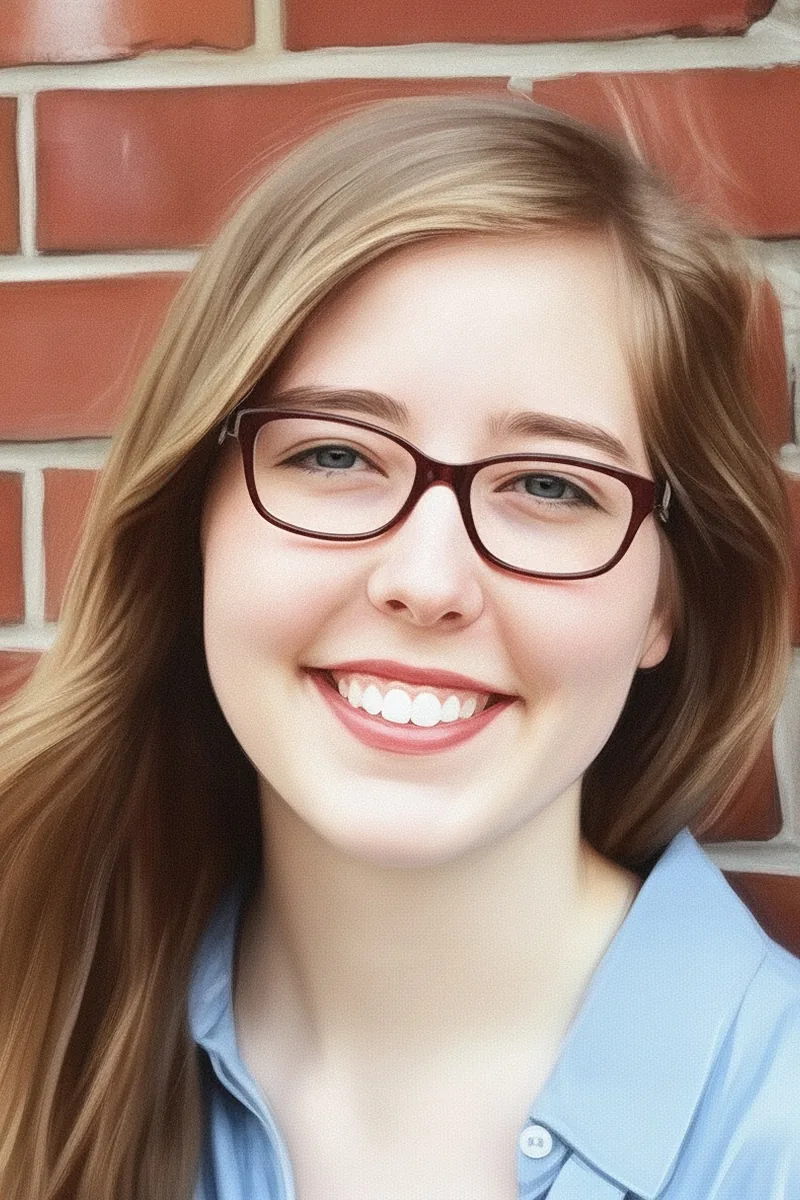
Frances graduated magna cum laude from Duke with a psychology degree, which means she spent years working with statistics, research design, and data analysis — the kind of applied math that makes abstract concepts feel grounded in something real. Her 35 ACT score confirms she's sharp across the full range of math content, and her background as a full-time educator means she knows how to spot exactly where a student's reasoning goes off track and rework the explanation until it lands.

Biomedical engineering at Duke means Eric lives in math daily — differential equations modeling biological systems, linear algebra for imaging algorithms, statistical analysis for lab data — so the algebra and calculus he tutors are tools he actively uses, not distant memories from a textbook. That engineering context lets him answer the perennial 'when will I ever use this?' question with specific, concrete examples. He scored a 36 on the ACT and is rated 5.0 by students.
Engineering coursework at Duke means Natalie uses math daily — from algebraic manipulation and trigonometric identities to calculus applications in structural analysis. A 35 ACT composite backs up that fluency, and she's particularly effective at showing students the reasoning behind each step so they can solve problems independently, not just follow a memorized procedure.
From fraction operations in middle school to derivatives in calculus, Simon covers a wide arc of math and zeroes in on the conceptual gaps that cause students to stall. His quantitative background — reflected in a 1590 SAT — means he can trace a student's algebra mistakes back to the underlying misunderstanding rather than just correcting the arithmetic. He's especially sharp at teaching word-problem translation, where students learn to convert messy real-world scenarios into clean equations.
Glioblastoma research at Duke Medical Center means Callie spends her days buried in quantitative data — analyzing tumor response curves, modeling treatment variables, running statistical comparisons — so the math she tutors from pre-algebra through calculus is the same math she actually uses. Her biology and environmental science training layered on additional quantitative depth, from population modeling to spatial analysis, giving her multiple real-world frames for concepts that can otherwise feel purely abstract. She scored a 1560 on the SAT and carries a 4.7 student rating.
A neuroscience degree involves serious quantitative coursework — calculus, statistics, and the kind of applied math that shows up in data analysis and modeling. Julie connects mathematical concepts to real problem-solving rather than isolated exercises, and her 1480 SAT score speaks to the foundational rigor she brings to arithmetic through pre-calculus topics.
Scoring a 1590 on the SAT required Zhong to master everything from proportional reasoning to quadratic modeling under tight time constraints. He brings that same efficiency to general math tutoring, breaking multi-step problems into clear, repeatable strategies that build real number sense.
From arithmetic fundamentals through pre-calculus and calculus, Tammy covers the full math pipeline and knows exactly where common gaps hide — fractions that were never fully understood, or function notation that got memorized without meaning. Her 1550 SAT and science-heavy coursework at Duke mean she can connect abstract math concepts to real applications that make them click.
Justin's economics minor at Duke meant working through quantitative coursework alongside his history and religious studies degrees, giving him comfort with mathematical reasoning that many humanities tutors lack. He approaches math by walking through each problem as a logical argument — premise, steps, conclusion — a habit sharpened by years of graduate-level analytical work at Yale. Rated 5.0 by students.
While Gregory's deepest expertise is in the humanities, he also tutors math and brings the same structured, step-by-step approach he uses in essay writing to problem-solving. He's particularly effective with students who freeze up when a math problem doesn't look like the example — teaching them to identify what a question is actually asking before jumping to a formula.
Whether a student is wrestling with fraction operations or pushing through quadratic modeling, Devanshi adapts her explanations to the specific concept causing trouble rather than re-teaching an entire chapter. Her economics and science background at Duke means she constantly connects math to real applications — budgets, data sets, growth curves — which gives students a reason to care about the mechanics.
A bachelor's in math education means Eric didn't just learn mathematics — he studied how people learn it, which changes the way he explains everything from fraction operations to quadratic equations. He pinpoints the exact step where confusion sets in and rebuilds understanding from that point forward. His 5.0 rating speaks to how well that approach works.
From pre-algebra through calculus, Emmanuel's approach to math centers on making sure students understand the reasoning behind each step rather than mimicking procedures. His science and medical background means he constantly connects math concepts — like rates of change or proportional reasoning — to real-world applications that make abstract ideas click.
From arithmetic foundations through AP-level coursework, Roger has a track record of excelling in math — he scored 5's on both AP Calculus AB and AP Statistics and continues with quantitative work in his Duke economics program. He's particularly good at identifying the exact concept where a student's understanding breaks down and rebuilding from that point. That diagnostic instinct keeps sessions efficient and targeted.
Jennifer's primary expertise is in history and writing, but her M.Ed. in Curriculum and Instruction means she's trained in how students actually learn — including the math concepts that trip them up in elementary and middle school. She's particularly strong at walking through word problems, where the real challenge is often reading comprehension and logical sequencing rather than computation itself. Rated 5.0 by families.
From arithmetic fundamentals through algebra and into calculus, Jordan treats math as a language that requires understanding the logic behind each operation, not just memorizing steps. His science background means he constantly connects mathematical concepts to real applications — showing why exponential functions matter in biology or how ratios appear in chemistry. That context gives students a reason to care about the math, which makes it far easier to retain.
Not every math tutor needs to be an engineer — sometimes what a struggling student needs is someone who learned math methodically rather than intuitively. Myles tutors algebra through calculus and recently tackled GRE Quantitative prep, so he's comfortable with everything from factoring polynomials to interpreting data sets. He explains concepts step by step, making sure each piece clicks before moving on.
Biomedical engineering at Duke means Molly uses calculus, linear algebra, and differential equations daily — not as abstract exercises but as tools for modeling real phenomena like blood flow and signal processing. That applied perspective makes her especially effective at connecting math concepts to tangible problems, which tends to make topics like integration techniques and series convergence click faster.
From pre-algebra fundamentals through calculus and statistics, Jordan covers the full math pipeline and knows exactly where common gaps form — especially the leap from arithmetic thinking to algebraic reasoning. A Harvey Mudd engineering degree means every concept comes with a clear explanation of both the procedure and the logic behind it.
A math degree gives Matt the kind of fluency where he can spot exactly where a concept breaks down for a student — whether that's fraction operations in middle school or limit definitions in calculus. He teaches across the full K-12 math spectrum and adapts his explanations to match how each student actually thinks about numbers and relationships.
From fractions and proportions through algebra and early calculus, Bailey has tutored math learners ages seven through adult for over three years. She pinpoints the specific gap — whether it's number sense, setting up word problems, or applying formulas — rather than re-teaching an entire chapter. Her 3.94 GPA in a quantitative economics program at Duke reflects genuine comfort with mathematical reasoning.
Biomedical engineering at the college level means tackling math from every angle — algebra, trig, calculus, and the applied problem-solving that ties them together. Erinn draws on that training to break down concepts like proportional reasoning, multi-step equations, and function behavior in ways that click. Her 1510 SAT score speaks to the kind of quantitative fluency she brings to every session.
Studying both biomedical engineering and mathematics at Duke means Beepul lives inside math daily — from algebraic manipulation to calculus to discrete structures. He digs into the reasoning behind formulas and operations so students can solve unfamiliar problems on their own, not just replicate steps from a textbook example. Rated by students who appreciate his knack for making abstract concepts click.
From fractions and ratios to early algebra concepts, math builds on itself — and one shaky link can make everything after it feel impossible. Anastasia identifies exactly where that link broke and rebuilds understanding from there, using concrete examples before moving to abstract procedures. Her patience and 5.0 student rating make her especially effective with learners who've started to doubt their math abilities.
A CS major might seem like an unusual math tutor, but Susie's Duke coursework is built on mathematical thinking — logic, problem decomposition, and pattern recognition show up in every program she writes. She applies that same structured approach to arithmetic, fractions, word problems, and early algebra, turning vague "I don't get it" moments into clear step-by-step reasoning.
Years of biostatistics and data analysis in neuroscience research keep Kristina sharp on everything from basic algebraic reasoning to statistical distributions and hypothesis testing. She approaches math by connecting abstract procedures to concrete problems — the kind of intuition that makes concepts like proportional reasoning or interpreting graphs click rather than feel like rote steps.
Timothy's double major in economics at Emory meant years of applied math — regression models, optimization, and quantitative analysis — which gives him a practical lens for teaching everything from fractions to functions. He's particularly sharp at identifying the specific step where a concept stops making sense and rebuilding understanding from that point forward.
While English is Arial's primary strength at Duke, she also tutors math from elementary through calculus and knows how to translate abstract problems into language that makes sense. She's especially effective with students who think of themselves as "not math people" — breaking word problems into manageable steps and connecting formulas to the logic behind them.
From basic fraction operations to integration by parts, Elisa has taught math at nearly every level and uses her engineering background to show students why a concept matters beyond the textbook. She's especially effective at identifying the exact step where a student's understanding breaks down — whether that's setting up an equation or simplifying the algebra inside it. Rated 4.8 by students.
Sonja's special education training at NC State shaped how she breaks down multi-step math problems — she builds in concrete checkpoints so students can track their own reasoning instead of losing the thread halfway through a solution. Her environmental science degree required applied quantitative work like data analysis and modeling, which keeps her comfortable across topics from proportional reasoning through calculus. Rated 5.0 by students.
Premed coursework at Duke meant Rayhan couldn't just survive math — he had to master it, from statistics and calculus to the quantitative reasoning embedded in chemistry and physics. He tackles everything from fraction operations and proportional reasoning at the middle school level to algebraic problem-solving, always emphasizing why a method works so students can adapt it to unfamiliar problems.
Tristan's primary expertise is in languages and linguistics, but his 1590 SAT demonstrates sharp quantitative reasoning that translates well to foundational math concepts. He's especially effective at breaking down word problems and algebraic thinking for students who consider themselves "language people" rather than "math people."
Growing up bilingual in Spanish and studying biology at Duke gave Amanda an unusual comfort with two things math demands: following precise rules and thinking in patterns. She's tutored everything from elementary arithmetic through calculus, and her science training means she naturally ties concepts like ratios, graphing, and functions back to tangible examples — growth rates, concentrations, scaling — that make the abstraction feel less arbitrary. Rated 5.0 by students.
From pre-algebra fundamentals through calculus, Future covers a wide range of math topics and tailors explanations to how each student actually thinks about numbers and operations. A cognitive science background means he understands why a concept like fraction division or function composition clicks for one student visually but needs a completely different framing for another.
From fraction operations in fifth grade to derivatives in college calculus, Emily has tutored math at every level in between. She's especially sharp at identifying the specific step where a concept breaks down for a student — whether that's setting up word problems or translating between graphs and equations — and rebuilding understanding from that exact point.
Julia's math fluency runs through calculus, built during a science degree where math wasn't theoretical — it was the tool for modeling biological systems. She tackles everything from fraction operations and proportional reasoning to algebraic problem-solving by grounding abstract steps in logical explanations students can actually follow.
Whether a student is struggling with fractions or pushing through pre-calculus, Emily pinpoints the specific concept causing the bottleneck rather than re-teaching everything from scratch. Her science and nursing background means she naturally connects math problems to practical applications, which often makes the 'why do I need this?' question answer itself.
From arithmetic fundamentals through early calculus, Kailee adjusts her explanations based on where a student's understanding breaks down — not just which problem they got wrong. Her 1510 SAT score reflects sharp quantitative reasoning, and she applies that same precision to breaking apart word problems, fraction operations, or algebraic thinking at any level.
From elementary arithmetic through multivariable calculus and discrete math, Kathleen covers an unusually wide range of the math curriculum. She's particularly strong at bridging the gap when students transition between levels — showing, for instance, how fraction reasoning in middle school connects directly to the algebraic manipulation they'll need later.
From basic multiplication tables through pre-algebra and into calculus, Lane covers a wide span of math and knows where students tend to get stuck at each level. He's especially good at translating word problems into equations — the step that trips up most learners — by teaching students to identify what the question is actually asking before they pick up a pencil.
Testimonials
Because the right Math tutor makes all the difference.
Average Session Rating – Based on 3.4M Learner Ratings
Practice Math
Free practice tests, flashcards, and AI tutoring for Math
Other Durham Tutors
Related Math Tutors in Durham
Frequently Asked Questions
Varsity Tutors matches Durham students with expert Math tutors for 1-on-1 instruction. We pair each student with a tutor based on their specific needs, learning style, and goals.
Whether you need homework help, exam prep, or want to get ahead, our Math tutors are ready to help.
Common challenges include gaps from earlier material, difficulty with specific concepts, and trouble applying learning to new problems. These issues can snowball quickly in Math.
A tutor identifies where you're stuck, fills in gaps, and provides targeted practice. The 1-on-1 format means you get help exactly where you need it.
Tutors work with your student's actual coursework—homework assignments, class notes, and upcoming tests. This keeps tutoring directly relevant to what's happening in the classroom.
When you share information about your student's school and curriculum, we can match you with a tutor who has relevant experience.
All tutors complete background checks, credential verification, and teaching evaluation. Many of our Math tutors hold advanced degrees or have years of teaching experience.
You can review tutor profiles to find someone with the right background for your student's level and needs.
Many students see improved grades within a few weeks, along with better understanding of Math concepts and more confidence tackling challenging material.
Tutors track progress and adjust their approach to ensure continued improvement.
Most students benefit from 1-2 sessions per week. More frequent sessions help if your student is significantly behind or has an important exam coming up.
Your tutor can recommend a schedule based on your student's specific situation and goals.
Tutoring is purchased in packages of hours, with rates varying by tutor experience. Varsity Tutors offers several options to fit different budgets and needs.
You can discuss pricing during your consultation to find what works best.
Your tutor will assess where your student is, discuss goals, and start working on priority areas. Most students bring current homework or upcoming test material to focus on.
By the end, you'll have a clear sense of how the tutor can help and a plan for moving forward.
Let’s find your perfect tutor
Answer a few quick questions. We’ll recommend the right plan and match you with a top 5% tutor.