Award-Winning Math Tutors
serving Greensboro, NC
Math
Tutors in Greensboro
Private 1-on-1 tutoring, weekly live classes for academic support, test prep & enrichment, practice tests and diagnostics, and more to elevate grades and test scores.
Based on 3.4M Learner Ratings
UniversitiesSchools & Universities
DeliveredHours Delivered
ProficiencyGrowth in Proficiency
Who needs tutoring?
No obligation. Takes ~1 minute.

From simplifying fractions to solving systems of equations, the thread running through all of middle and high school math is learning to recognize structure in a problem before jumping to a procedure. Matthew's coursework at Emory included calculus and statistics alongside his science degrees, so he understands how earlier math concepts build toward more advanced ones. He walks students through problems step by step, making sure each operation makes sense rather than just producing the right number.
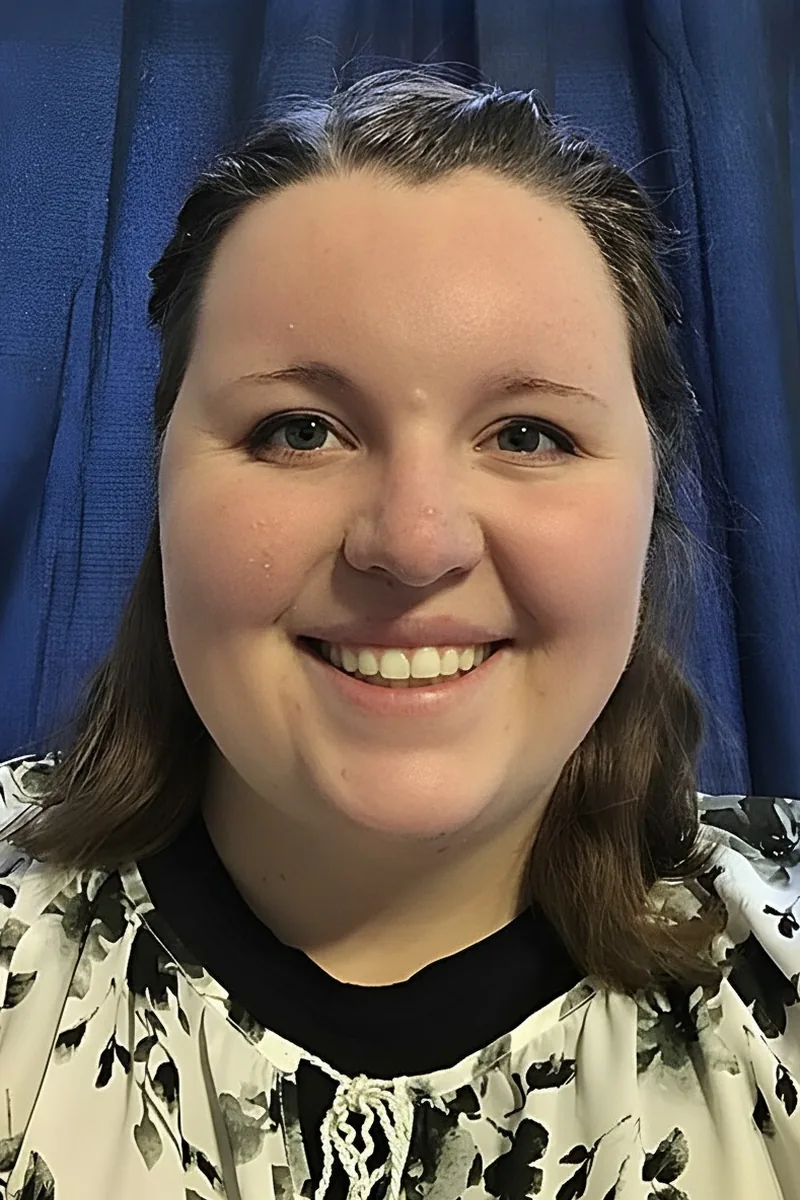
Hannah's hands-on experience tutoring math as an elementary teacher's aide means she understands exactly where younger students get stuck — whether it's place value, fractions, or early word problems. She asks guiding questions that lead a student to the answer step by step, building genuine number sense instead of rote calculation habits.
From fraction operations in elementary school to derivatives in calculus, Jaela covers the full math spectrum and zeroes in on the specific concept causing a student trouble. Her biology degree required heavy quantitative coursework, so she's comfortable breaking down everything from proportional reasoning to function behavior with real clarity. Rated 4.8 by students.
I am pursuing a Master's major in Clinical Laboratory Sciences (CLS). I enjoy math and science, having had graduated from chemical engineering, and would love to figure out how to support you on your academic journey!
From pre-algebra fundamentals through Calculus 2, Aaron covers the full math pipeline and knows exactly where the common stumbling blocks sit — fractions-to-ratios in middle school, the abstraction jump in algebra, and the conceptual leap into limits and integration. His mechanical engineering grad work keeps him using this math daily, so he explains it as a living toolset rather than isolated procedures. Rated 5.0 by students.
Sydny's math tutoring zeroes in on translating word problems into equations and building the algebraic reasoning that trips students up before they ever reach calculus. Her science-heavy background means she naturally connects math concepts to real applications — rates of change in biology, proportional reasoning in chemistry — which tends to make abstract procedures feel less arbitrary.
Frances graduated magna cum laude from Duke with a psychology degree, which means she spent years working with statistics, research design, and data analysis — the kind of applied math that makes abstract concepts feel grounded in something real. Her 35 ACT score confirms she's sharp across the full range of math content, and her background as a full-time educator means she knows how to spot exactly where a student's reasoning goes off track and rework the explanation until it lands.
Biomedical engineering at Duke means Eric lives in math daily — differential equations modeling biological systems, linear algebra for imaging algorithms, statistical analysis for lab data — so the algebra and calculus he tutors are tools he actively uses, not distant memories from a textbook. That engineering context lets him answer the perennial 'when will I ever use this?' question with specific, concrete examples. He scored a 36 on the ACT and is rated 5.0 by students.
Scoring a 35 ACT composite means Bryce has the kind of mathematical fluency that spans arithmetic through early calculus — and the patience to meet a student at whatever level they're working through. He's especially effective at untangling word problems, showing students how to translate messy real-world language into clean equations they already know how to solve.
While Alex's primary expertise is in the humanities, he tutors math at the foundational and middle-school level, covering topics like fractions, ratios, basic equations, and word problems. His structured, patient approach — rated 5.0 by students — translates well to breaking down multi-step math problems into manageable pieces.
Whether it's simplifying fractions in pre-algebra or tackling integrals in calculus, Florence covers the full math pipeline and knows how each level builds on the last. Her 36 ACT composite and Duke coursework in discrete math, probability, and calculus mean she can pinpoint exactly which foundational concept is causing a roadblock and address it directly.
From fraction operations in middle school to derivatives in calculus, Simon covers a wide arc of math and zeroes in on the conceptual gaps that cause students to stall. His quantitative background — reflected in a 1590 SAT — means he can trace a student's algebra mistakes back to the underlying misunderstanding rather than just correcting the arithmetic. He's especially sharp at teaching word-problem translation, where students learn to convert messy real-world scenarios into clean equations.
Engineering coursework at Duke means Natalie uses math daily — from algebraic manipulation and trigonometric identities to calculus applications in structural analysis. A 35 ACT composite backs up that fluency, and she's particularly effective at showing students the reasoning behind each step so they can solve problems independently, not just follow a memorized procedure.
Glioblastoma research at Duke Medical Center means Callie spends her days buried in quantitative data — analyzing tumor response curves, modeling treatment variables, running statistical comparisons — so the math she tutors from pre-algebra through calculus is the same math she actually uses. Her biology and environmental science training layered on additional quantitative depth, from population modeling to spatial analysis, giving her multiple real-world frames for concepts that can otherwise feel purely abstract. She scored a 1560 on the SAT and carries a 4.7 student rating.
While history and writing are Bethany's primary strengths, her 1450 SAT score reflects solid quantitative skills, and she tutors math at the foundational and middle-school level. She's particularly effective with students who feel intimidated by math, using structured, step-by-step problem breakdowns that build confidence with arithmetic, fractions, ratios, and basic algebraic thinking.
Caleb's math tutoring spans everything from fractions and ratios up through calculus, but he's especially sharp at identifying the specific conceptual gap holding a student back — whether that's integer operations, proportional reasoning, or reading word problems carefully. His 35 ACT score confirms he can move fluidly across math topics and break them down clearly.
A neuroscience degree involves serious quantitative coursework — calculus, statistics, and the kind of applied math that shows up in data analysis and modeling. Julie connects mathematical concepts to real problem-solving rather than isolated exercises, and her 1480 SAT score speaks to the foundational rigor she brings to arithmetic through pre-calculus topics.
A Duke math graduate who spent years tutoring middle and high schoolers through the university's Program in Education, Taariq has seen nearly every place students get stuck — from fraction operations to function transformations. He works through problems alongside students, catching misconceptions in real time instead of just checking final answers. His 4.9 rating speaks to an approach that builds genuine mathematical reasoning.
I am a freshman at Vanderbilt University currently pursuing a B.S. in Biochemistry. My inquisitive nature has fostered a love for mathematics, the natural sciences, and how they interact to produce the world we experience every day. This extends to my teaching strategy, where I emphasize the importance of conceptual understanding rather than pure memorization of equations and steps. My recent experience in a wide variety of Advanced Placement courses lends me insight to recent changes in course objectives and exam formatting.
Scoring a 1590 on the SAT required Zhong to master everything from proportional reasoning to quadratic modeling under tight time constraints. He brings that same efficiency to general math tutoring, breaking multi-step problems into clear, repeatable strategies that build real number sense.
From arithmetic fundamentals through pre-calculus and calculus, Tammy covers the full math pipeline and knows exactly where common gaps hide — fractions that were never fully understood, or function notation that got memorized without meaning. Her 1550 SAT and science-heavy coursework at Duke mean she can connect abstract math concepts to real applications that make them click.
From fraction operations in middle school to limits in early calculus, Earnest covers a wide range of math topics and connects each one to the reasoning behind it. His dual engineering degrees mean he's spent years applying math to real problems — and he brings that intuition to every session, making formulas feel less arbitrary.
From pre-algebra fundamentals through calculus and beyond, Elizabeth has used math as a daily working language across a physics degree, a biomedical engineering PhD, and postdoctoral research in gene therapy. That range means she can pinpoint exactly where a concept breaks down — whether it's fraction operations, quadratic behavior, or rate-of-change reasoning — and rebuild understanding from that specific point. She's rated by students who value her ability to make abstract math feel concrete.
From fraction operations in elementary school to functions and graphing in algebra, Alyssa adjusts her explanations based on how each student processes numerical information — a skill sharpened by her psychology training in cognitive assessment. She scored a 1550 on the SAT, and her strength in quantitative reasoning shows in how she breaks multi-step word problems into clear, logical pieces.
From pre-algebra through calculus, Emmanuel's approach to math centers on making sure students understand the reasoning behind each step rather than mimicking procedures. His science and medical background means he constantly connects math concepts — like rates of change or proportional reasoning — to real-world applications that make abstract ideas click.
While literature is Renee's doctoral specialty, she also tutors math with the same structured, patient approach she brings to her primary subjects. She's particularly effective with students who feel anxious about math, breaking problems into logical steps and rebuilding confidence in the process.
Katherine's subject range includes algebra and calculus, so she's comfortable walking younger or returning students through foundational concepts like fractions, order of operations, and basic equation-solving. She treats math the same way she treats language learning: breaking unfamiliar notation into logical steps until the pattern clicks rather than feels memorized.
Justin's economics minor at Duke meant working through quantitative coursework alongside his history and religious studies degrees, giving him comfort with mathematical reasoning that many humanities tutors lack. He approaches math by walking through each problem as a logical argument — premise, steps, conclusion — a habit sharpened by years of graduate-level analytical work at Yale. Rated 5.0 by students.
While Gregory's deepest expertise is in the humanities, he also tutors math and brings the same structured, step-by-step approach he uses in essay writing to problem-solving. He's particularly effective with students who freeze up when a math problem doesn't look like the example — teaching them to identify what a question is actually asking before jumping to a formula.
A bachelor's in math education means Eric didn't just learn mathematics — he studied how people learn it, which changes the way he explains everything from fraction operations to quadratic equations. He pinpoints the exact step where confusion sets in and rebuilds understanding from that point forward. His 5.0 rating speaks to how well that approach works.
Studying economics means Ify lives in quantitative territory — supply and demand curves, marginal analysis, optimization problems — so the math she tutors from pre-algebra through calculus isn't abstract to her; it's the toolkit she uses daily. A 1550 SAT and 32 ACT back up that fluency, and her 5.0 rating speaks to a low-pressure teaching style where no question feels too basic to ask twice.
From algebra through calculus, Prakash taught and tutored math extensively as a graduate instructor at UT Tyler, covering everything from polynomial factoring to integration techniques with undergrad engineering students. That teaching experience shows in how he sequences problems — starting with the underlying concept, then layering in complexity so each step feels like a natural extension rather than a new mystery. Rated 4.8 by students.
Whether a student is wrestling with fraction operations or pushing through quadratic modeling, Devanshi adapts her explanations to the specific concept causing trouble rather than re-teaching an entire chapter. Her economics and science background at Duke means she constantly connects math to real applications — budgets, data sets, growth curves — which gives students a reason to care about the mechanics.
Jennifer's primary expertise is in history and writing, but her M.Ed. in Curriculum and Instruction means she's trained in how students actually learn — including the math concepts that trip them up in elementary and middle school. She's particularly strong at walking through word problems, where the real challenge is often reading comprehension and logical sequencing rather than computation itself. Rated 5.0 by families.
From arithmetic foundations through AP-level coursework, Roger has a track record of excelling in math — he scored 5's on both AP Calculus AB and AP Statistics and continues with quantitative work in his Duke economics program. He's particularly good at identifying the exact concept where a student's understanding breaks down and rebuilding from that point. That diagnostic instinct keeps sessions efficient and targeted.
Dance choreography is essentially applied geometry and pattern logic — counting phrases, spatial relationships, symmetry, rotations — and Alisha's BFA training wired her to think in those structures instinctively. She pairs that spatial intuition with strong formal range across pre-algebra through calculus, and her 34 ACT score confirms she can back up the visual thinking with rigorous problem-solving. Her experience as a TA for an honors writing course also sharpened her ability to explain complex ideas clearly, which shows when she's unpacking a tricky sequence of algebraic steps.
From arithmetic fundamentals through algebra and into calculus, Jordan treats math as a language that requires understanding the logic behind each operation, not just memorizing steps. His science background means he constantly connects mathematical concepts to real applications — showing why exponential functions matter in biology or how ratios appear in chemistry. That context gives students a reason to care about the math, which makes it far easier to retain.
Not every math tutor needs to be an engineer — sometimes what a struggling student needs is someone who explains concepts in plain language and builds confidence methodically. Lisa teaches algebra and calculus alongside her humanities subjects, and she approaches math the way a careful writer approaches a draft: step by step, checking each piece of logic before moving forward. Her 4.9 rating speaks to how well that patient, structured style works across very different kinds of learners.
Not every math tutor needs to be an engineer — sometimes what a struggling student needs is someone who learned math methodically rather than intuitively. Myles tutors algebra through calculus and recently tackled GRE Quantitative prep, so he's comfortable with everything from factoring polynomials to interpreting data sets. He explains concepts step by step, making sure each piece clicks before moving on.
From pre-algebra through calculus, Zoey's approach to math is about connecting each new concept to something a student already understands — showing how fractions lead to ratios lead to proportional reasoning, so nothing feels like it appeared out of thin air. Her biology-heavy background means she's especially good at grounding abstract math in real measurement and data problems that make the numbers feel purposeful.
Testimonials
Because the right Math tutor makes all the difference.
Average Session Rating – Based on 3.4M Learner Ratings
Practice Math
Free practice tests, flashcards, and AI tutoring for Math
Other Greensboro Tutors
Related Math Tutors in Greensboro
Frequently Asked Questions
Varsity Tutors matches Greensboro students with expert Math tutors for 1-on-1 instruction. We pair each student with a tutor based on their specific needs, learning style, and goals.
Whether you need homework help, exam prep, or want to get ahead, our Math tutors are ready to help.
Common challenges include gaps from earlier material, difficulty with specific concepts, and trouble applying learning to new problems. These issues can snowball quickly in Math.
A tutor identifies where you're stuck, fills in gaps, and provides targeted practice. The 1-on-1 format means you get help exactly where you need it.
Tutors work with your student's actual coursework—homework assignments, class notes, and upcoming tests. This keeps tutoring directly relevant to what's happening in the classroom.
When you share information about your student's school and curriculum, we can match you with a tutor who has relevant experience.
All tutors complete background checks, credential verification, and teaching evaluation. Many of our Math tutors hold advanced degrees or have years of teaching experience.
You can review tutor profiles to find someone with the right background for your student's level and needs.
Many students see improved grades within a few weeks, along with better understanding of Math concepts and more confidence tackling challenging material.
Tutors track progress and adjust their approach to ensure continued improvement.
Most students benefit from 1-2 sessions per week. More frequent sessions help if your student is significantly behind or has an important exam coming up.
Your tutor can recommend a schedule based on your student's specific situation and goals.
Tutoring is purchased in packages of hours, with rates varying by tutor experience. Varsity Tutors offers several options to fit different budgets and needs.
You can discuss pricing during your consultation to find what works best.
Your tutor will assess where your student is, discuss goals, and start working on priority areas. Most students bring current homework or upcoming test material to focus on.
By the end, you'll have a clear sense of how the tutor can help and a plan for moving forward.
Let’s find your perfect tutor
Answer a few quick questions. We’ll recommend the right plan and match you with a top 5% tutor.