Award-Winning College Physics Tutors
serving Flint, MI
College Physics
Tutors in Flint
Private 1-on-1 tutoring, weekly live classes for academic support, test prep & enrichment, practice tests and diagnostics, and more to elevate grades and test scores.
Based on 3.4M Learner Ratings
UniversitiesSchools & Universities
DeliveredHours Delivered
ProficiencyGrowth in Proficiency
Who needs tutoring?
No obligation. Takes ~1 minute.
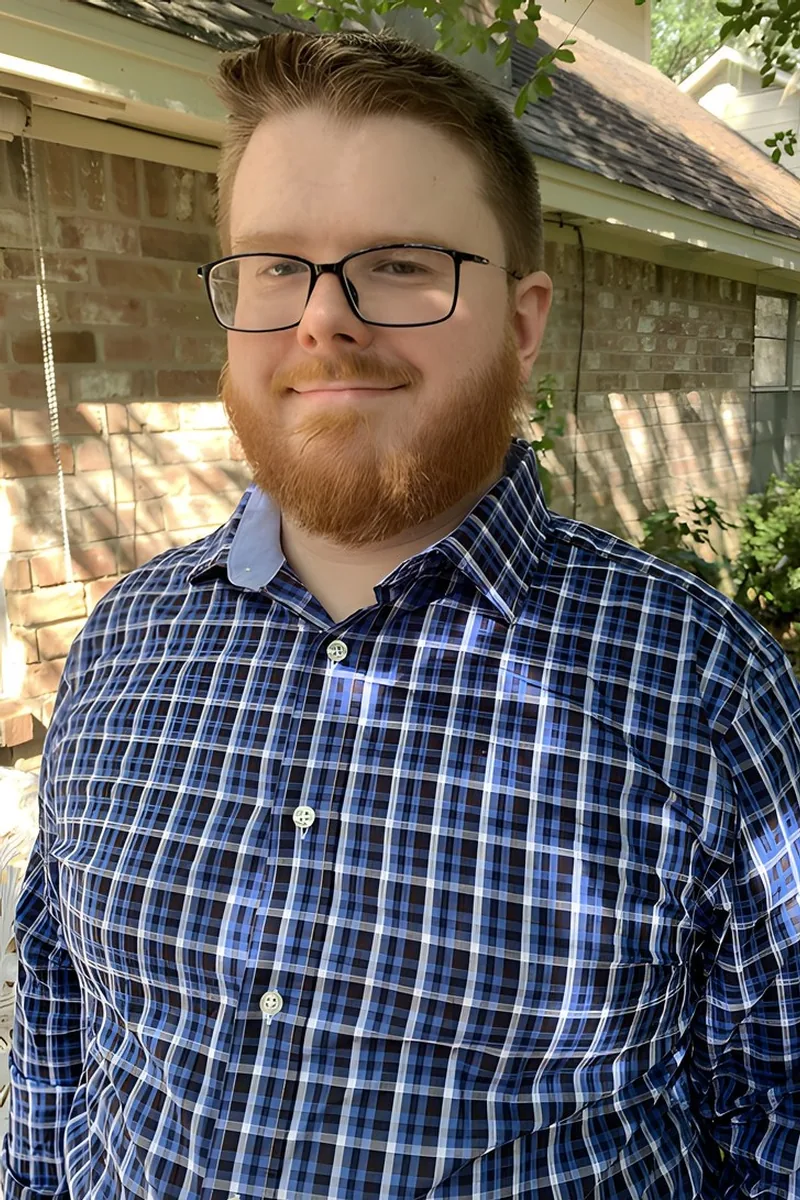
Four years teaching undergraduate physics labs at the University of Michigan — especially courses designed for non-STEM majors — taught Michael how to strip intimidating topics like electromagnetism, circuits, and wave optics down to their physical intuition before layering the math back on. His PhD research deepened that fluency across the full spectrum of college physics, from introductory mechanics through advanced electrodynamics and special relativity. Rated 4.7 by students.
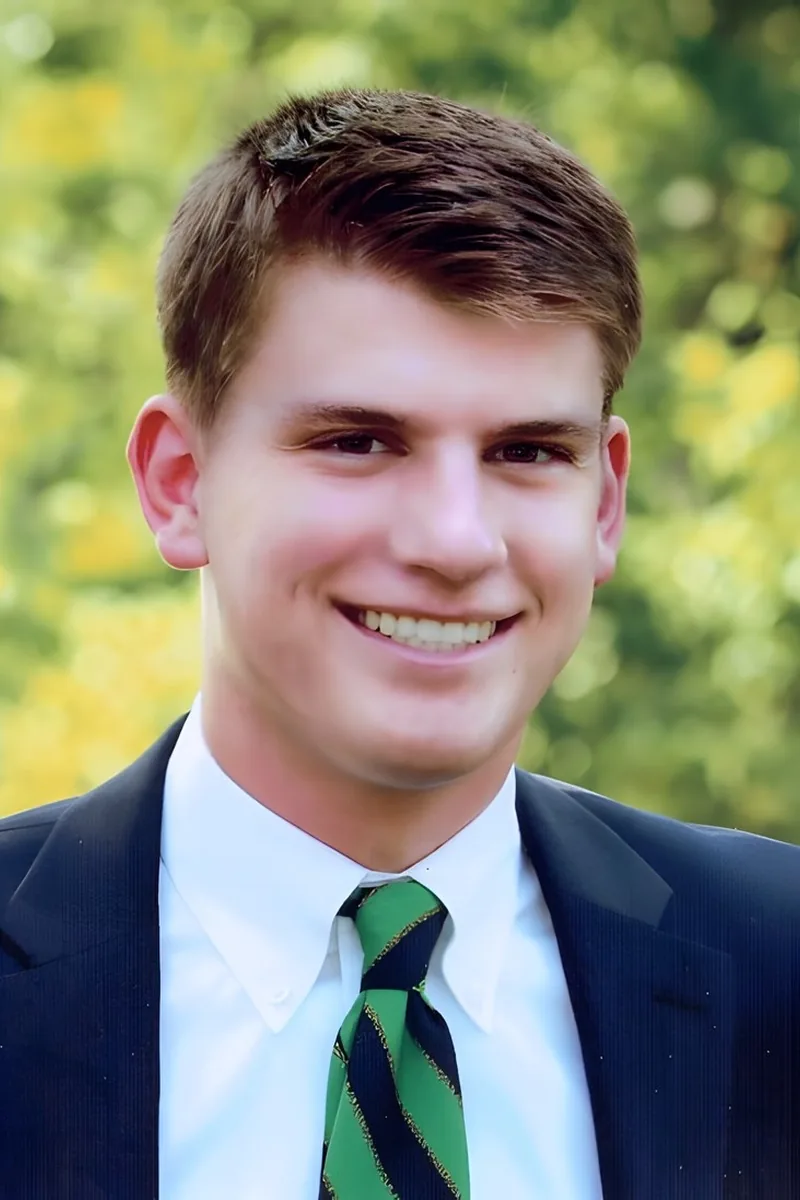
Studying mechanical engineering at Yale means Andrew's daily coursework runs on calculus-based physics — statics, dynamics, thermodynamics, fluid mechanics — so the concepts in a college physics sequence are ones he's actively applying, not distantly remembering. He breaks down force and energy problems by starting with the physical setup and constraints before touching an equation, a habit drilled into him by engineering design courses where skipping that step means your bridge collapses. His 1550 SAT reflects the quantitative precision he brings to problem solving.
As a premed at Cornell, Pratik takes the same calculus-based physics sequence his students are grinding through — mechanics, waves, thermodynamics, E&M — which means he knows exactly which problem types show up on exams and where the conceptual gaps tend to hide. He breaks down force diagrams and energy conservation problems step by step, connecting the math to the physical intuition that makes solutions click rather than feel like formula hunts. His 35 ACT reflects the kind of sharp quantitative reasoning that translates directly to tackling multi-concept physics problems.
Every problem in calculus-based physics starts with the same question: what are the forces, and how do they interact? Lane's mechanical engineering degree means he spent years answering that question across statics, dynamics, thermodynamics, and material behavior — not as textbook exercises but as design constraints for systems that actually need to work. He breaks down free-body diagrams and energy methods with the practicality of someone who's had to get the physics right before anything gets built.
I am a learner for life and I love sharing my knowledge with others. I have tutored middle-school students for one year and university students for two years. My focus is mainly on mathematics, chemistry, and related fields. I have degrees in both mathematics and biomedical engineering so I cover a lot of ground in the physiological sciences, computer programming, and statistics as well. Taking tests is one of my strong points and I have some killer strategies to share!
Free-body diagrams, energy conservation, projectile motion — Douglas spent his mechanical engineering degree solving these problems daily, which means he can walk through college physics concepts with the fluency of someone who actually built things with them. He's particularly good at teaching students to set up problems cleanly before diving into math, a habit that separates students who grind through equations from those who see the physics first. Rated 5.0 by students.
Between a math degree and hands-on tutoring experience in college physics, Matthew tackles the subject from both sides — he knows the calculus cold and he knows where students actually get stuck applying it to force diagrams, projectile motion, and conservation laws. He breaks problems into clear steps, starting with the physical setup before any numbers appear, so students learn to think through scenarios rather than hunt for formulas. Rated 4.9 by students.
Being a final-year medical student who also tutors math through calculus gives Pareesa an unusual angle on college physics — she regularly encounters mechanics and fluid dynamics in clinical contexts (blood pressure as hydrostatics, lung ventilation as gas laws) and can translate those connections back into the problem-solving framework introductory courses demand. Her 5.0 rating suggests that bridging physics concepts to something concrete and memorable actually clicks for students.
Medical school demands a working fluency in physics — from fluid dynamics in the cardiovascular system to optics in clinical imaging — and Macklin applies that perspective to college-level topics like electromagnetism, thermodynamics, and wave mechanics. He unpacks derivations so students understand where formulas come from, not just when to use them. His 5.0 rating speaks to that approach.
Working as an engineer in the automotive industry means William solves force balance, energy transfer, and dynamics problems professionally — the same concepts that fill college physics problem sets, just applied to real drivetrain and suspension systems. That hands-on engineering context lets him walk through free-body diagrams and work-energy calculations with concrete examples that make abstract coursework click. Holds a 5.0 rating.
Having worked as a mechanical engineer in the automotive industry, Matthew regularly deals with the same physics that fills college problem sets — force analysis, torque, material stress, energy transfer — except applied to real components under real constraints. That professional context lets him explain why a free-body diagram matters or how thermodynamic cycles actually behave, grounding abstract coursework in something tangible. His 1530 SAT reflects the quantitative sharpness he brings to calculus-based problem solving.
Samantha teaches AP Physics 1 and 2 alongside college-level physics, which means she's comfortable moving between the conceptual framing of introductory courses and the more rigorous calculus-based problem solving that college physics demands. Her biology degree at Michigan gives her a useful cross-disciplinary lens — she's particularly good at grounding abstract topics like wave optics or fluid dynamics in the biological systems where students can actually see them at work. A 35 ACT reflects the quantitative reasoning she brings to multi-step problems.
A Doctor of Engineering in Materials Science means Vazrik has spent years applying force analysis, wave behavior, and thermodynamic principles to understand how real materials deform, conduct heat, and respond to stress — which is essentially college physics with consequences. He grounds problem-solving in those tangible engineering contexts, so concepts like stress-strain relationships or heat transfer equations carry physical meaning rather than staying abstract. Rated 4.7 by students.
Studying physics and mathematics at the University of Windsor meant Ozair spent years working through the full sequence of calculus-based mechanics, electromagnetism, and thermodynamics — not as service courses for another major, but as the core of his degree. That depth shows when he breaks down problems involving torque, Gauss's law, or wave superposition, because he can trace each concept back to the underlying math and explain where the formulas actually come from.
Biomedical engineering forced Adam to internalize physics from the body up — fluid dynamics in blood flow, stress-strain relationships in tissue, electrical signals in neural circuits — which gives him a concrete anchor for the abstract equations that fill college physics problem sets. His master's work in CAD and design kept him deep in applied mechanics and material behavior, so he can walk through force analyses and energy problems with the fluency of someone who's actually modeled these systems. Rated 4.9 by students.
Engineering students at Michigan Tech take the same calculus-based physics sequence Sawyer is currently working through — mechanics, E&M, thermodynamics — which means he knows exactly which problem types are showing up on exams right now and where the conceptual gaps tend to hide. He leans on his strong quantitative instincts (1510 SAT) to break down force diagrams and energy conservation setups step by step, making sure the physics reasoning clicks before the math takes over. Rated 4.7 by students.
I'm working towards a B.S. in Physics at Michigan State University with a minor in Computational Mathematics, Science, and Engineering. I've made the Chancellor's List every semester and am a member of my university's Honors College. I've worked with students as young as 11 and as old as 25 for the past couple of years, both online and in-person. Since I'm still a student myself, I can relate to clients and teach in a way that creates a comfortable and safe space. I tutor a broad range of subjects and would love to help you!
College-level physics ramps up the mathematical rigor fast — suddenly you're integrating electric fields, applying vector calculus to fluid dynamics, or solving differential equations for oscillatory motion. Jason earned his B.S. in Physics and approaches each topic by grounding the math in physical intuition first, then layering in the formal derivations.
Working as a project leader in the automotive industry, Annie solves the same force analysis, torque, and energy transfer problems every day that show up on college physics problem sets — except her answers have to hold up in a real engine bay. Her mechanical engineering degree means she's been through the full calculus-based physics sequence and can walk students through the problem-setup logic that turns a wall of text into a clean free-body diagram or energy conservation equation. Rated 4.9 by students.
Studying molecular biophysics at Brown means Srini lives at the intersection of physics and biology — applying thermodynamics, electromagnetism, and wave mechanics to understand how molecules actually behave in living systems. That dual perspective makes him especially effective at unpacking the conceptual reasoning behind problems in mechanics, circuits, and optics that trip up so many college students.
A PhD in biomedical engineering means Andrew has spent years applying physics to biological systems — modeling forces on joints, analyzing fluid flow through tissues, understanding how electromagnetic fields interact with the body. That depth in mechanics, thermodynamics, and E&M carries directly into the calculus-based problem solving college physics courses demand. Rated 4.9 by students.
Studying applied mathematics at Caltech means Samuel encounters physics constantly — from classical mechanics and energy conservation to electromagnetism and wave behavior. He breaks down the math behind physical systems so that equations like Maxwell's or Newton's second law feel like tools rather than obstacles.
A computer science degree from UCLA means Michael spent semesters deep in the physics that underpins simulation and graphics — kinematics, force modeling, energy systems — and his 1560 SAT confirms the quantitative chops to handle calculus-based problem solving. He teaches students to treat each physics problem like debugging code: isolate what you know, identify the governing principle, then execute step by step until the answer falls out.
College-level physics ramps up fast, and the jump from textbook examples to exam problems can be brutal. Bryan earned his B.S. in Physics and tackles that gap by teaching problem-solving frameworks — symmetry arguments in electrostatics, constraint equations in multi-body dynamics — that transfer across chapters instead of requiring a new trick every week.
Biomedical engineering at VCU meant Waleed spent years applying physics to biological systems — modeling forces on prosthetic joints, analyzing fluid flow through vessels, understanding the electromagnetic principles behind imaging equipment like MRI and ultrasound. That gives him a concrete hook for the mechanics, thermodynamics, and E&M topics that fill college physics problem sets, since he can ground abstract equations in systems students can actually picture. Holds a 5.0 rating.
Studying biophysics at Rice means Aadith lives where physics and biology collide — modeling protein folding forces, analyzing fluid flow through membranes, applying thermodynamic principles to living systems — so he brings a concrete, research-informed perspective to the mechanics, waves, and electromagnetism that fill college physics syllabi. His 1590 SAT reflects serious quantitative chops, and his dual exposure to physics and biochemistry means he can walk through a tough problem from multiple angles until the reasoning clicks.
Ava's strength in college physics isn't a deep engineering background — it's her ability to teach students how to actually study the material. She breaks down problem-solving into structured steps, emphasizing how to read a force diagram or energy scenario before jumping to equations, and builds note-taking systems tailored to physics courses where lecture moves fast and notation piles up quickly.
Premed coursework and a computing degree at Notre Dame meant Aidan sat through the full sequence of calculus-based physics — mechanics, E&M, waves — while simultaneously learning to think algorithmically about complex problems. That combination is particularly useful when students hit the wall where physics stops being plug-and-chug and starts requiring multi-step reasoning, like connecting free-body diagrams to energy methods or translating a word problem into the right integral. His 35 ACT speaks to the quantitative fluency he brings to those tougher setups.
Studying computer science and applied math at Harvard means Derek uses physics constantly — from electromagnetism in circuit design to mechanics in computational modeling. He tackles college-level topics like Lagrangian dynamics and wave equations by connecting the math to physical intuition, making dense derivations feel less abstract.
Dylan has taken both college mechanics and electricity/magnetism at Northwestern's engineering school, so he's worked through the exact problem sets — free-body diagrams, circuit analysis, wave optics — that trip up most college physics students. His computer science background also means he's comfortable walking through the math-heavy derivations that make physics click rather than feel like guesswork. Rated 5.0 by students.
Chemical engineering at Georgia Tech means Aimee's spent years solving problems that blend thermodynamics, fluid mechanics, and energy balances — the same physics concepts that make college-level courses demanding, except she's applied them to reactor design and process optimization. Her biosystems engineering graduate work adds another layer, connecting classical mechanics and heat transfer to biological systems in ways that make abstract problem sets feel more concrete. Rated 4.9 by students.
Testimonials
Because the right College Physics tutor makes all the difference.
Average Session Rating – Based on 3.4M Learner Ratings
Other Flint Tutors
Related Science Tutors in Flint
Frequently Asked Questions
Varsity Tutors matches Flint students with expert College Physics tutors for 1-on-1 instruction. We pair each student with a tutor based on their specific needs, learning style, and goals.
Whether you need homework help, exam prep, or want to get ahead, our College Physics tutors are ready to help.
Common challenges include gaps from earlier material, difficulty with specific concepts, and trouble applying learning to new problems. These issues can snowball quickly in College Physics.
A tutor identifies where you're stuck, fills in gaps, and provides targeted practice. The 1-on-1 format means you get help exactly where you need it.
Tutors work with your student's actual coursework—homework assignments, class notes, and upcoming tests. This keeps tutoring directly relevant to what's happening in the classroom.
When you share information about your student's school and curriculum, we can match you with a tutor who has relevant experience.
All tutors complete background checks, credential verification, and teaching evaluation. Many of our College Physics tutors hold advanced degrees or have years of teaching experience.
You can review tutor profiles to find someone with the right background for your student's level and needs.
Many students see improved grades within a few weeks, along with better understanding of College Physics concepts and more confidence tackling challenging material.
Tutors track progress and adjust their approach to ensure continued improvement.
Most students benefit from 1-2 sessions per week. More frequent sessions help if your student is significantly behind or has an important exam coming up.
Your tutor can recommend a schedule based on your student's specific situation and goals.
Tutoring is purchased in packages of hours, with rates varying by tutor experience. Varsity Tutors offers several options to fit different budgets and needs.
You can discuss pricing during your consultation to find what works best.
Your tutor will assess where your student is, discuss goals, and start working on priority areas. Most students bring current homework or upcoming test material to focus on.
By the end, you'll have a clear sense of how the tutor can help and a plan for moving forward.
Let’s find your perfect tutor
Answer a few quick questions. We’ll recommend the right plan and match you with a top 5% tutor.