Award-Winning College Chemistry Tutors
serving Lexington, KY
College Chemistry
Tutors in Lexington
Private 1-on-1 tutoring, weekly live classes for academic support, test prep & enrichment, practice tests and diagnostics, and more to elevate grades and test scores.
Based on 3.4M Learner Ratings
UniversitiesSchools & Universities
DeliveredHours Delivered
ProficiencyGrowth in Proficiency
Who needs tutoring?
No obligation. Takes ~1 minute.

Dharani's biology degree and math minor at the University of Kentucky mean she's navigated college chemistry from the quantitative side — comfortable with the dimensional analysis, molarity calculations, and gas law algebra that derail students who came in expecting less math. She approaches each problem by isolating where the chemistry logic ends and the arithmetic begins, so students stop conflating conceptual confusion with calculation errors. Rated 4.9 by students.
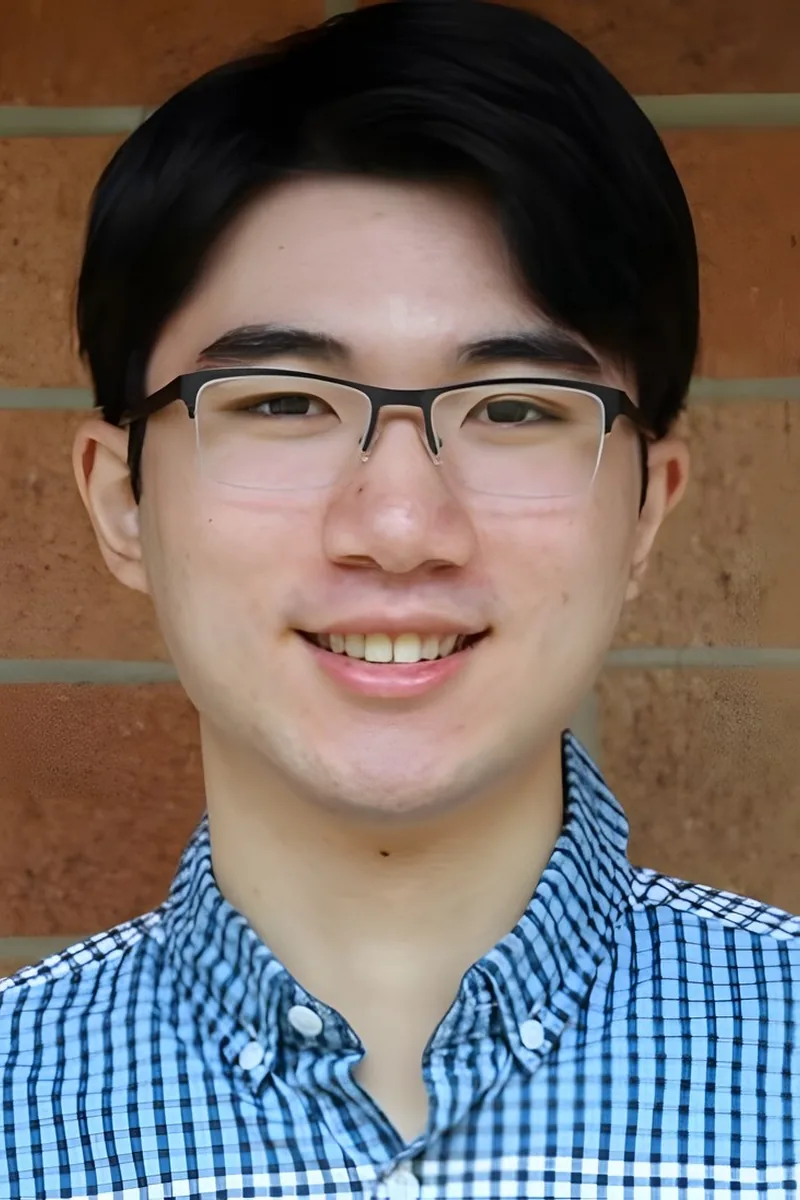
Running an organic chemistry recitation at the University of Kentucky is Jason's day job, so he's deeply familiar with the leap students face going from general chemistry into reaction mechanisms, spectroscopy, and stereochemistry. He unpacks each mechanism arrow by arrow, making sure students understand electron flow rather than just copying patterns from a textbook. Holds a 5.0 rating.
Five semesters as a chemistry TA — three in general chemistry, two in organic — means Troy has explained concepts like equilibrium, stoichiometry, and acid-base reactions to hundreds of students working through the same material, and he knows exactly which misconceptions show up on exam day versus which ones quietly compound over weeks. His biochemistry degree and upcoming medical training at UVA keep him sharp on how gen chem topics feed into upper-level science, so he teaches each concept with an eye toward what's coming next.
I am no longer needed.
First-year med students don't forget what tripped them up in gen chem — and Nishad, currently at Sidney Kimmel Medical College at Thomas Jefferson University, uses that recent memory to zero in on the conceptual breaks that derail students in topics like electron configuration, chemical bonding, and equilibrium. His premed background means he's taken college chemistry with the same stakes his students face, and he teaches it by connecting the molecular-level reasoning to the calculations so neither piece feels like it's floating on its own.
Having TA'd general chemistry at Cornell — running problem-solving sessions and later training other TAs in teaching techniques — Alec knows exactly which concepts derail students: electron configurations that don't match periodic trends, buffer problems where the Henderson-Hasselbalch equation gets misapplied, or enthalpy calculations where sign conventions silently flip answers. His genetics and pre-med coursework means he's also seen how gen chem principles resurface in biochemistry and organic chemistry, so he teaches each topic with an eye toward where it's headed. Rated 4.8 by students.
Tackling college-level chemistry means juggling thermodynamics, kinetics, and equilibrium all in the same problem set. Brittany was employed at the University of Pennsylvania's Tutoring Center specifically for General Chemistry I and II, where she worked with both undergraduates encountering the material for the first time and graduate students brushing up on fundamentals. That range sharpened her ability to adjust explanations to any level of preparation.
Thermodynamics, equilibrium constants, and reaction kinetics demand more than memorizing formulas — they require thinking about why a reaction proceeds the way it does. Garrett's coursework in physical chemistry and organic chemistry means he can unpack the energy landscapes and molecular interactions behind each concept. He connects general chemistry principles to their applications in biochemistry and physiology, which makes abstract ideas click faster.
Predentistry at Columbia means Erica is preparing for a career where gen chem concepts like acid-base chemistry, molecular bonding, and solution properties aren't abstract — they're clinically relevant every day. Her Harvard history of science background also gives her an unusual knack for explaining *why* chemical models were built the way they were, which makes memorizing periodic trends and electron configurations feel less arbitrary. Rated 4.9 by students.
General chemistry at the college level demands comfort with both conceptual reasoning and quantitative problem-solving — balancing redox half-reactions one day, then interpreting molecular orbital diagrams the next. Kate's master's work in environmental engineering required deep fluency in chemical thermodynamics and kinetics, and she brings that applied perspective to topics like enthalpy calculations, acid-base equilibria, and electrochemistry.
Thermodynamics is Rahul's favorite corner of chemistry — and as a Cornell chemical engineering graduate (magna cum laude), he's applied concepts like enthalpy, Gibbs free energy, and reaction spontaneity far beyond the gen chem textbook, through upper-level coursework in physical chemistry and process design. He pushes students to grasp the conceptual reasoning behind each problem before touching the math, so topics like calorimetry and equilibrium stop feeling like disconnected formula exercises. Rated 4.9 by students.
Working in a Yale research lab with tools like CRISPR-Cas9 means Matthew encounters gen chem principles — reaction kinetics, molecular interactions, buffer systems — in live experimental contexts, which sharpens how he explains them back at the introductory level. His biochemistry and molecular biology coursework built fluency with the bridge between general chemistry and its applications, so he can show students exactly why mastering something like equilibrium or thermochemistry pays off two courses down the road. Holds a 5.0 rating.
Second-year med student at Baylor College of Medicine, Michelle still remembers exactly which gen chem concepts — electron orbitals, buffer systems, reaction thermodynamics — became non-negotiable once biochemistry and physiology started building on them. Her Rice biochemistry degree means she learned college chemistry at a place where the coursework was rigorous enough to expose every shortcut that doesn't hold up, and she teaches accordingly: precise on the fundamentals so nothing collapses later.
Having scored a 36 on the ACT and taught honors chemistry alongside AP-level math and statistics, Ethan brings a quantitative sharpness to college chemistry that's especially useful when students hit the calculation-dense stretches — gas law problems, enthalpy calculations, solution stoichiometry. His environmental science background also means he can ground abstract topics like chemical kinetics and equilibrium in real-world systems where those principles visibly play out. Rated 5.0 by students.
Samantha studied Chemistry & Chemical Biology at Cornell with a food science concentration, so she's tackled everything from organic reaction mechanisms to thermodynamics and spectroscopy at the college level. She teaches tricky concepts like equilibrium constants, electrochemistry, and molecular orbital theory by building visual models that connect the math to what's physically happening at the molecular scale.
MIT's general chemistry sequence is notoriously fast — Vania not only survived it but tutored other students through it via the university's Seminar XL and Tutorial Services Room programs, where she got fluent in the exact places students stall out on topics like thermochemistry, equilibrium, and electron configuration. Her mechanical engineering training means she thinks about chemistry problems quantitatively, tracing how molecular-level behavior connects to the math rather than treating equations and concepts as separate tasks. Rated 5.0 by students.
Testimonials
Because the right College Chemistry tutor makes all the difference.
Average Session Rating – Based on 3.4M Learner Ratings
Nearby College Chemistry Tutors
Other Lexington Tutors
Related Science Tutors in Lexington
Frequently Asked Questions
Varsity Tutors matches Lexington students with expert College Chemistry tutors for 1-on-1 instruction. We pair each student with a tutor based on their specific needs, learning style, and goals.
Whether you need homework help, exam prep, or want to get ahead, our College Chemistry tutors are ready to help.
Common challenges include gaps from earlier material, difficulty with specific concepts, and trouble applying learning to new problems. These issues can snowball quickly in College Chemistry.
A tutor identifies where you're stuck, fills in gaps, and provides targeted practice. The 1-on-1 format means you get help exactly where you need it.
Tutors work with your student's actual coursework—homework assignments, class notes, and upcoming tests. This keeps tutoring directly relevant to what's happening in the classroom.
When you share information about your student's school and curriculum, we can match you with a tutor who has relevant experience.
All tutors complete background checks, credential verification, and teaching evaluation. Many of our College Chemistry tutors hold advanced degrees or have years of teaching experience.
You can review tutor profiles to find someone with the right background for your student's level and needs.
Many students see improved grades within a few weeks, along with better understanding of College Chemistry concepts and more confidence tackling challenging material.
Tutors track progress and adjust their approach to ensure continued improvement.
Most students benefit from 1-2 sessions per week. More frequent sessions help if your student is significantly behind or has an important exam coming up.
Your tutor can recommend a schedule based on your student's specific situation and goals.
Tutoring is purchased in packages of hours, with rates varying by tutor experience. Varsity Tutors offers several options to fit different budgets and needs.
You can discuss pricing during your consultation to find what works best.
Your tutor will assess where your student is, discuss goals, and start working on priority areas. Most students bring current homework or upcoming test material to focus on.
By the end, you'll have a clear sense of how the tutor can help and a plan for moving forward.
Let’s find your perfect tutor
Answer a few quick questions. We’ll recommend the right plan and match you with a top 5% tutor.