Award-Winning AP Calculus AB Tutors
serving Evansville, IN
AP Calculus AB
Tutors in Evansville
Private 1-on-1 tutoring, weekly live classes for academic support, test prep & enrichment, practice tests and diagnostics, and more to elevate grades and test scores.
Based on 3.4M Learner Ratings
UniversitiesSchools & Universities
DeliveredHours Delivered
ProficiencyGrowth in Proficiency
Who needs tutoring?
No obligation. Takes ~1 minute.

Limits, derivatives, and integrals each build on the last, so a shaky grasp of one topic can snowball fast in AP Calculus AB. Aidan tackles this by connecting each new concept back to its geometric meaning — showing, for example, why the derivative is a slope before diving into differentiation rules. His 1540 SAT and 35 ACT reflect the kind of precision he brings to exam preparation.
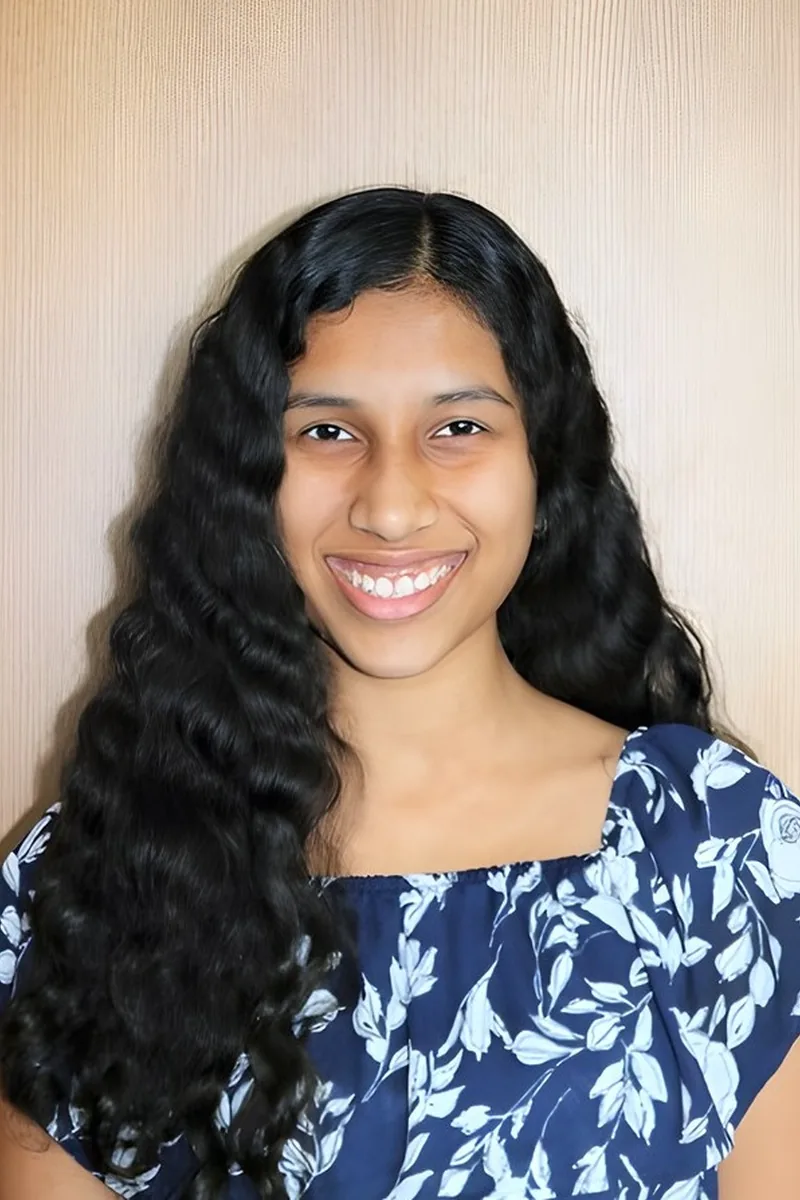
The jump from memorizing derivative rules to actually applying them — related rates, optimization, accumulation functions — is where most AP Calc AB students stall. Amy spent two years at Mathnasium teaching math across every level, which gave her a sharp sense of exactly where conceptual gaps form. She connects each calculus idea back to the algebra and precalc reasoning behind it, so students build real understanding instead of just pattern-matching.
Engineering freshmen at Notre Dame hit calculus hard from day one — Alexandra is currently living the material she teaches, working through the same derivative and integral concepts in her coursework that AB students face on the exam. That real-time fluency with limits, continuity, and the Fundamental Theorem means she knows exactly which ideas feel straightforward in lecture but fall apart on a timed free-response problem. Her 1530 SAT and 5.0 rating back up an approach built on recent, firsthand experience with the content.
Studying computer science and math at WashU means Victoria writes code that depends on calculus — implementing gradient descent, analyzing algorithm growth rates, computing areas under probability distributions — so she teaches AB concepts with the fluency of someone who actually uses them daily. She's particularly sharp at helping students nail the limit definition of the derivative and L'Hôpital's Rule, where careful algebraic reasoning matters more than memorized shortcuts. Rated 5.0 by students.
I'm currently a Process Assistant at an Amazon warehouse, which is like an assistant manager. My job is interesting, active, and varied, but I missed tutoring and want to make math and other subjects as easy as possible to approach and grasp for students. With the right time and a commitment to tailoring a tutoring style for the person being assisted, any student can pass their classes and retain lifelong knowledge and experience. I'm looking forward to working with you!
The leap from memorizing derivative rules to actually applying them — related rates, optimization, accumulation functions — is where AP Calculus AB gets difficult. Satvik earned a 5 on the AP exam and brings an engineer's perspective to every problem, showing students how to set up scenarios and interpret what their answers mean. His 5.0 tutoring rating speaks to how clearly he breaks down each concept.
Finance majors at Indiana's Hutton Honors College don't just take calculus as a prerequisite — they rely on derivatives to model how prices change and integrals to compute present value, which means Christopher teaches AB concepts with a built-in sense of what the math is actually measuring. His peer tutoring experience with quantitative tools and a 1470 SAT sharpen the precision he brings to walking students through limit definitions and the chain rule, two areas where small conceptual gaps snowball into free-response mistakes.
Actuarial science is essentially applied calculus under uncertainty — Jonathan's coursework revolves around using derivatives to price risk and integrals to model probability distributions, which keeps AB-level concepts sharp through daily use. His 32 ACT and deep comfort with limits, continuity, and the chain rule translate into clear, methodical explanations of the exact techniques the AP exam rewards most heavily.
Limits, derivatives, and the FTC aren't just abstract procedures — they describe how things change, which is central to the scientific work Wahala does as a neuroscience major at Indiana University. She breaks down each AP Calculus AB topic by connecting the graphical, numerical, and algebraic representations so students can tackle free-response questions with real understanding. Rated 5.0 by students.
As a dedicated tutor with a Bachelor's in Accounting and Finance from Indiana University - Bloomington, I have over 2 years of experience helping students master subjects like Financial Accounting, AP Calculus AB, and Algebra. My teaching philosophy centers on creating a supportive learning environment where students feel empowered to ask questions and engage deeply with the material. I believe that understanding concepts is crucial for academic success, and I strive to connect lessons to real-world applications. My passion for teaching stems from witnessing students gain confidence and achieve their goals.
The jump from memorizing derivative rules to actually interpreting what a derivative *means* — on a graph, in a word problem, inside a related-rates scenario — is where most AB students stall. Darren walks through each concept by tying the algebra back to geometric intuition, so that integration techniques and the Fundamental Theorem feel like natural extensions rather than new burdens. His math coursework at IUPUI keeps these ideas fresh and rigorous.
Limits, derivatives, and integrals each build on the last, so a shaky understanding early on can snowball fast in AP Calculus AB. Arthur tackles this by asking targeted questions that reveal exactly where a concept stopped clicking — then rebuilds from that point using straightforward language and visual explanations. He's studying math at Indiana University and has spent years teaching calculus-track students at every level.
The jump from Pre-Calculus to AP Calculus AB often comes down to one thing: understanding limits well enough that derivatives and integrals feel like natural next steps, not mysterious new operations. Andrew breaks down that conceptual bridge using precise mathematical language he honed through his MA, then connects it to the specific free-response styles the AP exam rewards.
Limits, derivatives, and integrals each build on the last, so a shaky grasp of one topic can quietly undermine everything that follows. Brooke tackles AP Calculus AB by connecting each concept back to its graphical and physical meaning — something her engineering training at Duke reinforces every day. She scored a 1550 on the SAT and carries that same precision into calculus.
Materials science engineers live in calculus — Jennifer's coursework meant using derivatives to characterize how material properties change under stress and integrals to calculate energy absorption across deformation curves, so she teaches AB concepts with that built-in sense of what the math physically describes. Her 1550 SAT and 33 ACT back up the quantitative precision she brings to tricky topics like implicit differentiation and area-between-curves problems. Rated 5.0 by students.
Kate breaks AB Calculus into two core skills: understanding what derivatives and integrals actually represent, and learning the mechanical techniques to compute them quickly. Her environmental engineering training required heavy use of related rates, optimization, and area-under-the-curve problems, so she can show students exactly how these concepts connect to real applications.
The jump from memorizing derivative rules to applying them on AP free-response questions is where most Calc AB students lose points. Adam breaks down each problem type — related rates, accumulation functions, slope fields — by teaching the reasoning behind setups so students can handle unfamiliar prompts on exam day.
Scoring a 36 ACT and teaching across subjects from differential equations to AP Statistics gives Ethan an unusually wide lens on how calculus concepts connect to the bigger mathematical picture. He digs into optimization and curve-sketching problems by tying derivative behavior back to the algebra and function analysis students already know, which makes the AP exam's multi-step free-response questions feel manageable rather than overwhelming.
Limits, derivatives, and integrals click faster when a student sees how each concept builds on the last — and Tim's computational science training at MIT means he can show exactly how those connections work, from the epsilon-delta definition through the Fundamental Theorem. He's tutored every level of high school math up through AP Calculus BC, so he knows precisely where AB students tend to stumble on topics like related rates and accumulation functions.
Cognitive science at Penn might not scream calculus, but Samantha's coursework required enough mathematical modeling — derivatives for rate-of-change problems, integrals for cumulative distributions — that she teaches AP Calculus AB with real fluency. She's especially effective at walking through optimization and curve-sketching problems, where translating a word problem into the right function is half the battle. Her 1460 SAT reflects the quantitative precision she brings to exam prep.
Limits, derivatives, and integrals each build on the last, so a shaky understanding of one concept compounds quickly in AP Calc AB. Ben unpacks each topic by tying it to its geometric meaning — the slope of a tangent line, the area under a curve — so that formulas feel intuitive rather than arbitrary. His 5.0 client rating speaks to how well that approach lands with students.
Studying chemical engineering and math at Vanderbilt means Greg lives in calculus — using derivatives to model reaction rates and integrals to balance mass and energy flows — so the AB curriculum's toughest concepts have a concrete anchor in his everyday coursework. His 1550 SAT and 5.0 tutoring rating back up an approach that emphasizes building each problem's setup from the physics or chemistry it describes, which is exactly the skill that separates strong free-response scores from mediocre ones.
Studying neuroscience at Vanderbilt meant Benjamin couldn't escape calculus — modeling membrane potentials, analyzing signal decay curves, computing rates of neurotransmitter diffusion — so the AB curriculum's core concepts aren't textbook abstractions for him but tools he's actually used. His 34 ACT reflects the quantitative precision he brings to teaching limits and the chain rule, two topics where small conceptual gaps snowball into free-response mistakes. He's especially good at slowing down the problem-setup phase so students learn to read what a question is really asking before jumping into computation.
Limits, derivatives, and integrals become far more intuitive when a student sees why they matter, not just how to compute them. Dennis's physics background means he can ground every AB Calculus concept — from the chain rule to Riemann sums — in tangible problems involving motion, area, and rates of change.
Brett spent his senior year at Syracuse tutoring student athletes through AP-level calculus, breaking down limits, derivatives, and integration techniques for students who needed concepts explained more than once and in more than one way. His engineering background at Penn means he can show exactly how the chain rule or a Riemann sum connects to real problems in science and design.
Testimonials
Because the right AP Calculus AB tutor makes all the difference.
Average Session Rating – Based on 3.4M Learner Ratings
Practice AP Calculus AB
Free practice tests, flashcards, and AI tutoring for AP Calculus AB
Nearby AP Calculus AB Tutors
Other Evansville Tutors
Related Math Tutors in Evansville
Frequently Asked Questions
Varsity Tutors matches Evansville students with expert AP Calculus AB tutors for 1-on-1 instruction. We pair each student with a tutor based on their specific needs, learning style, and goals.
Whether you need homework help, exam prep, or want to get ahead, our AP Calculus AB tutors are ready to help.
Common challenges include gaps from earlier material, difficulty with specific concepts, and trouble applying learning to new problems. These issues can snowball quickly in AP Calculus AB.
A tutor identifies where you're stuck, fills in gaps, and provides targeted practice. The 1-on-1 format means you get help exactly where you need it.
Tutors work with your student's actual coursework—homework assignments, class notes, and upcoming tests. This keeps tutoring directly relevant to what's happening in the classroom.
When you share information about your student's school and curriculum, we can match you with a tutor who has relevant experience.
All tutors complete background checks, credential verification, and teaching evaluation. Many of our AP Calculus AB tutors hold advanced degrees or have years of teaching experience.
You can review tutor profiles to find someone with the right background for your student's level and needs.
Many students see improved grades within a few weeks, along with better understanding of AP Calculus AB concepts and more confidence tackling challenging material.
Tutors track progress and adjust their approach to ensure continued improvement.
Most students benefit from 1-2 sessions per week. More frequent sessions help if your student is significantly behind or has an important exam coming up.
Your tutor can recommend a schedule based on your student's specific situation and goals.
Tutoring is purchased in packages of hours, with rates varying by tutor experience. Varsity Tutors offers several options to fit different budgets and needs.
You can discuss pricing during your consultation to find what works best.
Your tutor will assess where your student is, discuss goals, and start working on priority areas. Most students bring current homework or upcoming test material to focus on.
By the end, you'll have a clear sense of how the tutor can help and a plan for moving forward.
Let’s find your perfect tutor
Answer a few quick questions. We’ll recommend the right plan and match you with a top 5% tutor.