Award-Winning Finite Mathematics Tutors
serving Peoria, IL
Finite Mathematics
Tutors in Peoria
Private 1-on-1 tutoring, weekly live classes for academic support, test prep & enrichment, practice tests and diagnostics, and more to elevate grades and test scores.
Based on 3.4M Learner Ratings
UniversitiesSchools & Universities
DeliveredHours Delivered
ProficiencyGrowth in Proficiency
Who needs tutoring?
No obligation. Takes ~1 minute.
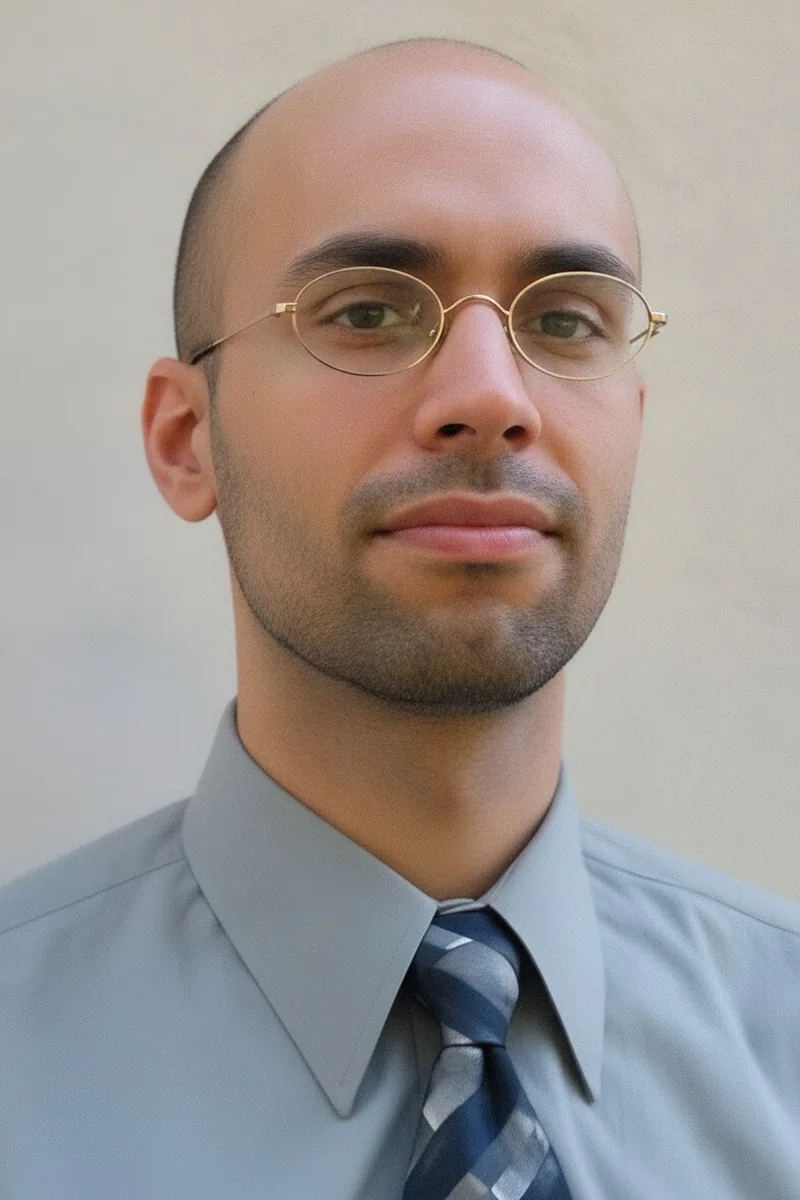
Sam's PhD in statistics means the probability and matrix algebra chapters in finite mathematics are second nature — he taught and applied those tools at a graduate level long before they showed up in an undergrad syllabus. His biomedical engineering background adds a practical edge when explaining how to set up linear programming problems or interpret a Markov chain, since he's used those models to solve real optimization and modeling questions. Rated 4.9 by students.
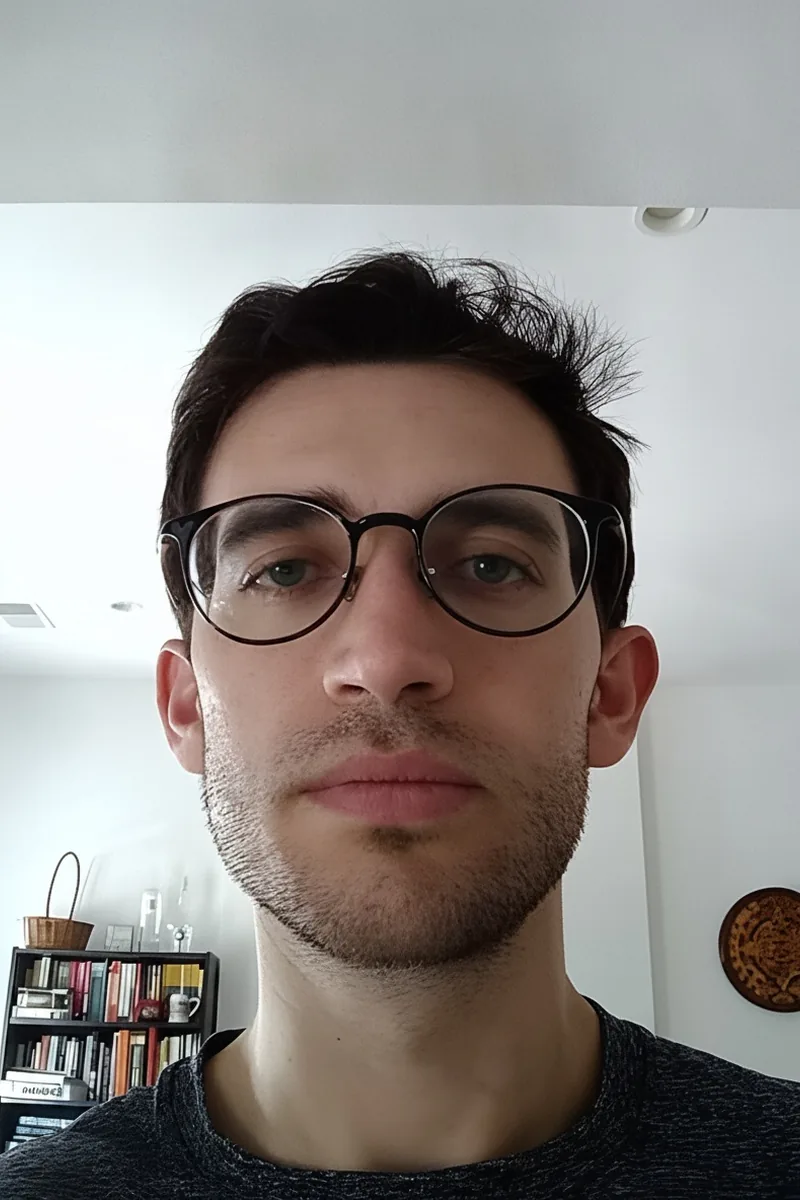
Until age 16, Viktor thought math was just blind memorization — then a series of teachers at the right moment revealed the logic underneath, and he ended up majoring in mathematics at UChicago. That conversion story matters for finite mathematics, where topics like counting techniques and set operations look arbitrary until someone shows you why the rules work the way they do. His 1600 SAT and current master's work in computer science at NYU keep him sharp on the discrete reasoning these courses demand.
Linear programming, matrix operations, and probability models can feel disconnected from the rest of a student's math experience, which is part of what makes finite mathematics so tricky. Alan's mathematics degree and teaching background let him tie these topics together into a coherent framework rather than treating each chapter as an isolated unit. He's particularly effective at translating word-heavy application problems into clear mathematical setups.
As a current statistics grad student with a sociology background, Evan has spent real time with the probability distributions, matrix operations, and data modeling that finite mathematics courses build around — and he's used them to analyze actual social science datasets, not just textbook exercises. He unpacks counting problems and set operations by connecting them to the logic behind survey design and population analysis, which makes the abstract notation feel grounded. Rated 5.0 by students.
Linear programming, matrix operations, and combinatorics can feel disconnected from the rest of math until someone ties them together. Maggie's engineering background means she regularly uses these tools — from optimization models in her PhD research to probability applied in biomedical data analysis. She teaches Finite Mathematics by anchoring each topic in a concrete decision-making scenario.
I am currently an adjunct professor of chemistry at a small liberal arts college in the Chicago area. Previously, I worked in the chemical industry for several years as a researcher, but I've found that the most satisfying moments have come when I am able to share my expertise with someone else. Similarly, I very much enjoyed the four semesters in the graduate school when I was a teaching assistant. It gave me the opportunity to work with students and help them develop an understanding for the subject. These are the primary reasons that I have decided to go into teaching.
Most finite mathematics students hit a wall when the course jumps from matrix operations to applied problems — suddenly they need to set up a linear system from scratch or model a real scenario with a payoff matrix. Moe's nuclear and electrical engineering training means he built and solved these kinds of models routinely, translating messy real-world constraints into clean mathematical formulations. Rated 4.9 by students.
Irene's PhD in Mathematics and Computer Science means she's worked with the discrete structures — set operations, combinatorics, graph models, and matrix algebra — that finite mathematics courses pull from, long before they were packaged into a single syllabus. She unpacks the logic behind each topic rather than rushing to formulas, which is especially useful when students hit the Markov chain or linear programming units and can't see how earlier material connects. Rated 4.9 by students.
Most finite mathematics students hit a wall not on the computation but on knowing which tool to reach for — is this a matrix problem, a linear programming setup, or a counting argument? Demirhan's master's degree in mathematics and years teaching college-level courses mean he can quickly diagnose where the confusion lives and unpack the underlying logic until the right approach becomes obvious. Rated 5.0 by students.
Discrete math and computer science grad work at DePaul keep Ignacio immersed in the logic, set operations, and counting techniques that finite mathematics courses revolve around — he's using these tools actively, not recalling them from years ago. He's especially sharp at unpacking the matrix algebra side of the course, connecting row operations and system setups to the computational thinking he applies daily in his CS program.
Engineering students at UIUC don't just encounter matrix operations and linear systems in a textbook — David uses them to design circuits and model signal processing, which gives him a concrete feel for the matrix algebra and optimization problems that finite mathematics courses throw at students. He's especially good at unpacking the logic behind setting up a problem, whether it's translating a scenario into a system of inequalities or deciding how to structure a counting argument. Rated 5.0 by students.
Preparing for medical school meant Serena spent serious time with the probability, statistics, and data analysis that finite mathematics courses revolve around — her biology degree at UCLA required exactly the kind of systematic counting and matrix reasoning that trips students up on exams. She breaks down word-heavy problems by identifying whether a question is really about combinations, conditional probability, or set operations before touching any formulas. Rated 5.0 by students.
Grading AP Calculus exams for several years sharpened Timothy's ability to spot exactly where students' mathematical reasoning breaks down — a skill that translates directly to finite mathematics, where a single misread of a counting problem or a misidentified constraint can derail an entire solution. His PhD and two decades of university teaching mean he's taught the probability, matrix algebra, and linear programming that make up a finite math course from both the theoretical and applied sides. Rated 5.0 by students.
Growing up as the oldest of six kids meant Joseph was explaining logic puzzles and counting problems at the dinner table long before his University of Chicago math coursework formalized those instincts into set theory, combinatorics, and probability. He's especially quick at helping students see the structure inside messy word problems — figuring out whether a scenario calls for a matrix setup, a Venn diagram, or a straightforward counting argument.
Most finite mathematics students hit a wall not on the math itself but on figuring out which tool applies — is this a matrix problem, a counting argument, or a linear programming setup? Anisha's biology training at UIC gave her practice with exactly that kind of applied reasoning, since modeling population data and analyzing genetic probabilities require pulling from the same toolkit. She zeroes in on translating messy problem statements into clean mathematical setups before touching any formulas.
I have helped many students achieve excellent grades in math by focusing on what really matters: building confidence and a clear understanding of concepts. My teaching style is simple I make sure students fully understand the basics, then guide them step by step to solve problems on their own. I encourage lots of practice and always take time to clear doubts, so that no student feels left behind. Math doesn't have to be scary with the right approach, it becomes logical and even enjoyable! My aim is to make every student feel confident, independent, and capable of solving problems successfully.
Biology coursework at Lewis University means Yusuf regularly uses the probability and matrix reasoning that finite mathematics courses test — from genetics probability models to population dynamics involving systems of equations. He's especially clear at teaching students how to set up a problem from scratch, translating dense word problems into the right mathematical framework before jumping into computation.
I am currently a Senior with a math major at Loyola University Chicago and have been accepted to their masters program. I also like playing tennis, whiffle ball, and writing poetry.
Most finite mathematics students hit a wall not because the individual topics are hard, but because gaps from earlier math — fractions, basic algebra, logical reasoning — quietly compound once set operations and counting techniques enter the picture. Tony's approach zeroes in on those underlying weak spots first, rebuilding the specific skills a student needs so that probability setups and matrix problems stop feeling like guesswork. His 4.9 rating speaks to how quickly that targeted repair work pays off.
Architectural engineering forced James to solve real optimization and constraint problems — allocating structural loads, balancing material costs, satisfying building codes — which is essentially linear programming and matrix algebra applied to steel and concrete. That hands-on engineering context makes him effective at teaching students how to set up objective functions and systems of inequalities, because he's done it for actual design projects rather than textbook-only scenarios. Rated 4.8 by students.
Studying finance at Notre Dame means Charles is actively using the probability, matrix algebra, and linear programming that finite mathematics courses cover — present value calculations, portfolio optimization, and risk modeling all draw on the same toolkit. He breaks down the business-flavored word problems that trip students up, especially when translating a scenario into the right system of equations or figuring out which counting technique applies.
Engineering PhD coursework forced Sabry to treat matrix operations, linear systems, and optimization not as textbook exercises but as daily tools for modeling real physical systems — which is exactly the mathematical machinery that finite mathematics courses test. He unpacks each problem type by connecting it back to the underlying structure, whether that's setting up a system of inequalities for linear programming or building a transition matrix for a Markov chain. His years running recitations for both undergrad and graduate students mean he's seen the specific algebraic missteps that slow people down.
I like helping students. I am very patient. I have experience teaching Calculus classes at the University of Miami. I have done private tutoring for all levels of math up to Calculus, as well as Statistics, Business Math, and Math Finance. I have worked in the actuarial field. I have an undergraduate degree in mathematics from Michigan State University and a Master's degree in mathematics from the University of Miami. I worked for The Princeton Review as a tutor for the SAT. I did very well on both the SAT and ACT, and like teaching students how to do better on those. I like history, too, and always find it fun to tutor history.
Engineering coursework at MIT means Natasha has used matrix operations, linear systems, and optimization methods as everyday tools — not just textbook exercises — which maps directly onto the core of most finite mathematics syllabi. She's especially sharp at translating messy word problems into clean constraint inequalities for linear programming, a step where many students lose the thread between the scenario and the math. Rated 4.9 by students.
Linear programming, matrix operations, and combinatorics can feel disconnected from the rest of a student's math experience, which is part of what makes Finite Mathematics tricky. Cory's engineering training leaned heavily on these exact tools for optimization and systems modeling, so he teaches them with a practical clarity that makes the material stick. Rated 4.9 by students.
Michael's double major in mathematics and finance means he learned topics like linear programming and probability not as abstract exercises but as decision-making tools — optimizing portfolios, modeling risk, building payoff matrices with real dollar signs attached. That practical grounding makes him especially effective at teaching the setup behind systems of inequalities and expected value calculations, where knowing what the numbers represent matters as much as crunching them.
Jacob's computer science master's work gave him daily practice with the graph theory, combinatorics, and algorithm design that underpin much of a finite mathematics course — so when he teaches topics like counting techniques or matrix operations, he can show exactly how each one functions inside a larger system. His 5.0 rating and ACT score of 35 speak to the precision he brings to breaking down multi-step setups, especially the probability and logic problems that tend to snowball when the initial framing is off.
Seven years of teaching across math levels from elementary through calculus gives Kate a clear read on which algebraic gaps cause students to stall when they hit finite math topics like counting techniques and probability setups. She's particularly effective at slowing down on the translation step — turning a dense word problem into a clean mathematical framework — which is where most finite mathematics students actually lose points. Rated 4.9 by students.
William's applied statistics master's work and biomedical engineering background mean he's built and manipulated the matrices, probability models, and optimization setups that finite mathematics courses test — but in the context of real engineering and data problems. He's especially sharp at teaching students how to translate messy word problems into clean linear programming constraints or probability frameworks, since that translation step is where most errors actually happen. Rated 4.8 by students.
Physics training builds a habit of translating real situations into mathematical frameworks — exactly the skill that trips students up in finite mathematics when they're staring at a word problem about scheduling, resource allocation, or probability and can't figure out where the math starts. Cory uses that same translation instinct to teach students how to set up matrices, identify constraints for linear programming, and organize counting problems before jumping to computation. Rated 4.9 by students.
Most finite mathematics students come from non-STEM majors and hit a wall when the course suddenly demands matrix operations or formal counting arguments — Andrea's physics training at MIT means she can strip those topics down to their underlying logic without overcomplicating the explanation. Her double major in literature also sharpens how she unpacks the dense, word-heavy probability scenarios that trip students up when they can't figure out what the problem is actually asking. Rated 5.0 by students.
Graph theory and group theory drove Benjamin's master's dissertation at the University of Essex, and both sit squarely inside the discrete, structure-focused thinking that finite mathematics requires — counting arguments, set operations, and matrix manipulations all draw on that same toolkit. He's especially strong on problems where students need to organize information using systematic logic rather than brute-force computation, whether that's building a transition matrix or setting up a combinatorics framework.
Testimonials
Because the right Finite Mathematics tutor makes all the difference.
Average Session Rating – Based on 3.4M Learner Ratings
Nearby Finite Mathematics Tutors
Other Peoria Tutors
Related Math Tutors in Peoria
Frequently Asked Questions
Varsity Tutors matches Peoria students with expert Finite Mathematics tutors for 1-on-1 instruction. We pair each student with a tutor based on their specific needs, learning style, and goals.
Whether you need homework help, exam prep, or want to get ahead, our Finite Mathematics tutors are ready to help.
Common challenges include gaps from earlier material, difficulty with specific concepts, and trouble applying learning to new problems. These issues can snowball quickly in Finite Mathematics.
A tutor identifies where you're stuck, fills in gaps, and provides targeted practice. The 1-on-1 format means you get help exactly where you need it.
Tutors work with your student's actual coursework—homework assignments, class notes, and upcoming tests. This keeps tutoring directly relevant to what's happening in the classroom.
When you share information about your student's school and curriculum, we can match you with a tutor who has relevant experience.
All tutors complete background checks, credential verification, and teaching evaluation. Many of our Finite Mathematics tutors hold advanced degrees or have years of teaching experience.
You can review tutor profiles to find someone with the right background for your student's level and needs.
Many students see improved grades within a few weeks, along with better understanding of Finite Mathematics concepts and more confidence tackling challenging material.
Tutors track progress and adjust their approach to ensure continued improvement.
Most students benefit from 1-2 sessions per week. More frequent sessions help if your student is significantly behind or has an important exam coming up.
Your tutor can recommend a schedule based on your student's specific situation and goals.
Tutoring is purchased in packages of hours, with rates varying by tutor experience. Varsity Tutors offers several options to fit different budgets and needs.
You can discuss pricing during your consultation to find what works best.
Your tutor will assess where your student is, discuss goals, and start working on priority areas. Most students bring current homework or upcoming test material to focus on.
By the end, you'll have a clear sense of how the tutor can help and a plan for moving forward.
Let’s find your perfect tutor
Answer a few quick questions. We’ll recommend the right plan and match you with a top 5% tutor.