Award-Winning Anatomy Tutors
serving Peoria, IL
Anatomy
Tutors in Peoria
Private 1-on-1 tutoring, weekly live classes for academic support, test prep & enrichment, practice tests and diagnostics, and more to elevate grades and test scores.
Based on 3.4M Learner Ratings
UniversitiesSchools & Universities
DeliveredHours Delivered
ProficiencyGrowth in Proficiency
Who needs tutoring?
No obligation. Takes ~1 minute.
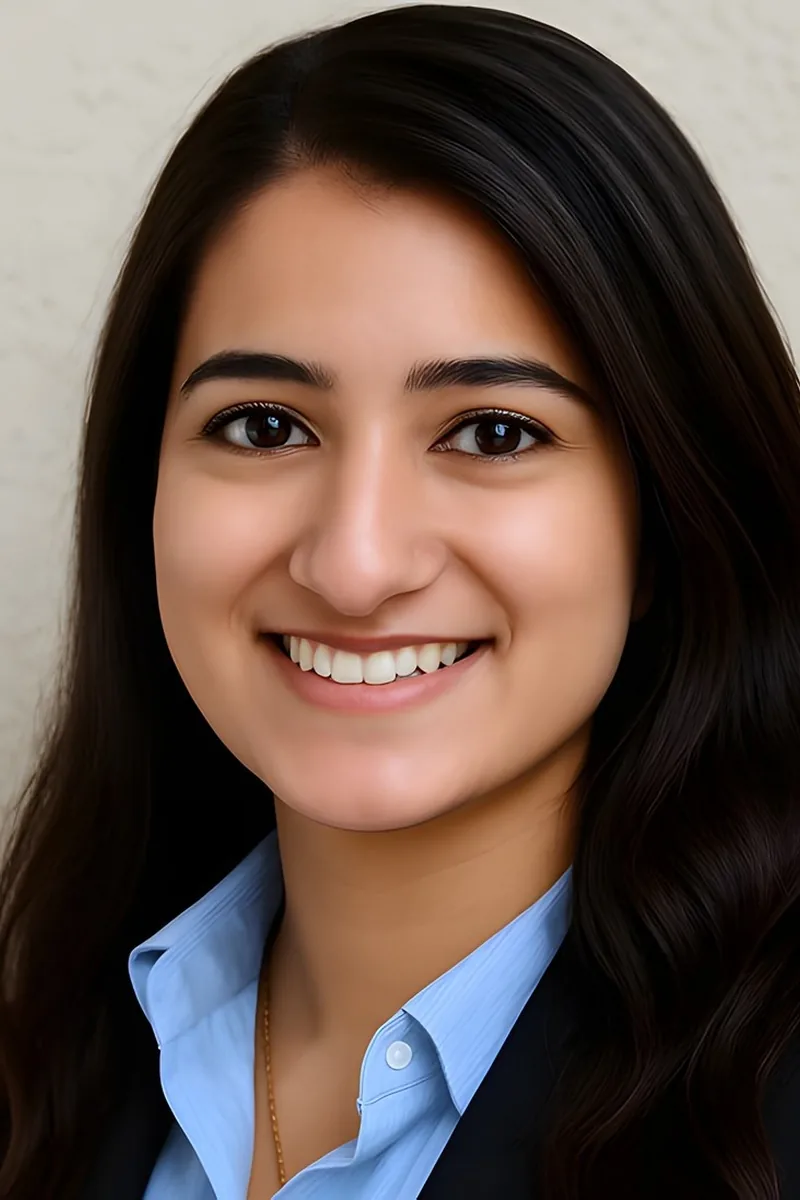
Memorizing every bone, muscle, and organ system in anatomy can feel overwhelming without a strategy. Karishma's psychology background gives her insight into how memory actually works, and she teaches students to use spatial relationships and functional groupings — like linking muscle attachments to their actions — so the material organizes itself rather than piling up.
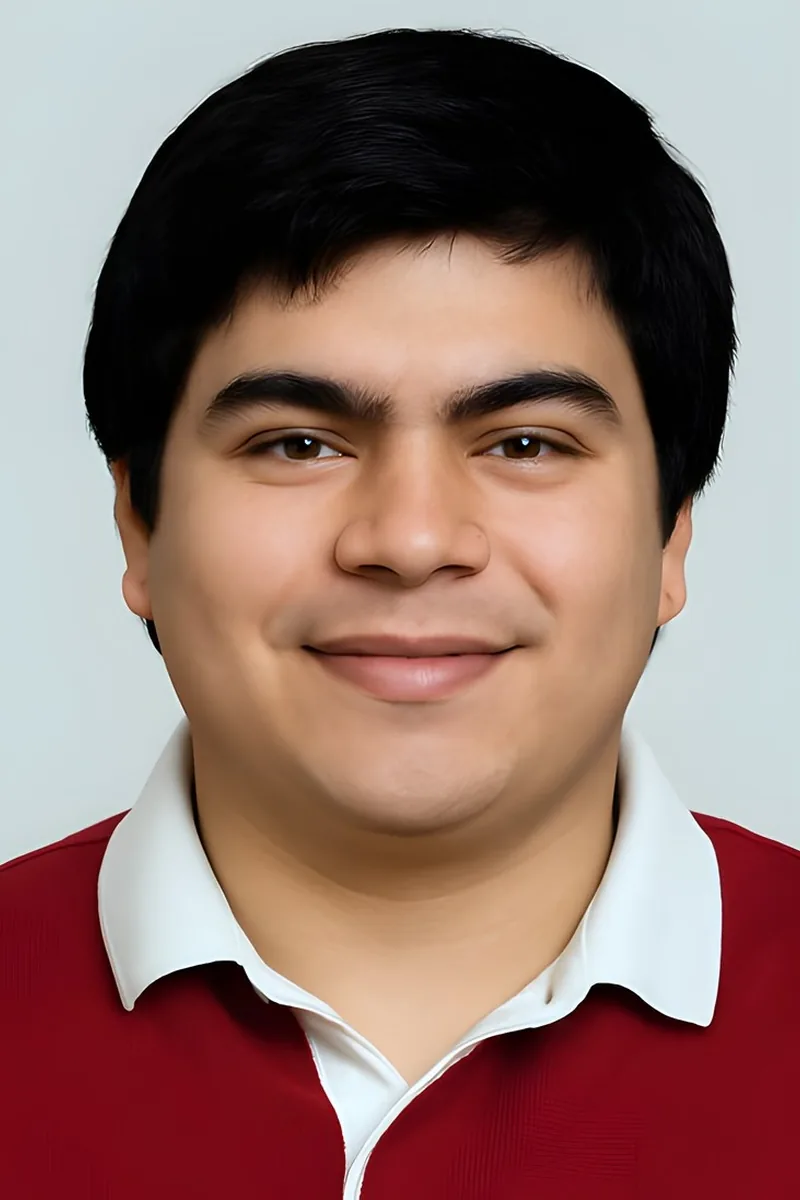
Memorizing every muscle origin, insertion, and nerve innervation feels impossible until someone shows you the organizational logic underneath it. Rudy's master's-level biology training means he can explain why the brachial plexus branches the way it does or how embryological development predicts adult organ placement — turning anatomy from a brute-force memorization task into something that actually makes sense.
Memorizing every bone, muscle, and nerve insertion point feels overwhelming until there's a logic to it — understanding that structure dictates function turns anatomy from a flashcard marathon into something predictable. Darya teaches students to reason through anatomical relationships, like why the brachial plexus branches the way it does or how the structure of the nephron enables filtration. Her biology background means she connects each structure to its physiological purpose.
Memorizing every muscle insertion and nerve pathway in anatomy can feel overwhelming without a system. Kurt approaches the subject the way he learned it in PA school — by region and by function, linking structures to what they actually do in the body so that names like "brachioradialis" stop being random Latin and start making sense. He's especially strong on musculoskeletal and neuroanatomy.
I am taking time to explore my lifelong interest in teaching. I began tutoring at the University of Notre Dame, where I worked for three years as a teaching assistant in a Cell Biology laboratory course. There, I enjoyed helping my peers understand the larger picture developing through our weekly experiments. At Loyola University Chicago, I continued to tutor a variety of subjects while earning a Master of Arts in Medical Sciences.
I am a firm believer in the idea that there is no better feeling than that "aha!" moment.
I am currently a fourth year medical student in Chicago. I attended the University of Notre Dame for undergrad, where I was a double major in Chinese and pre-medicine. When I am not studying, I enjoy spending time with family, volunteering, traveling, baking, and being active. I love sharing with others the knowledge and advice I have received in my education.
I am most excited about helping other students achieve their dreams of going to medical school by helping them study for the MCAT. Besides MCAT tutoring, my favorite subjects are chemistry, biology, and math which are all subjects I have tutored in before. I believe that every student can learn the material they hope to with the right guidance and effort. I hope that I can help students realize their full potential and grow in confidence as a learner. Outside of teaching, I like to perform in musicals, most recently I have been in local productions of Mamma Mia and Footloose, as well spend time with friends.
I'm an aspiring Physician Assistant Student. I earned my Master of Biomedical Science from Midwestern University and I am a graduate of the University of Notre Dame - Go Irish! I am excited to work with you in a variety of topics from science to Spanish and GRE writing.
I am a graduate of Case Western Reserve University with a bachelor's degree in Biology and a minor in Psychology. In addition, I have graduated Northwestern University with a Master's of Science in Reproductive Science and Medicine. I have experience working as a teaching assistant in college, as well as a private tutor for for several years now. The biological sciences and human development and physiology are some of the subjects I am most passionate about learning, studying, and teaching. I also greatly enjoy Psychology, English, and other science classes as well. I am bilingual, speaking English and Russian, which has aided me in helping many students learn Spanish, as I can understand the process of learning a second language. I have experience working with students of all ages, from kindergarten though college. I used to teach figure skating to kids (both in group and one-on-one lessons) which has really helped me learn to work with kids of different ages, and how to approach different learning styles l. I think the most important part of being a tutor is being able to adapt to the different learning needs of each individual student. Everyone learns in different ways, at their own pace, and has their unique strengths and struggles, and I believe I have the ability to understand and cater to the specific needs of each student.
I'm a recent college student who graduated with a Bachelors in Biological Sciences from the University of Illinois in Chicago. Since graduating, I have been interested in tutoring students in subjects I feel confident in.
I am a 2019 graduate of Marquette University in Milwaukee, Wisconsin. There, I received my Bachelor's of Science in Biomedical Sciences and Psychology. Currently, I am an optometry student at SUNY College of Optometry in Manhattan, NY. In my previous roles of statistics tutor and anatomy teaching assistant at Marquette, I enjoyed being both a mentor and friend to my students. Each day was a learning experience for me as much as it was for them, and I felt as though my impact extended far beyond the classroom. This is paralleled in how I intend to utilize my training to play the role of not only a healthcare provider to my future patients, but an educator. I find it immensely important to inform patients of the medicine and technology that can be adapted towards their visual impairments.
I'm from the Chicago-land area! I graduated from Grand Valley State University with honors in 2017, majoring in medical laboratory science. There I received many scholarships due to my academic success and developed an appreciation for some classes I had previously disliked in high school. I changed my major two weeks into the start of freshman year, trying to avoid taking many chemistry and physics classes; But after my first week in those courses, I had a newly piqued interest. I believe it was my professors that sold me on how chemistry and physics could be fun. They were always encouraging students to ask questions, and instead of rushing through the material to meet deadlines, they made sure students understood instead of simply regurgitating. Their passion for teaching topics most shy away from, and selling me on enjoying the material myself, instilled the want to share this knowledge and teaching style with others.
I'm a junior studying nursing at the University of Illinois at Chicago. I'm currently working towards a BSN degree, and hope to get a DNP (Doctorate of Nursing Practice) in the future. Nursing in itself is a very collaborative major, so my peers and I have spent a lot of time tutoring each other through our tougher courses.
I am a medical student student at Stritch School of Medicine. I graduated from Saint Louis University with a major in Neuroscience and a minor in Public Health. I am from Bolingbrook, IL and graduated from Neuqua Valley High School. I have lived in 7 different cities in 18 years and love to go on road trips! I love dark chocolate and Thai food anytime, any day. My favorite subject to teach is Math, because I like to work with numbers! I strongly believe in incentives. I believe that setting small treats for each goal you reach will motivate you to do better, as long as you set your mind to it. I have a passion to teach and see others grow better as a student! I hope that as your tutor, I can help you be a more confident, successful student!
Prosthetics and orthotics — Michael's specialty at Georgia Tech — is applied anatomy: fitting a prosthetic limb requires precise knowledge of residual musculoskeletal structures, nerve pathways, and how soft tissue interfaces with bone. That clinical engineering perspective means he teaches anatomy by connecting each structure to its mechanical role in the body, which gives students a concrete reason to remember what they're learning.
Having studied anatomy through her nursing education, Sarah knows the subject from the inside — not just labeling structures on a diagram but understanding how organ systems interact functionally. She tackles tough topics like the brachial plexus or cardiac conduction pathways by linking structure to clinical purpose, which makes dense material far easier to retain.
Nicole's psychology training — specifically her coursework in how people encode and retain dense information — gives her a practical edge when tackling anatomy's enormous vocabulary of bones, muscles, and organ systems. She teaches students to chunk material by body region and build associative links between structures and their functions, turning what feels like an endless list into a connected map. Her Children's Studies minor also means she's skilled at scaling explanations down for younger or introductory-level learners.
Learning anatomy often feels like memorizing a phone book — until someone shows you the logic behind how structures are named and organized. Nikolas spent his Exercise Science program at Ohio State dissecting musculoskeletal relationships, nerve pathways, and organ systems, so he teaches anatomy through spatial reasoning and functional connections rather than pure rote recall.
Rachel's physiology and microbiology tutoring background means she already thinks in body systems — so when she teaches anatomy, she connects each structure to what it actually does, giving students a functional reason to remember names and locations. Her approach works especially well for topics like the muscular system, where understanding how origin and insertion points relate to movement makes the terminology far less arbitrary.
Studying both speech and hearing science and medicine means Li has spent years learning the human body at every level — bones, muscles, nerves, and the way they interact as functional systems. She teaches anatomy by connecting structure to function, so students understand why the brachial plexus is organized the way it is, not just its branches.
Medical school means Timothy is learning anatomy at the most rigorous level right now, which keeps every muscle origin, nerve pathway, and organ system fresh in his mind. He tackles the memorization challenge head-on with spatial reasoning tricks and mnemonic strategies that make structures like the brachial plexus or cranial nerves far more manageable.
Learning anatomy is often treated as pure memorization — origin, insertion, action, repeat — but Ade tackles it differently by linking structures to their physiological function. When a student understands why the brachial plexus is organized the way it is, or how blood flow through the heart's chambers relates to valve placement, the naming conventions start to make intuitive sense.
Medical school anatomy is relentless — cadaver labs, spatial reasoning, thousands of structures with Latin names. Felix went through that gauntlet and developed memorization strategies tied to clinical relevance: knowing the brachial plexus not just as a diagram but as the reason a patient can't extend their wrist. He walks students through regional and systems-based anatomy with that same emphasis on function over rote labeling.
Andrew doesn't have a clinical or lab science background, but his history training at Northwestern built the kind of systematic categorization skills that translate surprisingly well to anatomy — organizing body systems, tracing relationships between structures, and retaining dense terminology. He approaches the subject by turning anatomical vocabulary into logical groupings, connecting muscle origins and insertions to their actions so students can reason through questions rather than relying on flashcard recall alone.
Memorizing 206 bones and hundreds of muscles is one thing; understanding how they relate spatially and functionally is another challenge entirely. Anni's biomedical graduate training and her path toward medical school mean she teaches anatomy the way clinicians think about it — connecting structure to function so that the brachial plexus or the layers of the GI tract actually make sense.
Four years of medical school at Harvard meant Jean didn't just study anatomy from a textbook — she learned it through cadaver dissection, clinical rotations, and diagnostic reasoning. She teaches students to think spatially about structures like the brachial plexus or the abdominal vasculature, building the kind of three-dimensional understanding that makes identification and relationships between structures click.
Testimonials
Because the right Anatomy tutor makes all the difference.
Average Session Rating – Based on 3.4M Learner Ratings
Practice Anatomy
Free practice tests, flashcards, and AI tutoring for Anatomy
Nearby Anatomy Tutors
Other Peoria Tutors
Related Science Tutors in Peoria
Frequently Asked Questions
Varsity Tutors matches Peoria students with expert Anatomy tutors for 1-on-1 instruction. We pair each student with a tutor based on their specific needs, learning style, and goals.
Whether you need homework help, exam prep, or want to get ahead, our Anatomy tutors are ready to help.
Common challenges include gaps from earlier material, difficulty with specific concepts, and trouble applying learning to new problems. These issues can snowball quickly in Anatomy.
A tutor identifies where you're stuck, fills in gaps, and provides targeted practice. The 1-on-1 format means you get help exactly where you need it.
Tutors work with your student's actual coursework—homework assignments, class notes, and upcoming tests. This keeps tutoring directly relevant to what's happening in the classroom.
When you share information about your student's school and curriculum, we can match you with a tutor who has relevant experience.
All tutors complete background checks, credential verification, and teaching evaluation. Many of our Anatomy tutors hold advanced degrees or have years of teaching experience.
You can review tutor profiles to find someone with the right background for your student's level and needs.
Many students see improved grades within a few weeks, along with better understanding of Anatomy concepts and more confidence tackling challenging material.
Tutors track progress and adjust their approach to ensure continued improvement.
Most students benefit from 1-2 sessions per week. More frequent sessions help if your student is significantly behind or has an important exam coming up.
Your tutor can recommend a schedule based on your student's specific situation and goals.
Tutoring is purchased in packages of hours, with rates varying by tutor experience. Varsity Tutors offers several options to fit different budgets and needs.
You can discuss pricing during your consultation to find what works best.
Your tutor will assess where your student is, discuss goals, and start working on priority areas. Most students bring current homework or upcoming test material to focus on.
By the end, you'll have a clear sense of how the tutor can help and a plan for moving forward.
Let’s find your perfect tutor
Answer a few quick questions. We’ll recommend the right plan and match you with a top 5% tutor.