Award-Winning College Physics Tutors
serving Boise, ID
College Physics
Tutors in Boise
Private 1-on-1 tutoring, weekly live classes for academic support, test prep & enrichment, practice tests and diagnostics, and more to elevate grades and test scores.
Based on 3.4M Learner Ratings
UniversitiesSchools & Universities
DeliveredHours Delivered
ProficiencyGrowth in Proficiency
Who needs tutoring?
No obligation. Takes ~1 minute.
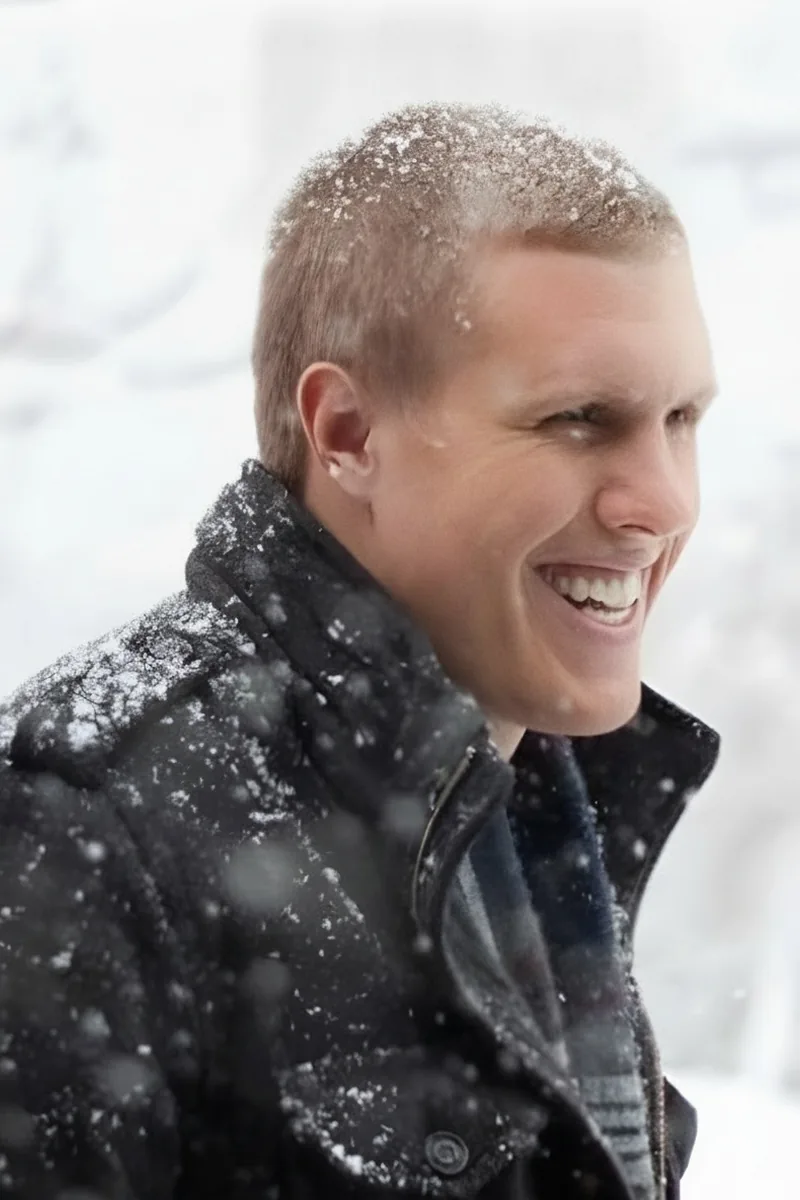
Stefan taught college physics for over a year at the university level, so he knows exactly where students stumble — whether it's setting up free-body diagrams, applying conservation laws, or navigating electromagnetic induction problems. His physics bachelor's from BYU-Idaho and materials science master's from the University of Washington mean he can connect introductory concepts to the deeper theory behind them. Rated 5.0 by students.
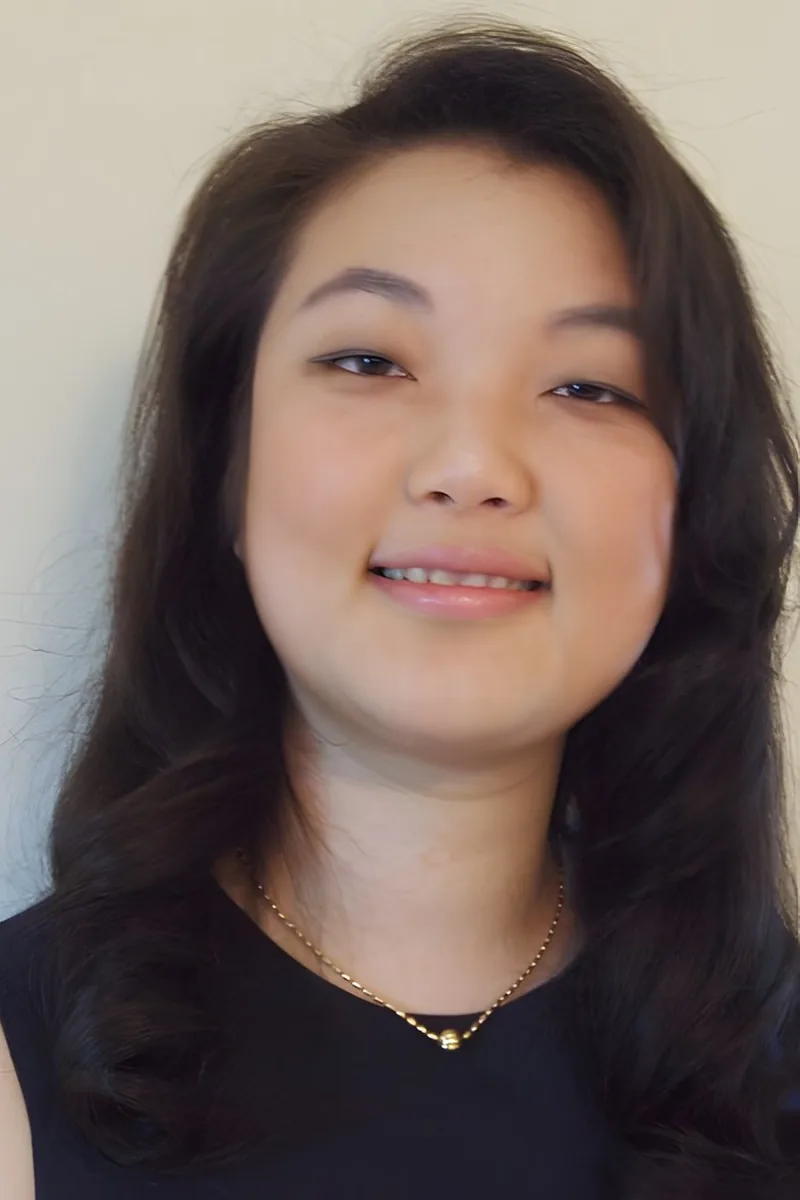
MIT's core physics sequence is calculus-heavy and fast — Vania not only survived it but tutored other students through it via the university's Seminar XL program, which means she's seen firsthand where classmates stall on topics like rotational motion, wave mechanics, and Gauss's law. Her mechanical engineering major keeps her applying those physics principles daily in coursework on statics, dynamics, and thermodynamic systems, so her explanations stay rooted in how the concepts actually get used. Rated 5.0 by students.
Chemical engineering at Vanderbilt means Greg solves physics problems daily — fluid mechanics, heat transfer, thermodynamics, and force balances are baked into every core course, so his explanations come from repeated, hands-on application rather than textbook summaries. His math double major gives him the calculus fluency to walk through derivations cleanly, especially when problems involve integration over continuous systems or solving second-order differential equations of motion. Rated 5.0 by students.
College-level physics demands more mathematical rigor than high school — suddenly, problems involve calculus-based derivations and vector analysis alongside conceptual reasoning. As a Johns Hopkins biomedical engineering and applied math student, Nicholas lives in that intersection of advanced math and physical modeling every semester. He walks through topics like rotational dynamics, electric fields, and wave optics with the precision college courses require.
Engineering coursework at Cornell means Abby is actively grinding through the same calculus-based physics — mechanics, wave motion, electromagnetism — that her students are tackling, which keeps her explanations grounded in the specific problem styles and pitfalls that show up on current exams. She breaks down multi-step problems by isolating the physical principle first, then translating it into the math, so students stop guessing which equation to use. Holds a 5.0 rating.
Statics, dynamics, circuits, electromagnetics — Steve didn't just take these courses, he took them twice over, earning degrees in both mechanical and electrical engineering before working as a practicing engineer. That dual perspective is especially useful in college physics, where a problem about induced EMF or stress in a beam benefits from someone who's designed real systems around those principles. Rated 4.9 by students.
A bio-organic chemistry degree means Alex spent semesters in calculus-based physics courses where thermodynamics, electromagnetism, and mechanics weren't electives — they were prerequisites for understanding molecular behavior. That chemistry-physics overlap gives him a knack for unpacking energy conservation and electric potential in ways that click for students who think in terms of atoms and reactions rather than pulleys and ramps.
Biomedical engineering at Johns Hopkins means Christine solves physics problems daily that most students only see in textbooks — fluid dynamics in blood flow, pressure gradients across membranes, mechanics of prosthetic joints — giving her a concrete, application-heavy lens for the material. She's particularly strong on the thermodynamics and mechanics portions of college physics, where her coursework overlaps most directly with standard problem sets. Holds a 5.0 rating.
Four years teaching undergraduate physics labs at the University of Michigan — especially courses designed for non-STEM majors — taught Michael how to strip intimidating topics like electromagnetism, circuits, and wave optics down to their physical intuition before layering the math back on. His PhD research deepened that fluency across the full spectrum of college physics, from introductory mechanics through advanced electrodynamics and special relativity. Rated 4.7 by students.
A computer science degree from UCLA means Michael spent semesters deep in the physics that underpins simulation and graphics — kinematics, force modeling, energy systems — and his 1560 SAT confirms the quantitative chops to handle calculus-based problem solving. He teaches students to treat each physics problem like debugging code: isolate what you know, identify the governing principle, then execute step by step until the answer falls out.
Having served as a teaching assistant for Differential Equations and Mechanics at Notre Dame, Jeffrey has already spent time explaining the exact concepts — torque, oscillations, coupled systems — that trip up students in university physics courses. His mechanical engineering PhD work at Rice deepens that fluency, especially in thermodynamics and rotational dynamics where the math gets dense fast. He's rated 4.9 by students.
Studying applied mathematics at Caltech means Samuel encounters physics constantly — from classical mechanics and energy conservation to electromagnetism and wave behavior. He breaks down the math behind physical systems so that equations like Maxwell's or Newton's second law feel like tools rather than obstacles.
Princeton's mechanical and aerospace engineering program is essentially a four-year immersion in applied physics — Fred spent it solving problems in fluid dynamics, thermodynamics, structural mechanics, and orbital motion, which maps directly onto the topics that fill college physics syllabi. He breaks down force diagrams and energy methods by connecting them to the engineering contexts where those concepts actually get used, making abstract problem sets feel more concrete. His 1550 SAT reflects the quantitative precision he brings to calculus-heavy coursework.
Testimonials
Because the right College Physics tutor makes all the difference.
Average Session Rating – Based on 3.4M Learner Ratings
Other Boise Tutors
Related Science Tutors in Boise
Frequently Asked Questions
Varsity Tutors matches Boise students with expert College Physics tutors for 1-on-1 instruction. We pair each student with a tutor based on their specific needs, learning style, and goals.
Whether you need homework help, exam prep, or want to get ahead, our College Physics tutors are ready to help.
Common challenges include gaps from earlier material, difficulty with specific concepts, and trouble applying learning to new problems. These issues can snowball quickly in College Physics.
A tutor identifies where you're stuck, fills in gaps, and provides targeted practice. The 1-on-1 format means you get help exactly where you need it.
Tutors work with your student's actual coursework—homework assignments, class notes, and upcoming tests. This keeps tutoring directly relevant to what's happening in the classroom.
When you share information about your student's school and curriculum, we can match you with a tutor who has relevant experience.
All tutors complete background checks, credential verification, and teaching evaluation. Many of our College Physics tutors hold advanced degrees or have years of teaching experience.
You can review tutor profiles to find someone with the right background for your student's level and needs.
Many students see improved grades within a few weeks, along with better understanding of College Physics concepts and more confidence tackling challenging material.
Tutors track progress and adjust their approach to ensure continued improvement.
Most students benefit from 1-2 sessions per week. More frequent sessions help if your student is significantly behind or has an important exam coming up.
Your tutor can recommend a schedule based on your student's specific situation and goals.
Tutoring is purchased in packages of hours, with rates varying by tutor experience. Varsity Tutors offers several options to fit different budgets and needs.
You can discuss pricing during your consultation to find what works best.
Your tutor will assess where your student is, discuss goals, and start working on priority areas. Most students bring current homework or upcoming test material to focus on.
By the end, you'll have a clear sense of how the tutor can help and a plan for moving forward.
Let’s find your perfect tutor
Answer a few quick questions. We’ll recommend the right plan and match you with a top 5% tutor.