Award-Winning AP Chemistry Tutors
serving Boise, ID
AP Chemistry
Tutors in Boise
Private 1-on-1 tutoring, weekly live classes for academic support, test prep & enrichment, practice tests and diagnostics, and more to elevate grades and test scores.
Based on 3.4M Learner Ratings
UniversitiesSchools & Universities
DeliveredHours Delivered
ProficiencyGrowth in Proficiency
Who needs tutoring?
No obligation. Takes ~1 minute.
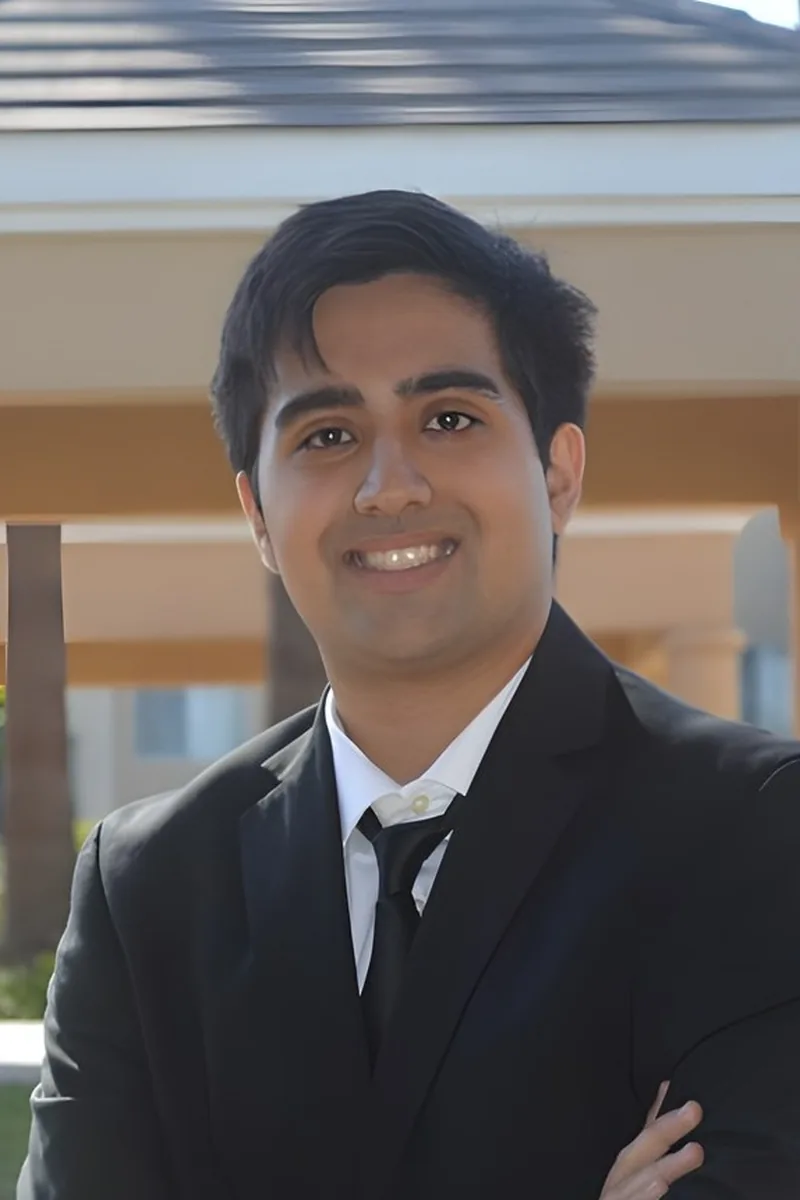
Thermodynamics, electrochemistry, and equilibrium calculations in AP Chemistry require more than formula memorization — they demand fluency with why reactions behave the way they do. Abrahim's chemistry background spans general through physical and organic at UCLA, and his direct teaching style zeroes in on the conceptual reasoning that earns 4s and 5s on exam day.

Five semesters as a chemistry teaching assistant — three in general chemistry and two in organic — gave Troy a front-row seat to exactly where AP Chemistry students get stuck: equilibrium calculations, thermodynamics sign conventions, and electron configuration exceptions. He tackles these pain points by tying abstract rules back to the periodic trends and mathematical logic that govern them.
AP Chemistry's toughest stretch for most students is the leap from stoichiometry into equilibrium, thermodynamics, and electrochemistry, where conceptual reasoning matters as much as calculation. Jhonatan's extensive lab science background in biological sciences means he thinks about chemical principles in applied contexts — reaction kinetics, buffer systems, Gibbs free energy — and explains them with that same concreteness.
Georgia Tech's chemical engineering curriculum threw Aimee into college-level thermodynamics, kinetics, and reaction engineering years before most students encounter those ideas — which means she can teach AP Chemistry's toughest conceptual leaps, like connecting enthalpy diagrams to spontaneity or interpreting rate law data, from genuine fluency rather than textbook familiarity. Her 4.9 rating and experience as a teaching assistant show she can translate that depth into clear, patient explanations when a student is stuck on a free-response problem at 9 p.m. the night before the exam.
AP Chemistry's toughest questions — equilibrium calculations, electrochemistry, thermodynamic spontaneity — demand both math fluency and chemical intuition. Rithi's neuroscience and biotechnology training means she's applied these principles in real research contexts, not just on paper. Her 4.9 rating speaks to how clearly she breaks down even the most abstract reaction dynamics.
Premed neuroscience coursework at Rice University means Aditi has worked through college-level chemistry where concepts like electron configuration, molecular geometry, and acid-base reactions aren't optional — they're prerequisites for understanding how the brain functions at a chemical level. She unpacks AP Chemistry's conceptual questions by tying abstract ideas back to observable phenomena, making topics like periodicity and bonding theory stick. Rated 4.8 by students.
AP Chemistry's toughest problems — multi-step equilibrium calculations, thermodynamic predictions, electrochemistry — demand the kind of quantitative fluency that comes naturally to a physics major. Nima walks through these concepts by building from first principles, connecting Le Chatelier's principle or Gibbs free energy to the underlying logic rather than a memorized rule set. His 1580 SAT speaks to the precision he brings to problem-solving.
Teaching 12th grade Chemistry at a high-performing Philadelphia magnet school means Kathleen sees exactly which AP Chemistry concepts — from equilibrium reasoning to periodic trends — trip students up on exams, and she's built classroom-tested strategies for each one. Her Penn M.S.Ed in Secondary Science Education and her chemistry degree give her both the content depth and the pedagogical training to explain why a reaction proceeds the way it does, not just how to get the right answer. Rated 5.0 by students.
Notre Dame's pre-med track put Aidan through the full college chemistry gauntlet — general and organic — where concepts like electron configuration, molecular polarity, and reaction spontaneity weren't just exam topics but prerequisites for everything that followed. He scored a 35 on the ACT, and that same precision shows up in how he teaches AP Chemistry's trickiest quantitative work, particularly gas law problems and solution chemistry where one missed conversion derails the entire calculation.
The jump from honors chemistry to AP Chemistry catches students off guard because suddenly they need to explain *why* — why equilibrium shifts, why certain reactions are spontaneous, why atomic structure dictates bonding behavior. Cassandra tackles these conceptual layers by tying each unit back to the underlying thermodynamic and kinetic principles, so students aren't just memorizing trends but understanding the logic that drives them. Her science degree and experience with analytical chemistry give her depth well beyond the AP curriculum.
Equilibrium, thermodynamics, and reaction kinetics aren't abstract concepts for Kristen — they were daily tools in her chemical-biological engineering coursework. She teaches AP Chemistry by connecting each unit back to underlying principles, so students can reason through unfamiliar free-response questions instead of relying on memorized shortcuts. Rated 4.9 by students.
Thermodynamics, equilibrium, and electrochemistry each require a different way of reasoning, and AP Chemistry punishes students who try to memorize their way through. Lauren minors in chemistry at Duke and uses her lab experience to ground abstract ideas — like Gibbs free energy or reaction kinetics — in tangible processes students can actually visualize.
Testimonials
Because the right AP Chemistry tutor makes all the difference.
Average Session Rating – Based on 3.4M Learner Ratings
Practice AP Chemistry
Free practice tests, flashcards, and AI tutoring for AP Chemistry
Other Boise Tutors
Related Science Tutors in Boise
Frequently Asked Questions
Varsity Tutors matches Boise students with expert AP Chemistry tutors for 1-on-1 instruction. We pair each student with a tutor based on their specific needs, learning style, and goals.
Whether you need homework help, exam prep, or want to get ahead, our AP Chemistry tutors are ready to help.
Common challenges include gaps from earlier material, difficulty with specific concepts, and trouble applying learning to new problems. These issues can snowball quickly in AP Chemistry.
A tutor identifies where you're stuck, fills in gaps, and provides targeted practice. The 1-on-1 format means you get help exactly where you need it.
Tutors work with your student's actual coursework—homework assignments, class notes, and upcoming tests. This keeps tutoring directly relevant to what's happening in the classroom.
When you share information about your student's school and curriculum, we can match you with a tutor who has relevant experience.
All tutors complete background checks, credential verification, and teaching evaluation. Many of our AP Chemistry tutors hold advanced degrees or have years of teaching experience.
You can review tutor profiles to find someone with the right background for your student's level and needs.
Many students see improved grades within a few weeks, along with better understanding of AP Chemistry concepts and more confidence tackling challenging material.
Tutors track progress and adjust their approach to ensure continued improvement.
Most students benefit from 1-2 sessions per week. More frequent sessions help if your student is significantly behind or has an important exam coming up.
Your tutor can recommend a schedule based on your student's specific situation and goals.
Tutoring is purchased in packages of hours, with rates varying by tutor experience. Varsity Tutors offers several options to fit different budgets and needs.
You can discuss pricing during your consultation to find what works best.
Your tutor will assess where your student is, discuss goals, and start working on priority areas. Most students bring current homework or upcoming test material to focus on.
By the end, you'll have a clear sense of how the tutor can help and a plan for moving forward.
Let’s find your perfect tutor
Answer a few quick questions. We’ll recommend the right plan and match you with a top 5% tutor.