Award-Winning Math Tutors
serving Augusta, GA
Math
Tutors in Augusta
Private 1-on-1 tutoring, weekly live classes for academic support, test prep & enrichment, practice tests and diagnostics, and more to elevate grades and test scores.
Based on 3.4M Learner Ratings
UniversitiesSchools & Universities
DeliveredHours Delivered
ProficiencyGrowth in Proficiency
Who needs tutoring?
No obligation. Takes ~1 minute.

It gives me, Dr. Tiffani Leverett, great pleasure and the utmost honor to have the opportunity to work with you. I have been an educator for 20-plus years, with 22 years of successful classroom teaching, and am currently working with teachers on teacher development for a school district, helping improve and grow our educators. Some of my accolades include being Teacher of the Year twice in my career at two different schools and being one of the only Georgia Master Teachers in my county. Google it! My WHY for loving being an educator is that the profession chose me, not the other way around. Despite any obstacles, I teach because I'm passionate about learning and growing, and I love helping others do the same. I am really excited to help you reach your academic goals by providing customized support that best fits your needs. I love seeing my students finally understand a challenging concept, and their faces just light up once they have mastered it!
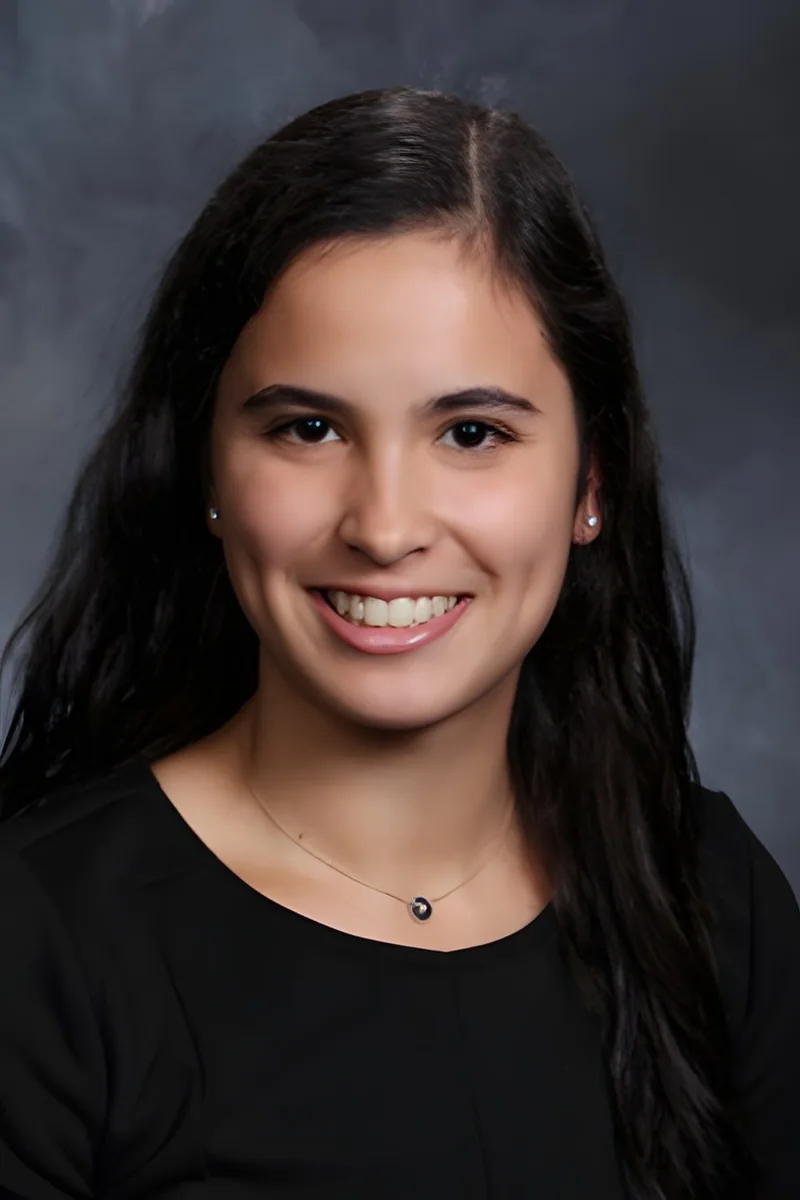
An MIT math graduate now pursuing a PhD in Operations Research at Georgia Tech, Isabella has spent years inside the subject from every angle — teaching it, studying it, and applying it. Whether a student is wrestling with fraction operations in sixth grade or limits in early calculus, she connects each concept to the bigger mathematical picture so the next topic feels like a natural extension, not a surprise.
From second-grade addition all the way through calculus, Paula teaches across the full math pipeline and knows exactly where the common stumbling blocks sit — the shift from arithmetic to algebraic thinking, the leap from equations to geometric proofs, the jump into limits and derivatives. Her 32 ACT and 1520 SAT back up that range with demonstrated quantitative skill.
Not every math tutor comes from an engineering background, and that can actually be an advantage. Jean approaches math the way a student who had to work at it would — breaking word problems into smaller logical steps, connecting arithmetic and algebraic concepts to practical reasoning, and building the kind of structured thinking her history and legal training demanded daily.
From fraction operations to polynomial expressions, the students who get stuck in math usually have one or two foundational gaps that snowball into confusion across every new topic. Marion diagnoses exactly where that breakdown happened and rebuilds the reasoning from there. Her 34 ACT and 1540 SAT confirm she has the quantitative chops to back up her teaching instincts.
Some students struggle with math not because they lack ability but because somewhere along the way a foundational concept — fractions, proportional reasoning, negative numbers — didn't fully click. Erica's cognitive science training gives her a diagnostic eye for pinpointing exactly where that gap is, and she rebuilds understanding from that point forward using concrete examples before moving to abstract procedures.
From fraction operations in elementary school to function notation in high school, Alice has seen the full spectrum of where math concepts break down — her time as a K-12 math center instructor gave her that range. She's especially good at reframing a problem so it connects to something a student already understands, turning abstract steps into reasoning that actually sticks.
Whether a student is struggling with fraction operations in middle school or hitting a wall with trigonometric identities, Ethan traces the confusion back to the specific concept that isn't clicking. His approach builds each new skill on top of the last, so students stop feeling like every chapter is a fresh crisis.
Rebecca covers math from pre-algebra through calculus, which means she understands exactly where foundational gaps tend to trip students up later. Rather than racing through problem sets, she walks through the reasoning behind each step — why you flip an inequality sign, how distribution actually works — so the logic carries forward to harder material.
Bona's neuroscience coursework at Northwestern is math-heavy — statistics, calculus, quantitative modeling — which means she's used to translating abstract formulas into something that actually makes sense. She's particularly strong at breaking down word problems, where the real challenge is figuring out what's being asked before any numbers get involved. Her 33 ACT composite speaks to the kind of cross-subject fluency that makes her effective across algebra, geometry, and beyond.
Robert's strengths sit squarely in reading, writing, and test prep — but his 1560 SAT required serious math performance, and that score doesn't happen without genuine command of algebra, data analysis, and problem-solving under pressure. As a Stanford-trained writer, he's particularly sharp at untangling word problems, teaching students to strip away the narrative and isolate the math underneath. Rated 5.0 by students.
While math isn't Wei's primary discipline, her linguistics training involves heavy quantitative reasoning — statistical analysis, formal logic, and pattern recognition all show up in her research. She applies that structured, step-by-step thinking to walk students through arithmetic, pre-algebra concepts, and word problems that require translating everyday language into mathematical operations.
From fraction operations in pre-algebra to integration techniques in calculus, Ilesh covers the full math pipeline and knows exactly where each concept feeds into the next. His Industrial Engineering degree from Georgia Tech required heavy coursework in linear algebra, probability, and applied calculus, so he explains not just the how but the why behind each method. He's rated 5.0 by students.
A neuroscience degree demands serious quantitative chops — from statistical analysis to modeling biological systems — and Saniya carried that rigor across subjects ranging from pre-algebra through calculus. She breaks down word problems and abstract concepts by connecting them to concrete, step-by-step reasoning rather than rote formula application. Rated 5.0 by students.
From fraction operations in middle school to derivatives in calculus, Vignesh has tutored across the full math spectrum since his early days at Kumon. He emphasizes repetition with purpose — not just doing fifty problems, but understanding why a technique works so students can adapt it to unfamiliar questions. His 1530 SAT score reflects the same structured problem-solving approach he teaches.
Juliana's subject range spans pre-algebra through calculus, which means she understands how each math concept scaffolds onto the last — and where gaps from earlier years quietly cause problems later. She's especially skilled at translating word problems into equations, a stumbling block that trips up students who otherwise understand the mechanics just fine. Rated 5.0 by students.
From arithmetic fundamentals through calculus, Morgan covers a wide range of math topics and tailors each session to the specific concept causing trouble — whether that's fraction operations, proportional reasoning, or interpreting word problems. An English major who genuinely enjoys math, she brings a knack for explaining quantitative ideas in plain language that clicks. Rated 5.0 by students.
Breaking down word problems into smaller, manageable steps is one of Merav's go-to strategies — she treats each problem like a script, identifying what information you're given, what's missing, and how to get there. Her analytical training at Northwestern (magna cum laude) carries over into arithmetic, fractions, ratios, and pre-algebra concepts, where she makes abstract operations feel concrete and logical.
While Emily's primary expertise is in language and writing, she also tutors math and brings the same structured, step-by-step approach she uses in essay editing to problem-solving. She's particularly effective at walking through word problems and translating them into equations, a skill that draws on her strength in reading comprehension.
From basic arithmetic through pre-algebra and into early calculus, Sydney's math tutoring zeroes in on the conceptual gaps that cause students to stall — things like not fully grasping fractions before hitting ratios, or missing the logic behind order of operations. Her experience with learning differences also means she can reteach a concept three different ways until one sticks.
From basic addition and subtraction facts through fractions, decimals, and early pre-algebra concepts, Tigist builds each lesson around the specific spot where a student's understanding breaks down. Her daily work supporting elementary learners — including those with diverse learning needs — has sharpened her ability to explain place value, multi-digit operations, and word problems in multiple ways until one clicks.
Arithmetic operations, fractions, and early algebraic thinking can feel like a foreign language to students who never got a clear explanation the first time around. Ominira approaches math by connecting abstract procedures to concrete reasoning — showing why you flip and multiply when dividing fractions, for instance, instead of just drilling the rule. Her experience as a paraprofessional educator means she's spent real classroom time identifying exactly where students get stuck.
Abigail teaches math across levels from elementary arithmetic through calculus, and she's especially good at slowing down on the conceptual gaps that cause students to fall behind — things like fraction operations, negative numbers, or order of operations that quietly trip people up for years. Her pre-health science coursework at Washington University keeps her math skills active and applied.
Law school sharpens one specific skill that pays off in math: reading a problem precisely, identifying exactly what's being asked, and building a logical chain to the answer. Jenna's Emory JD and her 32 ACT mean she's comfortable with quantitative reasoning, and she's especially effective at teaching students to slow down on word problems and translate messy language into clean equations. Rated 5.0 by students.
Whether a student is wrestling with fraction operations in fifth grade or limits in calculus, Chris connects each new concept to what they already understand so the jump feels manageable. His CS and education background at Cornell means he's comfortable across the full K-12 math spectrum, from arithmetic fluency through precalculus and beyond. Rated 5.0 by students.
Economics training at Wharton and Columbia required heavy quantitative coursework, so Denise is comfortable across algebra, basic calculus, and applied math concepts like functions, graphing, and word problems involving rates or percentages. She connects math skills to practical contexts — budgeting, interest calculations, data interpretation — which tends to make abstract operations click for students who wonder when they'll ever use this.
Quantitative analysis — the kind Brian taught at Georgia Tech's Scheller College of Business — is really applied math: percentages, proportions, basic modeling, and interpreting numerical relationships. That background means he can connect arithmetic and pre-algebra concepts to real scenarios that make abstract operations click. Rated 5.0 by students.
Whether a student is working through fractions or tackling function transformations, Yasheen connects math concepts to logical reasoning rather than rote procedure. Her science background means she constantly uses math as a tool — unit conversions, proportional reasoning, graph interpretation — and she brings that applied perspective into every session.
Maddie taught geometry, algebra, and pre-calculus as an assistant teacher in her high school's math department, which means she's used to diagnosing exactly where a concept stops making sense. Whether a student is struggling with fractions or working through word problems, she breaks each step down until the logic clicks rather than just demonstrating a procedure.
From arithmetic through calculus, Bettina's engineering training means she's used every branch of math in practice — solving real systems, not just textbook exercises. She zeroes in on the specific concept a student is stuck on, whether that's fraction operations, linear equations, or function behavior, and explains the reasoning behind each step. Students walk away understanding the logic, not just the procedure.
Political science might seem like a words-only field, but Matthew's coursework leans heavily on quantitative reasoning — interpreting polling data, analyzing electoral models, and working through the logic problems that underpin policy analysis. That analytical backbone, paired with a 1580 SAT, means he's sharp across algebra through calculus and especially good at teaching students to slow down and trace the logic of a multi-step problem instead of jumping to a formula. Rated 5.0 by students.
Years of actuarial work after earning a math degree from Vanderbilt gave David an unusual vantage point: he's used algebra, statistics, probability, and calculus to solve real problems with real stakes. That experience shapes how he teaches math at any level — connecting abstract procedures to concrete reasoning so students understand the why behind every step. Rated 5.0 by students.
John scored a 1510 on the SAT, which required strong command of algebra, data analysis, and problem-solving under pressure. He approaches math by walking through the reasoning behind each step rather than rushing to an answer, making concepts like linear modeling and systems of equations more intuitive. His background in structured analytical thinking from his English and History studies carries over naturally into breaking down word problems.
A biochemistry degree requires serious math chops — Christopher spent years applying algebra, calculus, and statistical reasoning to problems in kinetics, thermodynamics, and data analysis at Rice. That background lets him explain not just how to solve a math problem but why a particular method works, which tends to stick better than memorized procedures. He's tutored students from elementary through college level, so he adjusts his explanations to match exactly where a student is in their math progression.
Award-winning performance in her math coursework at UGA isn't an accident — Hailey is a double major in mathematics and psychology, which means she understands both the content and how students actually learn it. Whether the challenge is fractions and proportions or polynomial equations, she breaks problems into reasoning steps that make the next problem easier to tackle on your own. Rated 5.0 by students.
Whether it's fractions tripping up a sixth grader or word problems stumping a ninth grader, Sean zeroes in on the specific concept causing the confusion rather than re-teaching an entire chapter. His approach is to make abstract math tangible — using real examples, visual models, and logical reasoning to turn a frustrating problem into a solvable one. He's particularly skilled at working with middle schoolers and early high schoolers navigating that leap from arithmetic to algebraic thinking.
While Alison's primary expertise is in the humanities, she brings the same structured, step-by-step thinking to math that she uses to break down complex historical arguments. She's particularly effective at walking through word problems and applied math concepts where reading comprehension and logical reasoning matter as much as computation.
Whether a student is wrestling with fractions for the first time or building toward pre-algebra, Carson connects arithmetic and early math concepts to the bigger mathematical picture. His deep training at the University of Chicago means he understands where each skill leads — so he can explain not just how to solve a problem, but why the method works. He also maintains a curated bank of practice exercises matched to common sticking points.
From arithmetic fundamentals through differential equations, Addison has an unusually deep math background for an undergraduate — her STEM magnet coursework covered multivariable calculus and linear algebra before she even started at Rice. She's particularly effective at making abstract concepts like function behavior or algebraic manipulation feel intuitive by connecting them to real patterns students already recognize.
Economics coursework at UGA meant Max was doing math constantly — optimization problems, graphing supply and demand curves, interpreting derivatives as rates of change in real markets. That applied lens carries into his math tutoring, where he grounds algebraic and quantitative concepts in scenarios that give abstract procedures a reason to exist. Rated 4.9 by students.
Testimonials
Because the right Math tutor makes all the difference.
Average Session Rating – Based on 3.4M Learner Ratings
Practice Math
Free practice tests, flashcards, and AI tutoring for Math
Nearby Math Tutors
Other Augusta Tutors
Related Math Tutors in Augusta
Frequently Asked Questions
Varsity Tutors matches Augusta students with expert Math tutors for 1-on-1 instruction. We pair each student with a tutor based on their specific needs, learning style, and goals.
Whether you need homework help, exam prep, or want to get ahead, our Math tutors are ready to help.
Common challenges include gaps from earlier material, difficulty with specific concepts, and trouble applying learning to new problems. These issues can snowball quickly in Math.
A tutor identifies where you're stuck, fills in gaps, and provides targeted practice. The 1-on-1 format means you get help exactly where you need it.
Tutors work with your student's actual coursework—homework assignments, class notes, and upcoming tests. This keeps tutoring directly relevant to what's happening in the classroom.
When you share information about your student's school and curriculum, we can match you with a tutor who has relevant experience.
All tutors complete background checks, credential verification, and teaching evaluation. Many of our Math tutors hold advanced degrees or have years of teaching experience.
You can review tutor profiles to find someone with the right background for your student's level and needs.
Many students see improved grades within a few weeks, along with better understanding of Math concepts and more confidence tackling challenging material.
Tutors track progress and adjust their approach to ensure continued improvement.
Most students benefit from 1-2 sessions per week. More frequent sessions help if your student is significantly behind or has an important exam coming up.
Your tutor can recommend a schedule based on your student's specific situation and goals.
Tutoring is purchased in packages of hours, with rates varying by tutor experience. Varsity Tutors offers several options to fit different budgets and needs.
You can discuss pricing during your consultation to find what works best.
Your tutor will assess where your student is, discuss goals, and start working on priority areas. Most students bring current homework or upcoming test material to focus on.
By the end, you'll have a clear sense of how the tutor can help and a plan for moving forward.
Let’s find your perfect tutor
Answer a few quick questions. We’ll recommend the right plan and match you with a top 5% tutor.