Award-Winning Calculus Tutors
serving Augusta, GA
Calculus
Tutors in Augusta
Private 1-on-1 tutoring, weekly live classes for academic support, test prep & enrichment, practice tests and diagnostics, and more to elevate grades and test scores.
Based on 3.4M Learner Ratings
UniversitiesSchools & Universities
DeliveredHours Delivered
ProficiencyGrowth in Proficiency
Who needs tutoring?
No obligation. Takes ~1 minute.
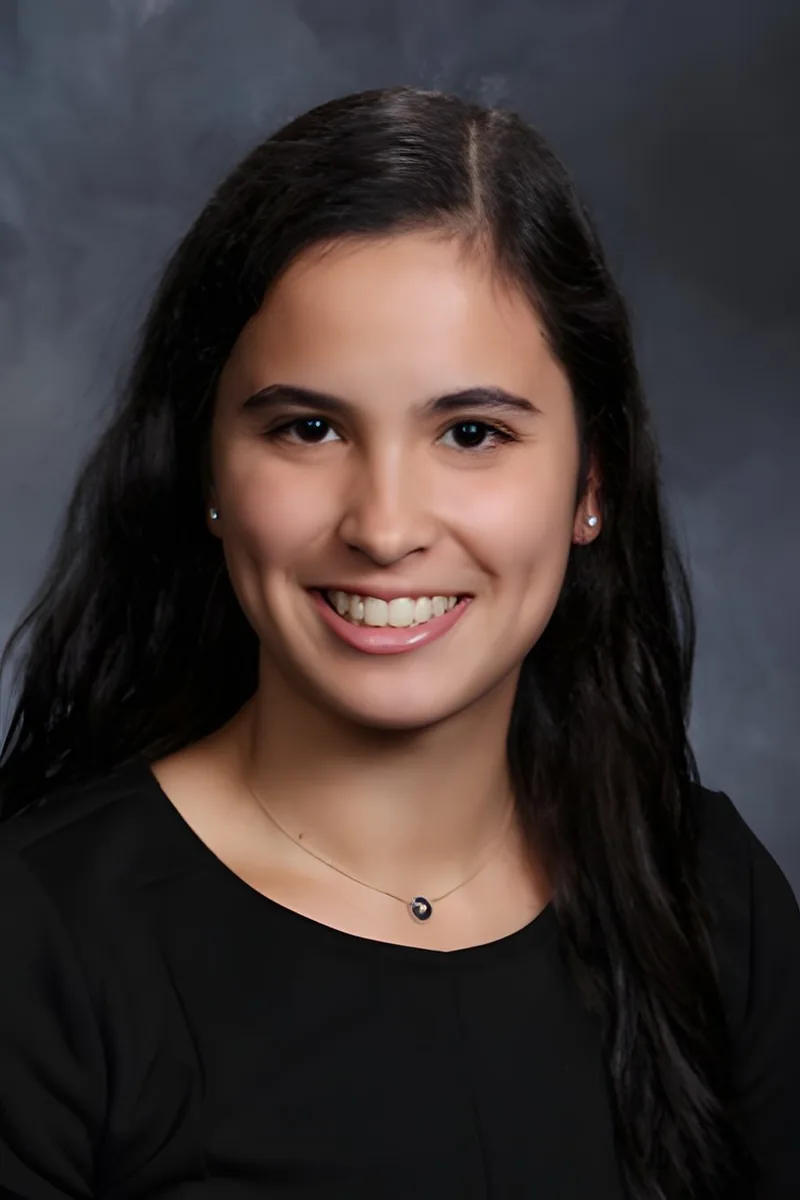
An MIT math degree followed by PhD work in Operations Research at Georgia Tech means Isabella has used calculus as a daily tool — optimization problems, convergence proofs, and the kind of rigorous analysis where understanding integration techniques and multivariable derivatives isn't optional. She's TA'd college-level math courses and taught gifted middle and high school students, so she can adjust the depth from first encounters with limits all the way through series and differential equations. Rated 5.0 by students.

Neurobiology coursework at the undergraduate level means Marion has actually used calculus — modeling membrane potential changes, analyzing action potential firing rates, and working through the differential equations that govern neural signaling. That firsthand experience with how derivatives and integrals describe biological systems gives her a concrete toolkit for teaching the material, not just abstract rules but the reasoning behind them. Rated 5.0 by students.
Jean's 1500 SAT confirms strong quantitative reasoning, though her degrees in Latin American History and her legal training place her squarely in the humanities. That said, law school sharpens a particular kind of logical sequencing — building an argument where each step depends on the last — which maps surprisingly well onto walking through limit definitions and early derivative rules where students need to see *why* each piece follows from the previous one.
Paula's psychology and communication studies background didn't require advanced math, so calculus isn't her deepest subject — but a 1520 SAT and 32 ACT show she handles quantitative reasoning well, and her broad tutoring range across math levels means she's walked students through the algebraic groundwork that calculus builds on. She's strongest at bridging that transition point where slope becomes a derivative and area becomes an integral, making the conceptual shift feel less like a cliff. Rated 4.8 by students.
Cognitive science training at the undergraduate level means Erica has encountered the quantitative modeling side of how the brain processes information — reaction time curves, signal detection theory, and the mathematical descriptions of learning and memory that rely on derivatives and rates of change. That background gives her a way to anchor early calculus concepts in something concrete, walking through what a derivative actually represents before jumping to computation. Rated 4.8 by students.
Neuroscience coursework at Washington University in St. Louis put Ethan through the full calculus sequence in context — modeling action potential propagation, analyzing rates of neurotransmitter diffusion, and working the differential equations that describe how biological signals change over time. That means he teaches derivatives and integrals as tools he's actually used, connecting the chain rule or integration by parts to problems where the math describes something real. His 35 ACT composite confirms the quantitative chops to back it up.
An anthropology degree doesn't scream calculus, but Rebecca's 1550 SAT shows she's comfortable with rigorous quantitative thinking, and her broad tutoring range — from pre-algebra through algebra 2 — means she's walked the full path that leads into calculus territory. She's strongest at bridging the gap between algebraic manipulation and calculus intuition, unpacking what's really happening when a slope becomes a rate of change.
Working as an instructor at a K-12 math learning center gave Alice a front-row seat to the exact moments where students stumble transitioning from algebra into calculus — the conceptual leap from static equations to dynamic rates of change. Her cognitive science training at Brown sharpens that intuition, since the field relies on mathematical modeling of learning and perception, including the derivative and integral concepts that underpin computational models of cognition. With a 1590 SAT backing her quantitative chops, she teaches calculus as a natural extension of the mathematical thinking students already have rather than an intimidating new language.
Studying neuroscience at Rhodes College meant Saniya couldn't avoid calculus — modeling action potential propagation, synaptic transmission rates, and neuronal decay curves all demand fluency with derivatives and integrals. That firsthand experience solving rate-of-change problems in biological systems gives her a way to make abstract calculus rules feel purposeful and concrete. Rated 5.0 by students.
Studying language acquisition at the PhD level means Wei spends her days analyzing patterns, building logical frameworks, and reasoning through complex systems — skills that translate directly to unpacking how limits and derivatives work. Her math tutoring experience and 5.0 rating show she can break down calculus notation into clear, sequential steps, especially for students who need someone patient enough to rebuild the algebraic reasoning underneath each new concept.
Robert's Stanford education and 1560 SAT score demonstrate strong quantitative reasoning, though his three degrees are in the arts and political science rather than mathematics. He tackles early calculus concepts — particularly limits and derivative rules — by treating them the way a writer treats a dense paragraph: slowing down, identifying the moving parts, and making sure each logical step is clear before moving to the next.
Industrial engineering at Georgia Tech is essentially applied calculus — optimization problems, queuing models, and systems analysis all run on derivatives and integrals, so Ilesh spent four years using the material rather than just studying it. A perfect 36 ACT composite and 5.0 tutoring rating back up that quantitative depth, and his engineering training means he can show exactly where concepts like related rates and integration techniques solve real problems.
Pre-med neuroscience at Northwestern means Bona has pushed through the full calculus sequence — derivatives, integrals, and their applications in modeling everything from neural membrane potentials to drug absorption rates. A 33 ACT composite confirms the quantitative chops, and her science background lets her anchor abstract rules like the chain rule or integration by parts in problems where the math actually describes something real.
Limits, derivatives, and integrals each require a different kind of thinking, and the jump from algebra to calculus trips up students who never fully owned the prerequisite skills. Vignesh tackles this by identifying exactly where a student's understanding breaks down — whether it's chain rule mechanics or setting up related rates — and running targeted problem sets until the gaps close. His 5.0 rating speaks to how well this repetition-first approach works.
An MBA at Tulane means Juliana is neck-deep in optimization problems — maximizing profit functions, minimizing cost curves, and interpreting marginal analysis, all of which are derivative and integral applications wearing business suits. She teaches calculus by connecting the mechanics of differentiation and integration to the decision-making frameworks she uses in her coursework, so the rules carry meaning beyond the textbook. Rated 5.0 by students.
Having completed coursework through Calculus 2, Morgan tackles derivatives and integrals by connecting each rule back to its graphical meaning — showing what a derivative actually looks like on a curve before drilling the power rule or chain rule. She's especially effective at walking through related rates and optimization problems, where translating a word problem into calculus notation is half the battle.
Ominira's degrees are in international relations and multicultural education, not mathematics, so she's straightforward that calculus is outside her primary wheelhouse. Her background as an academic success coach, though, means she knows how to break intimidating material into manageable pieces — a skill that applies directly to demystifying early concepts like limits and continuity, where the notation often scares students more than the ideas themselves.
Law school is essentially an extended exercise in chain-of-reasoning problems — if A, then B, then C — and Jenna applies that same sequential logic to walking through calculus concepts like limits and derivative rules, where each step has to justify the next. Her 32 ACT confirms solid quantitative chops, and her Emory JD training means she's practiced at slowing down dense, technical material until every piece makes sense. Rated 5.0 by students.
Emily's Spanish degree doesn't scream calculus, but her 1480 SAT shows she's comfortable with quantitative reasoning, and her tutoring spans a wide math range that includes the algebraic fluency calculus demands. She's especially effective at untangling the notation and language barriers that trip students up early — limits, continuity, and the shift from "solve for x" to "describe how x behaves" — treating it as a translation problem, which is exactly how her brain is wired.
Studying computer science and education at Cornell's College of Engineering means Chris uses calculus daily — from analyzing algorithm efficiency to the linear algebra and multivariable concepts underlying machine learning models. He teaches integration techniques and derivative applications by connecting them to the computational problems where they actually matter, giving students a reason to care about each rule they learn. Rated 5.0 by students.
Ten years of tutoring math from elementary through pre-algebra and algebra gives Sydney a clear picture of the conceptual gaps that trip students up when they first encounter calculus — especially the shift from static equations to thinking about how things change. Her Spanish and psychology training may seem unrelated, but the pattern-recognition skills from language acquisition and the analytical rigor from research methods translate surprisingly well to unpacking what a limit or a derivative is actually describing.
Goldman Sachs and Citigroup don't let you price derivatives instruments without understanding actual derivatives — Denise's international banking career at those firms, plus her Wharton economics degree, meant daily immersion in the calculus behind interest rate models, present value functions, and marginal analysis. She teaches the subject by connecting each rule to the financial logic it powers, turning abstract differentiation and integration into tools with obvious purpose. Rated 5.0 by students.
Tigist's degrees are in history and urban education rather than mathematics, so calculus is honestly not her deepest subject area. That said, her experience teaching math across grade levels means she understands the conceptual scaffolding that leads into calculus — she's particularly effective at slowing down around limits and continuity, making sure the underlying logic is solid before moving to computation.
Biology majors don't just take calculus — they use it, modeling everything from enzyme reaction rates to population dynamics where derivatives describe how living systems change in real time. Abigail's pre-health coursework at Washington University in St. Louis means she's worked through that applied side of the material, which gives her a concrete way to explain why a rate of change matters before diving into the mechanics of computing one.
Merav's academic home is theater and psychology, not mathematics, so she's candid that calculus isn't her deepest subject — but a 1560 SAT demonstrates real quantitative ability, and her psychology training involved interpreting rate-of-change data in research contexts. She approaches early calculus concepts like limits and derivatives with the same close-reading discipline she applies to scripts, breaking dense notation into manageable, logical steps.
Quantitative analysis in Brian's business coursework at Georgia Tech and his current data analytics master's program means he uses calculus daily — optimization problems, rate-of-change models, and integral applications all show up in real business contexts. He breaks down concepts like the chain rule and related rates by connecting them to practical scenarios that make the logic click.
An English and History degree from UGA doesn't scream calculus, and John is honest about that — this isn't his deepest subject. His 1510 SAT does show real quantitative chops, though, and his habit of asking "what does this actually mean?" — trained through years of close reading — turns out to be exactly the right question when a student is staring at a limit definition for the first time.
Studying biochemistry at Rice means Maddie uses calculus daily — from modeling reaction rates to analyzing exponential decay in biological systems. She breaks down limits, derivatives, and integrals by tying them to real applications, making the abstract machinery of calculus feel purposeful rather than arbitrary.
Mechanical engineering at the PhD level means Bettina hasn't just taken calculus — she's used it daily, from analyzing stress distributions in materials to solving the differential equations that govern fluid flow and heat transfer. That depth lets her teach concepts like integration techniques, multivariable calculus, and series convergence as tools with real engineering purpose, not just abstract exercises.
Limits, derivatives, and integrals each introduce a fundamentally new way of thinking about change and accumulation, and rushing past the conceptual foundations is where most students start to struggle. David's math degree from Vanderbilt and his actuarial career — where calculus-based models were daily tools — let him unpack these ideas with both theoretical rigor and practical grounding.
Christopher's deep comfort with calculus comes from using it constantly — modeling rates of change in biochemistry, analyzing curves in research, and applying integration concepts throughout his science coursework at Rice University. He's especially effective at teaching the conceptual leap from limits to derivatives, which is where many students first feel lost. Once that foundation is solid, topics like the chain rule and related rates start to feel like natural extensions rather than disconnected formulas.
Political science might not scream calculus, but Matthew's 1580 SAT proves he's operating at a high quantitative level, and his self-described commitment to staying sharp in concrete subjects like mathematics means he actively keeps those skills current. He tackles early calculus — the chain rule, related rates, optimization setups — by walking through each problem as a logical argument, a habit that comes naturally from his political science training in building structured, evidence-driven cases.
Cancer biology research at Yale means Yasheen works with rate-of-change models and accumulation problems constantly — tumor growth curves, reaction kinetics, dose-response relationships. That daily exposure to applied math gives her a natural way to unpack optimization and related rates problems, grounding abstract calculus in scenarios that actually mean something.
Understanding why the Fundamental Theorem of Calculus works changes everything about how a student approaches integration, and that's the kind of conceptual depth Hailey brings to sessions. She's a mathematics major at the University of Georgia who has earned awards in her advanced math courses, so she can walk through epsilon-delta proofs or u-substitution with equal confidence.
Physics and astronomy coursework doesn't just use calculus — it lives inside it, from deriving equations of motion to computing gravitational flux through a surface integral. Jonathan's physics degree means he learned derivatives and integrals as tools for describing how the physical world actually works, so he teaches them that way — grounding each concept in something tangible before formalizing the math.
Law school sharpens a very specific skill that transfers to early calculus: reading dense, unfamiliar notation and extracting the logical argument buried inside it. Luci's Juris Doctor training means she approaches limits and derivatives the way she'd approach a statute — breaking the language apart piece by piece until the underlying reasoning is exposed. Her strength is in making the notation less intimidating so the actual concepts can come through.
Having completed AP Calculus BC, multivariable calculus, linear algebra, and differential equations before college, Addison brings unusual depth to calculus tutoring. She breaks down limits, derivatives, and integration techniques by tying each concept back to its geometric or physical intuition, making the leap from computation to understanding feel natural.
Economics coursework at UGA gave Max regular exposure to calculus through marginal analysis, optimization problems, and modeling how cost and revenue functions behave — so he knows the material from the applied side, even if his degree isn't in mathematics. That economics lens is especially useful for teaching derivatives as rates of change with actual meaning, connecting the mechanics of differentiation to decisions about maximizing or minimizing real quantities.
Neuroscience coursework doesn't just brush up against calculus — it lives there, from modeling action potential propagation to quantifying synaptic transmission rates that depend on derivatives and differential equations. Josh's psychology-neuroscience degree means he learned calculus as a tool for understanding the brain, which gives him a concrete way to explain what a rate of change actually represents. His 5.0 tutoring rating and 1480 SAT back up that he can make the abstract machinery of limits and integrals feel grounded.
As a working astronomer, Alexandra doesn't just remember calculus — she uses derivatives and integrals daily to model how gas flows around young stars and to fit curves to spectroscopic data. She digs into the conceptual foundations behind limits, the chain rule, and integration techniques so students understand the machinery, not just the shortcuts. Her 4.9 rating speaks to how well that approach lands.
Testimonials
Because the right Calculus tutor makes all the difference.
Average Session Rating – Based on 3.4M Learner Ratings
Nearby Calculus Tutors
Other Augusta Tutors
Related Math Tutors in Augusta
Frequently Asked Questions
Varsity Tutors matches Augusta students with expert Calculus tutors for 1-on-1 instruction. We pair each student with a tutor based on their specific needs, learning style, and goals.
Whether you need homework help, exam prep, or want to get ahead, our Calculus tutors are ready to help.
Common challenges include gaps from earlier material, difficulty with specific concepts, and trouble applying learning to new problems. These issues can snowball quickly in Calculus.
A tutor identifies where you're stuck, fills in gaps, and provides targeted practice. The 1-on-1 format means you get help exactly where you need it.
Tutors work with your student's actual coursework—homework assignments, class notes, and upcoming tests. This keeps tutoring directly relevant to what's happening in the classroom.
When you share information about your student's school and curriculum, we can match you with a tutor who has relevant experience.
All tutors complete background checks, credential verification, and teaching evaluation. Many of our Calculus tutors hold advanced degrees or have years of teaching experience.
You can review tutor profiles to find someone with the right background for your student's level and needs.
Many students see improved grades within a few weeks, along with better understanding of Calculus concepts and more confidence tackling challenging material.
Tutors track progress and adjust their approach to ensure continued improvement.
Most students benefit from 1-2 sessions per week. More frequent sessions help if your student is significantly behind or has an important exam coming up.
Your tutor can recommend a schedule based on your student's specific situation and goals.
Tutoring is purchased in packages of hours, with rates varying by tutor experience. Varsity Tutors offers several options to fit different budgets and needs.
You can discuss pricing during your consultation to find what works best.
Your tutor will assess where your student is, discuss goals, and start working on priority areas. Most students bring current homework or upcoming test material to focus on.
By the end, you'll have a clear sense of how the tutor can help and a plan for moving forward.
Let’s find your perfect tutor
Answer a few quick questions. We’ll recommend the right plan and match you with a top 5% tutor.