Award-Winning AP US History Tutors
serving North Port, FL
AP US History
Tutors in North Port
Private 1-on-1 tutoring, weekly live classes for academic support, test prep & enrichment, practice tests and diagnostics, and more to elevate grades and test scores.
Based on 3.4M Learner Ratings
UniversitiesSchools & Universities
DeliveredHours Delivered
ProficiencyGrowth in Proficiency
Who needs tutoring?
No obligation. Takes ~1 minute.
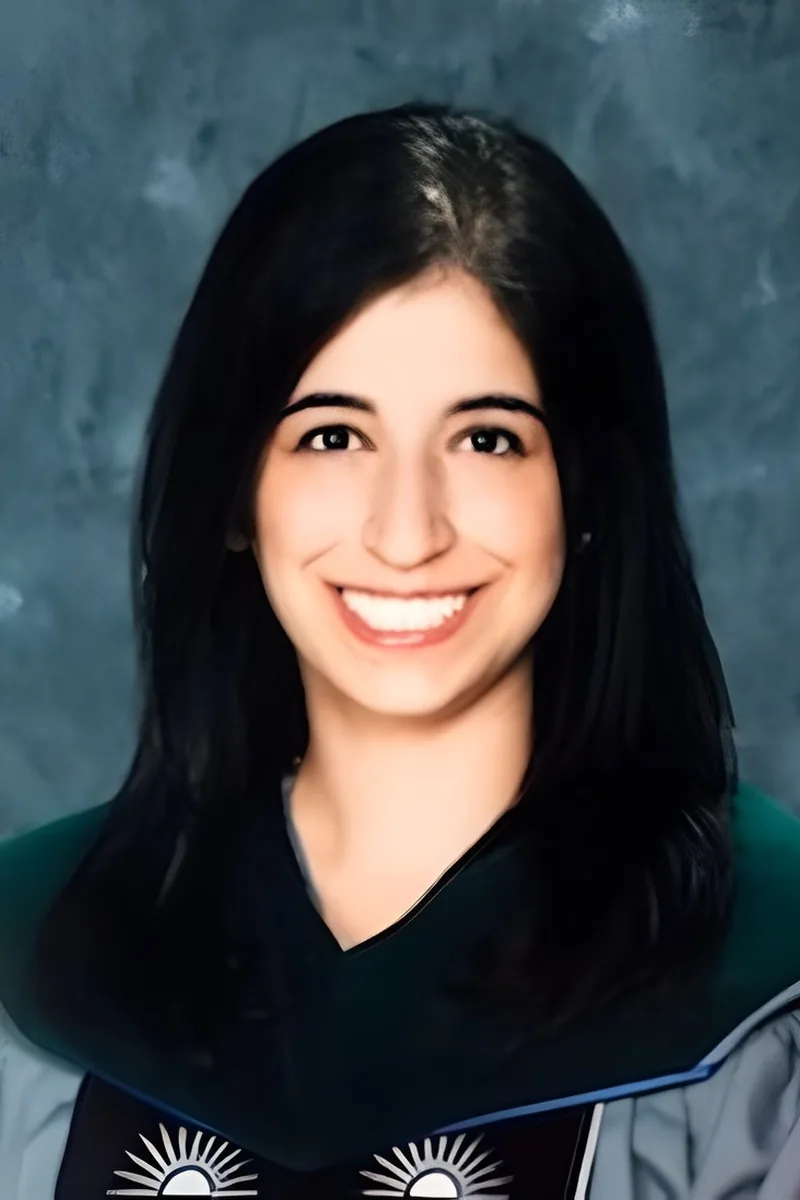
Before medical school, Jessica earned her history degree at Penn — meaning she studied American political and constitutional development at a university where those debates literally happened, steps from Independence Hall and the National Constitution Center. That immersion in primary-source-rich coursework carries over to APUSH's document-based questions, where she teaches students to read for authorial intent and historical context before building their thesis. Rated 4.8 by students.
APUSH's document-based questions reward students who can do more than recall facts — they need to contextualize sources, identify bias, and build an argument under time pressure. Emerson, a University of Chicago student who completed both AP and IB history coursework, teaches the analytical writing techniques that turn a scattered DBQ into a cohesive, evidence-driven essay. Rated 5.0 by students.
APUSH rewards students who can build arguments from evidence, not just recall dates — and Solange's work with her school's Social Studies Honors Society sharpened exactly that skill. She teaches students to dissect DBQs by identifying historical context, sourcing documents, and weaving a thesis that earns full points on the synthesis and complexity rubrics. Rated 5.0 by students.
St. John's College runs entirely on primary sources — no textbooks, just original documents read and debated seminar-style — so Kelsey has spent years doing exactly what APUSH asks: pulling arguments from historical texts and defending interpretations under scrutiny. That Great Books training is especially useful for the DBQ, where reading a source for its context, purpose, and audience matters more than recalling dates. Her 34 ACT reflects the timed analytical stamina the exam rewards.
The AP US History exam rewards students who can deploy specific evidence inside a clear analytical framework — not just recall dates. Greg's political science training at Vanderbilt means he teaches periods like Reconstruction or the New Deal through the lens of competing political arguments, which maps directly onto how the DBQ and LEQ are scored. He drills students on crafting contextualization paragraphs and using documents as proof rather than decoration.
I am working towards a Bachelor of Arts in Pure and Applied Mathematics as well as a Bachelor of Arts in Astronomy and Physics. I have enjoyed studying math and science since I was in elementary school. I would always help my friends out by answering their questions about the material. For about the last five years, I have had my own tutoring business where I have tutored a wide variety of math courses from elementary school math to pre-calculus and calculus. I like to make sure my students have a complete understanding of the core concepts before going into practice questions. I have also had experience helping my peers with physics and computer science courses.
Scoring standardized tests across subjects for grades K-12 — including evaluating written responses as a WIDA analyst — gave Mary an inside look at how rubric-based exams actually get graded, which is directly useful for APUSH's DBQ and LEQ essays where hitting specific scoring criteria matters more than sheer historical knowledge. Her Slavic Languages degree involved extensive work with Russian literature and international relations, building the kind of cross-cultural analytical reading that sharpens document analysis when students need to assess perspective, context, and purpose in primary sources.
A Classics degree means Leslie spent years reading primary sources in their original languages and reconstructing the political arguments of ancient republics — skills that transfer directly to APUSH's document-based questions, where students must analyze unfamiliar texts for context, purpose, and argument. Her deep grounding in Latin and classical political thought gives her a long historical lens for tracing ideas like republicanism, civic virtue, and constitutional debate from their roots through the American periods the exam covers most heavily. Rated 4.9 by students.
AP US History grades hinge on one skill most students underestimate: writing a document-based essay under time pressure while weaving in outside evidence. Kat teaches a systematic approach to DBQs and LEQs — how to group documents quickly, identify point of view, and build a thesis that actually answers the prompt. Her cross-subject strength in writing gives students an edge on the free-response sections.
Latin American Studies at the undergraduate level means Alyssa spent years examining U.S. foreign policy, immigration, and economic imperialism from the other side of the border — exactly the kind of perspective-shifting that APUSH document analysis rewards when students have to consider audience, purpose, and point of view. Her coursework in hemispheric history gives her particular depth on topics like Manifest Destiny, the Mexican-American War, Cold War interventionism, and immigration policy debates that thread through multiple exam periods. Rated 4.9 by students.
Studying political science at Stanford means Margaret spends her coursework inside the same institutional frameworks — constitutional design, federalism, party realignment — that APUSH tests most heavily across every period. That gives her a structural vocabulary for explaining why events like the Nullification Crisis or the New Deal reshape governance, which is exactly the causal reasoning the DBQ and LEQ score for. Her 1550 SAT also signals the timed reading and analytical writing stamina the exam demands.
A European history major at Johns Hopkins who also tutored AP US and World History for years, Alexander knows exactly where the overlap between these curricula pays off — students who can trace how Enlightenment thought shaped the Declaration of Independence or how WWI's aftermath drove American isolationism earn the cross-period connections APUSH essays reward. He zeroes in on the causation and contextualization skills that turn a content-dump essay into one that actually scores well on the DBQ and LEQ. Rated 4.7 by students.
Studying health policy at Stanford means Jake spends his coursework tracing how government decisions — from Progressive-era public health campaigns to the ACA — reshape American life, which is exactly the kind of policy-to-impact reasoning APUSH essays reward. His 34 ACT and dual background in SAT US History and Spanish give him both the timed analytical speed and the multicultural lens that strengthen document analysis on topics like immigration, expansion, and reform. Rated 5.0 by students.
The AP US History exam tests a student's ability to construct document-based arguments under pressure, not just recall dates. Samantha tackles DBQ and LEQ writing head-on, teaching students to identify historical context, weigh evidence, and write essays that earn synthesis and complexity points. Her background in English gives her a particular edge on the writing-heavy portions of the exam.
Michelle's history degree means she actually studied the primary source analysis and periodization thinking that APUSH tests — not just the content, but the discipline's methods for constructing arguments from evidence. She zeroes in on the essay skills that trip students up most, like turning a stack of DBQ documents into a coherent thesis instead of a chronological summary. Rated 5.0 by students.
Kirstie's liberal arts training and Master's in Education come together most visibly in APUSH's essay sections, where students need to do two things at once — read primary sources with a literary eye and marshal them into a historically grounded argument. She leans heavily on her AP English skills when teaching document analysis, showing students how to identify an author's purpose and audience before they ever start writing their thesis. Rated 5.0 by students.
A Master of Public Policy degree means Erika spent graduate school analyzing how American institutions evolved and why specific policy decisions — from the New Deal to the Great Society — reshaped the country. That lens gives her a natural edge when teaching APUSH's thematic threads around government power, reform movements, and political realignment. Rated 5.0 by students, she connects policy context to the kind of argumentation the exam actually scores.
The IB program's emphasis on extended essays and Theory of Knowledge — where students defend interpretive claims with structured evidence — builds the exact muscles APUSH's DBQ and LEQ require. Dalton completed the full IB diploma and now draws on that training to teach how to frame a historical argument around periodization or causation rather than just retelling events. His 35 ACT and 4.9 rating speak to the timed analytical performance the exam rewards.
The AP US History exam rewards students who can do two things fast: identify historical causation and write a thesis-driven essay under time pressure. Scott tackles both by teaching students to read documents like an anthropologist — pulling out perspective, audience, and purpose before jumping to conclusions. His deep background in social studies and essay writing makes the DBQ and LEQ feel far less intimidating.
Studying both biology and philosophy at Boston College means Andrew spends his days toggling between empirical evidence and argumentative reasoning — the exact combination APUSH essays demand when students must marshal specific historical evidence into a persuasive thesis. He's particularly strong on causation and contextualization questions, where his philosophy training kicks in to untangle why events unfolded as they did rather than just when. Rated 5.0 by students.
Kristin's University of Chicago BA required the kind of intensive primary source analysis and argumentative writing that APUSH essays directly test — she spent years constructing evidence-based claims under the school's famously rigorous Core Curriculum. Her philosophy minor adds a layer of logical precision to thesis construction, particularly on LEQs where students need to sustain a causal or comparative argument across multiple periods without losing the thread. Rated 5.0 by students.
Anthropology trains you to analyze how cultures construct meaning — the same interpretive muscle APUSH flexes when students must contextualize a Reconstruction-era political cartoon or explain why Progressive reformers framed their arguments the way they did. Samantha's anthropology degree from Northwestern gives her a knack for unpacking the cultural assumptions embedded in primary sources, which is where most students lose points on the DBQ. Her 33 ACT and 1490 SAT back up the timed analytical performance the exam demands.
Testimonials
Because the right AP US History tutor makes all the difference.
Average Session Rating – Based on 3.4M Learner Ratings
Practice AP US History
Free practice tests, flashcards, and AI tutoring for AP US History
Nearby AP US History Tutors
Other North Port Tutors
Related Social Studies Tutors in North Port
Frequently Asked Questions
Varsity Tutors matches North Port students with expert AP US History tutors for 1-on-1 instruction. We pair each student with a tutor based on their specific needs, learning style, and goals.
Whether you need homework help, exam prep, or want to get ahead, our AP US History tutors are ready to help.
Common challenges include gaps from earlier material, difficulty with specific concepts, and trouble applying learning to new problems. These issues can snowball quickly in AP US History.
A tutor identifies where you're stuck, fills in gaps, and provides targeted practice. The 1-on-1 format means you get help exactly where you need it.
Tutors work with your student's actual coursework—homework assignments, class notes, and upcoming tests. This keeps tutoring directly relevant to what's happening in the classroom.
When you share information about your student's school and curriculum, we can match you with a tutor who has relevant experience.
All tutors complete background checks, credential verification, and teaching evaluation. Many of our AP US History tutors hold advanced degrees or have years of teaching experience.
You can review tutor profiles to find someone with the right background for your student's level and needs.
Many students see improved grades within a few weeks, along with better understanding of AP US History concepts and more confidence tackling challenging material.
Tutors track progress and adjust their approach to ensure continued improvement.
Most students benefit from 1-2 sessions per week. More frequent sessions help if your student is significantly behind or has an important exam coming up.
Your tutor can recommend a schedule based on your student's specific situation and goals.
Tutoring is purchased in packages of hours, with rates varying by tutor experience. Varsity Tutors offers several options to fit different budgets and needs.
You can discuss pricing during your consultation to find what works best.
Your tutor will assess where your student is, discuss goals, and start working on priority areas. Most students bring current homework or upcoming test material to focus on.
By the end, you'll have a clear sense of how the tutor can help and a plan for moving forward.
Let’s find your perfect tutor
Answer a few quick questions. We’ll recommend the right plan and match you with a top 5% tutor.