Award-Winning AP US History Tutors
serving Miami, FL
AP US History
Tutors in Miami
Private 1-on-1 tutoring, weekly live classes for academic support, test prep & enrichment, practice tests and diagnostics, and more to elevate grades and test scores.
Based on 3.4M Learner Ratings
UniversitiesSchools & Universities
DeliveredHours Delivered
ProficiencyGrowth in Proficiency
Who needs tutoring?
No obligation. Takes ~1 minute.
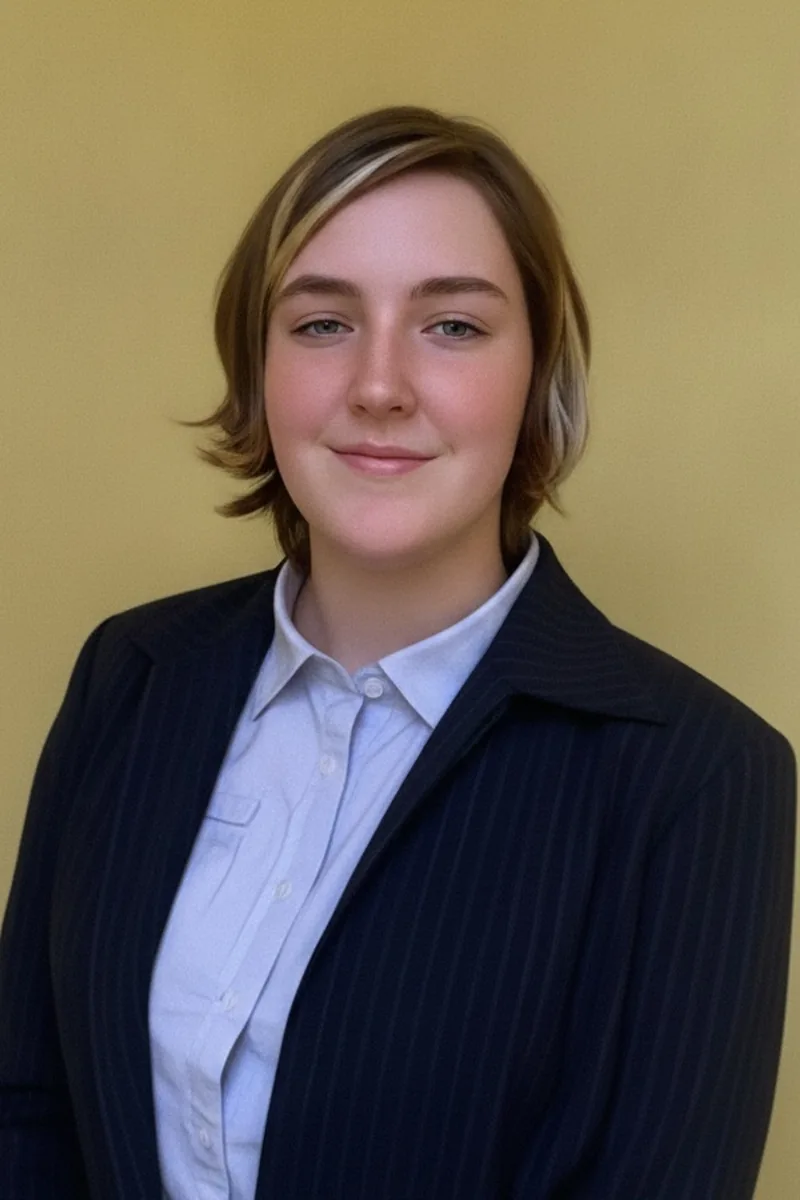
St. John's College runs entirely on primary sources — no textbooks, just original documents read and debated seminar-style — so Kelsey has spent years doing exactly what APUSH asks: pulling arguments from historical texts and defending interpretations under scrutiny. That Great Books training is especially useful for the DBQ, where reading a source for its context, purpose, and audience matters more than recalling dates. Her 34 ACT reflects the timed analytical stamina the exam rewards.
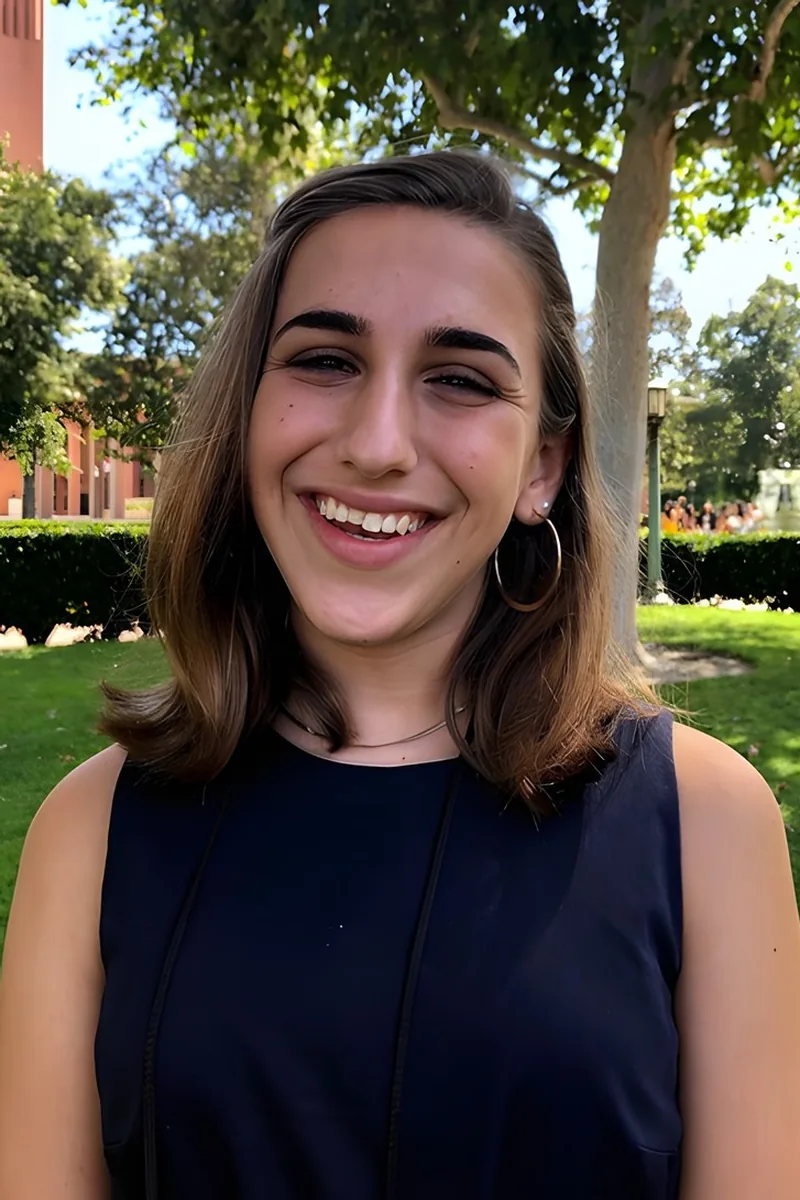
APUSH rewards students who can build arguments from evidence, not just recall dates — and Solange's work with her school's Social Studies Honors Society sharpened exactly that skill. She teaches students to dissect DBQs by identifying historical context, sourcing documents, and weaving a thesis that earns full points on the synthesis and complexity rubrics. Rated 5.0 by students.
I am working towards a Bachelor of Arts in Pure and Applied Mathematics as well as a Bachelor of Arts in Astronomy and Physics. I have enjoyed studying math and science since I was in elementary school. I would always help my friends out by answering their questions about the material. For about the last five years, I have had my own tutoring business where I have tutored a wide variety of math courses from elementary school math to pre-calculus and calculus. I like to make sure my students have a complete understanding of the core concepts before going into practice questions. I have also had experience helping my peers with physics and computer science courses.
Scoring standardized tests across subjects for grades K-12 — including evaluating written responses as a WIDA analyst — gave Mary an inside look at how rubric-based exams actually get graded, which is directly useful for APUSH's DBQ and LEQ essays where hitting specific scoring criteria matters more than sheer historical knowledge. Her Slavic Languages degree involved extensive work with Russian literature and international relations, building the kind of cross-cultural analytical reading that sharpens document analysis when students need to assess perspective, context, and purpose in primary sources.
Before medical school, Jessica earned her history degree at Penn — meaning she studied American political and constitutional development at a university where those debates literally happened, steps from Independence Hall and the National Constitution Center. That immersion in primary-source-rich coursework carries over to APUSH's document-based questions, where she teaches students to read for authorial intent and historical context before building their thesis. Rated 4.8 by students.
APUSH's document-based questions reward students who can do more than recall facts — they need to contextualize sources, identify bias, and build an argument under time pressure. Emerson, a University of Chicago student who completed both AP and IB history coursework, teaches the analytical writing techniques that turn a scattered DBQ into a cohesive, evidence-driven essay. Rated 5.0 by students.
The AP US History exam rewards students who can deploy specific evidence inside a clear analytical framework — not just recall dates. Greg's political science training at Vanderbilt means he teaches periods like Reconstruction or the New Deal through the lens of competing political arguments, which maps directly onto how the DBQ and LEQ are scored. He drills students on crafting contextualization paragraphs and using documents as proof rather than decoration.
A Classics degree means Leslie spent years reading primary sources in their original languages and reconstructing the political arguments of ancient republics — skills that transfer directly to APUSH's document-based questions, where students must analyze unfamiliar texts for context, purpose, and argument. Her deep grounding in Latin and classical political thought gives her a long historical lens for tracing ideas like republicanism, civic virtue, and constitutional debate from their roots through the American periods the exam covers most heavily. Rated 4.9 by students.
AP US History grades hinge on one skill most students underestimate: writing a document-based essay under time pressure while weaving in outside evidence. Kat teaches a systematic approach to DBQs and LEQs — how to group documents quickly, identify point of view, and build a thesis that actually answers the prompt. Her cross-subject strength in writing gives students an edge on the free-response sections.
Latin American Studies at the undergraduate level means Alyssa spent years examining U.S. foreign policy, immigration, and economic imperialism from the other side of the border — exactly the kind of perspective-shifting that APUSH document analysis rewards when students have to consider audience, purpose, and point of view. Her coursework in hemispheric history gives her particular depth on topics like Manifest Destiny, the Mexican-American War, Cold War interventionism, and immigration policy debates that thread through multiple exam periods. Rated 4.9 by students.
Evaluating hundreds of fellowship candidates' writing and academic work at a nonprofit gave Will a finely tuned sense for what makes a historical argument land — clear thesis, precise evidence, purposeful structure — which is exactly what APUSH's DBQ and LEQ score for. His humanities and political science degree from Villanova, plus coursework at Cambridge, means he can connect American political development to broader intellectual currents in ways that strengthen periodization and contextualization essays. Holds a 5.0 rating.
John's English and writing background translates directly to the essay-heavy demands of APUSH — the DBQ and LEQ are fundamentally persuasive writing tasks that happen to use historical evidence. He teaches students to treat each document like a text to be analyzed for purpose and audience, then build that analysis into a thesis-driven argument. His 4.9 rating and 36 ACT suggest the kind of analytical precision that makes timed essay writing click.
Molly's Columbia University history degree means she studied the same primary source debates and historiographical arguments that APUSH condenses into a single exam — from constitutional crises to westward expansion to twentieth-century reform. Her classroom teaching experience across elementary grades sharpened her ability to break complex ideas into clear, layered explanations, which pays off when walking students through the periodization and causation reasoning that separates a 3 from a 5. Rated 5.0 by students.
An interdisciplinary degree blending economics and political science at Yale means Allen spent four years studying the exact forces — trade policy, constitutional interpretation, factional politics — that drive APUSH's most heavily tested periods from the Early Republic through the New Deal. He teaches students to build LEQ and DBQ arguments around economic and political causation rather than just narrating events, a skill his 1570 SAT confirms he can execute under timed pressure. Rated 5.0 by students.
Political science majors spend years dissecting the constitutional tensions, legislative battles, and power dynamics that make up the core of the APUSH curriculum — Julian studied exactly the material the exam tests most heavily. His 1430 SAT signals strong timed reading and writing performance, which matters for an exam where the DBQ and LEQ live or die on how quickly a student can build a sourced, thesis-driven argument under pressure.
Studying political science at Stanford means Margaret spends her coursework inside the same institutional frameworks — constitutional design, federalism, party realignment — that APUSH tests most heavily across every period. That gives her a structural vocabulary for explaining why events like the Nullification Crisis or the New Deal reshape governance, which is exactly the causal reasoning the DBQ and LEQ score for. Her 1550 SAT also signals the timed reading and analytical writing stamina the exam demands.
Studying health policy at Stanford means Jake spends his coursework tracing how government decisions — from Progressive-era public health campaigns to the ACA — reshape American life, which is exactly the kind of policy-to-impact reasoning APUSH essays reward. His 34 ACT and dual background in SAT US History and Spanish give him both the timed analytical speed and the multicultural lens that strengthen document analysis on topics like immigration, expansion, and reform. Rated 5.0 by students.
Economics majors spend their time tracing how incentive structures, trade policy, and financial systems reshape societies — which means Ryan already thinks in the cause-and-effect chains that APUSH essays reward, especially for periods like the Market Revolution, Gilded Age industrialization, and New Deal economic reform. His 1590 SAT signals serious reading and analytical chops, the kind that make timed document analysis feel manageable rather than frantic. Rated 5.0 by students.
The AP US History exam rewards students who can do more than recall events — they need to analyze documents, identify historical causation, and write a convincing DBQ under time pressure. Jeff earned his MA in history from UC Berkeley, where he taught undergraduates how to build arguments from primary sources. He applies that same document-analysis approach to APUSH prep, breaking down rubric expectations so students know exactly what earns top scores.
Kirstie's liberal arts training and Master's in Education come together most visibly in APUSH's essay sections, where students need to do two things at once — read primary sources with a literary eye and marshal them into a historically grounded argument. She leans heavily on her AP English skills when teaching document analysis, showing students how to identify an author's purpose and audience before they ever start writing their thesis. Rated 5.0 by students.
Theater training builds a surprisingly useful APUSH skill — Amber knows how to read a text for subtext, audience, and intent, which is exactly what document-based questions ask students to do with political speeches, editorials, and propaganda. Her 1570 SAT and 35 ACT reflect the kind of timed analytical performance the exam rewards, and her casting background means she's practiced at quickly sizing up what someone is really trying to communicate. Rated 5.0 by students.
The AP US History exam tests a student's ability to construct document-based arguments under pressure, not just recall dates. Samantha tackles DBQ and LEQ writing head-on, teaching students to identify historical context, weigh evidence, and write essays that earn synthesis and complexity points. Her background in English gives her a particular edge on the writing-heavy portions of the exam.
Testimonials
Because the right AP US History tutor makes all the difference.
Average Session Rating – Based on 3.4M Learner Ratings
Practice AP US History
Free practice tests, flashcards, and AI tutoring for AP US History
Nearby AP US History Tutors
Other Miami Tutors
Related Social Studies Tutors in Miami
Frequently Asked Questions
The AP US History exam tests your understanding of American history from 1491 to the present, divided into nine thematic learning objectives. The exam includes a multiple-choice section (55 questions in 55 minutes), a short-answer section (4 questions in 50 minutes), and a free-response section with a document-based question and long essay (100 minutes total). Success requires not just memorizing dates and events, but understanding historical causation, change over time, and how to analyze primary and secondary sources.
Many students struggle with the sheer volume of content spanning five centuries, making it hard to identify what's truly important for the exam. Others find the document-based question intimidating because it requires analyzing sources quickly while constructing a coherent argument under time pressure. Time management is another common issue—pacing through 55 multiple-choice questions and then shifting to essay writing demands practice and strategy. Personalized tutoring helps you focus on your specific weak areas, whether that's a particular time period, understanding historical themes, or mastering essay structure.
Score improvement depends on your starting point and how consistently you engage with tutoring and practice. Students who work with a tutor typically see meaningful gains by focusing on targeted skill-building—whether that's improving source analysis, strengthening thesis statements, or mastering the multiple-choice format. Most students benefit from 4-8 weeks of regular tutoring before the exam, combined with consistent practice tests and review. A tutor can help you identify which sections offer the quickest wins and develop a study schedule that fits your timeline.
An effective study plan typically divides content review (understanding major themes and events) from skill practice (writing essays, analyzing documents, and taking timed practice tests). Start by taking a full practice exam to identify your weakest areas—whether that's a particular era, essay writing, or multiple-choice strategy. Then allocate study time proportionally: spend more time on weaker topics while maintaining regular practice tests to build stamina and timing. A tutor can customize this plan based on your current level and timeline, ensuring you're not just memorizing but truly understanding the material.
Document analysis is a skill that improves with targeted practice and feedback. The key is learning to identify the source's perspective, purpose, and historical context quickly, then connecting each document to your argument rather than just summarizing it. Many students benefit from working through past DBQs with a tutor who can show you how to spot the most important details and construct arguments that weave documents together. Regular practice with timed conditions helps you develop speed and confidence so the DBQ feels manageable on test day.
Test anxiety often stems from feeling unprepared or unfamiliar with the exam format, which is why practice tests are so valuable—they build confidence through repetition and help you develop a routine. Working with a tutor gives you a chance to practice under realistic conditions and get feedback before the actual exam, reducing uncertainty. Develop a test-day strategy: know how you'll allocate time across sections, have a plan for difficult questions (skip and return), and practice relaxation techniques during study sessions. Many students find that understanding the material deeply and having a clear strategy significantly reduces anxiety.
Ideally, start tutoring in the fall or early winter before the May exam, giving yourself 4-6 months to work through content and skill-building. However, even starting in spring can help if you focus on targeted review of weak areas and intensive practice test preparation. The earlier you begin, the more time you have to absorb content and practice essays without feeling rushed. Varsity Tutors can connect you with expert tutors in Miami who can assess your current level and create a timeline that works for your situation.
Varsity Tutors connects you with expert tutors for students in Miami who specialize in AP US History and understand the exam's unique demands. When you get matched with a tutor, you can discuss your goals, current score level, and timeline so they can tailor instruction to your needs. Whether you need help with content review, essay writing, document analysis, or full-length practice tests, you'll work with someone experienced in helping students achieve their target scores.
Let’s find your perfect tutor
Answer a few quick questions. We’ll recommend the right plan and match you with a top 5% tutor.