Award-Winning AP Biology Tutors
serving North Port, FL
AP Biology
Tutors in North Port
Private 1-on-1 tutoring, weekly live classes for academic support, test prep & enrichment, practice tests and diagnostics, and more to elevate grades and test scores.
Based on 3.4M Learner Ratings
UniversitiesSchools & Universities
DeliveredHours Delivered
ProficiencyGrowth in Proficiency
Who needs tutoring?
No obligation. Takes ~1 minute.

Scoring well on the AP Bio exam means moving fluidly between molecular genetics, cellular respiration, ecology, and evolution — often within a single free-response question. Ankit studied neuroscience at Duke, so he's lived inside the details of signal transduction, gene expression, and cellular mechanisms that dominate the hardest parts of the curriculum. He unpacks dense biological processes step by step, connecting each pathway to the bigger picture of how organisms function.
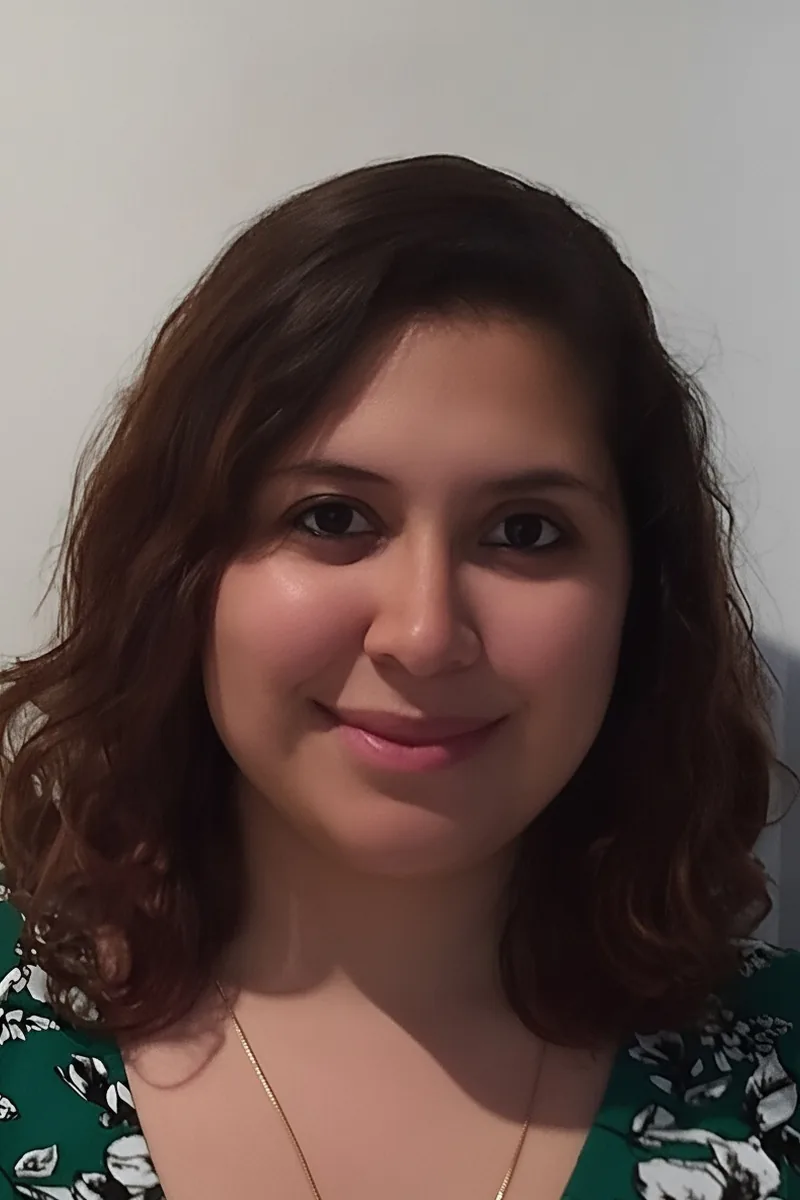
A biochemistry and cell biology degree from Rice is about as direct a pipeline to AP Biology as it gets. Adriana digs into the units that tend to separate 4s from 5s — cellular energetics, gene expression and regulation, and the data-analysis free-response questions that demand more than memorized definitions. She teaches students to think like the exam writers, connecting molecular-level processes to larger biological systems the way the redesigned AP framework rewards.
The AP Biology exam punishes surface-level memorization and rewards students who can reason through experimental design, analyze data, and apply concepts like gene regulation or energy flow to unfamiliar scenarios. Brett's graduate-level training in biology means he teaches the underlying logic of cellular respiration, heredity, and ecology — the kind of deep understanding that translates directly to 4s and 5s.
Studying biotechnology at UCF's Burnett Medical Scholars Program means Priya is immersed in the exact content AP Biology tests — from gene expression and cell signaling to ecology and evolution. She unpacks dense FRQ prompts by teaching students to identify what the question is really asking before they start writing, a skill that consistently turns partial-credit answers into full ones.
I am passionate about learning and assisting others with the intention of becoming an excellent physician in the future. I am eager to apply the knowledge and skills that I have learned along the way to improve the lives of those looking to better themselves.
Neuroscience majors don't just memorize biology — they have to trace how a signal moves from a neurotransmitter binding at a membrane receptor all the way through intracellular cascades to a cellular response, which is exactly the kind of multi-step reasoning AP Bio's free-response questions demand. Esha's dual-admission DO program track at Nova Southeastern means she's already studying the physiology, genetics, and cellular processes tested on the exam at a pre-med depth. Rated 5.0 by students.
A biomedical engineering degree from the University of Miami plus current medical school training there means Uju has studied AP Bio's plant and animal physiology content from an engineer's perspective — thinking about biological systems in terms of inputs, outputs, and feedback mechanisms. That engineering lens is particularly useful for the exam's questions on homeostasis and biological regulation, where students need to explain how organisms maintain stability through interconnected control systems. Rated 4.9 by students.
As a biochemistry TA and biology major at UF heading into medical school, Rangish is studying AP Bio's core content — gene expression, metabolic pathways, and cellular processes — at the college level right now, which keeps the material sharp rather than secondhand. His biochemistry background is especially useful for the units where biology and chemistry overlap, like enzyme kinetics and the energetics of photosynthesis and respiration, where understanding the molecular details makes free-response answers more precise. Rated 4.9 by students.
Heading into medical school after completing his biology degree, Anup is still close enough to the AP Biology curriculum to remember exactly where students get tripped up — particularly in units on cellular energetics and heredity, where the exam demands multi-step reasoning rather than simple recall. He walks through lab-based free-response questions by teaching students to read like scientists: pulling claims from data tables, identifying proper controls, and building explanations that earn full marks. Rated 5.0 by students.
The chemistry coursework Jordan is completing at Dickinson College gives her a molecular-level handle on AP Bio's trickiest content — enzyme kinetics, pH-dependent protein folding, and the energetics driving photosynthesis and cellular respiration. She's especially good at unpacking how chemical principles explain biological behavior, which is the kind of cross-disciplinary reasoning that separates strong free-response answers from surface-level ones.
The AP Biology exam rewards students who can design experiments, interpret data sets, and apply concepts to novel scenarios — not just define vocabulary. Michelle tackles each unit by linking big ideas like evolution, energy transfer, and information storage to the kinds of free-response questions the College Board actually asks. Her 4.9 rating speaks to how well that approach translates to exam day.
Pre-med coursework at the University of Miami meant Alec spent semesters in chemistry and biology labs before earning his psychology degree — so AP Bio's units on cellular processes and biochemistry aren't abstract textbook material but concepts he's applied hands-on. His psychology background also gives him a sharper angle on the behavioral biology and nervous system content that trips up students who've only studied molecular-level biology. Rated 5.0 by students.
Susie is currently deep in MCAT prep after completing her Human Biology degree at UT Austin, which means AP Bio topics like gene expression, cellular energetics, and ecology aren't distant memories — they're material she's actively reviewing and reinforcing at a higher level right now. That recency gives her a sharp sense of which concepts students actually stumble on, like distinguishing between the light-dependent and light-independent reactions or tracing how a single mutation can ripple through protein function and phenotype. Rated 4.8 by students.
I am a law student, but I took an unusual route to get there. I used to attend medical school but had a change of heart in my career path. Part of this was due to my political science major (double major with biology) in college as well as a number of Spanish and other courses that I took. Tutoring is something, I feel, that has come naturally to me, even back to my high school days. My goal is to help you learn as much as you can and reach your true potential. I will work hard to make sure that this happens, as long as you put in the work, too! We will work together to tailor your learning experience to your needs.
Fulton earned his B.S. in Biotechnology, which means the content in AP Biology — from cellular respiration pathways to gene regulation and Hardy-Weinberg equilibrium — overlaps directly with what he studied in depth. He teaches students to think like the exam does: connecting laboratory design questions to underlying biological principles rather than treating each unit as isolated material.
AP Biology's free-response questions reward students who can design experiments, interpret data, and explain biological mechanisms in precise language — not just recall vocabulary. Alokika digs into the four Big Ideas (evolution, energy, information, and interactions) with an emphasis on the analytical skills the exam actually tests. Her biology degree and medical coursework give her depth well beyond the AP curriculum.
As a biology major at Vanderbilt, Liraz is working through the same core content — gene regulation, ecological dynamics, phylogenetic analysis — that AP Bio tests, which means she can pinpoint exactly where the college-level material diverges from what students learned in introductory bio. She's especially useful for breaking down how the exam frames plant biology and ecology questions, since those units tend to get rushed in class but show up heavily in the multiple-choice and free-response sections.
Between her biology major and dual admission to medical school, Hanna has lived the AP Bio curriculum at a depth most tutors haven't. She digs into the trickiest exam topics — signal transduction pathways, Hardy-Weinberg equilibrium, cellular respiration energetics — and teaches students to reason through free-response questions the way the College Board wants them answered.
AP Bio covers an enormous range, from molecular genetics and cellular respiration to ecology and evolution, and the exam expects students to apply concepts in unfamiliar experimental contexts. Kat teaches students to read data tables and design experiments the way the College Board frames them, connecting each unit's content to the kinds of free-response questions that actually appear on test day.
Teaching 10th-grade Biochemistry at a competitive Philadelphia magnet school means Kathleen lives in the overlap between biology and chemistry that defines the AP Bio exam. She digs into the molecular details — enzyme kinetics, cellular respiration energetics, gene expression regulation — with the depth the College Board expects on free-response questions. Rated 5.0 by students.
Teaching has been a lifelong passion of mine. What drives me is sharing knowledge while genuinely connecting with others. I discovered my love for tutoring in high school and have been dedicated to it ever since. At Stanford University, I earned a BS in Human Biology and Chemistry while continuing to tutor throughout, advancing to Lead Tutor. After graduation, I spent a year as a Teaching Associate, designing and delivering course content which significantly broadening my pedagogical approach. What sets me apart is my versatility. Having served as both tutor and instructor, I can adapt my teaching style to each student's unique needs, whether that be building up foundational skills or pursuing advanced mastery. I'm now pursuing graduate studies at The Johns Hopkins School of Medicine, staying engaged with cutting-edge science while maintaining my commitment to education. I look forward to helping you achieve your academic goals!
Ellie's biomedical engineering coursework at Yale — plus her autism research in the School of Medicine — means she's working with the molecular and cellular biology that AP Bio tests at a level where she can explain not just what happens during signal transduction or gene regulation, but why it matters in a living system. She also tutors a Differential Equations course weekly, so she's comfortable with the quantitative reasoning behind chi-square problems and data analysis that trips up students on the exam's free-response sections. Rated 5.0 by students.
Studying biology and chemistry on the pre-med track at Northwestern means Kade is immersed daily in the exact material the AP Bio exam tests — from cellular respiration and signal transduction to gene regulation and evolutionary mechanisms. He also runs study groups at his university, so he's practiced at explaining dense concepts like feedback inhibition or Hardy-Weinberg equilibrium in ways that actually stick. That combination of current coursework and teaching experience makes a real difference on exam day.
Stanford's Human Biology program with a bioinformatics and stem cell science concentration meant Matthew spent his coursework at the intersection of computation and living systems — analyzing gene expression data, studying cell differentiation pathways, and thinking about biology as information processing. That lens is especially useful for AP Bio's molecular biology and genetics units, where students need to trace how information encoded in DNA gets read, regulated, and occasionally misread. Rated 4.9 by students.
Environmental science coursework gave Ethan an ecology-first perspective on biology — population dynamics, energy flow through ecosystems, and the interplay between organisms and their environments — which lines up directly with AP Bio's ecology and evolution units that many science-focused tutors breeze past. He also teaches AP Statistics, so he's unusually comfortable with the data interpretation and experimental design questions that trip students up on the exam. Rated 5.0 by students.
The AP Biology exam tests whether you can apply concepts — designing experiments around cellular respiration, interpreting data on gene expression, reasoning through ecological models. As a biology major at Stanford, Helen digs into these application-style questions and teaches the kind of scientific thinking the exam actually rewards. She holds a 5.0 client rating.
As a Cornell biology student on a pre-med track, Karim is actively studying the same cellular processes, genetics, and ecological concepts that AP Bio tests — so his explanations come with the freshness of someone working through this material at the college level right now. He's especially strong at breaking down how organisms maintain homeostasis and how evolutionary pressures shape populations, the kinds of big-picture connections the exam's data-interpretation questions demand. Rated 5.0 by students.
Studying biomedical engineering at Duke means Eric thinks about biological systems at the molecular, cellular, and organismal levels every day. He tackles AP Biology's toughest units — signal transduction, gene regulation, and energy flow through ecosystems — by tying them back to the underlying logic that the AP exam rewards.
From signal transduction pathways to Hardy-Weinberg equilibrium, AP Biology demands comfort with both molecular detail and big-picture ecological thinking. Amanda earned her biology degree at the University of Alabama and later built on that foundation through medical school coursework in genetics, physiology, and cell biology. She breaks down dense topics like gene regulation and cellular respiration into visual, step-by-step logic that sticks on exam day.
As a pre-med biosciences major at Rice University, Tegan is studying the same cellular processes, genetics, and ecological concepts that AP Bio covers — but at the college level, which means she can explain the *why* behind topics like enzyme kinetics or signal transduction rather than just the textbook summary. She's especially good at breaking down the plant biology and photosynthesis material that many students rush past, connecting light reactions and carbon fixation to the energy flow concepts the exam circles back to repeatedly. Rated 4.9 by students.
Studying biological engineering at MIT means Lainie encounters AP Bio's core content — gene regulation, cellular energetics, metabolic pathways — through the lens of designing and modeling biological systems, which gives her a more mechanistic understanding than a standard biology curriculum provides. She scored a 1580 SAT and has tutored students as young as four, so she's practiced at adjusting her explanations to match exactly how much detail a student can absorb. Rated 5.0 by students.
Testimonials
Because the right AP Biology tutor makes all the difference.
Average Session Rating – Based on 3.4M Learner Ratings
Practice AP Biology
Free practice tests, flashcards, and AI tutoring for AP Biology
Nearby AP Biology Tutors
Other North Port Tutors
Related Science Tutors in North Port
Frequently Asked Questions
Varsity Tutors matches North Port students with expert AP Biology tutors for 1-on-1 instruction. We pair each student with a tutor based on their specific needs, learning style, and goals.
Whether you need homework help, exam prep, or want to get ahead, our AP Biology tutors are ready to help.
Common challenges include gaps from earlier material, difficulty with specific concepts, and trouble applying learning to new problems. These issues can snowball quickly in AP Biology.
A tutor identifies where you're stuck, fills in gaps, and provides targeted practice. The 1-on-1 format means you get help exactly where you need it.
Tutors work with your student's actual coursework—homework assignments, class notes, and upcoming tests. This keeps tutoring directly relevant to what's happening in the classroom.
When you share information about your student's school and curriculum, we can match you with a tutor who has relevant experience.
All tutors complete background checks, credential verification, and teaching evaluation. Many of our AP Biology tutors hold advanced degrees or have years of teaching experience.
You can review tutor profiles to find someone with the right background for your student's level and needs.
Many students see improved grades within a few weeks, along with better understanding of AP Biology concepts and more confidence tackling challenging material.
Tutors track progress and adjust their approach to ensure continued improvement.
Most students benefit from 1-2 sessions per week. More frequent sessions help if your student is significantly behind or has an important exam coming up.
Your tutor can recommend a schedule based on your student's specific situation and goals.
Tutoring is purchased in packages of hours, with rates varying by tutor experience. Varsity Tutors offers several options to fit different budgets and needs.
You can discuss pricing during your consultation to find what works best.
Your tutor will assess where your student is, discuss goals, and start working on priority areas. Most students bring current homework or upcoming test material to focus on.
By the end, you'll have a clear sense of how the tutor can help and a plan for moving forward.
Let’s find your perfect tutor
Answer a few quick questions. We’ll recommend the right plan and match you with a top 5% tutor.