Award-Winning Microeconomics Tutors
serving Lakeland, FL
Microeconomics
Tutors in Lakeland
Private 1-on-1 tutoring, weekly live classes for academic support, test prep & enrichment, practice tests and diagnostics, and more to elevate grades and test scores.
Based on 3.4M Learner Ratings
UniversitiesSchools & Universities
DeliveredHours Delivered
ProficiencyGrowth in Proficiency
Who needs tutoring?
No obligation. Takes ~1 minute.

Supply and demand curves are just the starting point — Hari digs into elasticity, marginal utility, and market structures like oligopoly and monopolistic competition to show how firms actually make pricing decisions. His MBA in Finance gives him real-world context for concepts like cost curves and profit maximization that textbooks often present too abstractly. Rated 5.0 by students.
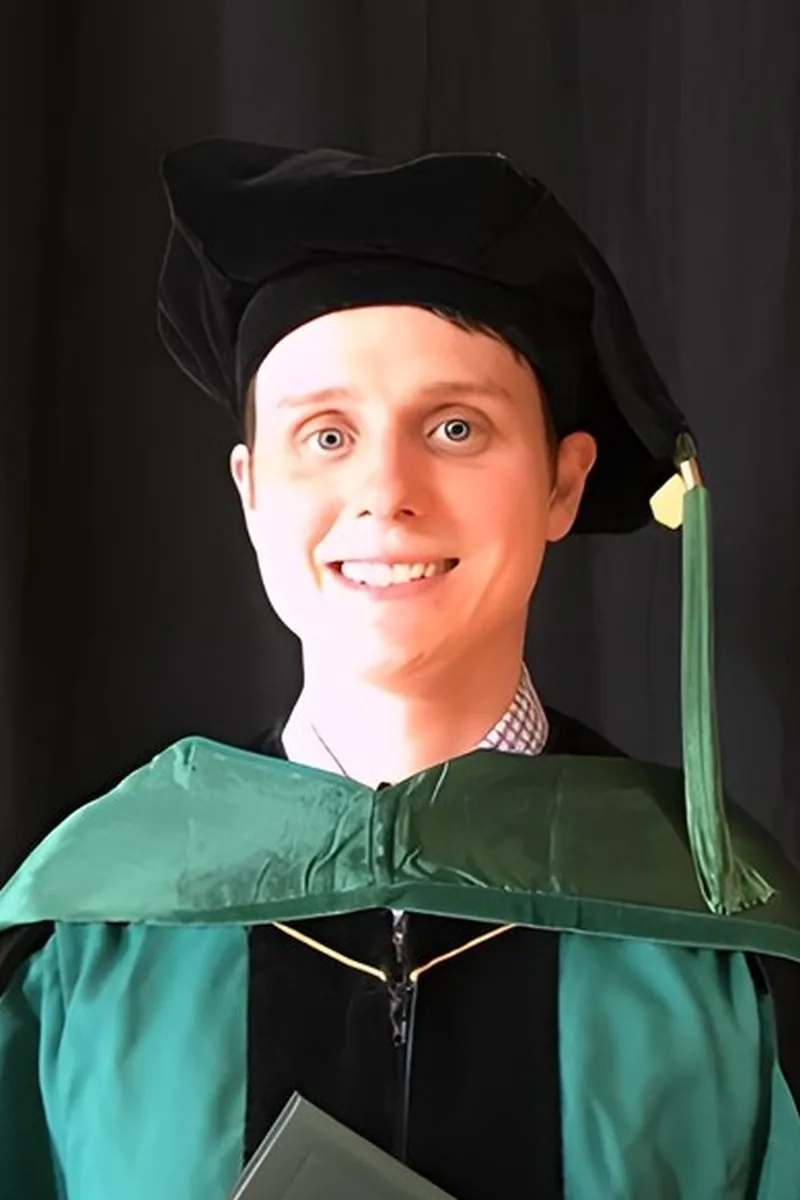
An economics degree from SUNY Albany means James can teach microeconomic concepts — supply and demand curves, elasticity, market structures, consumer choice theory — with the depth of someone who studied them formally. He connects abstract models like marginal utility and cost curves to real-world pricing decisions that make the logic intuitive. His 4.9 rating speaks to how clearly he breaks down graphs and mathematical relationships that trip students up.
From elasticity calculations to the subtleties of monopolistic competition, microeconomics demands comfort with both graphical reasoning and mathematical precision. Olivia's dual background — a BA in math and economics from Vanderbilt plus doctoral-level training at UNC Chapel Hill — lets her walk through utility maximization and cost curve analysis with genuine fluency rather than surface-level definitions.
Elasticity, marginal cost curves, market structures, welfare analysis — microeconomics is built on deceptively simple ideas that get complicated fast. Stephen's PhD research at Rice and his current teaching at Fordham keep him immersed in exactly these concepts, and his market research career means he can show students how firms actually use pricing strategy and cost analysis outside the classroom.
Caroline's comparative literature degree might seem unrelated to microeconomics, but her economics and public policy coursework gave her a solid handle on how incentive structures, trade-offs, and market behavior actually work. She's particularly good at translating the verbal reasoning behind models — explaining in plain language why a demand curve slopes downward or what drives a firm's shutdown decision — which clicks for students who get lost when the graphs pile up.
Having passed 15 AP exams — including both Calculus and Physics sequences — Nathan is comfortable with the optimization and graphical reasoning that trips up most microeconomics students, from setting up marginal analysis to interpreting shifts in supply-and-demand models. His computer science background at UCF reinforces that systematic, logical approach: breaking a complex problem into smaller steps, whether it's debugging code or tracing how a tax wedge creates deadweight loss. Rated 4.9 by students.
Marginal cost curves, price discrimination, game theory matrices — microeconomics is deceptively math-heavy for a social science course. Dariel digs into the graphical and algebraic sides together, making sure students can both sketch a firm's cost structure and calculate the profit-maximizing output behind it. His quantitative strengths in math and statistics give him an edge when courses lean into the more technical problem sets.
Elizabeth breaks down microeconomic concepts like elasticity, marginal cost curves, and market structures by tying them back to real business decisions — something her accounting studies at UCF reinforce constantly. She's particularly strong at teaching students how to read and interpret the graphs that make or break exam performance. Rated 4.9 by students.
Supply and demand curves are just the starting point — microeconomics gets interesting when students dig into market failures, game theory, and why perfectly competitive markets almost never exist in real life. Matthew approaches each model by asking what assumptions it makes and what happens when those assumptions break down, which turns memorization into genuine economic reasoning.
Supply and demand diagrams are deceptively simple until students hit elasticity, market failures, or game theory — that's where Microeconomics gets interesting. Marissa unpacks how firms actually make pricing and production decisions, turning what can feel like memorizing graph shifts into genuine economic reasoning.
I am a senior at Rollins College and have my IB diploma from high school. I did TOK, HLs: Psych, Econ, language and literature, and SLs: Spanish, biology, and mathematical studies. I prefer psych, econ, business, and anything English or literature related. I can do paper revisions, essay help, reading comprehension, elementary/middle/high school math. I would prefer more basic math and science, can help with reading and writing in Spanish, and am up for anything.
I am a graduate of the University of Notre Dame with a degree in Accounting. I spent the first 20 years of my career in public accounting with PwC (PriceWaterhouseCoopersLLP), including 7+ years as a a partner.
The jump from introductory economics to microeconomics trips students up right around market structures — distinguishing monopolistic competition from oligopoly, or calculating deadweight loss under a price ceiling. Julian's finance background at the University of Miami means he's comfortable with the math behind these models and can walk through the graphing and algebra that micro demands.
I'm from Las Vegas, NV. I am currently a junior at the University of Miami majoring in Industrial Engineering with a double minor in Mathematics and Economics. My hobbies include laying by the pool and listening to new music.
Studying finance at Boston College means Andy works with microeconomic principles daily — how firms price products, why markets allocate resources the way they do, and what happens when they don't. He brings that applied lens to concepts like profit maximization and market structures, grounding abstract graphs in the kind of real business reasoning that makes them click. Rated 5.0 by students.
From elasticity calculations to the nuances of monopolistic competition, microeconomics requires students to think graphically and verbally at the same time. David breaks down each market structure by walking through the firm's decision-making process step by step — where marginal cost meets marginal revenue, why profits shrink in the long run, and what happens when assumptions change. His entrepreneurship background means these aren't hypothetical firms to him.
At UCLA, Christopher studied economics with a double major that gave him both the quantitative models and the historical context behind how markets actually develop — useful when explaining why perfectly competitive markets rarely exist or how government intervention reshapes incentive structures. His time at Deutsche Bank adds a practical dimension to topics like firm pricing behavior and cost analysis, since he's seen how businesses weigh marginal decisions with real money on the line.
Elasticity, marginal utility, and market structures like oligopoly and monopolistic competition each require a different way of thinking — and Grant's economics degree gave him deep fluency with all of them. He breaks down consumer and producer theory using concrete examples, making the graphs and equations feel like tools rather than obstacles.
Consumer choice theory, production functions, and market structures like oligopoly all require students to think in graphs and marginal terms simultaneously. Idara's engineering management training at Stanford built exactly that kind of analytical fluency, and her finance career keeps her sharp on how firms actually make the pricing and output decisions microeconomics describes.
Elasticity, consumer surplus, and market structures like monopolistic competition can feel abstract until someone maps them to decisions you actually make. Sheena, who is pursuing an accelerated Master's in Economics, teaches microeconomics by anchoring each concept in concrete scenarios — why airlines price-discriminate, how a tax shifts deadweight loss, what drives firm entry in the long run. She makes the graphs tell a story rather than just sit on the page.
Mary's PhD in Chemistry from the University of Chicago means she spent years doing the kind of constrained optimization and quantitative modeling that microeconomics relies on — minimizing costs, maximizing outputs, interpreting how variables shift on a graph. She pairs that analytical rigor with MBA coursework that gave her direct exposure to firm behavior, pricing strategy, and market dynamics. It's a combination that lets her teach both the calculus behind profit maximization and the business logic that makes it meaningful.
Being inside Michigan Ross's BBA program means Kerry encounters microeconomic thinking in nearly every class — how firms decide what to produce, why pricing strategies differ across market structures, and what drives consumer decision-making under scarcity. That daily immersion in business case analysis gives her a way of teaching concepts like elasticity and profit maximization that's grounded in how companies actually behave, not just how curves shift on a whiteboard.
I have an MBA from Rice University and both real-world business experience and teaching experience. Most recently, I taught a first-year college course in Microeconomics for nine years, in addition to other classes in the university's international trade program. My students came from over 30 countries! I've worked in over a dozen countries for the U.S. Department of Commerce, as well as for private firms in building engineering and the energy industry. I enjoy helping students gain competence and master their chosen area of study.
Marginal cost, elasticity, consumer surplus — microeconomics is full of terms that sound technical but describe decisions people make every day. Travis unpacks these concepts by tying them to real scenarios: why airlines price seats differently, how a coffee shop decides its hours, what happens when a city caps rent. His political science training sharpens the policy side of micro, especially around market failures and regulation.
Most microeconomics courses lose students somewhere between indifference curves and game theory — the math feels disconnected from any decision a real person would make. Noel's public policy background lets him anchor every model in actual scenarios: why firms price-discriminate, how externalities justify a carbon tax, what happens to surplus when a city caps rent. That grounding turns problem sets from rote calculation into genuine analysis.
Andrew's Labor and Industrial Relations degree at Cornell covers significant microeconomic ground — labor markets, wage determination, firm behavior under different bargaining structures — giving him a practical lens on concepts like supply and demand, market power, and efficiency. He teaches students to think through how incentives shape decisions at the individual and firm level, grounding abstract models in the kind of real-world labor and industry examples that make the logic click. Rated 4.9 by students.
Testimonials
Because the right Microeconomics tutor makes all the difference.
Average Session Rating – Based on 3.4M Learner Ratings
Nearby Microeconomics Tutors
Other Lakeland Tutors
Related Business Tutors in Lakeland
Frequently Asked Questions
Varsity Tutors matches Lakeland students with expert Microeconomics tutors for 1-on-1 instruction. We pair each student with a tutor based on their specific needs, learning style, and goals.
Whether you need homework help, exam prep, or want to get ahead, our Microeconomics tutors are ready to help.
Common challenges include gaps from earlier material, difficulty with specific concepts, and trouble applying learning to new problems. These issues can snowball quickly in Microeconomics.
A tutor identifies where you're stuck, fills in gaps, and provides targeted practice. The 1-on-1 format means you get help exactly where you need it.
Tutors work with your student's actual coursework—homework assignments, class notes, and upcoming tests. This keeps tutoring directly relevant to what's happening in the classroom.
When you share information about your student's school and curriculum, we can match you with a tutor who has relevant experience.
All tutors complete background checks, credential verification, and teaching evaluation. Many of our Microeconomics tutors hold advanced degrees or have years of teaching experience.
You can review tutor profiles to find someone with the right background for your student's level and needs.
Many students see improved grades within a few weeks, along with better understanding of Microeconomics concepts and more confidence tackling challenging material.
Tutors track progress and adjust their approach to ensure continued improvement.
Most students benefit from 1-2 sessions per week. More frequent sessions help if your student is significantly behind or has an important exam coming up.
Your tutor can recommend a schedule based on your student's specific situation and goals.
Tutoring is purchased in packages of hours, with rates varying by tutor experience. Varsity Tutors offers several options to fit different budgets and needs.
You can discuss pricing during your consultation to find what works best.
Your tutor will assess where your student is, discuss goals, and start working on priority areas. Most students bring current homework or upcoming test material to focus on.
By the end, you'll have a clear sense of how the tutor can help and a plan for moving forward.
Let’s find your perfect tutor
Answer a few quick questions. We’ll recommend the right plan and match you with a top 5% tutor.