Award-Winning Geometry Tutors
serving Kissimmee, FL
Geometry
Tutors in Kissimmee
Private 1-on-1 tutoring, weekly live classes for academic support, test prep & enrichment, practice tests and diagnostics, and more to elevate grades and test scores.
Based on 3.4M Learner Ratings
UniversitiesSchools & Universities
DeliveredHours Delivered
ProficiencyGrowth in Proficiency
Who needs tutoring?
No obligation. Takes ~1 minute.
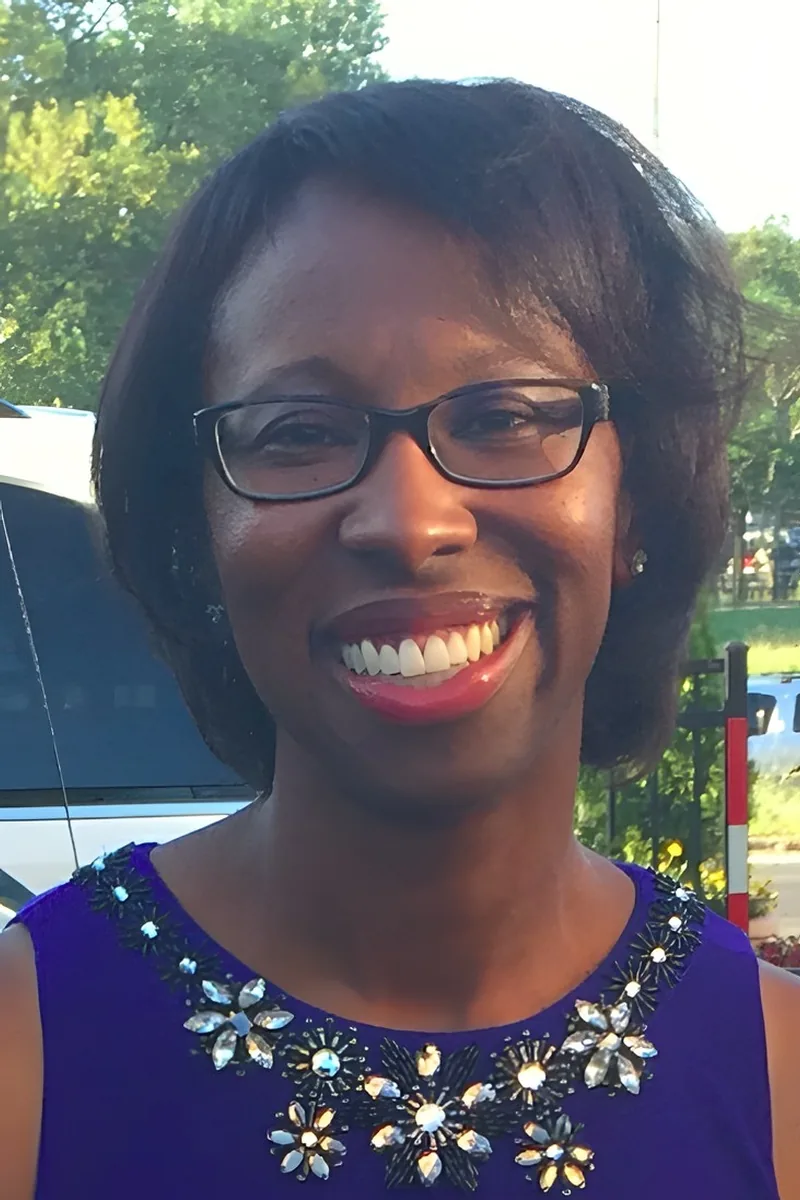
A chemical engineering degree from Princeton means Shellee spent years working with spatial models, structural diagrams, and precise measurement — skills that translate directly into teaching geometry concepts like surface area, volume, and properties of three-dimensional figures. She breaks down word-heavy geometry problems into clear visual steps, drawing on the same systematic approach she used in engineering coursework to make abstract shapes feel concrete. Rated 5.0 by students.
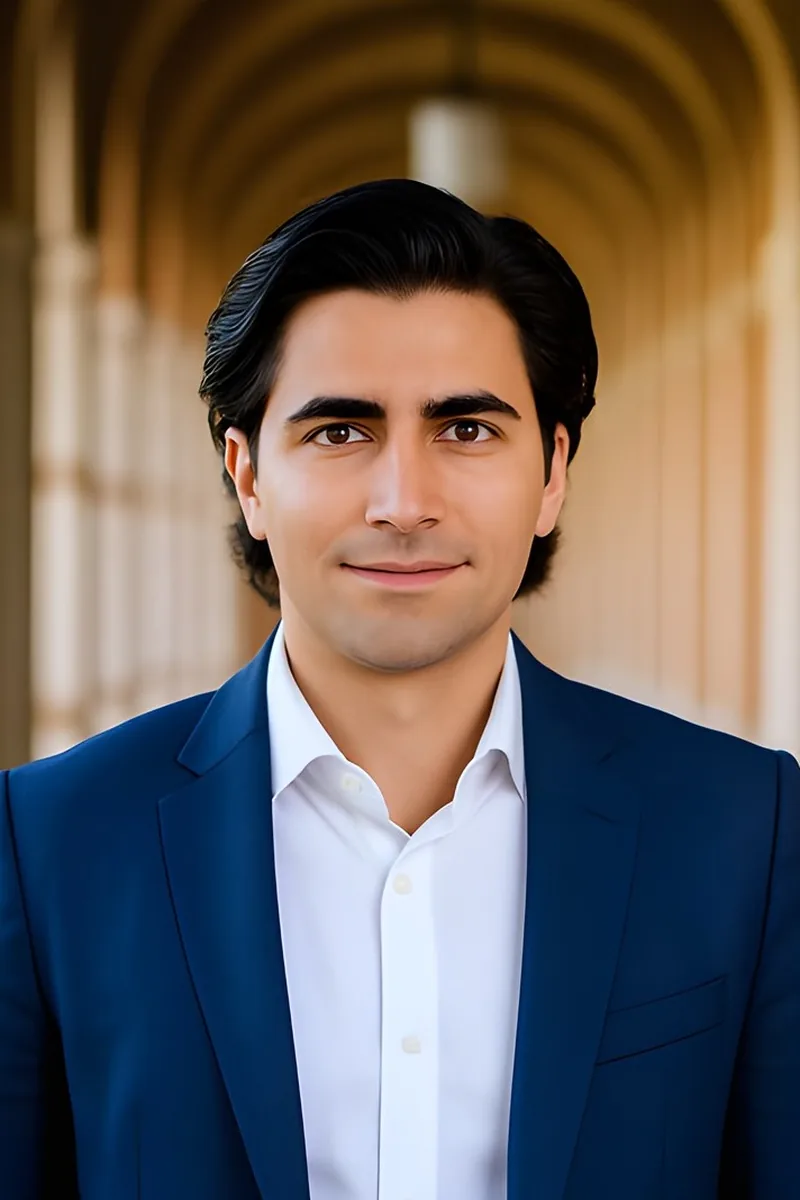
A biology major from Rice with a 1570 SAT, Perry approaches geometry problems the way he approaches lab work — by breaking complex diagrams into discrete, manageable pieces and reasoning through each relationship step by step. He's especially effective at teaching circle theorems and polygon properties, where students often know the individual rules but freeze when a problem layers several together. Rated 5.0 by students.
Proofs trip up most geometry students because they require a different kind of thinking — constructing logical arguments, not just computing answers. Andrea approaches geometric reasoning the way she learned to in engineering: start with what you know, identify relationships between angles, congruent triangles, or parallel lines, and build toward the conclusion step by step.
Proofs are usually the first time a math student has to construct a logical argument instead of just finding an answer, and that shift is what makes geometry feel so different. Gabriel tackles this by teaching students to read diagrams strategically — identifying congruence shortcuts, angle relationships, and parallel-line properties before writing a single statement. His four years running a competitive math club gave him plenty of practice making proof logic click for other students.
Psychology majors spend a lot of time constructing logical arguments from evidence — a skill Santiago transfers directly to geometric proofs, where each step in a congruence or angle relationship chain needs clear justification. His broad math tutoring experience, from algebra through calculus, means he can spot when a geometry student's real stumbling block is actually an algebraic gap hiding underneath the shapes. His 32 ACT reflects the kind of cross-subject reasoning that keeps multi-step geometry problems from falling apart.
Years of teaching in NYC public schools from Pre-K through 12th grade means James has watched hundreds of students hit the same geometry stumbling blocks — and the biggest one is usually the leap from memorizing theorems to actually deploying them in multi-step problems. His economics background trained him to build arguments from assumptions to conclusions, which maps directly onto geometric proof structure. Rated 4.9 by students.
Proofs are where most geometry students stall, unsure how to chain logical statements together into a convincing argument. Nicolas approaches them the way an engineer approaches a design problem: identify what you know, figure out what you need, and map the shortest path between the two. He also digs into triangle congruence, circle theorems, and coordinate geometry with the same structured thinking.
I am graduated from Penn State University in Industrial Engineering in 2017. I've tutored ever since I was in high school, and I love helping people! I like to help my students understand math (and other topics) instead of just doing it blindly. My goal is to help my students improve their math (and other topics) and build skills that will help them find learning easier in the future! Fun fact, I used to work for Disney and I like to salsa dance!
Proofs are usually the first place geometry students feel lost, because the subject suddenly asks them to justify reasoning instead of just computing answers. Jacob spent two and a half years teaching middle and high school math aligned to Common Core standards, so he knows how to bridge that shift from arithmetic thinking to logical argumentation. He breaks proof structure into repeatable steps that make even two-column and indirect proofs feel manageable.
Proofs are usually where geometry stops feeling like math class and starts feeling like a logic puzzle — and that shift frustrates students who were comfortable with computation. Dalila teaches proof-writing as a skill in its own right, showing how to build an argument from postulates and theorems about parallel lines, triangle congruence, or circle properties. Her mathematics training gives her a fluency with formal reasoning that makes the structure behind each proof visible.
Ten years of teaching math across every grade level means Paulkey has seen the specific moments where geometry loses students — the leap from calculating with numbers to reasoning with diagrams, or the shift from solving equations to writing proofs. His computer science background actually reinforces this: formal logic and step-by-step deduction are core to both programming and geometric proof, so he teaches students to approach two-column proofs the same way they'd debug a program, checking each logical step before moving to the next.
Proofs are where most Geometry students stall, because suddenly math requires written reasoning instead of just computation. Andrew's writing minor trained him to construct clear, logical arguments — a skill that translates directly to two-column and paragraph proofs. He also tackles triangle congruence, circle theorems, and coordinate geometry with an emphasis on sketching and visualizing before solving.
Neuroscience is surprisingly geometric — Mariam's coursework at Vanderbilt involves mapping neural pathways and interpreting brain imaging cross-sections, which builds the kind of spatial fluency that makes visualizing planes, angles, and three-dimensional figures intuitive. She teaches geometry by anchoring each new theorem to a clear visual before layering in the formal reasoning, so students can actually see why a relationship holds instead of just accepting it.
Engineering coursework at UC Berkeley and UIC meant Apoorva spent years sketching free-body diagrams, analyzing cross-sections, and reasoning through spatial problems where one misread angle throws off an entire design. That habit of precision carries directly into teaching geometry — especially when students need to build confidence linking properties of parallel lines, triangle congruence, and circle theorems into multi-step arguments. She holds a 4.6 rating from students.
Proofs are usually the first place geometry students hit a wall, because suddenly math requires logical argumentation instead of just computation. Wanqi walks through each proof as a chain of small, justifiable steps — identifying given information, choosing the right postulate or theorem, and building toward the conclusion. Her engineering background, where spatial reasoning is daily work, keeps the instruction grounded and visual.
Proofs are the part of geometry that makes students question everything they thought they knew about math — suddenly it's not enough to get an answer, you have to justify every step. Daniel's training in applied mathematics and computer science gave him deep practice in formal logical reasoning, which is exactly the skill geometric proofs demand. He walks through each proof as a chain of small, defensible claims rather than a mysterious block of text.
A Masters in Educational Measurement and Statistics means Matthew doesn't just know geometry — he's studied how students process spatial and logical reasoning, which lets him pinpoint exactly where a proof or multi-step problem goes off the rails. His psychology background at Johns Hopkins adds another layer: he reads how a student thinks about angle relationships or triangle properties and adjusts his explanations accordingly. Rated 4.8 by students.
Proofs are usually the first place geometry students feel stuck, because suddenly math requires written logical arguments instead of just calculations. Marissa walks through each proof structure — two-column, paragraph, flowchart — and teaches students to spot which theorems about parallel lines, congruent triangles, or angle relationships actually apply.
Proofs are where geometry stops feeling like math class and starts feeling like a logic puzzle, which is exactly why Anthony's background in philosophy gives him an unusual edge here. He teaches students to construct two-column and paragraph proofs by identifying what they actually know versus what they're assuming, turning vague geometric intuition about congruence and similarity into airtight reasoning.
Thirty years of teaching math and physics means Michael has watched thousands of students hit the same geometry stumbling blocks — and the biggest one is almost always the leap from memorizing theorems to actually deploying them in multi-step problems. His molecular biology background, where spatial reasoning about protein structures and molecular geometry is routine, gives him a concrete vocabulary for explaining why transformations and symmetry behave the way they do.
Hello! I'm a passionate educator with a Ph.D. in Electrical Engineering and a love for making learning both effective and enjoyable. Over the years, I've taught a wide range of subjects, always with the goal of making even the most complex topics simple and approachable. My teaching style focuses on breaking down challenging concepts into clear, manageable steps, working through problems together, and showing how lessons connect to real-world situations. I believe that a supportive, comfortable learning environment encourages curiosity and confidence, so students feel free to ask questions and explore ideas. Whether your child is building foundational skills or tackling advanced material, I'm committed to guiding them at their own pace, celebrating progress, and equipping them with tools that last far beyond our sessions. My mission is not only to help students succeed academically but also to help them enjoy the journey of learning
Proofs and spatial reasoning trip up a lot of students who were otherwise comfortable with math, because geometry demands a different kind of thinking. Sabrina's math background and classroom experience mean she can walk through angle relationships, triangle congruence, and coordinate geometry in ways that connect back to the algebra skills students already have. She keeps each session focused on one idea at a time until the logic genuinely lands.
Teaching geometry after volunteering as an educator in rural Guatemala gave Marina a knack for making abstract concepts concrete — especially when students hit the wall of formal reasoning about angle relationships and triangle properties for the first time. She breaks down each problem visually before introducing any theorem, building the kind of spatial intuition that makes proofs and constructions feel like natural next steps rather than arbitrary rules.
Proofs are usually the first place geometry students feel lost — the logic feels nothing like the computation they're used to. Kaitlyn walks through each proof as a chain of small, justifiable steps, teaching students to identify which theorem or postulate applies and why. She also covers the computational side, from triangle congruence to circle theorems, with an emphasis on drawing clear diagrams.
Proofs are usually where geometry students start to struggle, because suddenly math requires logical arguments instead of just calculations. Solange teaches students to build those arguments piece by piece, linking definitions, postulates, and theorems into chains of reasoning. Her IB background means she's comfortable with both the computational and proof-based sides of the subject.
Between her computer engineering coursework at the University of Florida and her time tutoring K-12 students at Mathnasium, Veronica has taught geometry from both the practical and theoretical sides — she knows how spatial reasoning shows up in engineering design, and she knows where younger students tend to get stuck. She's especially effective at breaking down problems involving geometric constructions and transformations, connecting each step back to the logic rather than letting students rely on memorized shortcuts.
Proofs are usually where geometry students panic, but they're really just structured arguments — and Lou teaches them that way. His engineering training required constant spatial reasoning, from analyzing angles of force to calculating areas of irregular shapes, so he brings geometric thinking that goes well beyond memorizing theorems.
Proofs are usually the first place geometry students get stuck, because suddenly math asks them to argue logically instead of just compute. Juan teaches proof structure — identifying givens, choosing postulates, and building a chain of reasoning — as a skill closer to engineering design than memorization. His background at UF gives him plenty of practice constructing exactly that kind of step-by-step argument.
Proofs are usually the make-or-break moment in Geometry, because they demand a completely different kind of thinking than computation does. Ari's philosophy training at Columbia — where constructing and critiquing logical arguments is the entire discipline — translates directly to teaching students how to build a proof from postulates and theorems. He also covers the visual and computational side, from triangle congruence to coordinate geometry and circles.
Dual-majoring in aerospace and mechanical engineering at UCF means Hannah lives in a world of cross-sections, angles of incidence, and three-dimensional spatial models — geometry isn't just a class she passed, it's the language she thinks in daily. She's especially strong at teaching students how to set up and reason through problems involving transformations and circle theorems, breaking down the diagram-reading step that often trips people up before the math even starts.
Proofs are usually the first time geometry students have to build a logical argument from scratch, and that transition from computation to reasoning can feel overwhelming. Navian approaches proofs the way he approaches engineering problems at UVA: identify what you know, figure out what connects to what, and build the chain one justified step at a time. He also covers the spatial reasoning side — triangle congruence, circle theorems, area and volume — with a 5.0 rating from students.
Proofs are where most Geometry students panic — the idea of building a logical argument with theorems and postulates feels nothing like the math they've done before. Krina approaches proofs as puzzles, teaching students to identify the given information, spot congruence or similarity shortcuts, and connect each statement to a reason without second-guessing themselves.
As a visual artist and photographer, Emily naturally thinks in shapes, angles, and spatial relationships — skills she brings directly to teaching geometry concepts like transformations, symmetry, and properties of figures. Her 34 ACT and 5.0 tutoring rating back up a teaching style that leans heavily on diagrams and visual reasoning, making abstract theorems about parallel lines and congruent triangles concrete before students ever write a formal proof.
Valerie's Florida math certification covers geometry specifically, and her MBA background means she approaches the subject with a business-minded efficiency — cutting straight to the relationships between shapes, angles, and measurements that actually drive problem-solving. She's especially effective on area and perimeter applications where students need to translate a word problem into a labeled diagram before any calculation begins.
Proofs are usually the first place Geometry students panic, because suddenly math requires written logical arguments instead of just calculations. Javier unpacks each proof step by step, teaching students to identify given information, spot congruence relationships, and build a chain of reasoning that holds up. He also covers triangle properties, circle theorems, and coordinate geometry with the same structured approach.
Proofs are usually the first place geometry students panic, but they're really just structured arguments — and Maryam treats them that way. She walks through triangle congruence, parallel line theorems, and circle properties by teaching students to reason step by step rather than memorize theorem names. Her background in public health, where logical argumentation is constant, reinforces that analytical approach.
Proofs and spatial reasoning trip up a lot of geometry students because the logic feels different from arithmetic-based math. Tyler breaks down each proof structure step by step, connecting angle relationships, triangle congruence, and circle theorems to a clear chain of reasoning. His 5.0 rating speaks to how well that methodical approach lands with students.
In biomedical engineering, every implant design and anatomical model comes down to precise geometric reasoning — Aditi's coursework has her regularly working with cross-sectional shapes, surface areas, and spatial relationships that map directly onto high school geometry concepts. She tackles the proof-writing side by treating each statement like an engineering constraint: if the given conditions hold, what necessarily follows? Rated 4.8 by students.
I am a current student at the University of Florida pursuing an Accounting degree and Entrepreneurship minor. Math has always been my passion, and I hope to show fellow students the fun in it!
Proofs are where most geometry students panic, so Daniel teaches a structured way to organize given information and identify which theorem applies before writing a single line. His Naval Academy training instilled a methodical, step-by-step discipline that translates surprisingly well to angle relationships, congruence, and circle theorems.
Testimonials
Because the right Geometry tutor makes all the difference.
Average Session Rating – Based on 3.4M Learner Ratings
Practice Geometry
Free practice tests, flashcards, and AI tutoring for Geometry
Nearby Geometry Tutors
Other Kissimmee Tutors
Related Math Tutors in Kissimmee
Frequently Asked Questions
Varsity Tutors matches Kissimmee students with expert Geometry tutors for 1-on-1 instruction. We pair each student with a tutor based on their specific needs, learning style, and goals.
Whether you need homework help, exam prep, or want to get ahead, our Geometry tutors are ready to help.
Common challenges include gaps from earlier material, difficulty with specific concepts, and trouble applying learning to new problems. These issues can snowball quickly in Geometry.
A tutor identifies where you're stuck, fills in gaps, and provides targeted practice. The 1-on-1 format means you get help exactly where you need it.
Tutors work with your student's actual coursework—homework assignments, class notes, and upcoming tests. This keeps tutoring directly relevant to what's happening in the classroom.
When you share information about your student's school and curriculum, we can match you with a tutor who has relevant experience.
All tutors complete background checks, credential verification, and teaching evaluation. Many of our Geometry tutors hold advanced degrees or have years of teaching experience.
You can review tutor profiles to find someone with the right background for your student's level and needs.
Many students see improved grades within a few weeks, along with better understanding of Geometry concepts and more confidence tackling challenging material.
Tutors track progress and adjust their approach to ensure continued improvement.
Most students benefit from 1-2 sessions per week. More frequent sessions help if your student is significantly behind or has an important exam coming up.
Your tutor can recommend a schedule based on your student's specific situation and goals.
Tutoring is purchased in packages of hours, with rates varying by tutor experience. Varsity Tutors offers several options to fit different budgets and needs.
You can discuss pricing during your consultation to find what works best.
Your tutor will assess where your student is, discuss goals, and start working on priority areas. Most students bring current homework or upcoming test material to focus on.
By the end, you'll have a clear sense of how the tutor can help and a plan for moving forward.
Let’s find your perfect tutor
Answer a few quick questions. We’ll recommend the right plan and match you with a top 5% tutor.