Award-Winning Algebra Tutors
serving Kissimmee, FL
Algebra
Tutors in Kissimmee
Private 1-on-1 tutoring, weekly live classes for academic support, test prep & enrichment, practice tests and diagnostics, and more to elevate grades and test scores.
Based on 3.4M Learner Ratings
UniversitiesSchools & Universities
DeliveredHours Delivered
ProficiencyGrowth in Proficiency
Who needs tutoring?
No obligation. Takes ~1 minute.
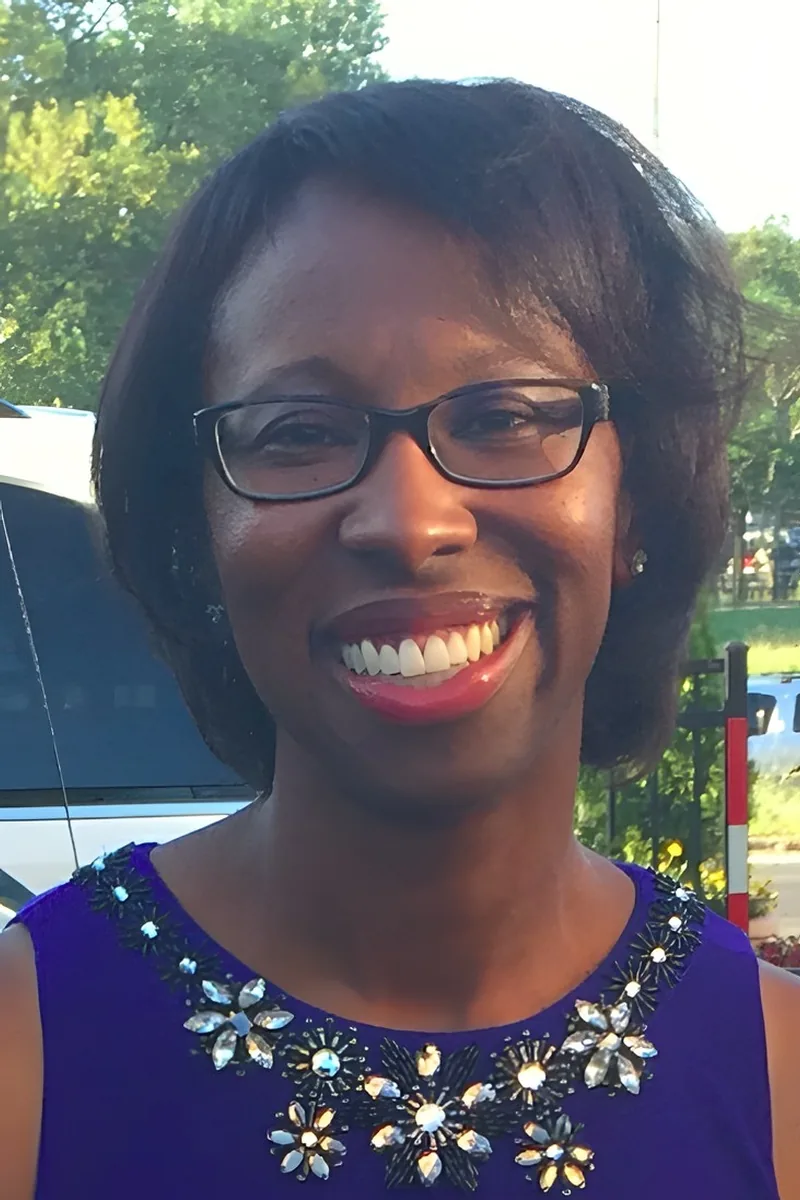
Most Algebra frustration comes from one place: students learn procedures without understanding why they work, so each new topic feels like starting over. Shellee teaches the logic underneath — why you balance both sides of an equation, what factoring actually accomplishes, how a graph and its equation tell the same story. Her engineering training at Princeton gave her a deep comfort with algebraic thinking that comes through in every session.

The jump from arithmetic thinking to algebraic thinking trips students up more than any single topic inside the course. Benjamin breaks that transition down concretely: what does it actually mean to solve for x, why does distributing work, how do you translate a word problem into an equation you can manipulate? His teaching experience across middle and high school levels means he can calibrate explanations to exactly the right level of abstraction.
I'm a firm believer in encouraging students to explain material in their own words to make sure each lesson "sticks."
I am a college student studying data science. Empathy and equity are essential in our world and for students' success. I have spent the last few years helping students learn complex subjects such as Statistics, Calculus, and General Biology. Not every student learns the same way. My goal in tutoring is to find a student's learning style and optimize their success. I believe that anyone can learn anything under the right conditions!
Before medical school, Jessica earned her history degree at Penn — but her 1540 SAT tells a different story about her math chops, and algebra is where that analytical sharpness comes through most clearly. She unpacks word problems and equation setups with the same precision she once applied to dissecting clinical case studies, making the leap from a problem's language to its algebraic structure feel methodical rather than mysterious.
Building confidence in algebra often comes down to one shift: understanding what an equation actually says instead of just moving symbols around. Perry tackles core skills like solving systems, factoring, and translating word problems into expressions, drawing on the quantitative rigor his science coursework at Rice demanded daily.
A solid grasp of algebra is what separates students who survive higher math from those who thrive in it. Michelle zeroes in on the logic behind manipulating expressions and solving systems, building the kind of algebraic fluency that made her own jump into calculus and neuroscience coursework at Duke feel seamless.
Solving systems of equations, factoring quadratics, manipulating inequalities — Kaylah treats each of these as a reasoning skill, not a recipe to memorize. Her mathematical foundation runs from a statistics minor at the University of Florida through her current computational master's at the University of Chicago, so she can show students exactly where algebra shows up in higher-level work. That forward view tends to make the 'why are we learning this?' question answer itself.
Most algebra struggles come down to one thing: not seeing why a manipulation is valid, just being told to do it. Derek teaches the reasoning behind steps like distributing, factoring quadratics, and solving systems — an approach shaped by his computer science training at Harvard, where logical precision is non-negotiable.
Every equation in accounting is algebra in disguise, and Tiffany has been solving for unknowns professionally since earning her business degree. She digs into the mechanics of factoring, linear systems, and inequalities by showing students the reasoning behind each manipulation — so they can set up and solve problems independently rather than following memorized steps.
The jump from arithmetic to algebra is really a jump into abstract thinking, and that's where most frustration starts. Andrea tackles this by grounding variables, inequalities, and systems of equations in concrete scenarios — the kind of modeling she does routinely as an engineer — so that "solve for x" stops feeling like a guessing game.
Solving equations is mechanical; understanding what a variable represents and why you can manipulate it is the real skill algebra demands. Hari digs into the reasoning behind factoring, systems of equations, and inequalities so that students develop intuition instead of just memorizing procedures. His 5.0 rating speaks to how well that approach lands.
When a student stares at a word problem and has no idea where to start, the issue usually isn't algebra skills — it's translating language into equations. Joshitha teaches a structured approach to that translation step, then builds speed with factoring, systems, and inequalities once the setup makes sense. Her emphasis on problem-solving strategy over rote repetition gives students tools they'll carry into every future math class.
A psychology major at Duke might seem like an unlikely algebra tutor, but Santiago's knack for identifying exactly where a student's reasoning stalls makes him effective at untangling everything from systems of equations to quadratic functions. He teaches the logic behind each manipulation so that solving isn't just procedural but actually makes sense.
The moment algebra shifts from solving for x to interpreting what x actually represents — in word problems, inequalities, or systems of equations — is where most students lose their footing. Anabel tackles that transition head-on, connecting abstract manipulation back to concrete meaning so that factoring or graphing linear equations starts to feel logical instead of mechanical.
Factoring a quadratic is mechanical; knowing which method to choose and why it works is where real algebra skill lives. Gabriel digs into the logic behind each manipulation — distributing, combining like terms, solving systems — so that students build genuine number sense instead of relying on memorized shortcuts. His background leading Mu Alpha Theta means he's spent years explaining these exact concepts to peers at every level.
Solving for x is only part of algebra — the real skill is learning to set up the equation in the first place. Caitlin spends time on translating word problems into expressions and understanding what operations like factoring or distributing actually accomplish, so students aren't just following steps but grasping the logic behind them.
Olivia approaches algebra as a language to decode, connecting abstract expressions and equations to the logical reasoning skills she honed studying American Studies. She's particularly strong at unpacking word problems — translating real-world scenarios into algebraic setups — which is often the exact place students get stuck.
When a student stares at a system of equations or a quadratic formula and asks "when will I ever use this?" Miriam has a real answer: she uses algebra routinely to analyze spacecraft data on lunar and asteroid compositions. She breaks down factoring, inequalities, and function behavior by tying abstract steps to concrete reasoning, drawing on years of tutoring college athletes through similar material at Duke.
I am graduated from Penn State University in Industrial Engineering in 2017. I've tutored ever since I was in high school, and I love helping people! I like to help my students understand math (and other topics) instead of just doing it blindly. My goal is to help my students improve their math (and other topics) and build skills that will help them find learning easier in the future! Fun fact, I used to work for Disney and I like to salsa dance!
Libby tackles algebra by anchoring abstract operations in concrete reasoning, whether that's solving systems of equations or simplifying rational expressions. Her anthropology background trained her to find patterns in complex data, and she applies that same pattern-recognition approach to help students see the logic behind algebraic rules. Rated 5.0 by students.
Factoring, systems of equations, and quadratic functions each have their own logic, and Nicolas teaches students to spot the structure inside a problem before reaching for a formula. His engineering training at Princeton reinforces algebra constantly, which means he can point to exactly why manipulating expressions fluently matters beyond the classroom.
Word problems are usually where Algebra stops feeling manageable, because translating English into equations requires a different kind of thinking than simplifying expressions. Manuela walks students through that translation process — identifying variables, setting up relationships, and checking whether an answer actually makes sense in context. She holds a 5.0 client rating across her subjects.
Whether a student is struggling with systems of equations, quadratic functions, or word problems that require translating English into algebraic expressions, James has seen it before — many times over. His teaching career in NYC public schools spanned Pre-K through 12th grade, and algebra was a constant throughout. He breaks problems into smaller decisions so students learn to set up solutions, not just mimic procedures.
The jump from arithmetic to algebra is really a jump from "find the answer" to "describe the relationship" — and that shift in thinking is where most students need the most support. Jacob tackles this head-on, using word problems and visual models to make variables and equations feel like tools rather than abstractions. His classroom experience with Common Core-aligned curricula means he's fluent in the progression from expressions through systems of equations.
Most algebra struggles come down to one thing: students learn procedures without understanding what the symbols actually represent. Dalila approaches equations and inequalities by making variables feel concrete — showing what it means graphically when you solve a system, or why factoring a quadratic is really a question about where a parabola crosses zero. That conceptual grounding turns algebra from rote symbol-pushing into something students can reason through independently.
Most algebra struggles come down to one thing: students learn to mimic procedures without understanding what variables and equations actually represent. Destiny digs into that gap, using word problems and visual models to make concepts like slope, systems of equations, and factoring click on a deeper level. She's rated 5.0 across her students.
The jump into algebra is really a jump into abstract thinking, and Paulkey treats it that way — teaching students to read an equation as a story rather than a string of symbols. He's especially effective at walking through variable isolation, distributing, and setting up equations from word problems, since those are the exact spots where he's watched students struggle most in over a decade of classroom teaching.
Amanda treats algebra as a language to be read, not just a set of procedures to follow — so when a student sees a system of equations or a quadratic expression, they understand what the math is actually saying. Her Brandeis psychology training informs how she sequences problems and builds intuition, making abstract relationships feel concrete.
The jump from arithmetic to algebraic thinking — where letters replace numbers and equations become tools for modeling — trips up more students than any single topic in math. Apoorva breaks down that transition by anchoring abstract ideas like factoring and systems of equations in concrete, step-by-step reasoning drawn from her engineering training.
When a student gets stuck on factoring trinomials or solving systems of equations, the issue usually isn't effort — it's that nobody explained *why* the method works. Andrew digs into that "why" by rephrasing algebraic steps in plain English, drawing on his writing training to find the clearest possible explanation. He adapts his approach problem by problem until the reasoning, not just the answer, makes sense.
The leap from solving simple equations to manipulating polynomials, working with systems, and reasoning about functions is where algebra gets interesting — and where many students stall. Brandon's approach emphasizes understanding the structure behind each problem type so that factoring or graphing becomes logical rather than mechanical.
Growing up bilingual and switching school systems between Egypt and the U.S. taught Mariam how to decode unfamiliar notation and fill in gaps on the fly — exactly the skill students need when algebra introduces abstract symbols for the first time. Her neuroscience studies at Vanderbilt reinforce that instinct, since courses in computational modeling and data analysis keep her fluent in rearranging equations and interpreting variable relationships daily.
Most algebra frustration comes not from the operations themselves but from translating word problems into equations and knowing which technique to reach for. Wanqi zeroes in on that translation step, teaching students to identify variables, set up relationships, and check solutions systematically. It's the same structured problem-solving approach she uses in her engineering coursework, scaled to fit algebra-level material.
Graph theory and group theory were central to Benjamin's master's dissertation, and both fields grow directly out of algebraic thinking — variables, structures, and relationships between quantities. That perspective lets him teach algebra as a language for describing patterns, whether a student is factoring quadratics for the first time or solving systems of equations. He holds a B.S. and M.S. in Mathematics from Iowa State and the University of Essex, respectively.
When quadratic equations or systems of linear equations stop making sense, the issue usually traces back to one specific gap in reasoning rather than a general math weakness. Ankit diagnoses exactly where that gap is and rebuilds understanding from that point, whether the sticking point is factoring, graphing slope-intercept form, or translating word problems into equations.
The jump from arithmetic thinking to algebraic thinking — using variables, manipulating expressions, solving for unknowns — is one of the biggest shifts a math student faces. Muriel tackles this transition by grounding every equation in a concrete scenario first, then showing how the abstract notation captures the same logic. That approach turns algebra from a set of mysterious rules into something students can reason through.
The jump from arithmetic to algebra trips students up when they can't see what a variable actually represents or why equation-balancing works. Lance's approach — shaped by a theoretical math background — connects each algebraic concept, from factoring polynomials to graphing linear systems, back to the logic underneath it. That foundation makes Algebra 2 and beyond significantly easier.
The leap from solving equations to understanding why a technique works is where most algebra students get stuck. Vansh's engineering background at Georgia Tech means he uses algebra daily — factoring, systems of equations, quadratic modeling — and he explains the logic behind each method so students can adapt rather than just memorize steps.
When a student stalls on factoring trinomials or graphing linear inequalities, the real issue is usually a conceptual gap hiding underneath the procedure. Matthew's graduate training in educational measurement is essentially the science of figuring out what someone knows and doesn't know, which makes him unusually precise at identifying where an algebra student's understanding breaks down and addressing that specific piece.
Testimonials
Because the right Algebra tutor makes all the difference.
Average Session Rating – Based on 3.4M Learner Ratings
Practice Algebra
Free practice tests, flashcards, and AI tutoring for Algebra
Nearby Algebra Tutors
Other Kissimmee Tutors
Related Math Tutors in Kissimmee
Frequently Asked Questions
Varsity Tutors matches Kissimmee students with expert Algebra tutors for 1-on-1 instruction. We pair each student with a tutor based on their specific needs, learning style, and goals.
Whether you need homework help, exam prep, or want to get ahead, our Algebra tutors are ready to help.
Common challenges include gaps from earlier material, difficulty with specific concepts, and trouble applying learning to new problems. These issues can snowball quickly in Algebra.
A tutor identifies where you're stuck, fills in gaps, and provides targeted practice. The 1-on-1 format means you get help exactly where you need it.
Tutors work with your student's actual coursework—homework assignments, class notes, and upcoming tests. This keeps tutoring directly relevant to what's happening in the classroom.
When you share information about your student's school and curriculum, we can match you with a tutor who has relevant experience.
All tutors complete background checks, credential verification, and teaching evaluation. Many of our Algebra tutors hold advanced degrees or have years of teaching experience.
You can review tutor profiles to find someone with the right background for your student's level and needs.
Many students see improved grades within a few weeks, along with better understanding of Algebra concepts and more confidence tackling challenging material.
Tutors track progress and adjust their approach to ensure continued improvement.
Most students benefit from 1-2 sessions per week. More frequent sessions help if your student is significantly behind or has an important exam coming up.
Your tutor can recommend a schedule based on your student's specific situation and goals.
Tutoring is purchased in packages of hours, with rates varying by tutor experience. Varsity Tutors offers several options to fit different budgets and needs.
You can discuss pricing during your consultation to find what works best.
Your tutor will assess where your student is, discuss goals, and start working on priority areas. Most students bring current homework or upcoming test material to focus on.
By the end, you'll have a clear sense of how the tutor can help and a plan for moving forward.
Let’s find your perfect tutor
Answer a few quick questions. We’ll recommend the right plan and match you with a top 5% tutor.