Award-Winning AP Computer Science A Tutors
serving Gainesville, FL
AP Computer Science A
Tutors in Gainesville
Private 1-on-1 tutoring, weekly live classes for academic support, test prep & enrichment, practice tests and diagnostics, and more to elevate grades and test scores.
Based on 3.4M Learner Ratings
UniversitiesSchools & Universities
DeliveredHours Delivered
ProficiencyGrowth in Proficiency
Who needs tutoring?
No obligation. Takes ~1 minute.
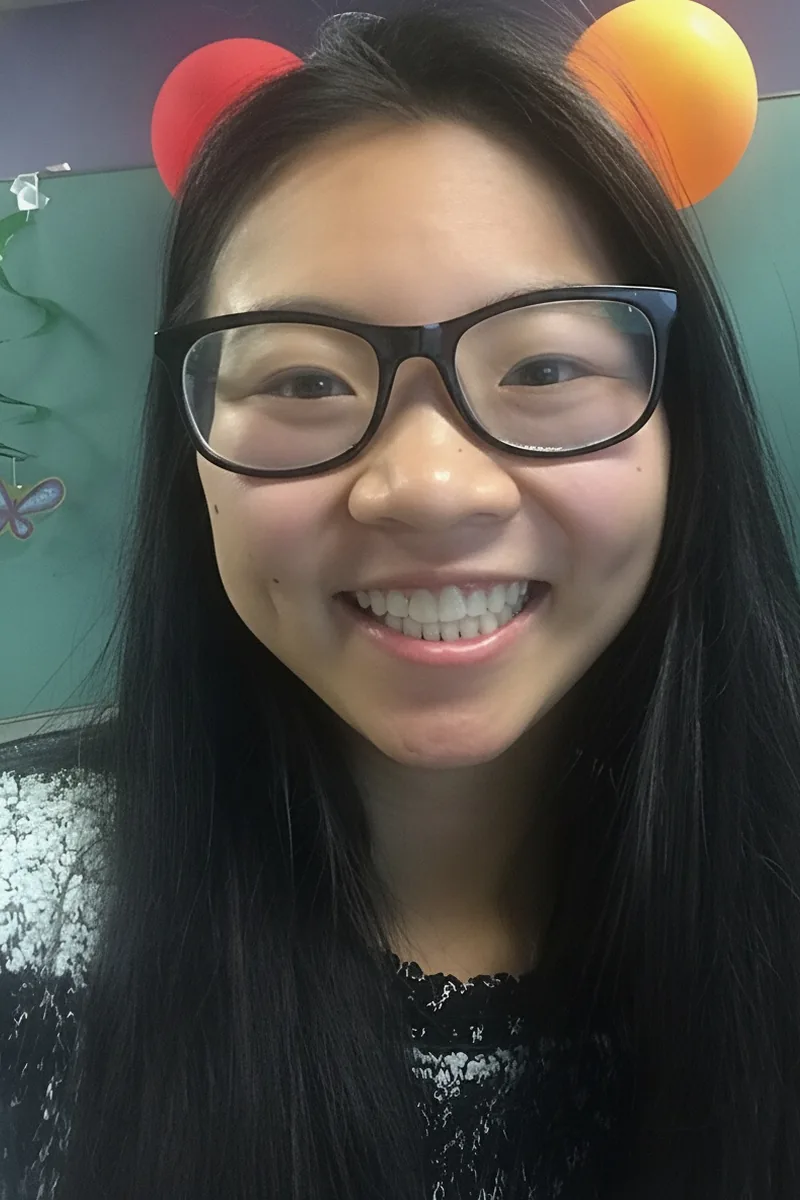
I am graduated from Penn State University in Industrial Engineering in 2017. I've tutored ever since I was in high school, and I love helping people! I like to help my students understand math (and other topics) instead of just doing it blindly. My goal is to help my students improve their math (and other topics) and build skills that will help them find learning easier in the future! Fun fact, I used to work for Disney and I like to salsa dance!

Debugging a recursive method or tracing through an ArrayList manipulation separates students who understand Java from those who've just memorized syntax. Ankit studied computer science at Duke and tackles AP Computer Science A by building intuition around object-oriented design — inheritance, polymorphism, and class hierarchies — so students can reason through free-response problems confidently. Rated 4.8 by students.
Two years building AI and machine learning systems professionally means Brandon writes Java, Python, and C daily — and knows that the object-oriented thinking AP CSA tests is the same design logic that powers real production code. His CS master's work at RIT gives him a depth with recursion, data structures, and algorithm design that lets him show students not just how to trace through a free-response problem, but why the underlying architecture works the way it does. Rated 4.9 by students.
Having built a career in software development while completing a master's in Computer Science, Daniel writes Java professionally — which means he can teach AP Computer Science A concepts like class design, recursion, and polymorphism the way working programmers actually think about them. He walks students through free-response problems by connecting each prompt to real coding patterns he uses daily, building the kind of fluency that makes exam questions feel like familiar territory.
Computer engineering at Georgia Tech means Yash writes Java alongside hardware description languages and low-level C, so he understands what's actually happening when AP CSA asks about object references, memory, and how data moves through a program. He uses that deeper-than-the-exam knowledge to make topics like inheritance and recursive method tracing click on the first pass, not the fifth. Holds a 5.0 rating from students.
The jump from writing simple programs to reasoning about inheritance hierarchies, ArrayLists, and recursive methods is where most AP CSA students struggle. Samuel codes in Java and C++ regularly as part of his CS degree at Florida Tech, so he can unpack tricky exam topics like polymorphism and 2D array traversal with examples that go beyond what the textbook offers.
I am working towards a Bachelor of Arts in Pure and Applied Mathematics as well as a Bachelor of Arts in Astronomy and Physics. I have enjoyed studying math and science since I was in elementary school. I would always help my friends out by answering their questions about the material. For about the last five years, I have had my own tutoring business where I have tutored a wide variety of math courses from elementary school math to pre-calculus and calculus. I like to make sure my students have a complete understanding of the core concepts before going into practice questions. I have also had experience helping my peers with physics and computer science courses.
Recursion, polymorphism, and array manipulation in Java are where most AP Computer Science A students start to struggle — the logic gets layered fast. As a current CS major, Parker debugs these concepts daily and can walk through how the AP exam tests them, from tracing code by hand to writing classes from scratch. That recent, active immersion in the material keeps explanations grounded and current.
Object-oriented programming clicks faster when someone can show you why inheritance and polymorphism matter — not just how to write the syntax. Sebastian is studying Computer Science at the University of Central Florida and breaks down AP CSA topics like arrays, recursion, and class design in Java with the fluency of someone coding daily. Rated 4.8 by students.
Having passed 15 AP exams in high school and now studying computer science at UCF, Nathan knows both the Java programming side and the exam strategy side of AP Computer Science A inside and out. He digs into the concepts that trip students up most — recursion, array manipulation, and writing classes from scratch — and connects each one to how the free-response questions are actually scored.
Currently pursuing a CS degree at UCF with Java and C++ in his regular toolkit, Hassan knows the AP CSA curriculum from both sides — as a student who recently worked through it and as someone writing object-oriented code in coursework right now. He zeroes in on the pieces that trip students up most, like tracing recursive methods by hand and designing classes that actually satisfy free-response rubrics. Rated 5.0 by students.
As a passionate educator with a Master's degree in Computer Science from Florida Atlantic University, I am dedicated to fostering a deep understanding of computational concepts in my students. With over 2 years of experience tutoring AP Computer Science A, AP Computer Science Principles, Python, and Java, I adopt a hands-on approach that emphasizes real-world problem-solving. My teaching philosophy revolves around creating a supportive environment where students feel encouraged to ask questions and actively engage with the material. I am motivated by the belief that every student has the potential to excel in technology, and I strive to guide them on their academic journeys. In my free time, I enjoy developing personal coding projects and exploring the latest technological advancements, sharing these insights with my students to spark their curiosity and enhance their learning experience. I am also a Software Engineer, and happy to discuss career development. Excited to work with you!
Penn State's CS program put Nicholas through Java from day one — building projects with inheritance, polymorphism, and data structures in the same language the AP CSA exam tests. That means he can spot exactly where students get tripped up on free-response questions, whether it's a misplaced recursive base case or a confused ArrayList traversal, and walk through the fix in real time. Holds a 5.0 rating.
Kevin's Stanford CS master's work in biocomputation means he writes Python and C++ for AI systems daily — but Java's object-oriented model is the same design thinking in a different wrapper, and he teaches AP CSA students to see class hierarchies, polymorphism, and recursion as transferable patterns rather than Java-specific tricks. His 1590 SAT and 35 ACT signal the kind of precise, methodical reasoning that translates directly to tracing free-response code under pressure. Rated 5.0 by students.
I am a undergraduate freshman of the University of Michigan, studying business at the Ross School of Business. Working together with students and having a good time while seeing steady improvements has proven to provide me great joy. I believe that communication and relationship building is crucial for students to open up about their struggles and also for me to identify problems they don't realize they can improve on, so this is a key aspect of all of my lessons. During my free time, I enjoy playing sports or snacking on desserts while binge-watching Friends!
Between simulating cosmic ray acceleration at Princeton and designing optical multiplexer components at Norfolk State, Dennis has written serious computational code in real research settings. He teaches AP Computer Science A concepts like object-oriented design, recursion, and array manipulation by connecting them to how software actually gets used — not just how it appears on the exam. That research experience means he can explain why a particular data structure matters, not just how to implement it.
Currently studying computer science at Duke, Susie codes in Java daily — which means AP CSA topics like array manipulation, loop construction, and object-oriented design aren't exam abstractions but tools she actually uses in her coursework. She teaches the reasoning behind each concept first, so students can trace through free-response problems with confidence instead of guessing at syntax.
Rice CS coursework in Java and Python means Alex writes object-oriented code daily — building classes, tracing recursion, debugging inheritance chains — which maps directly onto what the AP CSA exam tests. He also teaches Scratch and game design to younger students, so he's practiced at adjusting his explanations depending on whether someone is seeing their first for-loop or wrestling with polymorphism on a free-response prompt.
Leading sessions at Code Ninjas meant Lucas wasn't just teaching kids to code — he was diagnosing misconceptions in real time across Java, Python, and JavaScript, which is exactly the skill that matters when an AP CSA student can't figure out why their loop runs one too many times. His CS degree with an AI focus at Penn State means he thinks about Java's object-oriented structure as a foundation for bigger ideas, so he teaches class design and array logic with an eye toward where those patterns show up next. Rated 4.9 by students.
MIT's architecture program requires serious computational work — and Alicia paired hers with a computer science minor, writing Java and Python to solve structural and design problems where the code had to actually produce something. That blend of CS fundamentals and applied problem-solving translates directly to AP CSA's free-response section, where she teaches students to architect their classes and methods with the same intentionality she'd bring to designing a building. Rated 5.0 by students.
Princeton's operations research curriculum forced Jeff to build optimization models in Java and Python, so he knows firsthand how object-oriented principles like abstraction and encapsulation aren't just exam topics — they're tools for solving real problems efficiently. He leans on that applied experience when teaching AP CSA, especially for the algorithm-heavy free-response questions where students need to think about runtime and logic structure, not just correct output. Rated 4.8 by students.
A pre-med track at Northwestern might not scream Java, but Manideep's coursework in Python and computer science means he's comfortable translating programming logic across languages — exactly the skill that makes AP CSA's object-oriented concepts and recursive thinking accessible. He breaks down class design and array problems by connecting them to the structured, methodical reasoning his science background demands. Rated 5.0 by students.
Having built machine learning systems as a postdoctoral researcher at Princeton, Firas brings a depth of Java knowledge that extends well past the AP Computer Science A syllabus — which means he can explain not just how recursion or polymorphism works, but where these ideas show up in real software. He teaches students to read and trace code like a developer would, breaking down free-response problems into the same structured thinking he uses in his own research. Rated 5.0 by students.
Dylan minors in computer science at Vanderbilt and codes in both Java and C++, so he understands how object-oriented principles like encapsulation and inheritance translate across languages — a perspective that sharpens how he teaches AP CSA's class design and polymorphism questions. His physics background also means he's used to building models from scratch, which maps naturally onto writing and debugging multi-class programs where every method needs a clear purpose.
Testimonials
Because the right AP Computer Science A tutor makes all the difference.
Average Session Rating – Based on 3.4M Learner Ratings
Practice AP Computer Science A
Free practice tests, flashcards, and AI tutoring for AP Computer Science A
Nearby AP Computer Science A Tutors
Other Gainesville Tutors
Related Technology and Coding Tutors in Gainesville
Frequently Asked Questions
Varsity Tutors matches Gainesville students with expert AP Computer Science A tutors for 1-on-1 instruction. We pair each student with a tutor based on their specific needs, learning style, and goals.
Whether you need homework help, exam prep, or want to get ahead, our AP Computer Science A tutors are ready to help.
Common challenges include gaps from earlier material, difficulty with specific concepts, and trouble applying learning to new problems. These issues can snowball quickly in AP Computer Science A.
A tutor identifies where you're stuck, fills in gaps, and provides targeted practice. The 1-on-1 format means you get help exactly where you need it.
Tutors work with your student's actual coursework—homework assignments, class notes, and upcoming tests. This keeps tutoring directly relevant to what's happening in the classroom.
When you share information about your student's school and curriculum, we can match you with a tutor who has relevant experience.
All tutors complete background checks, credential verification, and teaching evaluation. Many of our AP Computer Science A tutors hold advanced degrees or have years of teaching experience.
You can review tutor profiles to find someone with the right background for your student's level and needs.
Many students see improved grades within a few weeks, along with better understanding of AP Computer Science A concepts and more confidence tackling challenging material.
Tutors track progress and adjust their approach to ensure continued improvement.
Most students benefit from 1-2 sessions per week. More frequent sessions help if your student is significantly behind or has an important exam coming up.
Your tutor can recommend a schedule based on your student's specific situation and goals.
Tutoring is purchased in packages of hours, with rates varying by tutor experience. Varsity Tutors offers several options to fit different budgets and needs.
You can discuss pricing during your consultation to find what works best.
Your tutor will assess where your student is, discuss goals, and start working on priority areas. Most students bring current homework or upcoming test material to focus on.
By the end, you'll have a clear sense of how the tutor can help and a plan for moving forward.
Let’s find your perfect tutor
Answer a few quick questions. We’ll recommend the right plan and match you with a top 5% tutor.