Award-Winning College Physics Tutors
serving Long Beach, CA
College Physics
Tutors in Long Beach
Private 1-on-1 tutoring, weekly live classes for academic support, test prep & enrichment, practice tests and diagnostics, and more to elevate grades and test scores.
Based on 3.4M Learner Ratings
UniversitiesSchools & Universities
DeliveredHours Delivered
ProficiencyGrowth in Proficiency
Who needs tutoring?
No obligation. Takes ~1 minute.
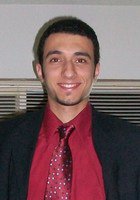
Pre-med students often struggle with college physics because the course feels disconnected from biology — but Fady, currently applying to medical school with a biological sciences degree, naturally bridges that gap by tying force, pressure, and energy concepts back to physiological systems. He breaks down mechanics and fluid dynamics problems step by step, emphasizing the physical intuition behind each setup rather than letting students default to equation-hunting.
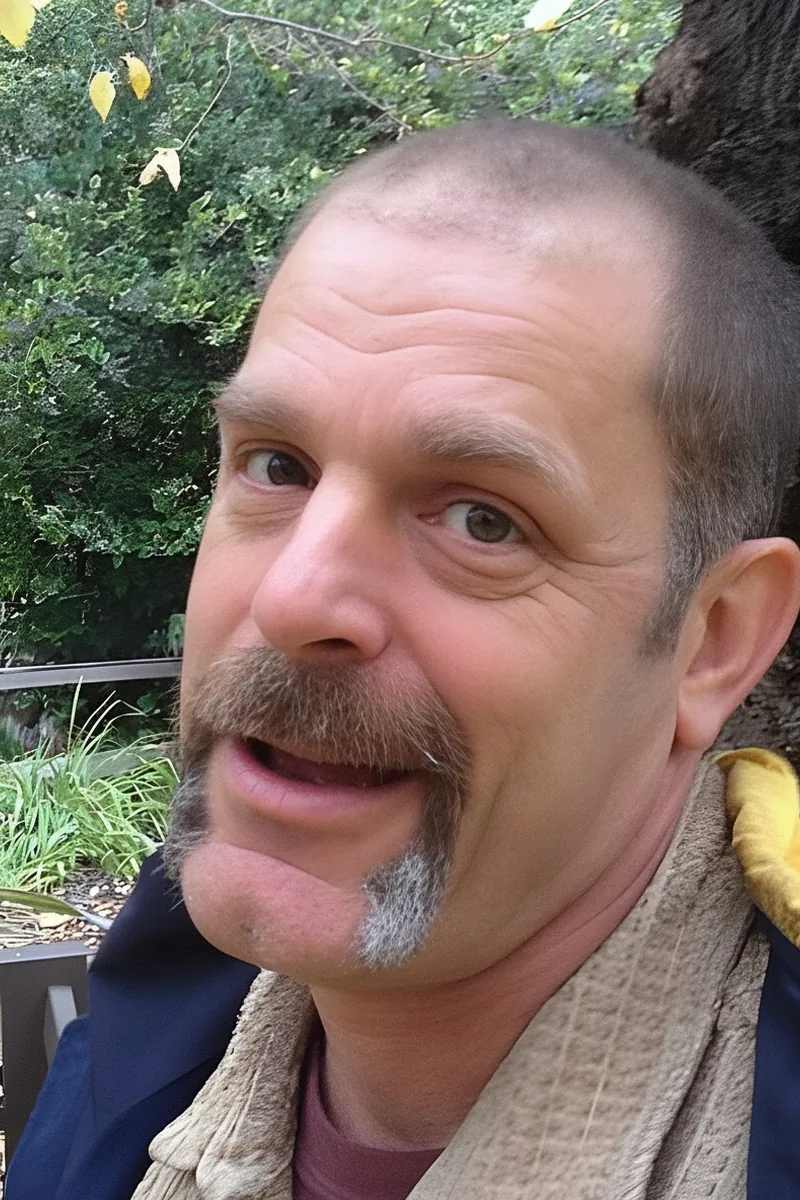
Engineering undergrads learn physics by building things that have to actually work — bridges that hold load, circuits that don't fry — and Mitch's general engineering degree put him through that full sequence of mechanics, E&M, and thermodynamics with real design constraints attached. He's especially good at teaching students to sketch the physical situation first (free-body diagrams, energy bar charts, field lines) so the math has something concrete to latch onto. Holds a 5.0 rating.
Between his UCSB honors biology coursework and his pre-med trajectory, Kevin has logged serious time with the physics that underpins living systems — fluid dynamics in circulation, pressure and volume in respiration, optics in vision, and the thermodynamics governing metabolic processes. He breaks down force diagrams and energy calculations by tying them back to concrete physical scenarios, so the math feels like it's describing something real rather than floating in abstraction. His 33 ACT reflects the quantitative reasoning he brings to calculus-based problem solving.
Biology majors often hit college physics expecting to memorize formulas the way they memorize metabolic pathways — and that's exactly where they stall out. Nicholas, who earned a 33 ACT while completing his own biology degree, tackles mechanics and electromagnetism by connecting the physical reasoning back to systems biology students already understand, like pressure gradients in circulation or torque in joint mechanics. That cross-disciplinary instinct makes the problem-solving approach click faster than pure equation drilling.
A state-certified teacher with a physics degree, Gerardo has taught the full arc of introductory physics — from free-body diagrams in mechanics through Gauss's law in electrostatics — and knows exactly where students lose the thread between the concept and the math. His classroom instinct is to get students talking through problems out loud, catching misunderstandings in real time before they calcify into bad habits. That teaching background means he reads confusion quickly and adjusts on the fly, which matters in a subject where one shaky assumption derails an entire solution.
Neuroscience at Pomona College meant Whitney spent serious time with the physics that governs how the body works — electrical potentials across membranes, wave mechanics in imaging, fluid dynamics in circulation — giving her a life-sciences angle on college physics that most tutors can't offer. She's especially good at walking through force diagrams and energy conservation problems by tying them back to biological systems students already care about. Her pre-med trajectory and 1480 SAT reflect the quantitative rigor she brings to each session.
UC Berkeley's integrative biology program requires a full year of calculus-based physics — mechanics, waves, thermodynamics, electromagnetism — and Jack earned a 1590 SAT while navigating that same quantitative rigor. His biology background gives him a useful second lens for physics concepts like fluid dynamics, pressure, and energy transfer, since he's used to thinking about how those principles play out in living systems rather than just on a whiteboard.
Private tutoring through her UC Irvine biology program meant Pooja was regularly fielding physics questions alongside the calculus and chemistry ones — force problems in physiology, pressure and flow in circulatory systems, optics in lab instrumentation. She treats college physics problems like puzzles to decode, walking students through the setup logic (free-body diagrams, energy accounting, identifying which conservation law applies) before any numbers get plugged in. Her strength is making the problem-solving process feel methodical rather than overwhelming.
Studying physics and mathematics simultaneously at Occidental means Drew is working through the same college physics material his students are — kinematics, forces, energy, waves — with the added benefit of seeing the mathematical scaffolding in his math courses the same week it shows up in his physics lectures. That real-time parallel gives him a sharp sense of which derivations are actually worth understanding versus which ones students can treat as tools, so sessions stay efficient and targeted.
Between teaching biology, chemistry, and physics across both high school and college levels, Tito has an unusually broad view of how scientific concepts interconnect — which pays off in college physics, where a thermodynamics problem might demand chemistry intuition or a biomechanics question pulls from biology. He breaks problems into their physical setup first, making sure students can sketch the scenario and identify governing principles before touching any math. Rated 4.8 by students.
Currently pursuing a physics-engineering 3-2 program, Valerie is taking the same calculus-based physics courses her students are navigating — mechanics, waves, electromagnetism — which means she knows exactly which problem types are showing up on exams right now. That real-time familiarity with the material, combined with her 1500 SAT and hands-on engineering coursework, lets her walk through force diagrams and energy methods with the kind of specificity that generic physics tutoring often lacks.
Jenna's neuroscience degree from Indiana University covered a surprising amount of physics — action potentials are fundamentally circuit problems, and understanding imaging techniques like fMRI requires grappling with electromagnetism and wave behavior. Now heading into medical school, she brings that interdisciplinary lens to college physics topics like mechanics and electricity, connecting abstract equations to the biological systems where they actually play out. Rated 4.9 by students.
College-level physics ramps up fast once partial derivatives, line integrals, and differential equations enter the picture. Sarah earned her B.A. in both Physics and Mathematics, so she walks through topics like Gauss's Law or Lagrangian mechanics by unpacking the math and the physics simultaneously — no hand-waving, no skipped steps.
Chemical engineering at Vanderbilt means Greg solves physics problems daily — fluid mechanics, heat transfer, thermodynamics, and force balances are baked into every core course, so his explanations come from repeated, hands-on application rather than textbook summaries. His math double major gives him the calculus fluency to walk through derivations cleanly, especially when problems involve integration over continuous systems or solving second-order differential equations of motion. Rated 5.0 by students.
Engineering physics at Cornell means Daniel is taking the most mathematically demanding version of every physics course — mechanics, E&M, waves, thermo — and building the intuition to move fluidly between physical reasoning and formal derivation. He's particularly strong at teaching students how to set up problems from scratch, translating a word problem into a free-body diagram or energy equation before any numbers appear. Rated 5.0 by students.
Biomedical engineering at Duke means Eric solves physics problems daily — modeling forces on prosthetic joints, analyzing fluid flow through artificial vessels, calculating electrical signals in biosensors — so the mechanics and electromagnetism in a college physics course map directly onto work he's already doing. He breaks multi-step problems into their physical components first, making sure the reasoning is solid before any math hits the page. Holds a 5.0 rating.
A dual BS in physics and math from Yale means Anthony didn't just take college physics — he took the honors sequence and then kept going through differential equations, multivariable calculus, and upper-division mechanics. His PhD work in economics at Yale still draws on that training daily, since building economic models requires the same setup-and-solve discipline as a multi-step Newton's law problem. Rated 5.0 by students.
Environmental engineering is essentially physics with consequences — Kate's master's work required her to model fluid flow, heat transfer, and pressure systems in real infrastructure, which means she's solved the same types of problems that show up on college physics exams but with actual design constraints attached. That applied perspective makes her particularly effective at teaching students to set up force balances and energy equations from a physical scenario rather than reverse-engineering from a formula sheet. Rated 4.9 by students.
College-level physics layers calculus and more rigorous problem-solving onto the conceptual foundations from high school, and Samantha's Cornell science background means she's fluent in both the math and the theory. She breaks down topics like rotational dynamics, electric fields, and thermodynamic cycles using visual models and step-by-step dimensional analysis that keep the problem-solving process clear.
Between simulating supernova shock fronts at Princeton and building optical filters at Norfolk State, Dennis has applied college-level physics across mechanics, electromagnetism, thermodynamics, and wave optics in real research settings. He unpacks difficult problem sets by connecting each concept to the physical scenario it describes — an approach that's especially effective for students transitioning from plug-and-chug to genuine problem-solving.
College-level physics demands more than plug-and-chug — problems in electrodynamics, rotational mechanics, or thermodynamics often require combining multiple principles in a single solution. Pranav digs into these multi-step problems as a Biomedical Engineering student at Johns Hopkins, where physics underpins much of his coursework. He walks through derivations and problem-solving strategies that build real fluency with the material rather than surface-level familiarity.
Studying civil engineering at Cornell means Ryan solves physics problems for a living — calculating load distributions, analyzing force vectors in structural systems, and applying fluid mechanics principles that come straight out of college physics coursework. He scored a 35 ACT, which speaks to the quantitative precision he brings when breaking down mechanics or electromagnetism problems step by step. Rated 4.7 by students.
A bio-organic chemistry degree means Alex spent semesters in calculus-based physics courses where thermodynamics, electromagnetism, and mechanics weren't electives — they were prerequisites for understanding molecular behavior. That chemistry-physics overlap gives him a knack for unpacking energy conservation and electric potential in ways that click for students who think in terms of atoms and reactions rather than pulleys and ramps.
Biomedical engineering at Brown means Phillip solves physics problems with real biological stakes — modeling fluid flow through vessels, analyzing stress on implant materials, calculating electrical signals in tissue. That daily overlap with mechanics, thermodynamics, and electromagnetism gives him a practical fluency that makes college physics problem sets feel less abstract and more like puzzles with actual answers. Rated 5.0 by students.
A physics degree means Nima didn't just pass college physics — he built his entire undergraduate education on top of it, from classical mechanics through electromagnetism and modern physics. He breaks down multi-step problems by teaching students to identify the governing principle first, then translate it into math, which is where a 1580 SAT and deep comfort with calculus-based reasoning pay off.
Testimonials
Because the right College Physics tutor makes all the difference.
Average Session Rating – Based on 3.4M Learner Ratings
Nearby College Physics Tutors
Other Long Beach Tutors
Related Science Tutors in Long Beach
Frequently Asked Questions
College Physics courses generally cover mechanics (motion, forces, energy), thermodynamics, waves and sound, electricity and magnetism, and often light and modern physics. The specific topics and depth depend on your course and institution, but most courses emphasize both conceptual understanding and problem-solving skills. A tutor can help you master the particular curriculum your course follows and connect these concepts to real-world applications like engineering, medicine, and technology.
Many students struggle with visualizing invisible forces and electromagnetic fields—this is completely normal. Effective tutoring uses diagrams, simulations, and real-world examples to make abstract concepts concrete. For instance, understanding how electric fields work becomes clearer when you see how they're similar to gravitational fields around Earth. Personalized instruction helps you develop mental models and intuition for these concepts, which is essential for solving complex problems.
Memorizing formulas without understanding leads to mistakes and makes it impossible to tackle unfamiliar problems. Real physics mastery means understanding *why* formulas work and *when* to apply them. Tutors help you develop problem-solving strategies—like drawing free-body diagrams, identifying what you know and don't know, and checking if your answer makes physical sense. This deeper understanding transfers to new situations and is what college physics courses actually test.
Physics labs teach the scientific method and help you see theory in action, but they can be challenging if you don't understand the underlying concepts. Tutors can help you prepare for labs by clarifying the physics principles you'll be testing, guide you through data analysis and error assessment, and help you write clear lab reports that connect your results to theory. This preparation makes labs more meaningful and helps you earn better grades on this important component of your course.
Unit conversions and dimensional analysis trip up many students because they require careful attention to detail and understanding of what units represent. Common mistakes include forgetting conversion factors, mixing up metric prefixes, or not tracking units through multi-step problems. A tutor can teach you systematic approaches—like the factor-label method—and help you develop habits that catch errors before they happen. With practice and clear strategies, these skills become automatic.
Your first session is about building a foundation for success. A tutor will assess your current understanding, identify specific challenges (whether it's conceptual gaps, problem-solving strategies, or test anxiety), and learn about your course requirements and goals. Together, you'll create a personalized plan focused on the topics and skills that will have the biggest impact on your performance. This might include reviewing foundational concepts, tackling challenging units, or developing better exam strategies.
Varsity Tutors connects you with expert tutors who have deep knowledge of physics and experience helping college students master challenging concepts. When you get matched with a tutor, you can discuss their background, teaching approach, and experience with your specific course or institution. The right tutor will explain concepts clearly, ask questions to check your understanding, and adapt their teaching to your learning style—all essential for moving from confusion to confidence.
Yes—personalized instruction directly improves exam performance by building genuine understanding rather than superficial memorization. Tutors help you practice problem-solving under timed conditions, identify patterns in question types, review mistakes from previous exams, and develop test-taking strategies. For students in Long Beach with access to quality tutoring, the combination of deeper conceptual understanding and targeted exam preparation typically leads to measurable grade improvements.
Let’s find your perfect tutor
Answer a few quick questions. We’ll recommend the right plan and match you with a top 5% tutor.