Award-Winning Physiology Tutors
serving Scottsdale, AZ
Physiology
Tutors in Scottsdale
Private 1-on-1 tutoring, weekly live classes for academic support, test prep & enrichment, practice tests and diagnostics, and more to elevate grades and test scores.
Based on 3.4M Learner Ratings
UniversitiesSchools & Universities
DeliveredHours Delivered
ProficiencyGrowth in Proficiency
Who needs tutoring?
No obligation. Takes ~1 minute.
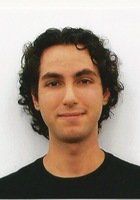
Studying physiology in dental school meant mastering everything from cardiac output equations to nerve signal propagation in the trigeminal system. Daniel unpacks organ system functions by tying each mechanism back to a clinical scenario — how the kidneys regulate blood pressure, why the sympathetic nervous system triggers specific responses — so the logic behind each process becomes memorable.
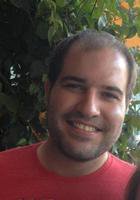
A Northwestern history and economics graduate turned attorney, Andrew brings an unusual skill to physiology: the ability to build logical arguments out of complex evidence. That translates well when students need to reason through chains like how aldosterone affects sodium reabsorption in the distal tubule, or why sympathetic activation increases heart rate — he treats each mechanism as a case to construct, not a paragraph to memorize. Rated 4.9 by students.
Understanding physiology means tracking cause and effect across organ systems — how a change in blood pH triggers respiratory compensation, or why cardiac output depends on both stroke volume and heart rate. Courtney's biology graduate work and undergraduate teaching experience at ASU give her a detailed command of these integrative mechanisms, and she excels at walking through the logic chain that connects stimulus to response.
Understanding physiology means tracing cause and effect across organ systems — why a drop in blood pressure triggers a specific hormonal cascade, or how the nephron maintains electrolyte balance. Amanda's dual background in biology and anthropology gives her a unique lens for connecting physiological mechanisms to the bigger picture of how human bodies adapted over time. Rated 4.9 by students, she breaks down feedback loops and homeostatic processes into logic chains that actually stick.
Spending a year at ASU's tutoring center working with students on science coursework showed Musa exactly where physiology tends to trip people up — concepts like the renin-angiotensin-aldosterone system or the mechanics of gas exchange across alveolar membranes, where one missed step derails the whole chain. His biological sciences training and MCAT preparation mean he can unpack those multi-step regulatory pathways at whatever depth a student needs, from the broad organ-system overview down to the cellular detail. Rated 5.0 by students.
I am a recent graduate from Arizona State University. I graduated Summa Cum Laude with a bachelors in philosophy. I will be attending the Sandra Day O’Connor College of Law in the fall of 2012. I have always been successful in academics and enjoy school thoroughly. I have also served as a Military Police Officer for the Arizona Army National Guard for over four years.
I have over two years of tutoring and teaching experience at Case Western Reserve University. I served as a Supplemental Instructor for ENGR 145 (Chemistry of Materials), where I created worksheets, led review sessions, and helped students develop strong conceptual foundations. I later worked as a Teaching Assistant for ENGR 210 (Circuits and Instrumentation), grading assignments and assisting students with hands-on circuit building and lab work. As a Biomedical Engineering major on the pre-med track, I specialize in tutoring pre-health and engineering courses, including General and Physical Chemistry, Math, Biology, Physics, and Anatomy and Physiology. I also provide MCAT preparation in the B/B, C/P, and P/S sections. My teaching approach focuses on clear explanations, active problem-solving, and adapting to each student's learning style. I strive to make challenging material approachable while helping students build confidence and independent learning skills.
I'm a current medical student at the University of Arizona College of Medicine with undergraduate degrees from Washington and Lee in chemical engineering and anthropology. I have extensive experience in tutoring and teaching since 2010, and am ready to help you with your learning needs! I focus on standardized testing (SAT/ACT) and also tutor in a wide range of math, English, and Spanish classes. In my free time, I like to run, do CrossFit, volunteer, and watch TV!
I am a student at the Barrett Honors College, a part of Arizona State University. I expect to earn my Bachelor of Science in Applied Mathematics with a focus on physics in December 2022. While my degree has had a heavy focus on physical sciences, I have also completed a variety of coursework in social and life sciences to prepare for my post-graduation plans. After graduation, I hope to earn either a Bachelor of Science in Nursing or a Master of Science in Entry to Nursing Practice and begin work as a pediatric nurse. I decided to change my path from mathematics and physics to nursing because I perform best and feel happiest when I am working with others, which is why I am so excited to have the opportunity to be a tutor. I first realized my passion for people-centered work in high school when I volunteered with the Juvenile Diabetes Research Foundation to help educate financial donors and newly diagnosed families on the science of type 1 diabetes. My passion grew throughout my time in college, during which I joined a division of a Rotary club, which matches people of all ages with service projects within their local community, became a teaching assistant for a Socratic-seminar discussion and writing course for freshmen in Barrett Honors College, and worked as a student researcher in a physics lab, where I had to collaborate with my colleagues to address research problems and clearly present my specific field of work to others who were less well versed in the topic.
I am a rising senior at Emory University majoring in Biology, B.S. on a pre-med track in the Biology Honors Program. In my sophomore year, I was a math and literacy tutor at Emory Reads where I worked with students at Ivy Prep Academy, Atlanta GA. Now, I lead review sessions for my fellow classmates in organic chemistry and biology to prepare for upcoming exams. In my past tutoring experiences and review sessions, I always used different colors and incorporated diagrams to improve conceptual understanding because I firmly believe every problem can be solved; if we have a solid foundation and truly understand a concept, we can apply it to any given scenario and figure out the solution. In order to make sure of this, I always encourage students to ask questions until all doubts have been cleared before moving on to decrease gaps in understanding. I can help with math, english, biology, chemistry, and physics although I think my favorite subjects to tutor would have to be Organic Chemistry and Human Physiology! I sincerely enjoy teaching these subjects and hope to show the students just how fascinating they can really be.
I am a fourth-year medical student at a U.S. MD program with plans to pursue a career in cardiology. I am passionate about working with learners and helping them reach their academic goals. My strengths include standardized test preparation for the ACT, MCAT, and USMLE Step 1 and Step 2, as well as core subjects such as medicine, anatomy, physiology, pharmacology, biology, chemistry, biochemistry, physics, psychology, etc. In addition, I have extensive experience helping students craft compelling essays for college and medical school applications. I look forward to supporting you in achieving your next academic milestone!
I'm a current medical student with a strong foundation in a wide variety of topics. My tutoring style is relaxed, supportive, and focused on creating a space where it's totally okay to make mistakeswe learn best when we can talk through questions without pressure. I enjoy breaking down complex topics into clear, relatable concepts and tying them back to real-world applications to make learning meaningful. Whether you're aiming to boost your confidence, improve study strategies, or prepare for an exam, I'm here to help you reach your goals with patience and encouragement.
Studying genetics and cell biology at the University of Minnesota means Brian lives in the details of how cells, tissues, and organ systems actually function — from action potentials and cardiac output to renal filtration and gas exchange. He teaches physiology by walking through the mechanism step by step, then tying it back to clinical or research scenarios from his lab work so each concept sticks.
Understanding physiology means seeing the body as an integrated system, not a list of organ functions to memorize. Matt's graduate work in nutrition required mastering renal, endocrine, and cardiovascular physiology at the molecular level, so he teaches concepts like action potentials, cardiac output, and hormonal feedback loops with the mechanistic depth that college-level courses demand. Rated 5.0 by students.
Laura's dual biology and anthropology degree from Fordham gave her an interesting vantage point on physiology — she learned human body systems both through the molecular lens of biology courses and through the evolutionary, whole-organism perspective that anthropology demands. Now pursuing her MPH in environmental health sciences at Columbia, she's especially sharp on how external factors interact with physiological processes like respiratory gas exchange or immune response cascades. Rated 5.0 by students.
Benjamin's pre-med coursework at Duke covered organ-system physiology in depth, from cardiac output and renal filtration to respiratory gas exchange. He unpacks each system by tracing the path a single molecule takes through the body, which turns dense content into a logical sequence rather than a wall of terminology.
Studying therapies for Alzheimer's and Parkinson's disease as a research scientist, Anthony encounters organ-system physiology daily — from neuronal signaling cascades to cardiovascular regulation. He teaches concepts like action potentials, renal filtration, and endocrine feedback loops by connecting textbook diagrams to what actually happens in a working lab.
Understanding physiology means tracing cause and effect across organ systems — how a drop in blood pressure triggers the renin-angiotensin-aldosterone pathway, or why disrupting one ion channel can cascade through cardiac function. Nicholas's biology training gives him a systems-level perspective, and he teaches students to map these feedback loops rather than memorize isolated facts about each organ.
Studying physiology means understanding how organ systems talk to each other — why a drop in blood pressure triggers the renin-angiotensin-aldosterone system, or how action potentials propagate along a myelinated axon. Daniel's PhD work in neuroscience at Rockefeller gives him deep, research-level fluency with these mechanisms, and his medical training at Weill Cornell ties every concept back to clinical relevance.
Understanding physiology means tracing cause and effect across organ systems — how a drop in blood pH triggers respiratory compensation, or how ion channels generate an action potential. Amin's biophysics PhD and clinical research at MGH ground his teaching in the molecular mechanisms behind each physiological process, making it easier to reason through unfamiliar scenarios on exams.
Studying physiology in medical school at Drexel meant Prateek had to master cardiac output equations, renal filtration mechanics, and neuronal action potentials at a level most tutors never reach. He unpacks complex organ-system interactions — like how the renin-angiotensin system ties the kidneys to blood pressure regulation — in a way that makes the logic visible instead of requiring brute-force memorization. Whether it's for a college course or MCAT prep, his clinical training gives him a practical edge.
I am also a first year medical student at the Tufts University School of Medicine in Boston. I have extensive experience with premedical classes and have taken and tutored the MCAT exam. I placed in the 97th percentile of the MCAT exam and I understand what the test takers want students to know and how to bridge the gap between knowing the material and doing well on the test. I am always excited when a student finally has that "ah-ha" moment and declares that they now can see how all of these seemingly separate scientific topics are actually all related. The MCAT no longer seems scary, but turns into a means of truly learning this material and providing a strong foundation for the future.
Helen earned a master's in pharmacology from Tulane, which means she didn't just study physiology — she studied what happens when you manipulate it. From cardiac output equations to renal filtration mechanics, she teaches organ systems by connecting structure to function to clinical relevance.
Understanding physiology means tracing cause and effect across organ systems — how a drop in blood pressure triggers the renin-angiotensin pathway, or why ventilation-perfusion mismatch leads to hypoxemia. Camille is a medical student heading into surgical training at NYU, so she unpacks these mechanisms with the clinical precision that makes complex feedback loops intuitive.
Testimonials
Because the right Physiology tutor makes all the difference.
Average Session Rating – Based on 3.4M Learner Ratings
Other Scottsdale Tutors
Related Science Tutors in Scottsdale
Frequently Asked Questions
Varsity Tutors matches Scottsdale students with expert Physiology tutors for 1-on-1 instruction. We pair each student with a tutor based on their specific needs, learning style, and goals.
Whether you need homework help, exam prep, or want to get ahead, our Physiology tutors are ready to help.
Common challenges include gaps from earlier material, difficulty with specific concepts, and trouble applying learning to new problems. These issues can snowball quickly in Physiology.
A tutor identifies where you're stuck, fills in gaps, and provides targeted practice. The 1-on-1 format means you get help exactly where you need it.
Tutors work with your student's actual coursework—homework assignments, class notes, and upcoming tests. This keeps tutoring directly relevant to what's happening in the classroom.
When you share information about your student's school and curriculum, we can match you with a tutor who has relevant experience.
All tutors complete background checks, credential verification, and teaching evaluation. Many of our Physiology tutors hold advanced degrees or have years of teaching experience.
You can review tutor profiles to find someone with the right background for your student's level and needs.
Many students see improved grades within a few weeks, along with better understanding of Physiology concepts and more confidence tackling challenging material.
Tutors track progress and adjust their approach to ensure continued improvement.
Most students benefit from 1-2 sessions per week. More frequent sessions help if your student is significantly behind or has an important exam coming up.
Your tutor can recommend a schedule based on your student's specific situation and goals.
Tutoring is purchased in packages of hours, with rates varying by tutor experience. Varsity Tutors offers several options to fit different budgets and needs.
You can discuss pricing during your consultation to find what works best.
Your tutor will assess where your student is, discuss goals, and start working on priority areas. Most students bring current homework or upcoming test material to focus on.
By the end, you'll have a clear sense of how the tutor can help and a plan for moving forward.
Let’s find your perfect tutor
Answer a few quick questions. We’ll recommend the right plan and match you with a top 5% tutor.