Award-Winning Anatomy Tutors
serving Scottsdale, AZ
Anatomy
Tutors in Scottsdale
Private 1-on-1 tutoring, weekly live classes for academic support, test prep & enrichment, practice tests and diagnostics, and more to elevate grades and test scores.
Based on 3.4M Learner Ratings
UniversitiesSchools & Universities
DeliveredHours Delivered
ProficiencyGrowth in Proficiency
Who needs tutoring?
No obligation. Takes ~1 minute.
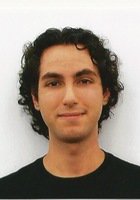
Dental school demands a level of anatomical knowledge most undergrads never encounter — Daniel spent years learning cranial nerves, musculoskeletal structures, and histological tissue types in clinical detail. He breaks down complex systems like the brachial plexus or cardiac anatomy into logical relationships rather than brute-force memorization lists. That clinical lens makes abstract structures feel real and easier to retain.
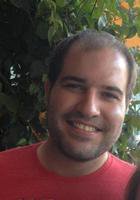
Andrew doesn't have a clinical or lab science background, but his history training at Northwestern built the kind of systematic categorization skills that translate surprisingly well to anatomy — organizing body systems, tracing relationships between structures, and retaining dense terminology. He approaches the subject by turning anatomical vocabulary into logical groupings, connecting muscle origins and insertions to their actions so students can reason through questions rather than relying on flashcard recall alone.
Memorizing every muscle insertion and nerve pathway in anatomy can feel overwhelming without a framework for organizing the material. Rachelle teaches students to approach structures by functional systems — grouping muscles by movement, tracing blood supply logically — so that recall becomes intuitive rather than brute force. Her disciplined study habits, honed through a philosophy degree and military service, translate directly into efficient anatomy prep.
Memorizing every bone, muscle, and nerve pathway in anatomy can feel like learning a foreign language — because it essentially is one, rooted in Latin and Greek terminology. Amanda's anthropology and archaeology training gave her years of hands-on experience with skeletal and muscular systems in ways most tutors never encounter. She teaches students mnemonic strategies and spatial reasoning techniques that turn rote memorization into durable understanding of structural relationships.
I'm not teaching biology to undergraduate majors at ASU, I research topics in aquatic ecology. Understanding the connectedness and patterns of environmental processes in aquatic ecosystems drives my passion to become an ecologist!
I have over two years of tutoring and teaching experience at Case Western Reserve University. I served as a Supplemental Instructor for ENGR 145 (Chemistry of Materials), where I created worksheets, led review sessions, and helped students develop strong conceptual foundations. I later worked as a Teaching Assistant for ENGR 210 (Circuits and Instrumentation), grading assignments and assisting students with hands-on circuit building and lab work. As a Biomedical Engineering major on the pre-med track, I specialize in tutoring pre-health and engineering courses, including General and Physical Chemistry, Math, Biology, Physics, and Anatomy and Physiology. I also provide MCAT preparation in the B/B, C/P, and P/S sections. My teaching approach focuses on clear explanations, active problem-solving, and adapting to each student's learning style. I strive to make challenging material approachable while helping students build confidence and independent learning skills.
I'm a current medical student at the University of Arizona College of Medicine with undergraduate degrees from Washington and Lee in chemical engineering and anthropology. I have extensive experience in tutoring and teaching since 2010, and am ready to help you with your learning needs! I focus on standardized testing (SAT/ACT) and also tutor in a wide range of math, English, and Spanish classes. In my free time, I like to run, do CrossFit, volunteer, and watch TV!
I am a student at the Barrett Honors College, a part of Arizona State University. I expect to earn my Bachelor of Science in Applied Mathematics with a focus on physics in December 2022. While my degree has had a heavy focus on physical sciences, I have also completed a variety of coursework in social and life sciences to prepare for my post-graduation plans. After graduation, I hope to earn either a Bachelor of Science in Nursing or a Master of Science in Entry to Nursing Practice and begin work as a pediatric nurse. I decided to change my path from mathematics and physics to nursing because I perform best and feel happiest when I am working with others, which is why I am so excited to have the opportunity to be a tutor. I first realized my passion for people-centered work in high school when I volunteered with the Juvenile Diabetes Research Foundation to help educate financial donors and newly diagnosed families on the science of type 1 diabetes. My passion grew throughout my time in college, during which I joined a division of a Rotary club, which matches people of all ages with service projects within their local community, became a teaching assistant for a Socratic-seminar discussion and writing course for freshmen in Barrett Honors College, and worked as a student researcher in a physics lab, where I had to collaborate with my colleagues to address research problems and clearly present my specific field of work to others who were less well versed in the topic.
I am a rising senior at Emory University majoring in Biology, B.S. on a pre-med track in the Biology Honors Program. In my sophomore year, I was a math and literacy tutor at Emory Reads where I worked with students at Ivy Prep Academy, Atlanta GA. Now, I lead review sessions for my fellow classmates in organic chemistry and biology to prepare for upcoming exams. In my past tutoring experiences and review sessions, I always used different colors and incorporated diagrams to improve conceptual understanding because I firmly believe every problem can be solved; if we have a solid foundation and truly understand a concept, we can apply it to any given scenario and figure out the solution. In order to make sure of this, I always encourage students to ask questions until all doubts have been cleared before moving on to decrease gaps in understanding. I can help with math, english, biology, chemistry, and physics although I think my favorite subjects to tutor would have to be Organic Chemistry and Human Physiology! I sincerely enjoy teaching these subjects and hope to show the students just how fascinating they can really be.
I am a senior at Arizona State University and have plans to continue on to medical school after receiving my undergraduate degree. I love tutoring all of the courses I have listed, especially the sciences, as that is what I study at ASU. Over the last year I have been tutoring students in science subjects at ASU's tutoring center. This experience has given me a sense of which topics are particularly troubling to students, and how to best explain these topics in a way that is understandable. When I tutor, I try to make the subject as easy and approachable as possible. Sometimes science classes can seem more difficult than they actually are, and I try to help others realize this. I am also well-versed in the structure and content of the MCAT. It is not an easy test, but I'm confident that I can help premeds reach their goals by helping with both content knowledge and test-taking strategies.
I am a fourth-year medical student at a U.S. MD program with plans to pursue a career in cardiology. I am passionate about working with learners and helping them reach their academic goals. My strengths include standardized test preparation for the ACT, MCAT, and USMLE Step 1 and Step 2, as well as core subjects such as medicine, anatomy, physiology, pharmacology, biology, chemistry, biochemistry, physics, psychology, etc. In addition, I have extensive experience helping students craft compelling essays for college and medical school applications. I look forward to supporting you in achieving your next academic milestone!
I'm a current medical student with a strong foundation in a wide variety of topics. My tutoring style is relaxed, supportive, and focused on creating a space where it's totally okay to make mistakeswe learn best when we can talk through questions without pressure. I enjoy breaking down complex topics into clear, relatable concepts and tying them back to real-world applications to make learning meaningful. Whether you're aiming to boost your confidence, improve study strategies, or prepare for an exam, I'm here to help you reach your goals with patience and encouragement.
Studying both speech and hearing science and medicine means Li has spent years learning the human body at every level — bones, muscles, nerves, and the way they interact as functional systems. She teaches anatomy by connecting structure to function, so students understand why the brachial plexus is organized the way it is, not just its branches.
Memorizing every bone, muscle, and nerve pathway in anatomy can feel overwhelming without a framework to organize it all. Justin tackles the subject regionally and functionally — connecting the brachial plexus to actual arm movements, or tracing blood flow through the heart to explain why valve defects produce specific symptoms. His Human Science background keeps the focus on how structures serve the living body, not just their Latin names.
Learning anatomy is as much about spatial reasoning as it is about vocabulary — you need to picture where the brachial plexus runs or how the heart's chambers connect to the great vessels. Amir, currently finishing medical school, teaches anatomy through detailed visual cues and diagrams that map structures in three dimensions, turning rote memorization into genuine understanding.
As a doctoral physical therapy student at Washington University, James studies human anatomy with a level of detail that goes well beyond introductory courses — from musculoskeletal origins and insertions to the brachial plexus and cranial nerves. He teaches anatomy by organizing structures into functional groups rather than isolated facts, which makes large volumes of material far more manageable. His 4.9 rating speaks to how well that approach lands with students.
Belinda's neuroscience degree required her to learn anatomy from the brain outward — tracing cranial nerves, mapping spinal cord regions, and understanding how the central and peripheral nervous systems connect to every major organ system. That top-down perspective means she teaches body structures as parts of functional circuits rather than standalone vocabulary, which is especially effective for students struggling to see how individual bones, muscles, and vessels fit into the bigger picture. Rated 5.0 by students.
Memorizing every bone, muscle, and organ system in anatomy can feel overwhelming without a strategy. Karishma's psychology background gives her insight into how memory actually works, and she teaches students to use spatial relationships and functional groupings — like linking muscle attachments to their actions — so the material organizes itself rather than piling up.
Knowing anatomy means building a mental map of the body that holds up under pressure — during practicals, in clinical rotations, and beyond. Alex is entering Washington University's OT doctorate program, where anatomy is foundational to everything from musculoskeletal assessment to neuroanatomy. That upcoming clinical training, combined with a neuroscience background, means Alex teaches structures in the context of function, not just flash-card labels.
Nicole's psychology training — specifically her coursework in how people encode and retain dense information — gives her a practical edge when tackling anatomy's enormous vocabulary of bones, muscles, and organ systems. She teaches students to chunk material by body region and build associative links between structures and their functions, turning what feels like an endless list into a connected map. Her Children's Studies minor also means she's skilled at scaling explanations down for younger or introductory-level learners.
Prateek's medical training at Drexel built on a neuroscience foundation at Johns Hopkins, which means he learned anatomy twice — first as undergraduate neuroanatomy, then as the full-body systems approach required for clinical medicine. That double exposure is especially useful for topics like cranial nerve pathways and CNS structures, where understanding the neuroscience behind the anatomy makes spatial relationships click instead of requiring brute memorization.
Memorizing every muscle origin, insertion, and innervation feels impossible until someone shows you the structural logic behind it. Casey approaches anatomy through her bioengineering lens, teaching students to see the body as an integrated mechanical and biological system so that concepts like brachial plexus organization or cardiac valve function make spatial sense, not just flashcard sense.
Memorizing every muscle origin, insertion, and nerve innervation feels impossible until someone shows you the organizational logic underneath it. Rudy's master's-level biology training means he can explain why the brachial plexus branches the way it does or how embryological development predicts adult organ placement — turning anatomy from a brute-force memorization task into something that actually makes sense.
Physical therapy graduate students live in anatomy — Ken's current PT program means he's working with musculoskeletal structures, nerve pathways, and organ systems on a daily basis. That clinical context makes it easier to teach concepts like brachial plexus innervation or joint articulation because he can tie each structure to its real function in the body.
Testimonials
Because the right Anatomy tutor makes all the difference.
Average Session Rating – Based on 3.4M Learner Ratings
Practice Anatomy
Free practice tests, flashcards, and AI tutoring for Anatomy
Other Scottsdale Tutors
Related Science Tutors in Scottsdale
Frequently Asked Questions
Varsity Tutors matches Scottsdale students with expert Anatomy tutors for 1-on-1 instruction. We pair each student with a tutor based on their specific needs, learning style, and goals.
Whether you need homework help, exam prep, or want to get ahead, our Anatomy tutors are ready to help.
Common challenges include gaps from earlier material, difficulty with specific concepts, and trouble applying learning to new problems. These issues can snowball quickly in Anatomy.
A tutor identifies where you're stuck, fills in gaps, and provides targeted practice. The 1-on-1 format means you get help exactly where you need it.
Tutors work with your student's actual coursework—homework assignments, class notes, and upcoming tests. This keeps tutoring directly relevant to what's happening in the classroom.
When you share information about your student's school and curriculum, we can match you with a tutor who has relevant experience.
All tutors complete background checks, credential verification, and teaching evaluation. Many of our Anatomy tutors hold advanced degrees or have years of teaching experience.
You can review tutor profiles to find someone with the right background for your student's level and needs.
Many students see improved grades within a few weeks, along with better understanding of Anatomy concepts and more confidence tackling challenging material.
Tutors track progress and adjust their approach to ensure continued improvement.
Most students benefit from 1-2 sessions per week. More frequent sessions help if your student is significantly behind or has an important exam coming up.
Your tutor can recommend a schedule based on your student's specific situation and goals.
Tutoring is purchased in packages of hours, with rates varying by tutor experience. Varsity Tutors offers several options to fit different budgets and needs.
You can discuss pricing during your consultation to find what works best.
Your tutor will assess where your student is, discuss goals, and start working on priority areas. Most students bring current homework or upcoming test material to focus on.
By the end, you'll have a clear sense of how the tutor can help and a plan for moving forward.
Let’s find your perfect tutor
Answer a few quick questions. We’ll recommend the right plan and match you with a top 5% tutor.