Award-Winning Statistics Tutors
serving Reading, PA
Statistics
Tutors in Reading
Private 1-on-1 tutoring, weekly live classes for academic support, test prep & enrichment, practice tests and diagnostics, and more to elevate grades and test scores.
Based on 3.4M Learner Ratings
UniversitiesSchools & Universities
DeliveredHours Delivered
ProficiencyGrowth in Proficiency
Who needs tutoring?
No obligation. Takes ~1 minute.

Cassandra's Applied Psychology degree from NYU required heavy coursework in statistics — from probability distributions and hypothesis testing to regression analysis and interpreting p-values. She knows firsthand how intimidating it is when a stats course suddenly feels more like math than the social science you signed up for. That experience makes her especially effective at translating statistical logic into plain, intuitive language.
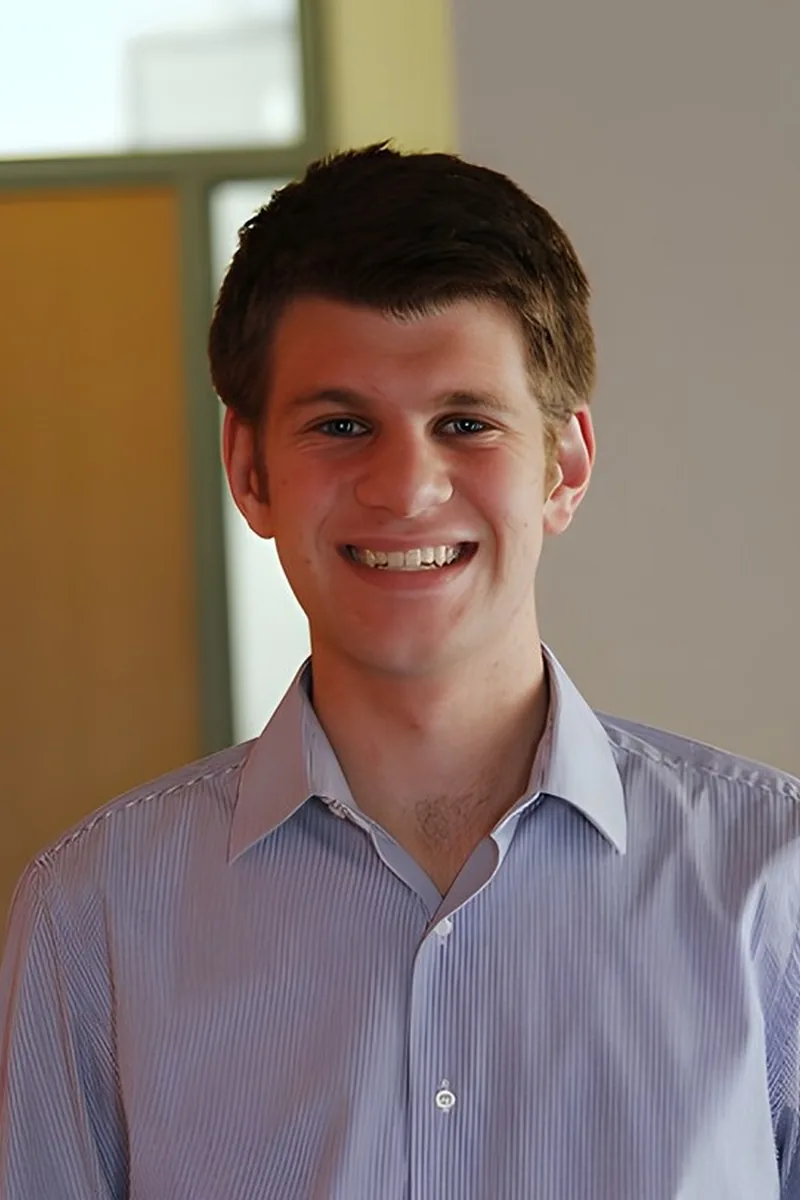
Studying Philosophy, Politics, and Economics at Penn means Kevin encounters statistics not as an abstract math course but as a tool for answering real questions — polling reliability, economic trends, policy evaluation. He unpacks topics like probability distributions, hypothesis testing, and regression with that applied lens. Students come away understanding not just how to compute a standard deviation but what it actually tells them.
Interpreting p-values, choosing the right hypothesis test, and knowing when a confidence interval actually tells you something useful — these are the concepts that separate students who understand statistics from those just plugging into calculators. Zachary brings a researcher's perspective from his biochemistry and biophysics training, where statistical analysis was built into every experiment. Rated 5.0 by students.
Probability distributions, hypothesis testing, confidence intervals — statistics asks students to think in a fundamentally different way than most math courses. Elliot spent years running statistical analyses on neural data during his PhD research, which means he can show exactly how concepts like p-values and regression actually function in practice, not just on a formula sheet.
Probability distributions, hypothesis testing, and confidence intervals all hinge on one skill: knowing what question you're actually answering with the data. Ade's biology background means he's applied statistical reasoning to real research contexts, and he brings that practical lens to everything from z-tests to regression analysis.
Probability distributions, hypothesis testing, and confidence intervals all hinge on understanding what the numbers actually represent — not just which formula to grab. With a biology degree from Stanford, Abhinav regularly used statistical reasoning to interpret experimental data and brings that practical lens to every stats concept he teaches.
Studying finance at Penn meant Joyce spent semesters immersed in probability distributions, hypothesis testing, and regression analysis — not as theory exercises but as tools for real decision-making. She brings that applied mindset to statistics tutoring, breaking down concepts like p-values and confidence intervals in terms that actually click.
Cognitive Science runs on statistics — from analyzing experimental data to modeling human behavior — so Kimberly learned distributions, hypothesis testing, and probability as everyday tools rather than abstract formulas. She teaches statistics by grounding each concept in real scenarios, making ideas like standard deviation and regression feel intuitive instead of mechanical. Her 5.0 rating speaks to that approach.
Probability distributions, hypothesis testing, and confidence intervals each require a different kind of thinking than most math courses demand. Daniel's graduate-level math background means he can explain the reasoning behind statistical formulas — why a z-test works here but a t-test works there — instead of just walking through calculator steps.
Biomedical engineering and robotics coursework at Penn means Ronil uses statistics daily — from designing experiments with proper sample sizes to running regression analyses and hypothesis tests on real lab data. He breaks down concepts like p-values, confidence intervals, and probability distributions by tying them to concrete scenarios rather than abstract formulas. Rated 5.0 by students.
Probability distributions, z-scores, regression — statistics is ultimately about making defensible claims from messy data. Michael spent his neuroscience program at the University of Scranton running statistical analyses on real research, which means he can show students what a p-value actually tells you and, just as importantly, what it doesn't. That practical grounding makes textbook problems feel less arbitrary.
Probability distributions, hypothesis testing, and confidence intervals all click faster when you've seen them applied to real data. Tom's neurobiology concentration at Penn required heavy statistical analysis of experimental results, so he teaches Statistics with the kind of practical context that makes formulas feel purposeful rather than arbitrary.
Between her biology research background at Tufts and her medical coursework at Pitt, Danielle has spent years applying statistical thinking to real data — from calculating standard deviations to running hypothesis tests and interpreting regression output. She teaches statistics as a decision-making tool, not just a set of formulas to memorize. Holds a 5.0 rating.
Public health research runs on statistics — hypothesis testing, regression models, confidence intervals, epidemiological study design — and Yasmine uses all of it daily in her PhD work. She breaks down concepts like p-values and probability distributions by tying them to real datasets, making abstract formulas feel like tools with a clear purpose.
Running statistical analyses was a core part of Dhinakaran's biomedical engineering research, so he teaches concepts like hypothesis testing, confidence intervals, and regression from the perspective of someone who's actually used them to draw real conclusions from messy data. He's especially sharp at explaining when and why you'd choose a t-test over a chi-square, or what a p-value actually means in context.
Most statistics struggles aren't about the math — they're about interpreting what a confidence interval or p-value actually means in context. Steven's biology training at Drexel required heavy statistical analysis of experimental data, so he teaches concepts like hypothesis testing and regression through real datasets rather than abstract formulas.
Studying psychological science at Colgate gave Kaila hands-on experience with regression analysis, sampling methods, and probability distributions long before she started tutoring the subject. She breaks down the logic behind each statistical test so students understand when to use a chi-square versus a t-test, not just how to compute one.
I am currently a graduate student in Chemical Engineering at the University of Delaware. I am working on using magnetic and flow fields to create advanced materials by directing the self-assembly process of nanoparticles . I have tutored students in Chemistry, Physics and Math all throughout undergraduate and graduate work. I truly enjoy breaking material down into its core components that allows the students to understand complicated information.
Probability distributions, hypothesis testing, and confidence intervals all rely on a kind of mathematical reasoning most students haven't encountered before. Giancarlo's Penn math background gives him the formal grounding to explain the logic behind statistical methods, not just the calculator steps. He holds a 5.0 client rating.
I am a PhD student in Civil Engineering at the University of Pittsburgh, holding both bachelor's and master's degrees in the same field from Cairo University, Egypt. My passion for teaching began at home, helping my three younger siblings understand challenging math and science topics. This early experience sparked a lifelong interest in education, which I continued to pursue as a teaching assistant at the University of Pittsburgh for two years. I've worked with students at different levels and backgrounds, and I enjoy tutoring subjects like math, physics, engineering mechanics, and civil engineering courses. I also have experience teaching engineering software. What I enjoy most is helping students understand difficult concepts by breaking them down into simple, manageable steps. I believe that every student learns differently, so I always try to adjust my teaching style to match their needs. Outside academia, I'm an avid football (soccer) fan and support Real Madrid and Al Ahly clubs and I enjoy playing the game whenever I get the chance. I also enjoy traveling and exploring new places with my wife we've visited six countries so far and hope to visit many more.
Studying economics at the undergraduate level means living inside datasets — running regressions, interpreting confidence intervals, and distinguishing correlation from causation daily. Shua applies that hands-on statistical thinking when teaching concepts like hypothesis testing, normal distributions, and chi-square analysis. He's especially good at translating the notation-heavy formulas into plain-language logic.
Understanding the difference between a sample statistic and a population parameter, or knowing when to apply a normal model versus a binomial one, requires more than following textbook steps. Matt tackles statistics through the lens of his engineering training, where interpreting data distributions and calculating confidence intervals are everyday tasks. He connects abstract concepts like standard deviation and hypothesis testing to tangible scenarios that make the material click.
Probability distributions, hypothesis testing, regression — statistics demands a different kind of mathematical thinking than most students are used to. Andreas doesn't just walk through formulas; he teaches students to interpret what a standard deviation or a confidence interval actually tells you about the data. His economics coursework at Temple keeps him actively working with statistical models.
Sociology runs on statistics, so Cheridan doesn't just know the formulas — she's used hypothesis testing, regression, and probability distributions to analyze real data for her coursework at Temple. That background means she can explain concepts like p-values and confidence intervals in plain language, grounded in actual research scenarios. Students walk away understanding what the numbers mean, not just how to calculate them.
This is Ian's home turf — he earned his B.S. in Biometry and Statistics from Cornell, where he spent years immersed in probability distributions, hypothesis testing, regression analysis, and experimental design. He unpacks the logic behind each statistical method so students can interpret output and choose the right test, not just follow formulas.
Studying sociology at Penn with a statistics minor means Maya lives in datasets — running regressions, interpreting distributions, and testing hypotheses for actual research questions. She brings that hands-on fluency to topics like probability, sampling methods, and confidence intervals, making abstract statistical reasoning feel grounded and practical.
I am open to tutoring in a broad range of subjects, including Algebra, Spanish I/II, ESL and Biology (SAT II, AP, and MCAT).
As an economics major, Hunter uses statistics constantly — regression analysis, probability distributions, hypothesis testing — so he teaches it as a practical toolkit rather than an abstract set of formulas. He's especially good at walking through the logic of p-values and confidence intervals, two concepts that confuse students precisely because textbooks over-formalize them.
Probability distributions, hypothesis testing, and confidence intervals can feel like a foreign language if the logic behind them isn't clear. James approaches statistics by building each concept from concrete examples before introducing notation, drawing on the data analysis skills he developed throughout his physics coursework.
Studying finance and entrepreneurship at Wharton, Lachlan uses statistics daily — from regression analysis to probability distributions to hypothesis testing. He breaks down abstract concepts like p-values and confidence intervals by connecting them to real business and economic data, making the logic behind the math click.
Interpreting p-values, distinguishing correlation from causation, and reading ANOVA tables are skills Melanie uses constantly in her own Ph.D. research in school psychology. That firsthand experience with real data analysis means she teaches statistics as a practical tool for making arguments, not just a set of formulas to memorize. Rated 4.8 by students.
The hardest part of statistics isn't the formulas — it's knowing when to use a t-test versus a z-test, or why a confidence interval means what it means. Amina approaches each problem by first asking what the data is actually telling us, then selecting the right tool. Her science coursework means she's applied statistical reasoning to real experimental data, not just textbook exercises.
Melissa's psychology background gives her a practical edge in statistics — she learned to design studies, interpret p-values, and run hypothesis tests as part of real research, not just textbook exercises. She unpacks concepts like standard deviation, confidence intervals, and regression by tying them to the kinds of data questions students will actually encounter. That blend of applied experience and teaching instinct is why she holds a 5.0 rating.
I am a graduate from Rochester Institute of Technology with a master's in Game Design and Development. My passions lie in everything related to games and mathematics. In the past, I have tutored various subjects in mathematics throughout high school and college, including but not limited to Algebra, Algebra II, Trigonometry, Calculus, Discrete Mathematics, Mathematics of Graphical Simulation, and Linear Algebra. As for technology, I am more than happy to reach out for help in Web Development (HTML, CSS, Javascript) or C# programming. I believe that every person can learn any topic. While every individual has different tastes, strengths, and weaknesses, there is no such thing as an "incapability" to know a subject. Education often possesses a guise of anti-fun, but I can promise you that all topics can be engaging, and I am willing to show you how engaging mathematics and technology can be. As a Game Designer, I have a deep interest in both playing games and making games. This includes games of all kinds: video games, board games, tabletop role-playing games, trading card games, miniatures, and even some sports like tennis or ping pong. Games act as a fantastic teaching tool. They teach by design without users recognizing. It is always a satisfying moment when somebody says "I learned that word from Magic" or "D&D taught me that." Remember: you can succeed. If something is important to you, then it's always worthwhile.
Probability distributions, hypothesis testing, confidence intervals — statistics asks students to think about uncertainty in a way no prior math class has prepared them for. Erin's math degree gives her the formal background to explain why a formula works, which makes it far easier to know when and how to apply it on homework and exams.
Probability distributions, hypothesis testing, and confidence intervals trip students up when the formulas outpace the reasoning. Alex tackles statistics by anchoring each method in a concrete question — what are we actually measuring, and why does this test answer it? — so that choosing between a t-test and a chi-square becomes a decision, not a guess.
I'm currently a fourth year medical student at a private medical school in Texas. I've been involved with tutoring since middle school continuing all the way through medical school. There are so many different ways to teach based on how students learn best and I am passionate about meeting the individual needs of students so they can succeed. I took unconventional approaches to learning as instilled by mentors throughout my life that greatly increased my ability to learn and comprehend material . I've worked with tutoring students in ACT prep, SAT prep, MCAT prep, IB and AP courses, as well as STEM subjects from elementary school through to college. Recently, I've also tutored for USMLE Step 1 & 2. I also edit and work with students who need tutors for writing and reading comprehension. I have extensive experience in both college and medical school admissions and work yearly with students on essays and applications. I went to high school at the Downingtown STEM Academy and graduated May 2018 from the University of Alabama with a 4.2. I have a BS in Biology with minors in Social Work and Social Welfare. I will be graduating with an MD and MPH in May 2022. I tutor english, math, geometry, algebra, SAT, ACT, MCAT, USMLE chemistry, biology, organic chemistry, and writing along with other subjects. I've worked with rural students in Alabama, students in the Greater Philadelphia area, and students in urban areas. I believe education should be personalized and while schools can't provide this due to lack of resources, tutors are a great substitute for that. Education is the gateway to social mobility and happiness and I seek to prepare my student to meet their individual goals. I work to create an environment where the student can focus on understanding the material for their own understanding and not for others which significantly increases the students confidence in the subject matter and their desire to learn more.
I am a University of Pennsylvania educated tutor with expert knowledge in pre-medical courses and public health statistical analysis. I have three years of experience in bench genetics and clinical research. I really enjoy sciences and writing and have good eye for essay editing. I have taken each and every one of the tests and classes I tutor in repeatedly so my tutoring sessions will also include effective study strategy tips. When I am not nerding out, I enjoy Netflix shows and salsa dancing. I would be happy to provide you with any academic help you need.
I am a rising sophomore at Harvard College, currently on leave for the semester. I am a B.A. candidate in mathematics and physics, and I have both professional and academic experience in computer science as well.
I am currently a first-year medical school student. Prior to med school, I graduated from Duke University with a Bachelor's degree in Biomedical Engineering and received my Master's degree in Biomedical Studies from Drexel College of Medicine. I have over 6 years of experience tutoring individual students and also worked as a teaching assistant at the graduate school level. I am passionate about teaching and working with students. I have experience working with high school, college and graduate students and have a subject expertise that include Biology, Physics, Math, Physiology, Biochemistry.
Testimonials
Because the right Statistics tutor makes all the difference.
Average Session Rating – Based on 3.4M Learner Ratings
Practice Statistics
Free practice tests, flashcards, and AI tutoring for Statistics
Other Reading Tutors
Related Math Tutors in Reading
Frequently Asked Questions
Varsity Tutors matches Reading students with expert Statistics tutors for 1-on-1 instruction. We pair each student with a tutor based on their specific needs, learning style, and goals.
Whether you need homework help, exam prep, or want to get ahead, our Statistics tutors are ready to help.
Common challenges include gaps from earlier material, difficulty with specific concepts, and trouble applying learning to new problems. These issues can snowball quickly in Statistics.
A tutor identifies where you're stuck, fills in gaps, and provides targeted practice. The 1-on-1 format means you get help exactly where you need it.
Tutors work with your student's actual coursework—homework assignments, class notes, and upcoming tests. This keeps tutoring directly relevant to what's happening in the classroom.
When you share information about your student's school and curriculum, we can match you with a tutor who has relevant experience.
All tutors complete background checks, credential verification, and teaching evaluation. Many of our Statistics tutors hold advanced degrees or have years of teaching experience.
You can review tutor profiles to find someone with the right background for your student's level and needs.
Many students see improved grades within a few weeks, along with better understanding of Statistics concepts and more confidence tackling challenging material.
Tutors track progress and adjust their approach to ensure continued improvement.
Most students benefit from 1-2 sessions per week. More frequent sessions help if your student is significantly behind or has an important exam coming up.
Your tutor can recommend a schedule based on your student's specific situation and goals.
Tutoring is purchased in packages of hours, with rates varying by tutor experience. Varsity Tutors offers several options to fit different budgets and needs.
You can discuss pricing during your consultation to find what works best.
Your tutor will assess where your student is, discuss goals, and start working on priority areas. Most students bring current homework or upcoming test material to focus on.
By the end, you'll have a clear sense of how the tutor can help and a plan for moving forward.
Let’s find your perfect tutor
Answer a few quick questions. We’ll recommend the right plan and match you with a top 5% tutor.