Award-Winning Spanish Tutors
serving Mesa, AZ
Spanish
Tutors in Mesa
Private 1-on-1 tutoring, weekly live classes for academic support, test prep & enrichment, practice tests and diagnostics, and more to elevate grades and test scores.
Based on 3.4M Learner Ratings
UniversitiesSchools & Universities
DeliveredHours Delivered
ProficiencyGrowth in Proficiency
Who needs tutoring?
No obligation. Takes ~1 minute.
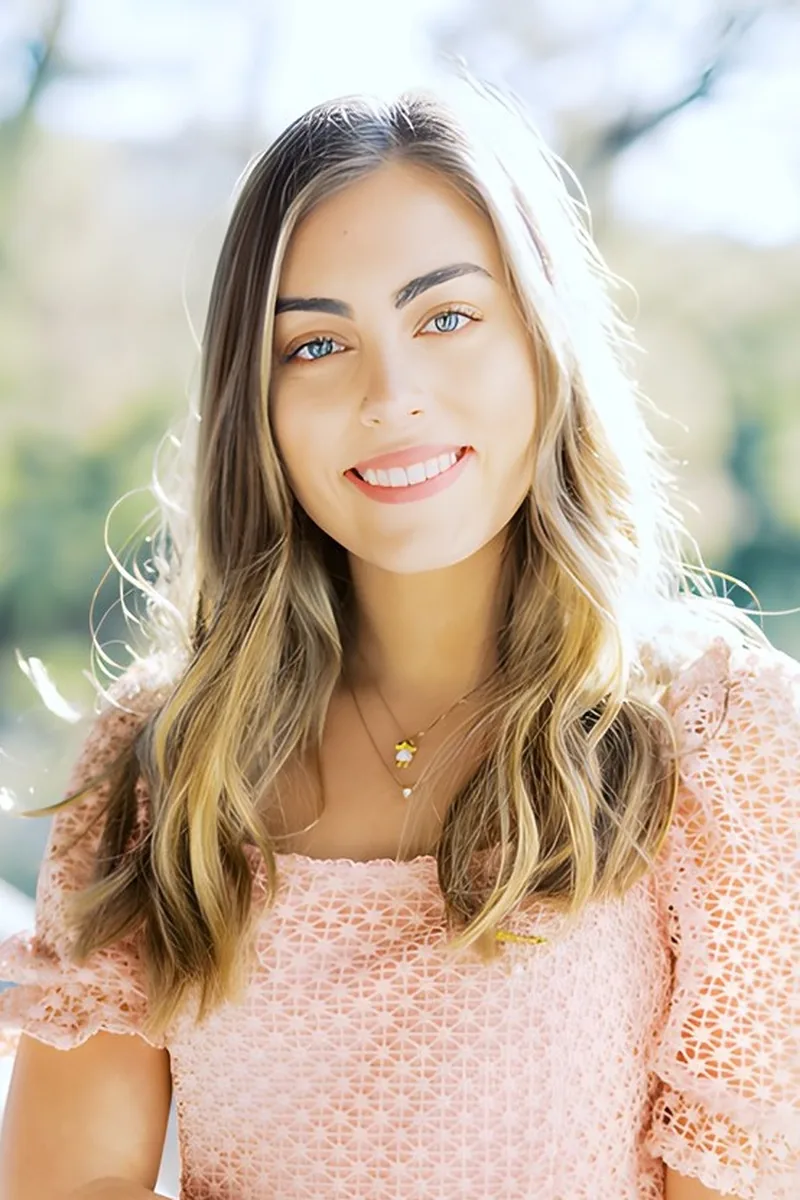
Atley is completing a Spanish minor at the University of Arizona, which means she's actively immersed in the language across multiple levels — from conversational fluency to reading academic texts. She breaks down tricky grammar concepts like subjunctive mood and ser versus estar by connecting them to patterns students already recognize, making conjugation and sentence structure feel less like rote memorization.

Speaking multiple languages herself and deeply committed to multilingualism, Ivanna teaches Spanish with attention to the grammatical scaffolding — verb conjugations, subjunctive mood, pronoun placement — that separates basic communication from real fluency. She connects grammar concepts to how native speakers actually use the language, making rules feel intuitive rather than arbitrary.
Jake has taught Spanish from level 2 through level 4 and beyond, which means he knows exactly where the grammar gets tricky — subjunctive mood, preterite versus imperfect, indirect object pronoun stacking. He approaches each concept with clear structural breakdowns before layering in practice, so the rules actually stick instead of feeling like guesswork.
Learning Spanish grammar often clicks faster when someone can explain *why* the subjunctive exists rather than just *when* to use it. Alex teaches Spanish at the intermediate-to-advanced level and draws on his anthropology studies to weave in cultural context — the kind of real-world framing that makes vocabulary and grammar patterns stick instead of feeling like arbitrary rules.
Megan approaches Spanish with the same structured problem-solving mindset she applies to her computer science coursework at Harvey Mudd — conjugation patterns, grammatical rules, and vocabulary acquisition all respond well to systematic practice. She covers foundational skills like verb tenses, sentence construction, and reading comprehension, building each lesson around practical usage so that grammar doesn't feel like an abstract exercise.
Living in Costa Rica for a study abroad program gave Thara something most Spanish tutors can't offer: real conversational fluency built from speaking with indigenous communities, elderly residents, and locals across different regions. She uses that immersion experience to teach grammar and vocabulary in context, so students internalize verb conjugations and sentence structure through actual communication rather than rote drills.
Theater training sharpens a skill most language tutors overlook — the ability to inhabit a character's voice, rhythm, and emotional register in real time. Jacob's MFA in Theater Arts and his psychology background mean he teaches Spanish conversation and pronunciation as performance: students practice producing the language out loud with attention to intonation and natural phrasing, not just written accuracy. Rated 5.0 by students.
Learning Spanish grammar rules is one thing; understanding when and why to use the subjunctive in an actual sentence is another. Shannon teaches across all four levels of Spanish and openly talks about the concepts she found tricky as a learner herself, which makes verb conjugation patterns and pronoun placement feel less intimidating. That honesty about the learning process — rated 4.9 by her students — creates space for real questions instead of silent confusion.
Born and raised in Uruguay, Veronica is a native Spanish speaker who also spent years teaching English to Spanish-speaking students — meaning she's navigated the gap between both languages from both directions. That dual perspective makes her especially sharp at explaining tricky grammar like the subjunctive mood, ser versus estar, and pronoun placement in ways that actually stick.
Two years living in Peru gave Tod the kind of Spanish fluency that a classroom alone can't replicate — he learned verb conjugations, subjunctive mood, and idiomatic expressions by using them daily in real conversations. He brings that immersive sensibility to tutoring, connecting grammar rules to how Spanish is actually spoken. His minor in Spanish at Arizona State adds formal linguistic structure to that lived experience.
Learning Spanish clicked for Gavin when he stopped translating word-by-word and started thinking in the language, and that's the shift he tries to create for his own students. He tackles everything from verb conjugation drills to conversational fluency, adjusting based on whether someone is just starting out or polishing their subjunctive usage.
Having tutored Spanish I and II, Pooja zeroes in on the grammar fundamentals — verb conjugation patterns, pronoun placement, ser versus estar — that students need before they can read or converse with any confidence. She creates structured practice around each concept so that rules stick through application rather than rote repetition.
Hana approaches Spanish grammar as a system with its own internal logic, so students learn to predict verb conjugations and pronoun placement instead of memorizing isolated charts. Her International Studies background means she can also weave in cultural context — the differences between Latin American and Peninsular usage, for instance — that makes the language feel less like a set of rules and more like a living thing.
From verb conjugations across tenses to building vocabulary for reading comprehension, Angie covers Spanish at multiple levels and connects grammar rules to practical usage. She also teaches conversational Spanish, so students get a tutor who values both structural accuracy and the confidence to actually speak.
Paul teaches Spanish with an emphasis on building grammatical structure — verb conjugations, pronoun placement, and sentence construction — so that students develop real fluency instead of just memorizing vocabulary lists. His background in biology and science gives him a knack for systematic thinking that translates surprisingly well to mastering a language's underlying rules.
I am a great tutor because I am young and enthusiastic. I can relate to the kids I tutor because I recently experienced the classes and standardized tests that they are taking. I use an informal style so that the student can feel comfortable asking questions. I try to connect personally to the students so that they have fun and look forward to tutoring. I tutor standardized tests and most high school classes. I have two years of experience tutoring and I spent both this summer and last summer teaching full-time.
I am a recent graduate from Arizona State University. I graduated Summa Cum Laude with a bachelors in philosophy. I will be attending the Sandra Day O’Connor College of Law in the fall of 2012. I have always been successful in academics and enjoy school thoroughly. I have also served as a Military Police Officer for the Arizona Army National Guard for over four years.
I am working towards a Bachelor's in English at ASU after two years at Mesa Community College. I am passionate about English and have a year's experience tutoring Algebra. I aim to provide individualized online instruction to high school students that is centered around their needs and capabilities. My experiences dealing with ADHD allow me to relate to students experiencing similar difficulties and to be a better tutor for them. I believe education is important and that every student is capable of success with a little help. In my free time I enjoy reading nonfiction, experimenting with drawing styles, and sewing.
I'm enjoying my time at home and getting to explore questions of interest to me.
I am currently an engineer in the design and construction industry for an international construction company, and a recent graduate from the University of Arizona. I received my Bachelor's of Science in Civil Engineering in May 2016 and left my roots in Tucson, Arizona. In my spare time, I enjoy soaking up the beautiful views around here by hiking, running, and adventuring. My hobbies also include cooking and baking, beauty pageants, bargain shopping, and traveling whenever the opportunity arises. I began tutoring elementary and middle school students in basic study skills, math, and reading at a young age, and have been tutoring since. From there, my tutoring experiences have expanded to help students of all ages from primary school to university level in basic math, pre-calculus, college level math; biology, chemistry, physics; Spanish and SAT and ACT prep. I believe that any student is capable of learning and mastering any concept - and that a bit of patience, hard work, and faith get you a long way.
I am an undergraduate studying at Arizona State and have experience working in my school's writing center as a tutor. I find that the best approach to interacting with students is to be friendly, open, and patient. We have all struggled in a subject at some point in our lives, and I hate to see students get flustered or embarrassed when they don't understand a concept. I'm upbeat and enjoy sharing my enthusiasm for what I have learned with the people that I meet. When I'm not working or in school, I enjoy reading, listening to music, or eating copious amounts of food.
Teaching across Spanish 1 through Spanish 3, Sarah knows exactly where each level's stumbling blocks are — from mastering ser versus estar early on to navigating subjunctive mood in more advanced coursework. Her Vanderbilt coursework and conversational practice give her a feel for how the language actually sounds, not just how it looks on a conjugation chart.
Jake has tutored Spanish across multiple levels and speaks the language well enough to teach everything from verb conjugation patterns in the preterite and imperfect to reading comprehension strategies for literary passages. His approach emphasizes understanding the logic behind grammar rules so students can apply them flexibly, not just memorize charts.
Teaching elementary school in diverse classrooms gave Victoria daily practice communicating in Spanish with students and families, and she carries that real-world fluency into her tutoring. She covers verb conjugations, reading comprehension, and written composition across Spanish 1 through 4, adjusting complexity to wherever a student currently sits in the sequence.
Earning a certificate of advanced language in Spanish at Yale means Maxwell doesn't just know the grammar rules — he uses the language daily in academic and social contexts. He breaks down tricky concepts like subjunctive mood triggers and ser vs. estar distinctions by connecting them to how native speakers actually think about meaning. Rated 5.0 by students.
Vivian's background is in music performance and standardized test prep, not Spanish — but her Juilliard training means she's wired to hear and reproduce precise patterns, a skill that transfers directly to mastering pronunciation, accent marks, and the rhythmic flow of spoken Spanish. She applies the same disciplined, repetition-based practice she uses in the practice room to lock in conjugation patterns and vocabulary retention.
Learning Spanish grammar isn't just about conjugation tables — it's understanding why the subjunctive appears after certain triggers, or how ser and estar change a sentence's entire meaning. Renee earned both a BA and a PhD centered on Spanish, giving her the kind of deep structural knowledge that lets her explain the 'why' behind tricky rules. She's taught Spanish at multiple levels, from private tutoring to formal academic settings.
Studying both German and Spanish at Carleton while majoring in psychology gives Amanda a multilingual perspective that sharpens how she teaches language — she understands firsthand where English speakers get tripped up by gendered nouns or unfamiliar verb forms because she's wrestling with those same structures across two foreign languages simultaneously. Her conversational Spanish background means sessions stay practical, connecting grammar concepts like ser versus estar to real dialogue instead of isolated worksheets.
Learning Spanish as a cognitive science student gave Adam an unusual advantage: he understands how the brain acquires a second language and uses that knowledge to make vocabulary and grammar stick faster. His Spanish minor at Rice covered everything from verb conjugation patterns to conversational fluency. Whether a student is wrestling with the subjunctive mood or building everyday speaking confidence, Adam tailors the approach to how they learn best.
Studying at the Horace Mann School in New York City meant Ethan took Spanish alongside a rigorous academic curriculum, and his current economics and public policy coursework at UChicago keeps him reading and analyzing across disciplines — skills that transfer directly to parsing Spanish texts and constructing grammatically sound written responses. He's particularly sharp at breaking down the logic behind ser versus estar or preterite versus imperfect, treating tricky distinctions as puzzles with clear rules rather than exceptions to memorize.
Conjugation tables are easy to memorize and easy to forget — Dalton instead teaches Spanish grammar through pattern recognition, showing students how verb tenses relate to each other so that irregular forms start making sense. He covers everything from foundational topics like ser vs. estar to more advanced concepts like the subjunctive mood. His approach builds reading and writing skills alongside speaking confidence.
Foundational vocabulary and verb conjugations matter, but Dylan pushes students to actually use Spanish before they feel fully ready — because that productive discomfort is where fluency grows. He's lived and traveled extensively in Spanish-speaking communities, which means he teaches not just textbook grammar but the idiomatic expressions and cultural context that make the language real.
Kate teaches Spanish at multiple levels, from verb conjugation fundamentals in Spanish 2 through the subjunctive mood and complex sentence structures in Spanish 4. Her engineering background gives her a systematic way of breaking down grammar rules that clicks for students who think analytically.
Testimonials
Because the right Spanish tutor makes all the difference.
Average Session Rating – Based on 3.4M Learner Ratings
Other Mesa Tutors
Related Languages Tutors in Mesa
Frequently Asked Questions
Speaking is often the hardest skill to develop in a classroom setting, where students get limited airtime. With personalized 1-on-1 instruction, you get consistent conversation practice tailored to your level—whether you're working on pronunciation, fluency, or confidence. A tutor can correct you in real-time, model natural speech patterns, and create scenarios that match your goals, from casual conversation to professional communication.
Spanish verb conjugation is challenging because verbs change based on subject, tense, and mood—with irregular verbs adding extra complexity. Rather than memorizing conjugation tables, personalized tutoring focuses on understanding patterns and using verbs in context, which helps them stick. A tutor can break down tricky tenses like the subjunctive or preterite vs. imperfect, and give you targeted practice until conjugation becomes automatic.
Vocabulary sticks best through repeated exposure in meaningful contexts, not through isolated word lists. Personalized tutoring uses spaced repetition and retrieval practice—reviewing words at strategic intervals and applying them in conversation and writing. A tutor can also help you connect new vocabulary to themes you care about, making words more memorable and useful in real situations.
Both matter, but they work together. Grammar gives you the structure to form correct sentences, while conversation builds fluency and confidence. The best approach combines explicit grammar instruction with plenty of speaking practice—a tutor can teach you the rule, then immediately apply it in dialogue so you understand not just the 'why' but how to use it naturally.
Yes—pronunciation is one of the biggest advantages of 1-on-1 tutoring. A tutor can model correct pronunciation, listen to your speech, and give immediate feedback on sounds that don't exist in English (like the rolled 'r' or the Spanish 'j'). With consistent practice and guidance, you can train your ear and mouth to produce Spanish sounds accurately, which also boosts your listening comprehension.
Language and culture are inseparable—understanding Spanish-speaking cultures helps you grasp idioms, humor, and communication styles that grammar alone won't teach. Personalized tutoring can weave cultural insights into lessons, from regional differences in Spain and Latin America to contemporary media and traditions. This makes learning more engaging and helps you communicate authentically, not just grammatically.
Yes, Varsity Tutors connects Spanish learners in Mesa with expert tutors who understand the local curriculum and can support students across Mesa's 194 schools. Whether you're preparing for Spanish class, working toward fluency, or getting ready for AP Spanish or language proficiency exams, a tutor can tailor instruction to your specific needs and goals.
Your first session is about understanding where you are and where you want to go. The tutor will assess your current level across reading, writing, speaking, and listening, discuss your goals, and identify your biggest challenges—whether that's verb tenses, conversation confidence, or test prep. From there, you'll build a personalized plan that targets your priorities and fits your learning style.
Let’s find your perfect tutor
Answer a few quick questions. We’ll recommend the right plan and match you with a top 5% tutor.