Award-Winning Physical Chemistry Tutors
serving Denver, CO
Physical Chemistry
Tutors in Denver
Private 1-on-1 tutoring, weekly live classes for academic support, test prep & enrichment, practice tests and diagnostics, and more to elevate grades and test scores.
Based on 3.4M Learner Ratings
UniversitiesSchools & Universities
DeliveredHours Delivered
ProficiencyGrowth in Proficiency
Who needs tutoring?
No obligation. Takes ~1 minute.
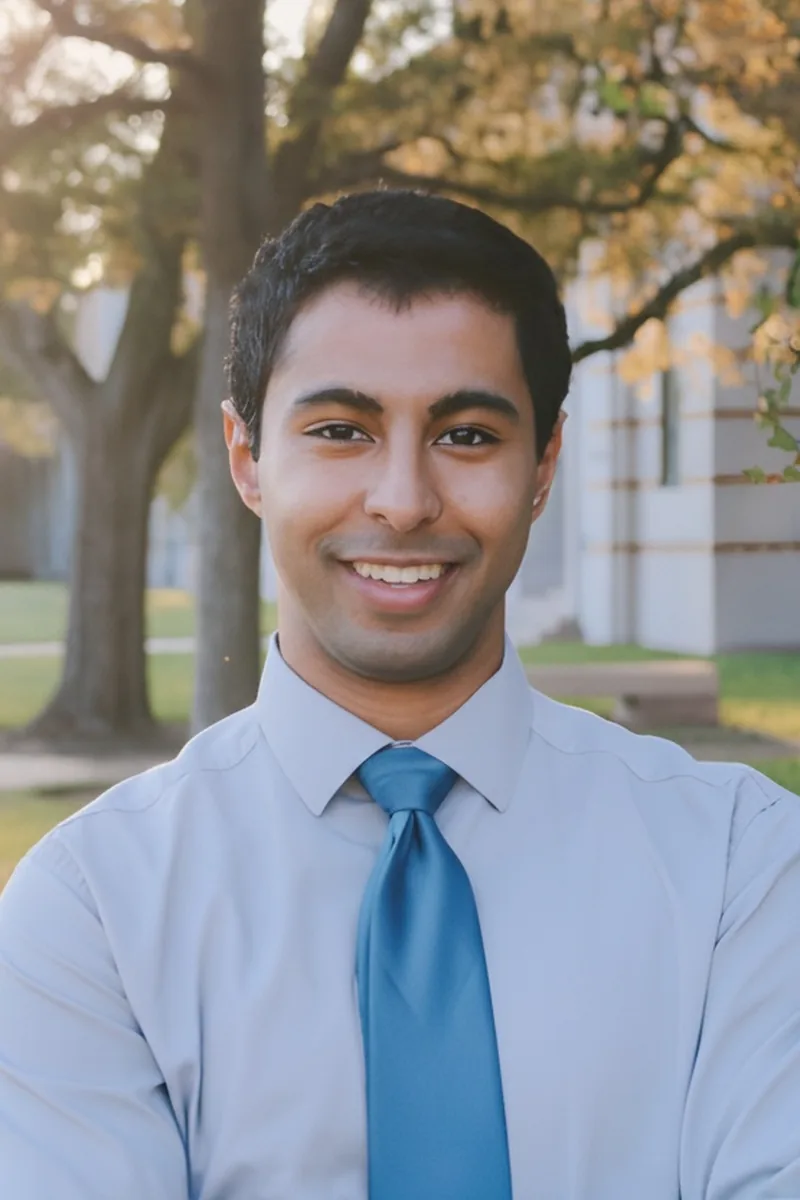
Rice's chemistry curriculum put Asad through the full p-chem gauntlet — thermodynamics, quantum mechanics, kinetics — and his path to medical school at UT Houston means he's had to internalize concepts like enthalpy, entropy, and equilibrium well enough to apply them in biological and clinical contexts. That dual pressure of rigorous chemistry coursework and MCAT preparation sharpened his ability to explain why a derivation works, not just how to grind through the math.

Environmental statistics at Rice required Alex to work extensively with the same calculus-heavy quantitative methods — differential equations, statistical modeling, multivariable analysis — that students encounter in thermodynamics and kinetics derivations throughout a p-chem sequence. His geography background adds a surprising edge: understanding energy balances and phase transitions in Earth systems translates directly to making sense of state functions and equilibrium in a chemistry context.
A PhD in biophysics and a master's in organic chemistry mean Amin has worked through the quantum mechanics, statistical mechanics, and thermodynamics of p-chem from both the physical and molecular sides — deriving partition functions in one course, then applying free energy calculations to real chemical systems in the next. That dual perspective lets him teach a topic like the Boltzmann distribution or a phase diagram by moving fluidly between the mathematical formalism and the chemistry it's actually describing.
Biomedical engineering at BU and Tufts meant Anthony lived in the math that makes p-chem intimidating — differential equations, thermodynamic modeling, and the kinetics of biological systems — long before applying it to physical chemistry specifically. His research background studying neurodegenerative disease therapies keeps him fluent in the quantitative reasoning behind concepts like Gibbs free energy, phase equilibria, and reaction rate theory. Rated 4.9 by students, he connects each derivation to the physical system it describes so the notation carries real meaning.
Mechanical engineering at Rice means Aleksey has been solving thermodynamic cycles, heat transfer problems, and differential equations for years — the exact mathematical toolkit that p-chem throws at students in a chemistry wrapper. He breaks down topics like entropy, enthalpy, and phase equilibria by treating them as engineering problems first, then layering in the molecular-level chemistry that gives each variable its meaning. Rated 5.0 by students.
Biology research through the American Museum of Natural History and pre-med coursework at Cornell gave Krishna hands-on exposure to the thermodynamic and kinetic principles that p-chem formalizes — energy changes in biological systems, reaction rates, equilibrium behavior. She uses that life-science grounding to make topics like Gibbs free energy and rate laws feel like descriptions of real molecular events rather than pure derivation exercises.
Teaching high school chemistry daily means Kathleen regularly translates thermodynamic concepts like enthalpy, entropy, and equilibrium into language that clicks — a skill that carries directly into the more calculus-heavy treatment those same ideas get in a p-chem course. Her M.S.Ed from Penn and chemistry degree give her both the content depth and the instinct for spotting exactly where a derivation stops making sense to a student. Rated 5.0 by students.
Decades as a PhD chemical engineer meant Steven was solving Clausius-Clapeyron problems, reaction kinetics models, and energy balance derivations long before they were textbook exercises — they were daily work. He breaks down p-chem's toughest material by explaining a concept one way, re-explaining it from a different angle, then grounding it in a real engineering application where the math actually matters. Rated 4.9 by students.
Thermodynamic potentials, quantum mechanical models, kinetic rate laws — physical chemistry demands comfort with both rigorous math and chemical intuition simultaneously. Mark's chemical engineering degree from Yale required multiple semesters of p-chem coursework, and he tackles the subject by grounding intimidating derivations in the physical phenomena they describe. He's especially strong at walking through the calculus embedded in topics like entropy and partition functions.
Two biomedical engineering degrees mean Allyson has been doing the calculus-heavy thermodynamics and kinetics work that p-chem formalizes — modeling energy transfer in biological systems, working through rate equations for physiological processes — since undergrad. She zeroes in on the specific mathematical step where a derivation goes from followable to opaque, whether that's a tricky partial derivative in a Maxwell relation or the statistical reasoning inside a Boltzmann distribution. Rated 4.9 by students.
I grew up in the Boston area and now live in Citrus County, Florida. I graduated from MIT in chemical engineering and worked for many years as a chemical process engineer, so I have a strong background in math and science, especially chemistry and thermodynamics. I've also been granted six U.S. patents. When the pandemic hit us, I moved to Florida and did part-time work as a chess tutor, then became a substitute teacher in the middle and high schools in our district. I enjoyed working with the students, many of whom had difficulty learning in big classes with many disruptions. I found that I could best help these students by using real-world examples to teach difficult concepts in a new way. Often, then, the student would come away with a new perspective and a much better understanding of the concept. I was happy to be able to help. These days as a VT tutor, I continue to use, whenever possible, real-world examples in my own material in chemistry and thermodynamics.
Biology coursework builds a surprising amount of p-chem intuition — enzyme kinetics, membrane energetics, and metabolic thermodynamics all run on the same free energy and rate equations that dominate a physical chemistry sequence. Ade uses that biological grounding to make abstract derivations tangible, turning something like a Boltzmann distribution into a concrete picture of how molecules actually partition energy across states.
Testimonials
Because the right Physical Chemistry tutor makes all the difference.
Average Session Rating – Based on 3.4M Learner Ratings
Nearby Physical Chemistry Tutors
Other Denver Tutors
Related Science Tutors in Denver
Frequently Asked Questions
Physical Chemistry combines abstract mathematical concepts with molecular-level thinking, making it one of the most demanding chemistry courses. Students in Denver typically struggle most with thermodynamics (entropy, enthalpy, and Gibbs free energy), kinetics (reaction rates and mechanisms), and quantum mechanics fundamentals. Many students find it hard to visualize molecular behavior and connect mathematical equations to what's actually happening at the atomic level. Personalized tutoring helps break down these abstract concepts into concrete, understandable pieces—showing how theoretical principles apply to real chemical systems.
Physical Chemistry labs require both technical execution and conceptual understanding. Expert tutors work with students to understand experimental procedures, data analysis, and how to connect lab results back to theoretical predictions. They help students design experiments with proper controls, interpret graphs and spectroscopy data, and troubleshoot when results don't match expectations. This bridges the gap between classroom theory and hands-on science—essential skills for success in Denver's rigorous chemistry programs at schools like Lincoln High School and the University of Denver.
Memorizing the equation PV = nRT might help you pass a single test, but understanding why pressure, volume, and temperature relate that way lets you solve novel problems and predict chemical behavior. Physical Chemistry tutors focus on building conceptual understanding first—helping you see formulas as tools that describe real relationships between molecules and energy. This approach takes more time upfront but develops the scientific reasoning skills that make advanced chemistry and related fields accessible. Students who understand the 'why' typically retain material longer and perform better on cumulative exams.
Balancing equations and unit conversions are fundamental skills that trip up many Physical Chemistry students. Expert tutors break these processes into systematic steps, showing you how to organize information and avoid common mistakes. For unit conversions, they teach you to think about what you're measuring (moles, grams, liters) and use dimensional analysis as a reliable method, not just a mechanical trick. With Denver's 14.4:1 average student-teacher ratio, working with a tutor gives you the personalized attention needed to catch and correct errors before they compound across multiple problem sets.
Most students see meaningful improvement within 4-6 weeks of consistent personalized tutoring, especially if they're currently struggling with fundamental concepts. The timeline depends on your starting point, the specific topics you're targeting, and how frequently you meet with a tutor. If you're preparing for an exam or need to master a specific unit before moving forward in the course, tutors can prioritize those areas for faster results. Varsity Tutors can connect you with expert tutors who design a customized plan based on your timeline and goals, so you're not just catching up—you're building lasting understanding.
Excelling in Chemistry doesn't automatically translate to Physical Chemistry success. Physical Chemistry is fundamentally different—it layers heavy mathematics (calculus, differential equations) on top of chemistry concepts, and requires comfort with statistical thinking and thermodynamic reasoning. Many strong chemistry students hit a wall with the abstract mathematical nature of the course. Personalized tutoring helps you build the specific skills needed to connect math to chemistry, interpret phase diagrams and thermodynamic cycles, and think probabilistically about molecular systems—all critical for Physical Chemistry.
Look for tutors with deep expertise in thermodynamics, kinetics, and quantum mechanics—not just general chemistry knowledge. They should be able to explain complex concepts in multiple ways and help you see connections between topics. It also helps if they understand your specific course requirements (whether it's AP Chemistry, college-level courses, or graduate Physical Chemistry) and can tailor explanations to your learning style. Varsity Tutors connects you with expert tutors who have proven experience helping students master Physical Chemistry and can work with your schedule and academic goals.
Let’s find your perfect tutor
Answer a few quick questions. We’ll recommend the right plan and match you with a top 5% tutor.