Award-Winning Organic Chemistry Tutors
serving Oxnard, CA
Organic Chemistry
Tutors in Oxnard
Private 1-on-1 tutoring, weekly live classes for academic support, test prep & enrichment, practice tests and diagnostics, and more to elevate grades and test scores.
Based on 3.4M Learner Ratings
UniversitiesSchools & Universities
DeliveredHours Delivered
ProficiencyGrowth in Proficiency
Who needs tutoring?
No obligation. Takes ~1 minute.
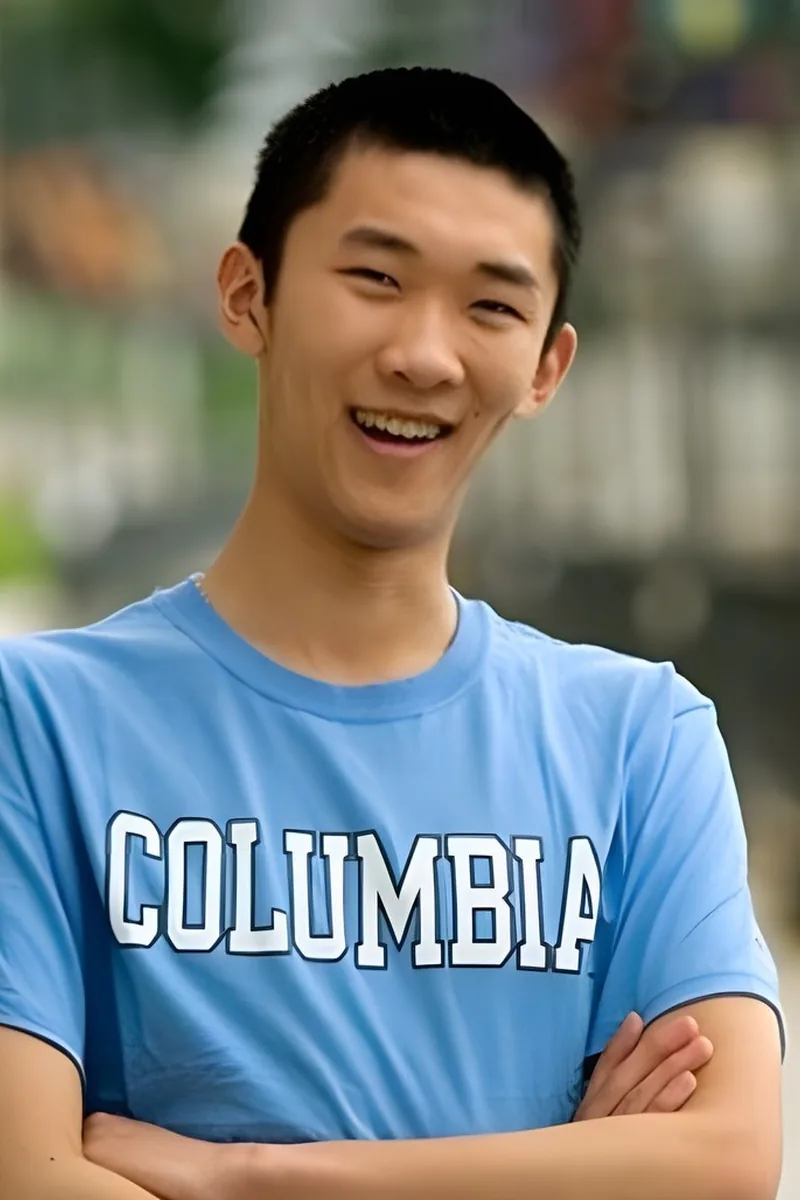
Zhenrui's premed and electrical engineering coursework at Columbia means he's tackled organic chemistry from both the biological and physical sciences side — thermodynamic versus kinetic control, molecular orbital theory, and the quantitative reasoning behind reaction energetics that pure pre-med students often find unfamiliar. That dual perspective lets him explain why a carbonyl addition proceeds the way it does, not just diagram the arrows.
Reaction mechanisms are the language of organic chemistry, and most students struggle because they try to memorize hundreds of reactions instead of learning the handful of electron-pushing patterns that explain nearly all of them. Nicholas teaches students to read nucleophilicity, leaving group ability, and steric effects as clues that predict outcomes — turning synthesis problems from guesswork into logical puzzles.
Studying cancer cells at the molecular level means Siavash lives inside organic chemistry — reaction mechanisms, functional group transformations, and stereochemistry aren't abstract concepts for him but daily tools. He walks through arrow-pushing and electron movement with the kind of fluency that comes from applying orgo in an active research lab at Cal State Northridge.
Most students dread organic chemistry's reaction mechanisms, but Sarah approaches them as logic puzzles with predictable patterns. Her physics and math training sharpens the way she teaches electron movement, stereochemistry, and retrosynthetic analysis — treating each mechanism as a problem to reason through rather than a sequence to memorize.
I am a graduate of the University of California, Los Angeles. I received my Bachelor of Arts in International Development Studies with a focus on the Middle East and North Africa. I also completed a minor in Public Health during my undergraduate career. Upon my graduation from UCLA in June 2013, I received both Latin Honors (cum laude) and a nomination to the Phi Beta Kappa (P.B.K.) National Society. I have recently been accepted to medical school and plan to attend in August 2014. I have experience teaching in middle school and high school settings abroad in both the Philippines and Honduras. I have also tutored family and friends in the sciences throughout my college career. I am intelligent, articulate, patient, and motivating, which I believe allows me to be a successful tutor. I have extensive experience working with children and am determined to make sure my students not only excel in their classes, but also learn the material well and develop an aptitude for academia. I believe education is the gateway to success and feel committed to help prepare my students for their future. In my spare time, I enjoy reading, traveling, running, and hiking with my dog.
I am a graduate of the University of California at Berkeley with a Bachelors degree in Molecular and Cellular Biology. During my four years of college, I guided K-12 students of the Oakland area in Language Arts and Mathematics and served as a mentor for many high school students. I have also been an undergraduate student instructor for the General Biology lab course offered at U.C. Berkeley, a prerequisite for students wishing to pursue Biology as a major. Since I have a wide range of teaching experiences in both academic subjects and test preparation, I am highly adaptable to different learning styles and cater my teaching methods to meet student needs. Apart from being flexible, I am also very accessible for additional questions or help that is needed. In my spare time, I enjoy baking, exploring my city and watching movies.
Siddharth's biology degree means he first encountered organic chemistry through the lens of biomolecules — amino acid reactivity, lipid structures, and the functional group behavior that drives metabolic pathways. That biological framing gives him a practical way to teach arrow-pushing and reaction classifications, connecting each mechanism to molecules students can visualize rather than treating them as abstract exercises.
Reaction mechanisms are the language of organic chemistry, and Casey reads them fluently after years of bioengineering coursework that demanded constant fluency in electron-pushing, stereochemistry, and functional group transformations. She teaches students to recognize patterns across reaction types — why nucleophilic additions behave the way they do, how leaving groups dictate substitution vs. elimination — so each new chapter feels like a variation on something familiar rather than a fresh nightmare.
Reaction mechanisms are the language of organic chemistry, and Jhonatan treats them that way — teaching students to read electron flow through arrow-pushing until substitution, elimination, and addition reactions feel like variations on a theme rather than isolated procedures to memorize. His biochemistry expertise is especially useful when carbonyl chemistry and amino acid reactivity come into play. He holds a 5.0 client rating.
Reaction mechanisms are the backbone of organic chemistry, and spotting nucleophilic attacks or predicting stereochemical outcomes requires genuine pattern recognition, not rote memorization. Lauren's chemistry minor at Duke and her hands-on lab research give her a practical fluency with functional group reactivity that she translates into clear, step-by-step reasoning for each mechanism type.
Reaction mechanisms in organic chemistry demand the same kind of pattern recognition Seong uses in her neuroscience coursework at Northwestern — tracking electron movement, predicting intermediates, and understanding why one pathway dominates over another. She unpacks arrow-pushing notation by tying each step to underlying principles of nucleophilicity and sterics, so students can reason through unfamiliar reactions on exams instead of relying on rote memorization.
Reaction mechanisms are the language of organic chemistry, and Troy spent two semesters teaching that language as an organic chemistry TA. He walks students through arrow-pushing, stereochemical outcomes, and retrosynthetic analysis by emphasizing the handful of recurring electronic patterns that make hundreds of reactions predictable rather than random.
Four years of tutoring organic chemistry at Yale — while simultaneously doing pre-med coursework — gave Marcus a sharp sense of where students get stuck, particularly with carbonyl reactivity and multi-step synthesis planning. His current research at the Hospital for Special Surgery keeps him actively applying these concepts, so he teaches functional group transformations as interconnected tools rather than an isolated reaction catalog.
Chemical engineering at Cornell meant Rahul didn't just pass organic chemistry — he applied it daily in reactor design, synthesis planning, and thermodynamic analysis of reaction pathways. That engineering lens gives him a distinctive angle on topics like carbonyl chemistry and stereoselectivity, where he ties mechanism logic back to energy landscapes and kinetic versus thermodynamic control. Rated 4.9 by students.
Biomedical engineering at Johns Hopkins means Nicholas encounters organic chemistry where it intersects with real applications — polymer biomaterials, drug delivery systems, and the functional group chemistry that governs how molecules interact with biological tissue. He teaches reaction types by grounding them in that engineering context, turning abstract arrow-pushing into something students can visualize and reason through. Rated 4.8 by students.
Most students dread organic chemistry because it feels like a new language, but the logic underneath reaction mechanisms is surprisingly consistent once someone lays it out clearly. Ade approaches each reaction type — substitution, elimination, addition — by teaching students to read electron movement and predict products rather than memorize hundreds of individual reactions.
Cornell's biology curriculum threw Raphael into organic chemistry as the bridge between general chemistry and the biochemistry he needed for his pre-med track — meaning he learned reaction mechanisms through the lens of biological relevance, not just isolated transformations on an exam. He tackles arrow-pushing and functional group reactivity by zeroing in on the "why" behind electron movement, building each mechanism step from nucleophile-electrophile logic so students can reason through unfamiliar problems on their own. Holds a 5.0 rating.
Reaction mechanisms are the backbone of organic chemistry, and students who try to memorize each one individually run out of mental storage by the second exam. Bintou's chemistry training at Penn taught her to classify reactions by electron behavior — nucleophilic attack, leaving group stability, carbocation rearrangement — so patterns emerge instead of isolated steps. She teaches students to predict products by reading the mechanism, not by recognizing a specific example they've seen before.
Testimonials
Because the right Organic Chemistry tutor makes all the difference.
Average Session Rating – Based on 3.4M Learner Ratings
Practice Organic Chemistry
Free practice tests, flashcards, and AI tutoring for Organic Chemistry
Nearby Organic Chemistry Tutors
Other Oxnard Tutors
Related Science Tutors in Oxnard
Frequently Asked Questions
Varsity Tutors matches Oxnard students with expert Organic Chemistry tutors for 1-on-1 instruction. We pair each student with a tutor based on their specific needs, learning style, and goals.
Whether you need homework help, exam prep, or want to get ahead, our Organic Chemistry tutors are ready to help.
Common challenges include gaps from earlier material, difficulty with specific concepts, and trouble applying learning to new problems. These issues can snowball quickly in Organic Chemistry.
A tutor identifies where you're stuck, fills in gaps, and provides targeted practice. The 1-on-1 format means you get help exactly where you need it.
Tutors work with your student's actual coursework—homework assignments, class notes, and upcoming tests. This keeps tutoring directly relevant to what's happening in the classroom.
When you share information about your student's school and curriculum, we can match you with a tutor who has relevant experience.
All tutors complete background checks, credential verification, and teaching evaluation. Many of our Organic Chemistry tutors hold advanced degrees or have years of teaching experience.
You can review tutor profiles to find someone with the right background for your student's level and needs.
Many students see improved grades within a few weeks, along with better understanding of Organic Chemistry concepts and more confidence tackling challenging material.
Tutors track progress and adjust their approach to ensure continued improvement.
Most students benefit from 1-2 sessions per week. More frequent sessions help if your student is significantly behind or has an important exam coming up.
Your tutor can recommend a schedule based on your student's specific situation and goals.
Tutoring is purchased in packages of hours, with rates varying by tutor experience. Varsity Tutors offers several options to fit different budgets and needs.
You can discuss pricing during your consultation to find what works best.
Your tutor will assess where your student is, discuss goals, and start working on priority areas. Most students bring current homework or upcoming test material to focus on.
By the end, you'll have a clear sense of how the tutor can help and a plan for moving forward.
Let’s find your perfect tutor
Answer a few quick questions. We’ll recommend the right plan and match you with a top 5% tutor.