Award-Winning Science Tutors
serving Bremerton, WA
Science
Tutors in Bremerton
Private 1-on-1 tutoring, weekly live classes for academic support, test prep & enrichment, practice tests and diagnostics, and more to elevate grades and test scores.
Based on 3.4M Learner Ratings
UniversitiesSchools & Universities
DeliveredHours Delivered
ProficiencyGrowth in Proficiency
Who needs tutoring?
No obligation. Takes ~1 minute.
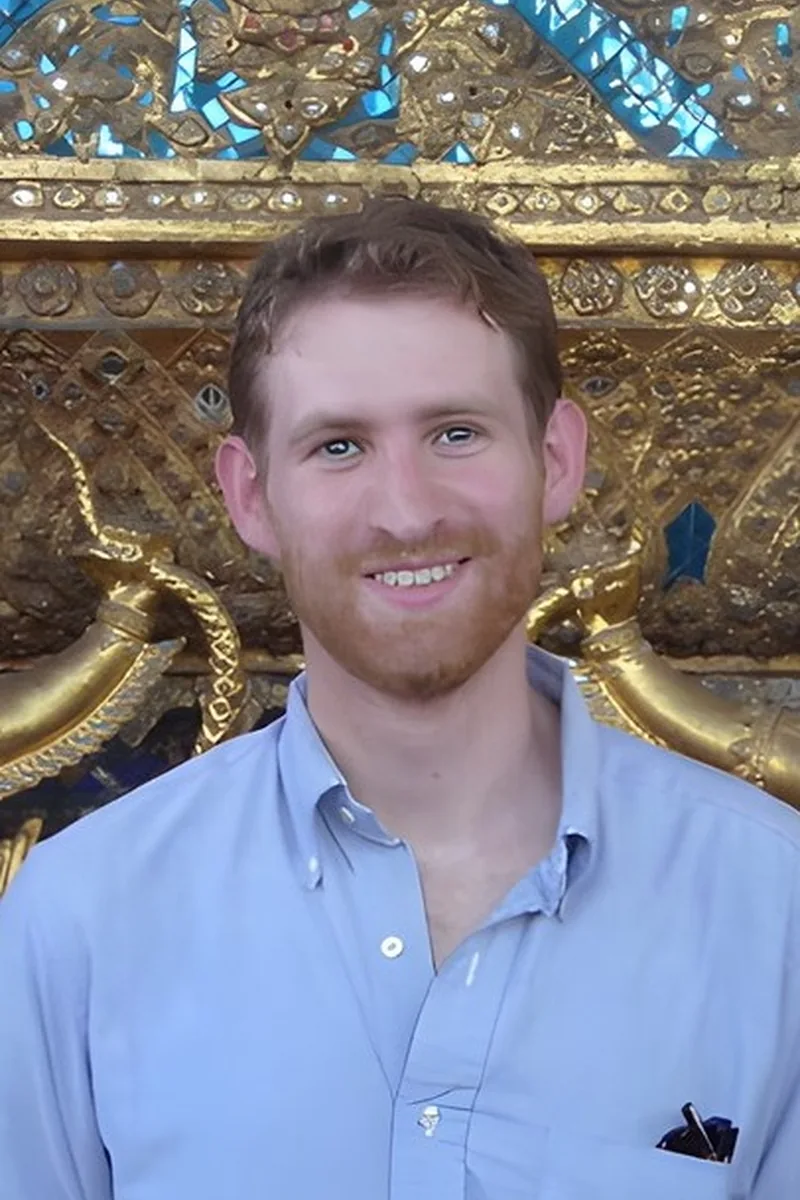
A PhD candidate in English might not be the obvious pick for science, but Alex's 1560 SAT required mastering data interpretation, evidence evaluation, and graph-based reasoning under pressure — the same skills that drive science coursework. What he adds that most science tutors don't is the ability to teach students how to write about science clearly: crafting lab reports, explaining results in plain language, and turning raw observations into coherent arguments.
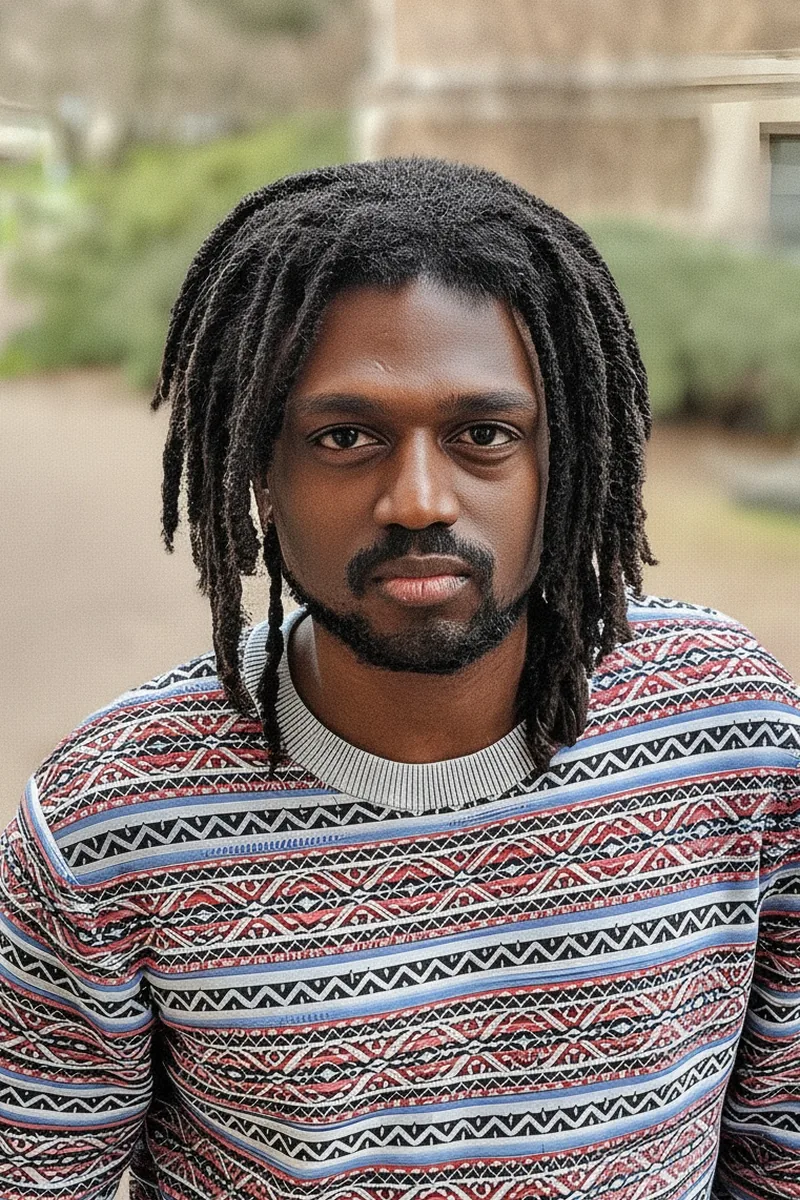
A math degree from Stanford means Najja is fluent in the quantitative backbone of science — unit conversions, interpreting graphs, calculating rates of change — and can teach those skills without making the math feel like a separate obstacle. His current PhD work in history has also sharpened his ability to evaluate sources and build evidence-based arguments, which comes in handy when students need to write up lab reports or explain what an experiment actually proved.
Moayad's mathematics background gives him a strong handle on the quantitative side of science — unit conversions, interpreting graphs, proportional reasoning, and applying formulas in context. He's especially effective at connecting math tools to science problems so students stop seeing equations as abstract and start using them to explain physical phenomena.
Studying biomedical engineering at Johns Hopkins while working in a research lab at Oregon Health and Sciences University, Helen teaches science the way she uses it daily — connecting concepts like cellular respiration, chemical bonding, and experimental design to real applications. Her 4.8 rating from students speaks to her ability to make abstract processes tangible and testable.
As a biology major in a combined BS/MD program, Alice lives in the sciences daily — cell biology, genetics, chemistry, ecology. She's especially good at making abstract processes concrete, like tracing energy through a food web or walking through how DNA replication actually works step by step.
A Yale liberal arts education required Moses to engage with scientific reasoning across disciplines — interpreting data, evaluating experimental design, and connecting evidence to conclusions. He applies that same critical-thinking framework when walking students through concepts in earth science, biology basics, or the scientific method.
A physics degree requires fluency across biology, chemistry, and environmental science, and Cory teaches all of them — giving him an unusual ability to show how energy conservation in physics links to reaction thermodynamics in chemistry or metabolic pathways in biology. He uses a conversational style that ties abstract scientific principles to real-world examples students already understand.
Teaching across middle and high school grades means Marie has spent plenty of time reinforcing the scientific reasoning and data interpretation skills students need for lab reports, research projects, and standardized exams. She leans on her strengths in reading comprehension and analytical writing to teach students how to parse complex science texts and articulate their findings clearly.
An applied mathematics major at UCLA, Maria brings genuine quantitative fluency to the parts of science that trip students up most — unit conversions, interpreting graphs, and translating experimental data into meaningful conclusions. Her statistics training is especially useful when students need to understand error, variability, or what makes a sample size credible. She also reads and speaks Russian and French, which comes in handy for breaking down the Latin and Greek roots buried in scientific terminology.
Clare holds degrees in both mathematics and philosophy — a combination that covers the two core demands of science coursework: working through quantitative problems and constructing logical arguments from evidence. She teaches students to connect the math (unit conversions, graphing, interpreting formulas) to the reasoning (designing experiments, evaluating hypotheses, explaining why results support or undermine a claim), so the whole process holds together instead of feeling like disconnected facts to memorize.
An environmental science degree and a current MPH in Environmental Systems and Human Health mean Kourtney has spent years moving between biology, chemistry, earth science, and data analysis. She unpacks scientific concepts by connecting them to real systems — how ecosystems function, how pollutants move through water, how the human body responds to environmental stressors — which makes the material stick far better than rote memorization.
Elizabeth's English and Spanish double major means she's spent years dissecting unfamiliar terminology by breaking words into Latin and Greek roots — a skill that pays off immediately when students hit dense scientific vocabulary in biology or chemistry units. Her 1490 SAT also required sharp data-interpretation and evidence-based reasoning, so she can walk students through reading graphs and evaluating experimental claims with real confidence.
A cellular and molecular biology degree means Xiansheng spent years inside the details — protein synthesis, enzyme kinetics, cell signaling pathways, lab techniques. He teaches science by linking big-picture concepts to the molecular mechanisms underneath, which is especially useful for students preparing for AP Chemistry or building toward a pre-med track.
An econometrics degree is essentially a degree in testing hypotheses with data — Chica spent her undergraduate years building statistical models, isolating variables, and determining whether results were meaningful or just noise. That training maps cleanly onto science coursework, especially when students need to interpret graphs, design controlled experiments, or explain what their data actually proves. Her 5.0 rating and 1520 SAT suggest she communicates those quantitative concepts clearly.
Heading to medical school after graduating with a public health degree, Tsering has conducted research at Emory School of Medicine, Oregon Health & Science University, and NIH — so middle school science topics like cell biology, the scientific method, and human body systems are territory she knows deeply. She connects textbook concepts to real research examples that make the material stick. Her 5.0 rating speaks to how well that approach lands with students.
Studying environmental science at Northeastern means Angela lives at the intersection of biology, chemistry, and earth systems every day — not as separate textbook chapters but as connected ideas. She brings that integrative lens to science tutoring, whether a middle schooler is learning about ecosystems or a high schooler is tackling chemical reactions. Explaining how concepts link to real-world phenomena is where she's most in her element.
A Political Economy degree from USC means Avalon spent years reading studies, interpreting data sets, and evaluating whether evidence actually supports a claim — the same critical thinking loop that science coursework asks students to master. She's particularly strong at walking students through how to set up a fair experiment and explain results in plain language, since her honors writing program drilled clarity and precision into every assignment. Rated 4.9 by students.
Commercial aviation coursework covers aerodynamics, weather systems, and physics principles that most students only encounter in a textbook. Jon uses that hands-on scientific background to explain concepts like force, pressure, and energy transfer in ways that go beyond memorizing formulas.
Grant's English degree might not scream science, but his 35 ACT means he handled the Science section — which is really a test of graph reading, data interpretation, and logical reasoning — at near-perfect levels. He's especially useful for students who can handle the content but struggle to extract meaning from dense passages, charts, and experimental descriptions.
Madyson's biochemistry coursework at Northeastern — spanning cell biology, organic chemistry, and lab techniques — gives her a broad foundation to pull from when explaining scientific concepts at any level. She's particularly effective at teaching students how to read data tables, interpret experimental results, and connect observations back to underlying principles.
An electrical engineering degree means Daniel lives at the intersection of physics, chemistry, and applied math every day. He's especially strong on topics like energy, circuits, forces, and the scientific method — the foundational concepts that show up repeatedly across middle and high school science curricula. He ties abstract ideas to tangible examples, like explaining voltage by comparing it to water pressure in a pipe.
Currently, I am a Research Technician at New Mexico State University in Las Cruces, NM. I have tutored as an undergraduate student, and I have been the lead TA for General Chemistry courses at UC Berkeley. Chemistry is one of my passions, and I would love to share my experience!
Intensely curious, I am interested in STEM subjects and the liberal arts. I tutor to help you reach your educational goals and because it's immensely gratifying to see my students succeed.
I am a professional scientist with multiple years of experience in the biopharmaceutical field. I have spent time in the classroom with elementary aged students and am comfortable with this age group. I am also familiar with AP classes and ACT/SAT preparation. I look forward to sharing my love of learning with students and helping them achieve academic goals!
Update: I completed a two-month full-time guest teacher assignment teaching World Languages Spanish to high school students (9th-12th) Spanish 1/2/3. By utilizing a student-centered learning approach, cultural competence, and equitable teaching, I support students with pedagogy rooted in inquiry, hypothesis, information gathering, problem-solving, and action. I encourage all students to adopt an open-minded approach, and provide support to gifted students, students with disabilities, English Language Learners, and Multilanguage Learners with equity. "Not everything that is faced can be changed, but nothing can be changed until it is faced." James Baldwin I am in my second year of grad school, pursuing a dual master's degree in K-8 Elementary Education and K-12 Special Education (Mild to Moderate Disabilities). With my education grad studies and BFA from the Rhode Island School of Design (RISD), I synthesize creativity and best practices in education to find creative ways of supporting learners. My pursuit and purpose is to guide with compassion and enthusiasm. I encourage students to take ownership of their learning. By promoting student agency, students empower themselves to achieve in academic, social, emotional, and behavioral development. As an ADHD adult, I enjoy working with ADHD students and adults experiencing anxiety + depression. What is effortful for our neurodivergent brains is also our superpower! In my career, I have lived and worked in NYC as an editorial photographer, actor, and dancer. I lived in Berlin and pursued performance art + music while honing my communications skills in digital art + copywriting in Marketing. In Los Angeles, I succeeded as a commercial and theatrical actor. My skill set is suited for collaboration with all students to support and develop their passion for learning, exploration, and critical thinking. I live in southeastern Washington State and teach in northeastern Oregon and southeastern Washington State public school districts. I support students in the following subjects: Elementary School Reading Elementary School Math AP English High School English Middle School English Middle School Math Digital Media & Graphic Design Fine Arts & Filmmaking Creative Writing Study Skills & Organization German 1/2 Spanish 1/2/3 Spanish Language Arts English Language Learners English Language Development Algebra 1/2 Special Education (all subjects) High School Math "We all have ability. The difference is how we use it." Stevie Wonder Thank you for reading! Ms. Anna C.
Antonia's science teaching draws on her experience tutoring both AP Biology and elementary science, so she can adjust the depth of explanation depending on whether a student is labeling parts of a cell for the first time or analyzing ecological relationships. She breaks down scientific vocabulary and diagram interpretation in ways that make concepts click rather than feel like a foreign language — a skill sharpened by her work in dual-language education.
As a dedicated tutor with over 2 years of experience, I am passionate about fostering a supportive learning environment where students can thrive in subjects like Algebra, Business Analytics, and Data Science. Currently pursuing my Bachelor's in Informatics at the University of Washington, I incorporate real-world applications into my teaching to engage students and enhance their understanding of complex concepts. My approach emphasizes personalized learning, encouraging students to ask questions and develop critical thinking skills. I find great joy in witnessing my students' growth and success, and I strive to instill a love for learning that extends beyond the classroom.
I'm a tutor who loves the moment when a concept finally clickswhether that's solving a calculus problem or debugging a first Python script. With experience teaching math from elementary to college level and professional training in full-stack development, I help students build confidence alongside competence in both math and programming. At Mathnasium, I worked with groups of 4-6 students at different levels, learning to adapt quickly to different learning styles. I bring that same flexibility to teaching HTML, CSS, JavaScript, Python, and other programming languages. I don't just give answersI guide students to discover solutions themselves because that's what sticks. Whether it's explaining why a for-loop isn't working, walking through derivatives, preparing for the SAT, or building a first web page, I focus on understanding over memorization. I'm patient but direct, and I adjust my approach based on what's actually working for each student. My goal is simple: make learning feel achievable, not intimidating, and give students tools they can use long after our sessions end.
Scoring in the 99th percentile on the MCAT required Josef to master science across disciplines — biology, chemistry, physics, and biochemistry — and he brings that integrated perspective to every session. Rather than treating each science topic as isolated, he connects ideas like energy transfer in physics to metabolic pathways in biology, showing students how the same principles reappear across fields.
A PhD in Computational Mathematics from the University of Chicago means Justin doesn't just know science — he understands the quantitative reasoning that ties physics, chemistry, and earth science together. He breaks down concepts like energy conservation, wave behavior, and data analysis by connecting them to real-world phenomena, from climate modeling to how lenses form images. Rated 5.0 by students.
Engineering at Yale means Charles lives at the intersection of physics, chemistry, and applied math every day — analyzing forces in a truss, modeling heat transfer, or interpreting experimental data. He brings that hands-on perspective to general science tutoring, connecting abstract formulas to physical situations students can actually picture. Whether the topic is kinematics, energy conservation, or interpreting lab results, he makes the reasoning behind each step visible.
Jennifer's ELA training at NYU's accelerated MAT program might seem distant from science, but teaching students to read dense nonfiction closely — pulling claims from evidence, evaluating an author's reasoning, spotting unsupported conclusions — is exactly what science coursework demands when students face lab reports, textbook passages, and data-heavy questions. She's especially useful for students who understand the concepts but struggle to articulate their thinking in written explanations or short-answer responses.
Having earned a 1560 SAT — which requires sharp data interpretation and evidence-based reasoning across both sections — Sash can walk students through the analytical side of science that often trips them up: reading graphs, evaluating experimental setups, and explaining results in precise language. Her comparative literature training at Princeton also means she's unusually good at helping students decode dense scientific texts and write clear, well-structured lab reports.
A social sciences master's degree means Lauren spent years doing what science coursework actually asks of students — reading studies, questioning methodology, and pulling defensible conclusions from messy data. She's particularly good at walking through how to set up a controlled experiment and explain results in plain language, since her own graduate research required exactly that. Rated 5.0 by students.
Biology was Joseph's undergraduate focus at UCLA, and his public health master's at Yale keeps him immersed in how scientific concepts apply to real problems like disease transmission and environmental health. He unpacks topics like the scientific method, cell structure, and ecosystems by connecting them to questions students encounter outside the classroom.
Mimi's Masters in Education from Harvard focused on inquiry-based and object-based learning — an approach that turns science into something students can observe, question, and test rather than just read about in a textbook. Her integrated arts background means she often teaches concepts like ecosystems or states of matter through hands-on exploration and visual models, which tends to stick with students who struggle to learn from lectures alone. She's especially strong with younger and middle school learners building their first real science habits.
A biomedical engineering major at Brown, Phillip lives at the intersection of biology, chemistry, and physics — which means he can explain how cellular respiration connects to thermodynamics or why force diagrams matter in anatomy. He tackles science by linking concepts across disciplines so students see the bigger picture instead of memorizing isolated facts.
Daniel's sociology degree means he spent years learning to design surveys, analyze demographic data, and apply the scientific method to real human behavior — skills that translate naturally when teaching students how to form hypotheses, control variables, and interpret results in a general science context. He's especially comfortable helping students who freeze up at graphs and data tables, since reading quantitative evidence was a daily requirement in his coursework. Holds a 5.0 rating.
A biochemistry degree from Rice and a current M.D. program at Baylor mean Michelle lives at the intersection of biology and chemistry every day. She unpacks concepts like cellular respiration, acid-base equilibria, and molecular genetics by tying them to how the body actually works — turning dense textbook material into something students can visualize and retain.
Biomedical engineering trained Sam to move fluidly between biology, chemistry, and physics — the same integration students need when tackling science coursework. He unpacks concepts like cellular respiration or circuit analysis by tying them back to the underlying math, which turns abstract diagrams into something students can actually reason through.
Testimonials
Because the right Science tutor makes all the difference.
Average Session Rating – Based on 3.4M Learner Ratings
Practice Science
Free practice tests, flashcards, and AI tutoring for Science
Other Bremerton Tutors
Related Science Tutors in Bremerton
Frequently Asked Questions
Varsity Tutors matches Bremerton students with expert Science tutors for 1-on-1 instruction. We pair each student with a tutor based on their specific needs, learning style, and goals.
Whether you need homework help, exam prep, or want to get ahead, our Science tutors are ready to help.
Common challenges include gaps from earlier material, difficulty with specific concepts, and trouble applying learning to new problems. These issues can snowball quickly in Science.
A tutor identifies where you're stuck, fills in gaps, and provides targeted practice. The 1-on-1 format means you get help exactly where you need it.
Tutors work with your student's actual coursework—homework assignments, class notes, and upcoming tests. This keeps tutoring directly relevant to what's happening in the classroom.
When you share information about your student's school and curriculum, we can match you with a tutor who has relevant experience.
All tutors complete background checks, credential verification, and teaching evaluation. Many of our Science tutors hold advanced degrees or have years of teaching experience.
You can review tutor profiles to find someone with the right background for your student's level and needs.
Many students see improved grades within a few weeks, along with better understanding of Science concepts and more confidence tackling challenging material.
Tutors track progress and adjust their approach to ensure continued improvement.
Most students benefit from 1-2 sessions per week. More frequent sessions help if your student is significantly behind or has an important exam coming up.
Your tutor can recommend a schedule based on your student's specific situation and goals.
Tutoring is purchased in packages of hours, with rates varying by tutor experience. Varsity Tutors offers several options to fit different budgets and needs.
You can discuss pricing during your consultation to find what works best.
Your tutor will assess where your student is, discuss goals, and start working on priority areas. Most students bring current homework or upcoming test material to focus on.
By the end, you'll have a clear sense of how the tutor can help and a plan for moving forward.
Let’s find your perfect tutor
Answer a few quick questions. We’ll recommend the right plan and match you with a top 5% tutor.