Award-Winning College Chemistry Tutors
serving Bremerton, WA
College Chemistry
Tutors in Bremerton
Private 1-on-1 tutoring, weekly live classes for academic support, test prep & enrichment, practice tests and diagnostics, and more to elevate grades and test scores.
Based on 3.4M Learner Ratings
UniversitiesSchools & Universities
DeliveredHours Delivered
ProficiencyGrowth in Proficiency
Who needs tutoring?
No obligation. Takes ~1 minute.

Hi, I'm Stephanie! I recently graduated from Stanford University with a B.S. in Chemical Engineering and a minor in Biology, earning a 3.9 GPA. With three years of research experience and a strong background in chemistry, biology, physics, math, and engineering, I am eager to tutor STEM subjects from middle school through college levels. I look forward to simplifying challenging concepts, fostering a supportive learning environment, and helping students build confidence. I am committed to helping students find excitement in STEM.
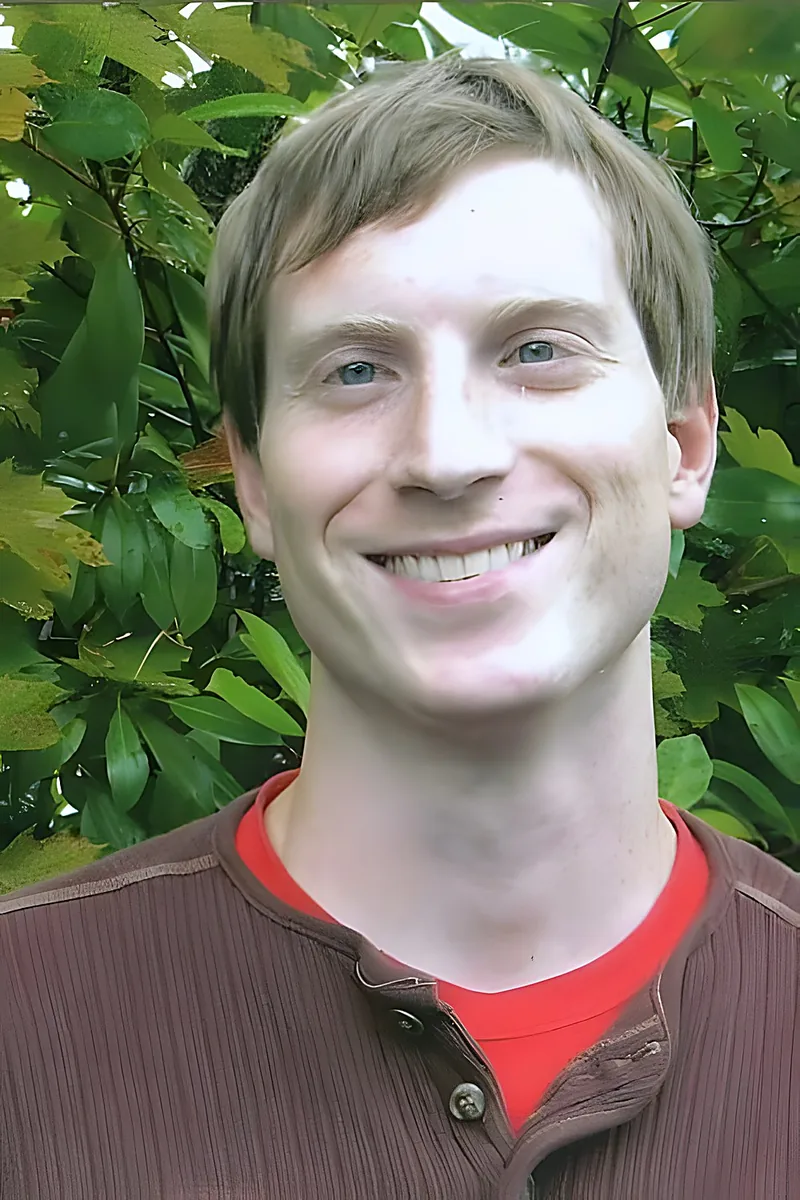
I am a Masters student in Physics at the University of Washington and have over 10 years of teaching and tutoring experience. Most recently, I worked as a teacher at the Yellow Wood Academy, a private high school that offers students a specialized one-on-one classroom environment. At YWA, I taught all high school science classes (including AP, Computer Programming, and Environmental Science) and all levels of high school math. In addition to my teaching and tutoring duties, I designed individualized lesson plans, curricula, homework assignments, and tests. Subjects I have successfully tutored Physics: all levels Chemistry: all levels high school, plus P-Chem, O-Chem Biology: all levels high school Math: all levels high school, plus Differential Equations, Statistics, some Group Theory. Standardized test preparation (incl. SAT, ACT, GRE, MCAT) Need help in another area? Just ask! While math and science are the subjects I am most passionate about, I am well-versed in many academic areas, and I may be able to help you.
Helping students in their education is my passion. I understand how frustrating it is to keep trying on understanding a concept or master a skill without getting a satisfying result. I aim to help students enjoy learning and acquiring knowledge. Always remember that knowledge is power, and nobody can take it from you. I have sufficient tutoring and teaching experience in secondary and post-secondary settings. I worked as a tutor at the University of Wisconsin Oshkosh. I tutored college students different courses in mathematics, physics, biology, chemistry, and psychology. Also, l worked as a graduate teaching assistant at Marquette University. I taught the laboratory part of general chemistry, analytical chemistry, and organic chemistry. Furthermore, l worked as a science teacher at different secondary schools. I taught science for grades 4,5,6, and 8. Also, l taught chemistry for grade 9. When it comes to my education, l have a bachelor degree in biology healthcare science and chemistry biomolecular science (double major). In addition, l have a master's degree in chemistry. I received my undergraduate education at the University of Wisconsin Oshkosh and my graduate education at Marquette University. I tutor for numerous subjects such as algebra, trigonometry, calculus, physics, organic chemistry, analytical chemistry, human anatomy, developmental biology, ecology, and biochemistry. Also, l tutor for the GRE, DAT, TOEFL, and IELTS. My favorite subjects are the math, physics, biology, and chemistry subjects because l, simply, enjoy these fields. My teaching philosophy and tutoring style are based on practicing with various examples. When you are confronted with numerous problems to solve, you become more confident in that subject area. As a result, better performance in quizzes and exams. Outside of academia, learning about other cultures and countries around the world is my interest.
Going through med school means Amanda has seen what happens when gen chem concepts like acid-base equilibria and reaction thermodynamics aren't truly understood — they unravel in biochemistry, pharmacology, and every clinical science that follows. She teaches college chemistry by grounding each topic in the bigger picture of where it leads, using her biology degree and 4.2 GPA from Alabama to zero in on the quantitative reasoning — electron configurations, enthalpy calculations, equilibrium expressions — that students need to own rather than just survive.
Cognitive Studies at Vanderbilt gave Vy an unusual angle on college chemistry — she understands how students actually learn and retain dense, concept-heavy material like electron configurations, equilibrium shifts, and thermodynamic laws, not just the content itself. She uses that awareness to structure explanations around how the brain organizes new information, which makes a real difference when a student is drowning in a fast-paced gen chem course. Holds a 5.0 rating.
Balancing redox equations, predicting reaction spontaneity with Gibbs free energy, working through equilibrium problems — these are the topics that trip up most college chemistry students. Laura tackles them daily as a biology major at WashU, where the pre-med chemistry sequence demands real fluency with thermodynamics, kinetics, and acid-base chemistry. Rated 5.0 by students, she breaks down quantitative problems into clear, logical steps.
I've been working with students for over seven years, from middle school all the way through college, across subjects like math, calculus, statistics, linear algebra, chemistry, and physics, with a lot of SAT and ACT prep mixed in. My background is perhaps a little unconventional. I have two bachelor's degrees, one in Engineering and one in Communication Studies, plus a Master's in Design. That combination means I can guide you through challenging technical material and communicate it in a way that is easy to grasp. What I care most about is helping students get to a place where they don't need me anymore. I know that sounds like a strange thing for a tutor to say, but I think it's the right goal. I'm not here to walk you through steps to copy down. I want you to understand why something works, because that's what holds up under pressure, on a test you haven't seen before. If you're ready to ace that test or prove that theorem that's been bugging you, reach out and let's work together
Second-year med student at Baylor College of Medicine, Michelle still remembers exactly which gen chem concepts — electron orbitals, buffer systems, reaction thermodynamics — became non-negotiable once biochemistry and physiology started building on them. Her Rice biochemistry degree means she learned college chemistry at a place where the coursework was rigorous enough to expose every shortcut that doesn't hold up, and she teaches accordingly: precise on the fundamentals so nothing collapses later.
Studying chemistry at Harvard while preparing for Columbia Medical School means James has taken college chemistry far past the introductory level — he knows which early concepts like electron configurations, VSEPR theory, and reaction stoichiometry quietly become load-bearing walls for everything from organic mechanisms to biochemical pathways. He teaches gen chem by flagging those high-stakes fundamentals early, so students aren't blindsided when later courses assume fluency. Rated 4.9 by students.
Decades of work as a PhD chemical engineer mean Steven has used gen chem concepts like reaction thermodynamics, equilibrium, and stoichiometry as professional tools — not exam topics he learned once and moved on from. He tackles tough problems by explaining the idea one way, then reframing it from a different angle, and grounding it with a practical example so the concept sticks from multiple directions. Rated 4.9 by students.
Fourth-year med student at Albert Einstein College of Medicine, Michael has been applying gen chem principles — acid-base chemistry, reaction thermodynamics, solution behavior — in clinical and biochemical contexts for years, which means he can explain not just how to solve a problem but where that concept resurfaces later. His biology degree from Yeshiva College (summa cum laude) and time teaching MCAT prep for Kaplan gave him practice breaking down the exact topics that trip up college chemistry students: stoichiometry setups, equilibrium expressions, and the leap from qualitative reasoning to quantitative problem-solving.
Working in Duke's Bilbo lab on neuroimmune interactions means Lauren applies gen chem principles — reaction kinetics, molecular polarity, acid-base behavior — in a research setting where getting the chemistry wrong has real consequences for experimental design. That hands-on context, paired with her neuroscience and chemistry coursework, gives her a practical read on which concepts students need to truly internalize versus which ones they're just memorizing long enough to pass the exam. Rated 4.8 by students.
Having taken the full gen chem sequence at Cornell alongside organic chemistry and upper-level biology coursework, Jonathan knows exactly where college chemistry concepts like electron configuration, VSEPR theory, and solution stoichiometry start causing problems — usually when the course shifts from memorizable rules to applied reasoning. His human biology background means he naturally ties chemical principles back to biological systems, which tends to click for the pre-med and life science students who make up most of his college chemistry sessions. Rated 4.9 by students.
Dual-majoring in biomedical and chemical engineering at Vanderbilt means William encounters gen chem concepts like reaction thermodynamics, equilibrium, and stoichiometry not as isolated textbook chapters but as tools he actively uses in engineering coursework — which gives him a sharp sense of what "good enough" understanding looks like versus what actually holds up under pressure. He scored a 5 on the AP Chemistry exam and now tackles college chemistry by connecting the molecular-level reasoning to the quantitative problem-solving, so students see why the math works instead of just memorizing setups. Rated 4.8 by students.
A bio-organic chemistry degree means Alex has lived through the full gen chem sequence and then pushed those concepts further — into reaction mechanisms, molecular orbital theory, and the quantitative problem-solving that upper-level chemistry demands. That depth shows up when tackling topics like chemical kinetics or periodic trends, where he can explain not just how to solve a problem but why the underlying chemistry behaves the way it does.
Testimonials
Because the right College Chemistry tutor makes all the difference.
Average Session Rating – Based on 3.4M Learner Ratings
Other Bremerton Tutors
Related Science Tutors in Bremerton
Frequently Asked Questions
Varsity Tutors matches Bremerton students with expert College Chemistry tutors for 1-on-1 instruction. We pair each student with a tutor based on their specific needs, learning style, and goals.
Whether you need homework help, exam prep, or want to get ahead, our College Chemistry tutors are ready to help.
Common challenges include gaps from earlier material, difficulty with specific concepts, and trouble applying learning to new problems. These issues can snowball quickly in College Chemistry.
A tutor identifies where you're stuck, fills in gaps, and provides targeted practice. The 1-on-1 format means you get help exactly where you need it.
Tutors work with your student's actual coursework—homework assignments, class notes, and upcoming tests. This keeps tutoring directly relevant to what's happening in the classroom.
When you share information about your student's school and curriculum, we can match you with a tutor who has relevant experience.
All tutors complete background checks, credential verification, and teaching evaluation. Many of our College Chemistry tutors hold advanced degrees or have years of teaching experience.
You can review tutor profiles to find someone with the right background for your student's level and needs.
Many students see improved grades within a few weeks, along with better understanding of College Chemistry concepts and more confidence tackling challenging material.
Tutors track progress and adjust their approach to ensure continued improvement.
Most students benefit from 1-2 sessions per week. More frequent sessions help if your student is significantly behind or has an important exam coming up.
Your tutor can recommend a schedule based on your student's specific situation and goals.
Tutoring is purchased in packages of hours, with rates varying by tutor experience. Varsity Tutors offers several options to fit different budgets and needs.
You can discuss pricing during your consultation to find what works best.
Your tutor will assess where your student is, discuss goals, and start working on priority areas. Most students bring current homework or upcoming test material to focus on.
By the end, you'll have a clear sense of how the tutor can help and a plan for moving forward.
Let’s find your perfect tutor
Answer a few quick questions. We’ll recommend the right plan and match you with a top 5% tutor.