Award-Winning College Physics Tutors
serving McAllen, TX
College Physics
Tutors in McAllen
Private 1-on-1 tutoring, weekly live classes for academic support, test prep & enrichment, practice tests and diagnostics, and more to elevate grades and test scores.
Based on 3.4M Learner Ratings
UniversitiesSchools & Universities
DeliveredHours Delivered
ProficiencyGrowth in Proficiency
Who needs tutoring?
No obligation. Takes ~1 minute.
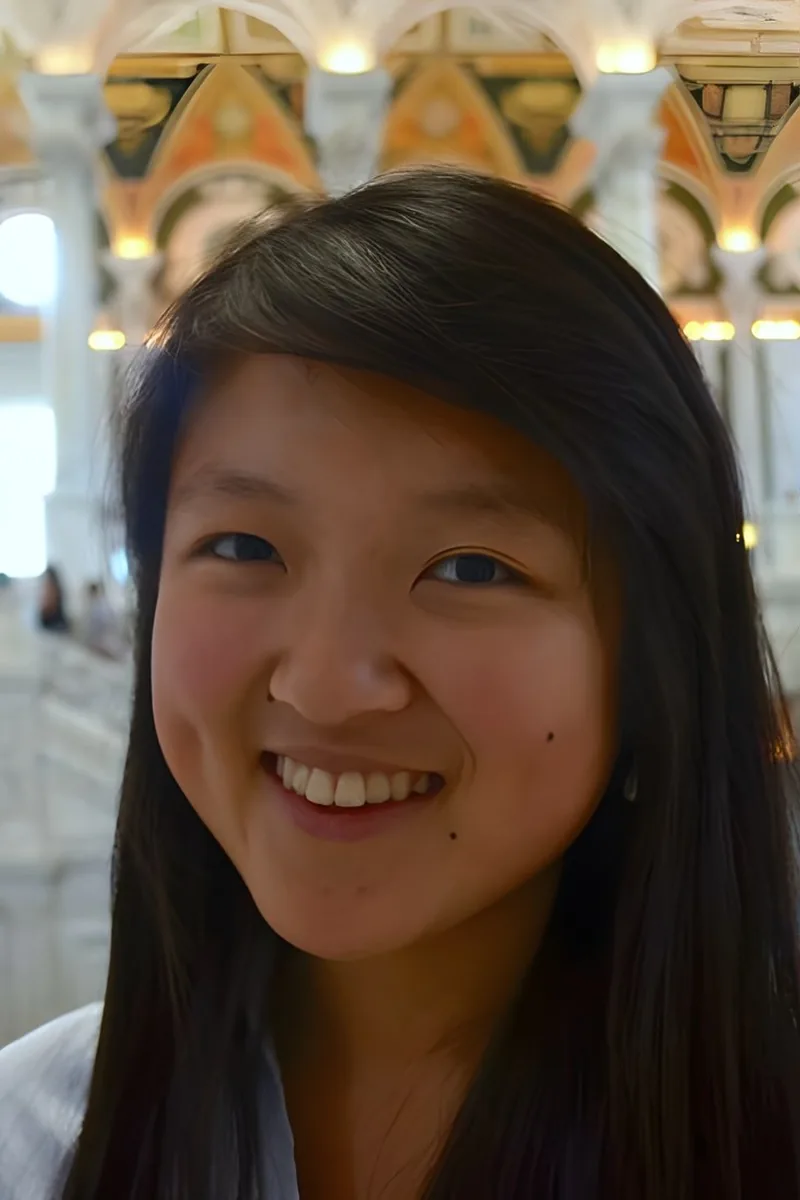
Pursuing an MD at Stanford after a double major in economics and molecular/cellular biology, Maggie brings a pre-med perspective to college physics that makes topics like optics, fluid dynamics, and wave mechanics feel immediately relevant rather than abstract. She's especially sharp at teaching students to set up problems cleanly — translating a physical scenario into the right free-body diagram or energy equation before doing any math. Rated 5.0 by students.
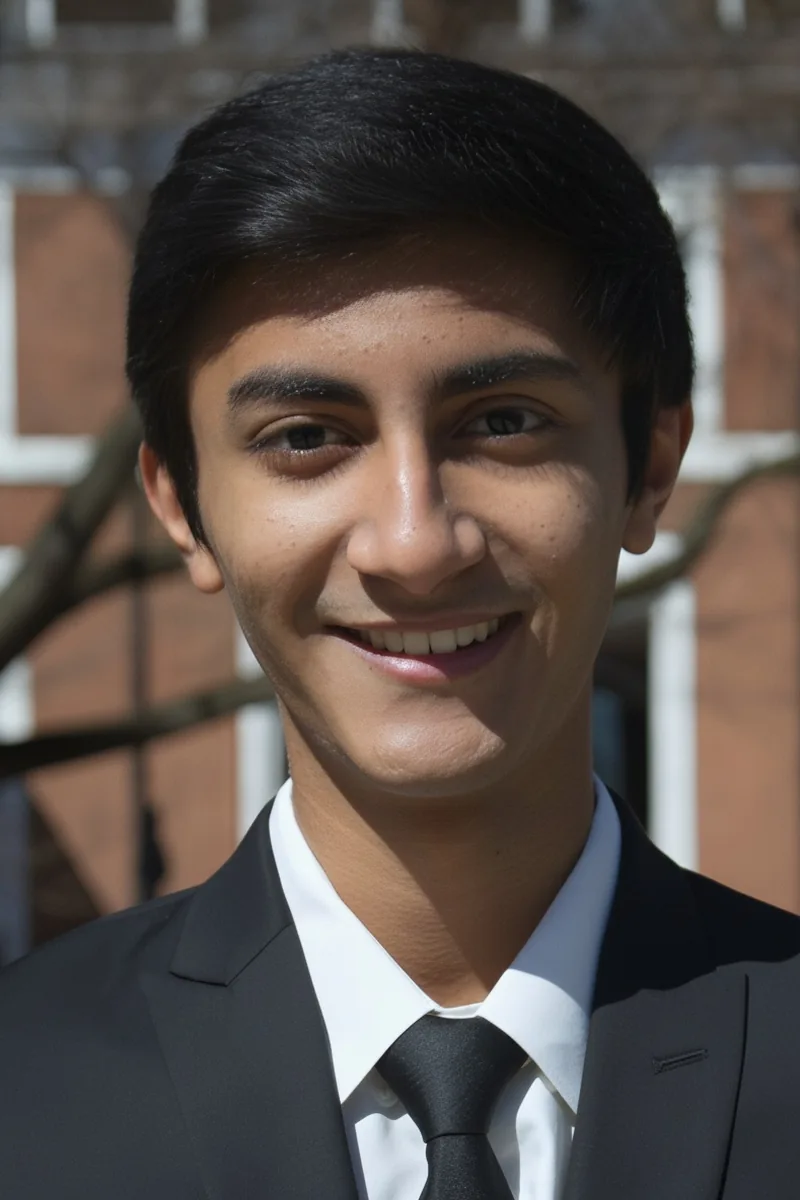
Bidyut's biomedical engineering coursework at Johns Hopkins means he tackles college physics problems — from rotational dynamics to electromagnetic induction — with the applied perspective of someone who uses these principles in lab and design work daily. He connects abstract force diagrams and circuit analyses to real engineering scenarios so the physics actually clicks. Rated 5.0 by students.
Studying biophysics at Rice means Aadith lives where physics and biology collide — modeling protein folding forces, analyzing fluid flow through membranes, applying thermodynamic principles to living systems — so he brings a concrete, research-informed perspective to the mechanics, waves, and electromagnetism that fill college physics syllabi. His 1590 SAT reflects serious quantitative chops, and his dual exposure to physics and biochemistry means he can walk through a tough problem from multiple angles until the reasoning clicks.
Two physics degrees — a B.S. and a PhD — mean Zhengdong has worked through every layer of the college physics sequence, from introductory Newtonian mechanics all the way to quantum theory and advanced electrodynamics. He's particularly effective at teaching students to translate a physical scenario into the right mathematical framework, whether that's setting up free-body diagrams in mechanics or applying Gauss's law to symmetric charge distributions. Rated 4.8 by students.
College-level physics ramps up fast — suddenly you're integrating to find electric flux or applying Lagrangian mechanics, and the plug-and-chug approach from high school breaks down. Raj's triple-science foundation at Rice gives him the calculus fluency and physical reasoning to unpack these tougher problem sets. He's especially sharp at teaching students to translate word problems into mathematical models.
Having completed the full IB Physics sequence and a biology degree at Texas A&M, Kinjal understands the crossover between life sciences and physics that trips up so many pre-med students in college-level courses — think fluid dynamics in biological systems or energy conservation in metabolic processes. She breaks down force diagrams, kinematics, and circuit analysis by tying each concept back to a concrete physical scenario. Rated 5.0 by students.
Jennifer's economics and biochemistry double major at Rice means she's currently knee-deep in the quantitative modeling and lab science that college physics draws from — optimization, differential analysis, and the physical principles behind biological systems. She tackles problem sets by teaching students to sketch the situation and identify governing principles first, turning intimidating multi-step problems into a clear sequence of smaller, solvable pieces. Rated 4.9 by students.
What makes John effective in college physics isn't a traditional engineering or physics degree — it's the fact that he teaches across calculus, AP Physics 1, AP Physics C: Mechanics, and IB Physics simultaneously, which means he's constantly translating the same core concepts (projectile motion, energy conservation, electric fields) across different levels of mathematical rigor. That range gives him an unusually clear sense of where the conceptual gaps are when a student can follow a derivation but can't set up the problem from scratch. Rated 4.9 by students.
Eight years of teaching math and science — as a TA, in small-group settings, and one-on-one — means Sungae has seen every way students get stuck on force diagrams, energy conservation, and rotational motion. Her doctorate in mechanical engineering from Texas Tech gave her deep fluency with the calculus-based physics that underpins those courses, from setting up integrals for moment of inertia to applying Newton's laws in non-trivial coordinate systems. She walks through each problem step by step, making sure the physical intuition clicks before moving on.
A biological and physical sciences degree means Mingee studied physics alongside chemistry and biology, which gives her a knack for explaining where these disciplines collide — think pressure in fluid systems, energy transfer in biological processes, or wave behavior in optics. She breaks down problem-solving into clear steps: sketch the scenario, identify the governing principle, then translate it into math. Rated 5.0 by students.
Biochemistry at Rice means Malcolm regularly applies physics principles that many pre-med students dread — thermodynamics governing reaction spontaneity, fluid dynamics in biological systems, and the electromagnetic basis of spectroscopy techniques he encounters in lab. He breaks college physics problems down by identifying the underlying concept first, then walking through the math, which keeps students from defaulting to equation-hunting. His 1520 SAT reflects the quantitative instincts he brings to calculus-based problem sets.
Bioengineering sits squarely at the intersection of physics and biology, so Casey's degree required serious fluency in mechanics, fluid dynamics, and electromagnetism — the exact topics that dominate college physics syllabi. She brings that applied perspective to problem-solving, connecting abstract force diagrams and energy equations back to physical systems like blood flow, biomechanical loading, and pressure gradients that make the concepts stick.
Before most students even start college physics, Michael had already completed two years of college coursework at the Texas Academy of Mathematics and Science, including the calculus and statistics that underpin force analysis, wave behavior, and energy methods. His statistics degree at Rice sharpens how he teaches error propagation and data interpretation in lab-based physics problems — skills that often get glossed over but show up on every exam. Rated 5.0 by students.
Chemical engineering coursework is essentially college physics with the stakes turned up — Jonathan spent four years applying fluid mechanics, heat transfer, and thermodynamics to reactor design and process modeling, so he knows these concepts at the level where they actually get used. He's particularly good at teaching students to translate a word problem into a free-body diagram or energy balance before touching an equation, which is usually where the real confusion lives.
A physics bachelor's degree means Logan has worked through the full sequence — classical mechanics, electromagnetism, waves, thermodynamics — with the mathematical rigor that college-level courses demand. He's particularly good at walking through the problem-setup phase, teaching students to sketch the physical situation and identify governing principles before jumping into algebra. That systematic approach keeps multi-step problems from feeling overwhelming.
A biology and anthropology background might not scream physics, but Anna's ACT score of 32 and her breadth across calculus, chemistry, and both high school and college physics means she's comfortable with the quantitative reasoning that ties force diagrams to real-world scenarios. She's particularly useful for pre-med and life-science students tackling physics requirements, since she naturally connects mechanics and thermodynamics concepts back to the biological systems those students already understand.
Biomedical engineering at Rice means Aurnab tackles college physics concepts daily — fluid dynamics in blood flow models, circuit analysis in biosensor design, mechanics in prosthetic systems — so the problems on a physics exam map directly to work he's already doing. He breaks down the calculus-heavy steps in topics like electromagnetic induction and rotational motion by connecting each derivation to the physical picture it represents. Rated 4.9 by students.
I am a graduate of UC San Diego with a Bachelors in Neuroscience through the Psychology department. After graduating, I went to Michigan Technological University and did some graduate work, before moving to Texas to be closer to my parents. I did my alternative certification program through Texas Teachers and am highly qualified to teach Science for grades 7-12. I have been a teacher in public and charter schools for the last four years, and have tutoring experience extending over ten years behind me as well.
I am a bit of a Swiss army knife. I can help you with math, programming, physics and a bunch of other courses. Other than homework and exams, you can ask me for help with projects or papers as well.
Chemical engineering at Rice meant David spent years applying physics to real systems — fluid flow through reactors, heat transfer across membranes, pressure-driven separations — so the mechanics and thermodynamics in college physics aren't abstract to him. Now a first-year medical student at Baylor, he's revisiting these concepts through a biological lens, which gives him a fresh way to explain everything from energy conservation to wave behavior. Rated 5.0 by students.
Studying architectural engineering in Texas A&M's Honors Program, Anne applies college-level physics daily — from statics and dynamics to electromagnetism. She digs into free-body diagrams, rotational equilibrium, and circuit analysis with students, emphasizing the problem-setup habits that separate students who understand the material from those just memorizing formulas.
Biochemistry coursework gave Nathaniel a working fluency with the physics that underpins biological systems — pressure gradients in fluid flow, energy conservation in metabolic processes, and the electrostatics behind molecular interactions — so he teaches college physics with an eye toward why these principles show up everywhere, not just on problem sets. His 33 ACT and 5.0 tutoring rating back up an approach that emphasizes careful problem setup: sketching the scenario, identifying the governing law, and only then reaching for equations.
Payton's computer science coursework at Texas A&M runs straight through the physics that CS students often underestimate — vectors in graphics engines, force simulations, and the calculus-based mechanics behind collision detection all show up in both disciplines. That dual fluency lets her translate abstract physics problems into the kind of logical, step-by-step reasoning that clicks for students who think in code. Rated 4.9 by students.
An applied physics degree means Christina didn't just study the theory behind mechanics, electromagnetism, and thermodynamics — she learned to apply those principles to real engineering-scale problems, which is exactly the leap college physics courses demand. She breaks down multi-step scenarios by isolating the physical principles first, then walking through the math, so students stop guessing at formulas and start reasoning through solutions. Rated 4.9 by students.
Having served as a Teaching Assistant for several college Physics courses, Alicia breaks down topics like electromagnetism, thermodynamics, and mechanics by connecting them to tangible engineering and architectural problems. Her dual background in materials science and architecture means she can explain stress-strain relationships or wave behavior through real structures students can visualize. Rated 5.0 by students.
Biomedical engineering at Texas A&M means Whitney's college physics training came with immediate application — analyzing forces on prosthetic joints, modeling fluid flow through arterial stents, calculating electrical signals in biosensors — so she teaches mechanics and electromagnetism as tools that do something, not just equations on a problem set. Her 35 ACT and 5.0 tutoring rating back up the quantitative chops she brings to calculus-based problem solving.
I am a graduate of Georgetown University where I earned my Bachelor of Science degree in International Politics with a concentration on Foreign Policy. I also earned a Certificate in Latin American Studies and am a member of Pi Sigma Alpha, The National Political Science Honor Society. I have experience tutoring students in both the SAT and the SSAT. Additionally, my time as an 8th Grade Science teacher here in Dallas has prepared me for the curriculum and challenges facing students in the area. While I offer tutoring in a broad range of subjects from foreign languages to grammar and writing to math and science, I find Physics to be the most enjoyable subject to teach. I see Physics as the science that allows all the other sciences to occur, and I find it helpful to use Physics demonstrations when studying the subject. When it comes to tutoring, I believe that whoever is doing the talking is doing the learning, so my students will be doing the leg work when it comes to their learning. I believe that every student can achieve success in school; each student just learns at their own pace and in their own way. When I have free time, I enjoy reading a good book, playing a game of tennis, or participating in or watching theatrical events.
Fourteen AP courses and then a full biochemistry degree at Texas A&M means Gabriel learned physics concepts like kinematics, energy conservation, and wave behavior multiple times from multiple angles — so when a student's textbook explanation isn't clicking, he can reframe the same idea through a different lens. That adaptability shows up in his 5.0 rating and in his comfort moving between the algebra-based and calculus-based versions of introductory physics. His 33 ACT reflects the quantitative fluency that keeps problem-solving efficient under pressure.
Working as an engineer in Fort Worth, Nate applies physics principles daily — from force analysis and energy methods to fluid and thermal systems — which keeps the material fresh and grounded in practice. He teaches problem setup as a skill in itself, showing students how to translate a word problem into a free-body diagram or energy equation before any numbers get involved. Rated 5.0 by students, with a 34 ACT to back up his quantitative chops.
Premed coursework means Ehigbor has tackled the full sweep of introductory physics — mechanics, waves, optics, electricity — with the added pressure of needing those concepts to stick for the MCAT down the line. She zeroes in on free-body diagrams and energy conservation setups, teaching students to sketch out the physics of a situation before hunting for equations. Rated 5.0 by students.
Mechanical engineering at UT Austin means Shroothi's daily coursework is essentially college physics with the stakes turned up — she's solving force balance problems, modeling energy transfer in thermal systems, and applying Newton's laws to real machine components. That hands-on engineering context makes her especially effective at teaching students how to set up free-body diagrams and choose the right conservation law before diving into calculations. Rated 5.0 by students.
Electrical and computer engineering at Rice means Omar lives in the physics — circuit analysis, electromagnetic fields, signal propagation — and then turns around and explains it to undergrads as a lab assistant and grader for the engineering department. That dual role of learning and teaching keeps him sharp on the calculus-based fundamentals (Kirchhoff's laws, Maxwell's equations, AC/DC circuit behavior) that tend to blindside students who thought mechanics was the hard part. Rated 5.0 by students.
College-level physics ramps up the mathematical rigor significantly, layering calculus-based derivations onto concepts students may have only seen algebraically before. Richard digs into the transition from introductory mechanics and electromagnetism to the more formal treatments, making sure the underlying physics reasoning keeps pace with the increasing math demands.
Biochemistry at UT Austin means Don regularly applies physics principles — fluid dynamics in biological systems, thermodynamics driving chemical reactions, optics in lab instrumentation — so he knows which concepts actually show up beyond the physics classroom. He breaks down force problems and energy calculations by connecting them to the molecular-scale reasoning his major demands, giving students a concrete anchor for abstract equations. Holds a 5.0 rating.
Studying natural science at Johns Hopkins meant Chikaneme worked through the full sequence of calculus-based physics alongside pre-med and engineering students, covering everything from Newtonian mechanics to electromagnetic waves in courses designed to be unforgiving. His economics training adds a surprisingly useful layer — he's comfortable building quantitative models and thinking through multi-variable systems, which translates directly to setting up and solving complex force or energy problems. Holds a 5.0 rating.
Miguel's computer science degree trained him to decompose complex systems into smaller, solvable pieces — the same skill that turns a daunting college physics problem involving pulleys, friction, and inclined planes into a clean sequence of force equations. He pairs that algorithmic thinking with strong calculus fundamentals to walk through the math-heavy sections of mechanics and electromagnetism without skipping steps. Rated 4.9 by students.
Biomedical engineering at UT-Austin means Shyon is knee-deep in calculus-based physics every semester — mechanics of biological systems, fluid dynamics in tissues, electrical signals in circuits that model the human body. That daily immersion gives him a practical grip on the force diagrams, energy methods, and wave concepts that dominate college physics problem sets. Rated 5.0 by students.
Bioinformatics sits squarely at the crossroads of biology, chemistry, and the quantitative reasoning that drives college physics — Hamza's degree required him to think in terms of energy landscapes, molecular forces, and statistical mechanics long before those topics appeared on a problem set. He breaks down the problem-setup phase that most students rush through, teaching them to identify governing principles like Newton's laws or conservation of energy before touching an equation. His 1600 SAT underscores the mathematical precision he brings to calculus-based physics problems.
A biochemistry and economics double major who scored a 35 ACT, Murtuza tackles college physics problems the way he learned to in quantitative coursework — by building a clear model of what's happening before plugging into equations. His biochemistry background gives him a practical grip on topics like optics, fluid dynamics, and thermodynamics, since those concepts showed up constantly in lab settings where getting the physics wrong meant getting the experiment wrong.
At the college level, physics problems demand comfort with calculus-based reasoning — deriving equations of motion, applying Gauss's law with surface integrals, or solving differential equations for circuit behavior. Daniel's physics degree put him through all of these, and he walks students through the mathematical scaffolding so the physics itself stays visible underneath the math.
Testimonials
Because the right College Physics tutor makes all the difference.
Average Session Rating – Based on 3.4M Learner Ratings
Nearby College Physics Tutors
Other McAllen Tutors
Related Science Tutors in McAllen
Frequently Asked Questions
College Physics students often struggle with translating abstract theoretical concepts—like forces, energy, and motion—into real-world applications. Many find unit conversions and dimensional analysis challenging, and connecting mathematical problem-solving to the underlying physics principles can be difficult. Personalized 1-on-1 instruction helps students build conceptual understanding rather than just memorizing formulas, which is essential for success in College Physics and beyond.
Tutoring supports lab work by helping you understand the scientific method, design experiments, and interpret data meaningfully. Expert tutors can clarify the physics concepts behind each experiment, help you troubleshoot unexpected results, and strengthen your ability to write clear lab reports that connect observations to theory. This deeper understanding makes lab sessions more productive and helps you develop genuine scientific reasoning skills.
Effective problem-solving in College Physics starts with identifying what concepts apply to the situation, then setting up equations strategically rather than jumping straight to calculations. Tutors help you develop a systematic approach: drawing diagrams, defining variables, checking units, and verifying that your answer makes physical sense. With practice and guidance, this methodical thinking becomes second nature and transfers to more complex problems throughout the course.
Many College Physics concepts—like electric fields, momentum, and wave behavior—are easier to grasp when you can see them in action. Tutors use diagrams, simulations, and real-world examples to make invisible forces and processes tangible. For students in McAllen, personalized instruction means you can work at your own pace until concepts click, building the mental models that help you solve unfamiliar problems confidently.
Effective exam prep goes beyond reviewing notes—it requires practice testing, identifying weak areas, and understanding *why* you missed problems. Tutors help you create a focused study plan, work through challenging problem types, and build confidence in your reasoning. Starting prep early and spacing out your study sessions (rather than cramming) leads to better retention and stronger performance on exam day.
Your first session is a chance to connect with a tutor and identify your specific needs—whether you're struggling with particular topics, preparing for an exam, or working to improve your overall grade. The tutor will assess your current understanding, learn about your learning style, and create a personalized plan tailored to your goals. From there, you'll focus on the concepts and problems that matter most to your success.
Varsity Tutors connects you with expert tutors who have deep knowledge of College Physics content and proven teaching experience. These tutors understand both the material and how to explain complex concepts clearly—they know where students typically get stuck and how to guide you through those challenging areas. Each tutor brings their own expertise and teaching style, so you get instruction tailored to how you learn best.
Many students notice improvement within the first few sessions as concepts become clearer and problem-solving strategies start to click. Consistent tutoring over several weeks builds deeper understanding and confidence, especially if you're working on multiple challenging topics. The timeline depends on your starting point and goals, but personalized instruction accelerates learning by focusing directly on what you need most.
Let’s find your perfect tutor
Answer a few quick questions. We’ll recommend the right plan and match you with a top 5% tutor.