Award-Winning Geometry Tutors
serving McAllen, TX
Geometry
Tutors in McAllen
Private 1-on-1 tutoring, weekly live classes for academic support, test prep & enrichment, practice tests and diagnostics, and more to elevate grades and test scores.
Based on 3.4M Learner Ratings
UniversitiesSchools & Universities
DeliveredHours Delivered
ProficiencyGrowth in Proficiency
Who needs tutoring?
No obligation. Takes ~1 minute.
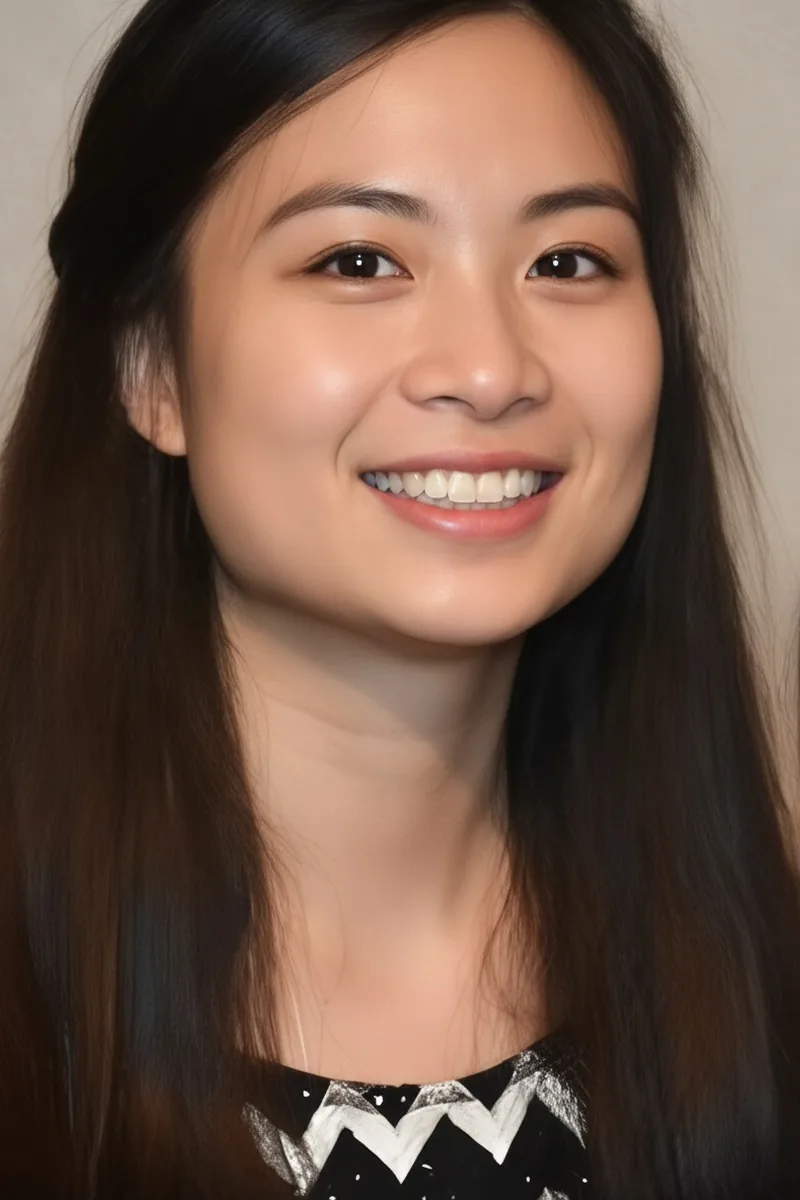
Proofs trip up a lot of Geometry students because they require a completely different kind of thinking — constructing logical arguments instead of just computing answers. Michelle approaches proofs and spatial reasoning the way she approaches scientific problems: systematically, breaking each claim into smaller pieces until the conclusion becomes obvious.
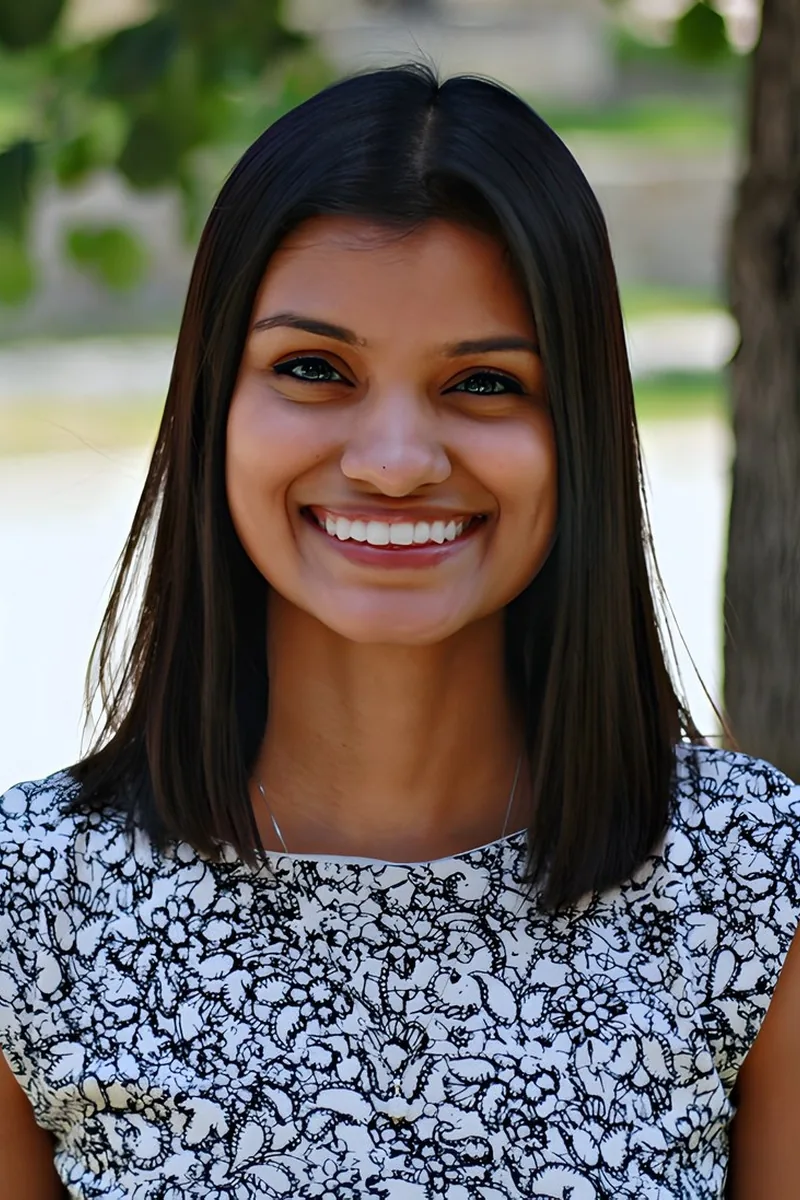
Cognitive science — Sugi's major at Rice — is fundamentally about how people build mental models, and geometry is one of the few math subjects where that matters enormously: students who can't visualize a rotation or mentally decompose a figure into simpler shapes will struggle no matter how many theorems they memorize. Sugi teaches the visualization first, then layers in the formal reasoning for congruence, similarity, and circle properties so that proofs feel like describing something you can already see. Rated 5.0 by students.
Proofs are usually where geometry goes from manageable to frustrating — suddenly students need to justify every step with logic instead of just calculating angles. Maggie approaches proof-writing as a skill closer to constructing an argument than solving an equation, a perspective sharpened by her dual background in science and the liberal arts. She also covers coordinate geometry, triangle congruence, and circle theorems with the same emphasis on reasoning over rote steps.
Proofs are usually where geometry students panic, but they're really just logical arguments written in a specific format. Mackenzie teaches students to read a diagram like a puzzle — identifying congruent triangles, parallel-line angle relationships, or circle theorems before ever picking up a pencil. That visual-first strategy makes even two-column proofs and coordinate geometry problems feel approachable.
Proofs are where most geometry students get stuck — the leap from calculating angles to constructing logical arguments feels like a different subject entirely. Jonathan breaks that transition down by teaching students to identify given information, spot congruence relationships, and build each proof step by step. His 4.9 rating speaks to how well that structured approach clicks.
Proofs are usually the moment geometry stops feeling intuitive and starts feeling impossible. Aditi teaches students to read a diagram like a puzzle — identifying congruent triangles, parallel-line angle relationships, or circle theorems before writing a single statement. Her science background at Rice also means she naturally connects geometric reasoning to real spatial problems.
Proofs are usually the make-or-break moment in geometry, and Carter treats them as logic puzzles rather than rote exercises. He walks through each proof by identifying what's given, what's needed, and which theorem bridges the gap — a structured reasoning style he honed studying philosophy and applied math at Brown. Students consistently rate him 5.0.
Proofs are usually where Geometry students hit a wall — the jump from calculating angles to constructing logical arguments feels like a completely different subject. Meagen's English background actually gives her an edge here, since she's trained in building structured, evidence-based arguments. She applies that same reasoning framework to two-column proofs, triangle congruence, and geometric logic.
Proofs trip up a lot of geometry students because they demand a completely different kind of thinking — logical reasoning instead of computation. Jessy tackles this by teaching students to map out their reasoning visually before writing a single line of proof. She also covers the computational side, from triangle congruence to circle theorems, with an emphasis on understanding why each formula works.
Proofs are usually the make-or-break topic in Geometry, and most students struggle because they've never been asked to build a logical argument in math before. Vinson treats each proof as a puzzle: identify what's given, figure out what tool applies (congruence postulates, parallel-line theorems, similarity criteria), and chain the steps together. That structured thinking comes naturally from his computational math training at Rice.
Teaching Calculus I & II and Organic Chemistry as a TA at Rice means Sakibul has spent years explaining abstract ideas through diagrams and spatial models — skills that translate directly to geometry, where a well-labeled figure often unlocks an entire proof. His applied mathematics background gives him a knack for connecting geometric concepts like circle theorems and polygon properties back to the algebraic reasoning students already know, making new material feel less like a separate subject and more like an extension of familiar tools.
Proofs are usually where geometry students panic, because suddenly math asks them to build logical arguments instead of just computing answers. Layla approaches proofs the way her engineering training taught her to approach design problems: identify what you know, figure out what you need, and map a path between them. She also digs into congruence, similarity, and circle theorems with the same structured thinking.
The IB program's emphasis on mathematical reasoning — where you can't just memorize formulas but have to justify every step — gave Kinjal a deep comfort with the kind of structured thinking geometry demands. She unpacks circle theorems, polygon properties, and geometric constructions by tying each one back to the underlying logic, so students see why a proof works rather than just mimicking its format. Rated 5.0 by students.
I am most passionate about biology and chemistry. I am a firm proponent of education, believing it to be absolutely necessary for an improved quality of life, and I try to impart this appreciation to all of my students.
Working in a UTHealth research lab, Emily reads molecular structures and cell diagrams all day — skills that translate directly to interpreting geometric figures, identifying relationships between shapes, and reasoning through spatial problems. Her triple-science background in biochemistry and cell biology means she approaches topics like symmetry, congruence, and properties of polygons with the same precision she brings to analyzing lab data.
Proofs are where most geometry students freeze — the jump from calculating angles to constructing logical arguments feels completely different from earlier math. Kenan teaches proof-writing as a step-by-step reasoning skill, connecting each theorem back to the spatial intuition students already have from working with shapes and diagrams.
Most geometry struggles actually start with not knowing how to read a diagram — which angles matter, which sides correspond, what information is hiding in plain sight. Molly's editing background (she worked on multiple newspapers) trained her to extract key details from cluttered material, and she applies that same close-reading instinct to breaking down geometric figures before jumping into any calculations or proofs.
Proofs tend to be the sticking point in Geometry, where students suddenly need to justify each step rather than just compute an answer. Eric approaches proof-writing the way he approaches essay structure in his English major at Dartmouth: every claim needs evidence, and every line should logically follow the last. That framework turns intimidating two-column and paragraph proofs into a manageable skill.
Proofs are often the first time a math class asks students to explain their reasoning rather than just compute an answer, and that shift trips up a lot of geometry students. Kendall teaches a structured approach to two-column and paragraph proofs while also covering the spatial reasoning behind angle relationships, congruence, and similarity. She treats each theorem as a tool to understand, not just a formula to apply.
Proofs are usually the first time a math student has to explain *why* something is true, not just show that it works — and that's where Geometry gets intimidating. John teaches students to build logical arguments step by step, whether they're proving triangle congruence or working through circle theorems, so the reasoning becomes a tool rather than an obstacle.
Proofs are often the first time students have to build a logical argument in math, and David's training in formal reasoning — across computer science and graduate work at Columbia and UChicago — translates directly to teaching students how to structure geometric proofs step by step. He also tackles the spatial reasoning behind congruence, similarity, and circle theorems, making sure students understand the 'why' behind each property.
Biochemistry might seem far from geometry, but Malcolm's Rice coursework in molecular structure — where visualizing 3D shapes, bond angles, and spatial arrangements is constant — built exactly the kind of spatial intuition that makes geometric reasoning click. He tackles the subject from the measurement and logic side, teaching students to set up problems involving circles, arc lengths, and sector areas with the same precision he brings to lab work.
Proofs are where most geometry students stall — not because the logic is hard, but because nobody taught them how to organize what they already see. James breaks down two-column and paragraph proofs into a repeatable process, connecting angle relationships and congruence theorems to visual reasoning. His triple-science background means he treats geometry as a tool for thinking, not just a set of formulas to memorize.
Most geometry struggles Kim sees aren't really about geometry — they're about a student not realizing which earlier concept (ratios, equation-solving, spatial vocabulary) is actually blocking them. Her approach is diagnostic: she pinpoints the specific gap first, then rebuilds the connection so that topics like triangle congruence or circle theorems stop feeling like guesswork. Rated 5.0 by students.
Proofs are usually the first thing that makes geometry feel different from every math class before it — suddenly students need to justify each step with a theorem, not just get the right number. Katelyn walks students through the logic of two-column and paragraph proofs while also strengthening their spatial reasoning for problems involving congruence, similarity, and circle theorems.
Art history is essentially a geometry education in disguise — Sarah spent years at Vanderbilt analyzing perspective lines in Renaissance paintings, symmetry in Islamic tile patterns, and the proportional systems architects use to design everything from cathedrals to modern museums. That trained eye for spatial relationships translates directly when she teaches students to reason through properties of shapes, angle relationships, and geometric constructions.
Proofs are what make geometry unique in a high school math sequence, and they're also what makes students panic. Jacob, a pure math PhD student whose entire field runs on proof-writing, teaches students to build geometric arguments step by step — from setting up given information to choosing the right congruence theorem to close the logic.
Proofs are usually the first place geometry students feel lost, because suddenly math asks them to argue logically instead of just compute. Michael approaches geometric reasoning as a form of structured writing — each step needs a clear justification, whether it's proving triangle congruence or working through circle theorems. His background in both math and writing at Rice makes him especially effective at teaching students to build those logical chains.
Proofs are usually the first place geometry students hit a wall — suddenly math requires structured logical arguments instead of just calculations. Casey walks through each proof by identifying what's given, what's needed, and which theorem connects the two, turning an intimidating format into a repeatable process. She also covers the spatial reasoning side, from triangle congruence to circle theorems, with a visual approach shaped by her engineering training.
Proofs are where most geometry students panic — the leap from calculating angles to constructing a logical argument feels enormous. Samantha approaches proof-writing as a thinking skill rather than a formula, walking through each statement-reason pair until the structure becomes second nature. Her background spans everything from elementary math to differential equations, so she connects geometric reasoning to the bigger mathematical picture.
Proofs are usually where Geometry students panic, but they're essentially just logical arguments built one step at a time — something Chelsea does constantly as an engineering major. She tackles everything from triangle congruence and circle theorems to coordinate geometry, emphasizing how to structure reasoning so that proofs feel like puzzles rather than mysteries.
Proofs trip up a lot of geometry students because they require a completely different kind of thinking — constructing a logical argument rather than computing an answer. Mohamed, who also tutors writing and literature, brings that same attention to structured reasoning when he tackles congruence proofs, circle theorems, and coordinate geometry. He teaches students to read a diagram like an engineer reads a blueprint: systematically, one relationship at a time.
Proofs are usually the first place geometry students panic — the idea of building a logical argument from postulates and theorems feels completely different from plugging numbers into formulas. Thomas tackles proofs by teaching students to map out their reasoning before writing anything formal, turning a intimidating process into a step-by-step puzzle. His 5.0 rating speaks to how well that structured approach lands.
Proofs are usually where geometry students panic, because suddenly math requires structured written arguments instead of just calculations. Claire's background on Notre Dame's mock trial team means she thinks naturally in terms of building logical cases from evidence — a skill that translates directly to two-column and paragraph proofs. She also covers triangle congruence, circle theorems, and coordinate geometry.
Between her finance degree and pre-med coursework at NYU, Hanna built the kind of precise, step-by-step reasoning that geometry rewards — especially in problems where students need to chain together properties of parallel lines, triangle congruence, and circle theorems to reach a conclusion. Her experience teaching self-contained 4th grade in Houston ISD also means she's sharp at spotting when a geometry struggle is really an unfinished conversation about fractions, ratios, or basic measurement from earlier grades.
From angle relationships in parallel lines to triangle congruence proofs, geometry asks students to think spatially and argue logically in ways other math courses don't. Jackson's civil engineering background is built on geometric reasoning — calculating load paths, analyzing structural shapes — and he brings that intuition to every proof and construction problem.
Proofs are usually the first place geometry students feel lost, because the class suddenly asks them to justify every step instead of just computing an answer. Daniel approaches proofs as logical storytelling — each statement follows from the last — and connects triangle congruence, parallel-line theorems, and circle properties to the spatial reasoning he uses in mechanical engineering design.
Chemical engineering at Rice meant David spent years working with reactor geometries, flow cross-sections, and three-dimensional spatial models — the kind of applied geometric reasoning that makes concepts like surface area, volume, and cross-sectional analysis feel concrete rather than abstract. As a current medical student at Baylor, he also brings anatomical spatial thinking to the table, which gives him a unusually practical way of explaining why geometric relationships matter. Rated 5.0 by students.
Proofs trip up a lot of geometry students because they require a completely different kind of thinking than computation does. Andrew tackles this by walking through the reasoning behind angle relationships, triangle congruence, and parallel-line theorems until students can construct arguments on their own. His 5.0 rating speaks to an example-first teaching style that turns abstract geometric logic into something students can see and follow.
Public policy analysis at Duke requires building structured, evidence-based arguments — a skill Christopher applies directly to geometric proofs, where each statement needs a clear justification before the next one follows. His minors in English and History reinforce that argumentative rigor, making him especially effective at teaching students how to organize two-column and paragraph proofs around congruence, similarity, and circle theorems.
Testimonials
Because the right Geometry tutor makes all the difference.
Average Session Rating – Based on 3.4M Learner Ratings
Practice Geometry
Free practice tests, flashcards, and AI tutoring for Geometry
Nearby Geometry Tutors
Other McAllen Tutors
Related Math Tutors in McAllen
Frequently Asked Questions
Many students struggle with the transition from algebra to geometry's visual and logical reasoning demands. Common pain points include understanding proofs, visualizing 3D shapes, applying theorems to word problems, and connecting abstract concepts like angles and congruence to real-world applications. With McAllen's average class sizes around 18 students per teacher, personalized 1-on-1 instruction can help students work through these concepts at their own pace and build the conceptual understanding that classroom instruction alone may not provide.
Proofs require both logical thinking and clear communication—skills that develop best with guided practice and feedback. Expert tutors help students understand the reasoning behind each step, not just memorize proof formats, and teach strategies for approaching different proof types (two-column, paragraph, coordinate). With personalized instruction, students learn to see the logical connections between given information and conclusions, building confidence in this challenging area.
The first session focuses on understanding your student's current level, learning style, and specific challenges—whether that's struggling with angle relationships, coordinate geometry, or proof writing. Tutors will review recent assignments or tests to identify gaps and develop a personalized plan aligned with your student's school curriculum. This foundation ensures that tutoring directly supports what's being taught in the classroom.
Geometry curricula can vary between McAllen's school districts and individual schools, with different textbooks emphasizing different approaches. When you connect with a tutor through Varsity Tutors, you can share your student's specific curriculum, textbook, and current unit of study so the tutor can tailor lessons accordingly. This ensures practice problems, examples, and teaching methods match what your student is learning in class.
Word problems require students to translate real-world scenarios into geometric concepts, identify relevant information, and apply theorems—a multi-step process that combines reading comprehension with mathematical reasoning. Tutors teach problem-solving strategies like drawing diagrams, breaking problems into smaller steps, and checking whether answers make sense geometrically. With consistent practice and feedback, students develop the confidence to tackle unfamiliar problem types.
Math anxiety often stems from feeling lost or making mistakes in a fast-paced classroom. One-on-one tutoring creates a low-pressure environment where students can ask questions, make mistakes safely, and see themselves succeed on progressively harder problems. Tutors help students recognize patterns, understand the 'why' behind concepts, and celebrate progress—all of which rebuild confidence and shift the relationship with math from frustration to curiosity.
Visual-spatial skills are core to geometry, and some students need more hands-on support to develop them. Expert tutors use multiple approaches—sketching diagrams, using manipulatives, rotating shapes mentally, and connecting 2D and 3D concepts—to help students build spatial intuition. Over time, students learn to visualize geometric relationships and apply them to solve problems, turning a weakness into a strength.
Look for tutors with strong geometry knowledge who can explain concepts clearly and adapt to different learning styles. When you connect with tutors through Varsity Tutors, they're vetted professionals experienced in helping students master geometry at all levels. You can discuss their background with specific geometry topics, their experience with your student's school or curriculum, and their approach to building both skills and confidence.
Let’s find your perfect tutor
Answer a few quick questions. We’ll recommend the right plan and match you with a top 5% tutor.