Award-Winning Statistics Graduate Level Tutors
serving El Paso, TX
Statistics Graduate Level
Tutors in El Paso
Private 1-on-1 tutoring, weekly live classes for academic support, test prep & enrichment, practice tests and diagnostics, and more to elevate grades and test scores.
Based on 3.4M Learner Ratings
UniversitiesSchools & Universities
DeliveredHours Delivered
ProficiencyGrowth in Proficiency
Who needs tutoring?
No obligation. Takes ~1 minute.
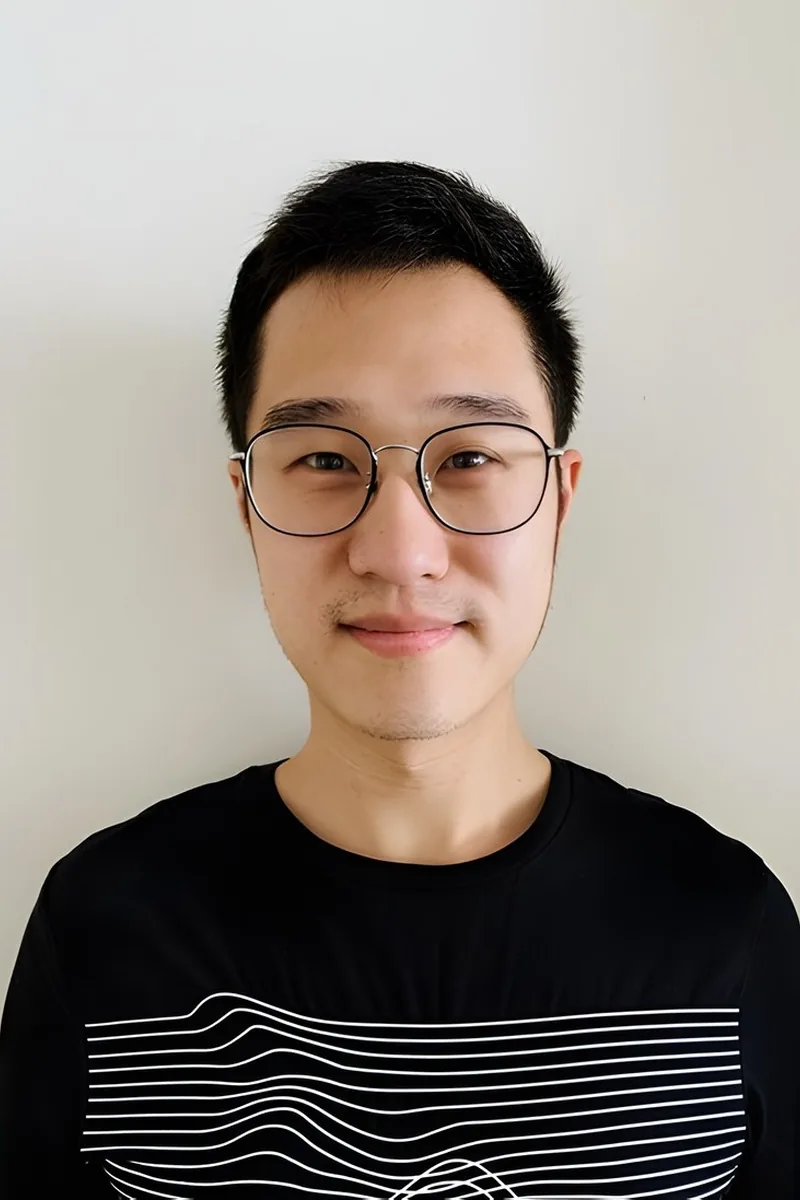
Graduate-level statistics demands fluency with concepts like maximum likelihood estimation, Bayesian inference, and multivariate distributions that go far beyond introductory coursework. Yuanxin's master's in financial engineering at USC required exactly this depth — she built and analyzed stochastic models where getting the statistics wrong meant getting the entire financial model wrong.
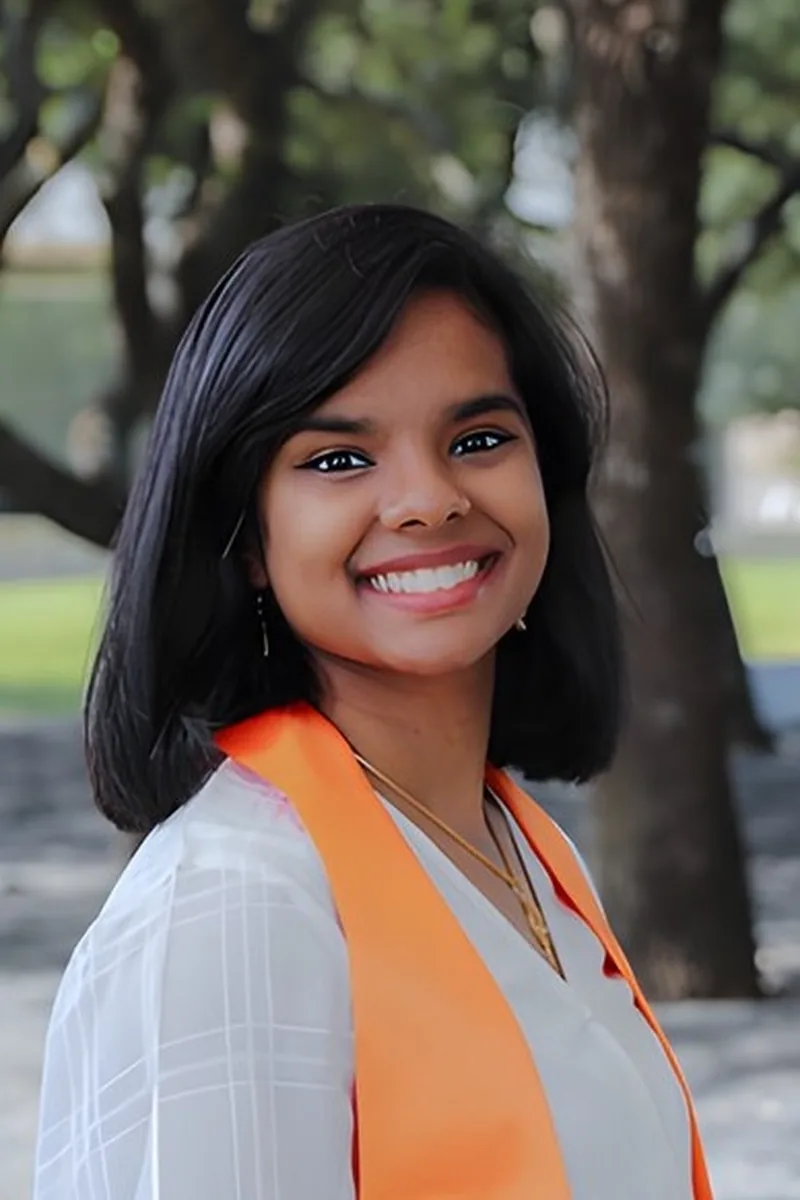
Graduate-level statistics demands more than running tests — it requires understanding why you'd choose a mixed-effects model over a fixed-effects one, or when bootstrapping outperforms parametric assumptions. Snipta's computer science and cognitive science training at UT Dallas, plus hands-on research at the National Institutes of Health, means she's applied techniques like Bayesian inference and multivariate regression to real datasets, not just textbook exercises.
Graduate-level statistics demands more than plugging data into software — it requires understanding why you'd choose a Cox regression over a logistic model, or when maximum likelihood estimation breaks down. Naushaba's Master's in Epidemiology means she learned these methods by applying them to real research questions, from survival analysis to multivariate modeling. She teaches the reasoning behind each technique so students can defend their statistical choices in dissertations and publications.
Graduate-level statistics throws students into multivariate analysis, ANOVA designs, and regression modeling where the intuition behind each test matters as much as running it. Macklin applies these methods daily as a medical student analyzing clinical research data, so he teaches the reasoning behind choosing a test — not just the formulas. Rated 5.0 by students.
I am currently finishing my thesis. For the past two years I was an adjunct instructor at The City College of New York, teaching statistics and introductory neuroscience, where I learned the importance of communicating complicated concepts clearly at an individualized level. All of my classes performed above average, and I discovered how satisfying it is to help people understand difficult ideas. I've found that by creating a good rapport with my students I am able to more effectively impart difficult concepts to them while causing them less stress. My passion is people, which first led me to study psychology, leading to my work in statistics, and later into teaching.
Graduate-level statistics demands comfort with concepts like maximum likelihood estimation, ANOVA designs, and regression diagnostics that go well beyond introductory coursework. Sasha's training in both biology and science education gives her a practical lens for these methods — she connects statistical theory to real research applications, which is especially useful for grad students analyzing their own data.
Graduate-level statistics is where psychology and research methods collide, and Jessi has lived that intersection — her psychology degree from Rice and ongoing bioethics work at UPenn mean she's run regressions, interpreted ANOVA tables, and designed studies with real data. She breaks down concepts like multivariate analysis and hypothesis testing by grounding them in the research contexts where they actually matter.
Graduate-level statistics lives and dies in the details — knowing when to apply a two-way ANOVA versus a mixed-effects model, or interpreting interaction terms in a multivariate regression. William's MBA training grounded him in applied statistical methods, from hypothesis testing and confidence intervals to the kind of real-world data analysis that thesis committees actually scrutinize. He breaks down output from SPSS or Excel so students understand what every p-value and coefficient truly means.
Graduate-level statistics throws students into maximum likelihood estimation, Bayesian inference, and multivariate analysis — territory where intuition from introductory courses often breaks down. Irene holds a Ph.D. in Mathematics and Computer Science, which means she can unpack the measure-theoretic foundations behind concepts like convergence in distribution or sufficiency. She's particularly effective at bridging the gap between abstract proofs and applied problem sets.
Graduate-level statistics demands fluency with techniques like regression modeling, ANOVA, and hypothesis testing frameworks that go well beyond introductory coursework. Scott applies these methods actively in his doctoral research at NYU, where he analyzes complex datasets on human development — so he can walk through both the theory and the practical decision-making behind choosing the right analysis for a given research question.
Graduate-level statistics demands comfort with mathematical proofs and distributional theory that go far beyond introductory courses — maximum likelihood estimation, Bayesian inference, and multivariate analysis all require real mathematical maturity. Yasaman's Ph.D. research in Electrical and Computer Engineering at McMaster has her working with advanced statistical methods regularly, so she can unpack both the theory and the computational implementation behind each technique.
Graduate-level statistics in medical and biomedical research relies heavily on survival analysis, logistic regression, and interpreting multivariate models — all tools Elise used extensively through her M.D. training at Creighton. She breaks down the reasoning behind test selection (why a Cox model instead of a chi-square, for instance) so the methodology clicks rather than just the formulas.
Holding a Master's in Statistics, Adam digs into the graduate-level material that trips students up most — maximum likelihood estimation, Bayesian inference, multivariate distributions, and the theoretical underpinnings of hypothesis testing. He's taught and tutored across university settings, so he knows how to bridge the gap between abstract proofs and applied problem sets. Rated 4.9 by students.
As a PhD student in economics at Yale, Anthony works with graduate-level statistics constantly — maximum likelihood estimation, regression diagnostics, hypothesis testing frameworks, and Bayesian methods all show up in his research. He brings that working fluency to tutoring sessions, breaking down proofs and derivations in ways that clarify the underlying probability theory. Students tackling measure-theoretic foundations or asymptotic theory get someone who's actively immersed in this material.
Graduate-level statistics demands comfort with proofs and distributions that undergraduate courses only sketch — maximum likelihood estimation, sufficient statistics, and the theory behind hypothesis testing. Drisana is actively completing her graduate mathematics degree, so she's immersed in the rigorous thinking these courses require and can unpack dense notation into clear reasoning.
Testimonials
Because the right Statistics Graduate Level tutor makes all the difference.
Average Session Rating – Based on 3.4M Learner Ratings
Nearby Statistics Graduate Level Tutors
Other El Paso Tutors
Related Math Tutors in El Paso
Frequently Asked Questions
Graduate statistics programs usually build on foundational probability and inference to cover advanced topics like mathematical statistics, multivariate analysis, experimental design, Bayesian methods, and computational statistics. The specific curriculum varies by program, but most courses emphasize theoretical foundations alongside applied techniques. Personalized tutoring can help you master both the conceptual framework and the mathematical rigor required for success in your specific graduate program.
Many graduate statistics students struggle with the transition from computational thinking to mathematical proof, understanding why methods work rather than just applying them, and connecting abstract theory to real-world applications. Additionally, navigating different statistical software packages, interpreting complex research papers, and designing studies with appropriate statistical power can feel overwhelming. Expert tutors can break down these conceptual barriers and help you build confidence in both theoretical understanding and practical application.
Your first session focuses on understanding your specific goals, current coursework, and areas where you need support—whether that's mastering hypothesis testing, regression analysis, or preparing for comprehensive exams. The tutor will assess your background and learning style to create a personalized plan tailored to your graduate program's requirements. This foundation ensures that every subsequent session builds directly toward your academic success.
Proofs and derivations require understanding not just the steps, but the logic and mathematical reasoning behind them. Tutors help you develop problem-solving strategies by working through examples, identifying key theorems and assumptions, and showing how to structure arguments clearly. This approach builds your ability to tackle unfamiliar proofs independently and strengthens your conceptual understanding of statistical theory.
Yes, many tutors working with graduate statistics students are experienced with R, Python, SAS, and other statistical software commonly used in graduate programs. They can help you implement theoretical concepts computationally, debug code, interpret output, and develop efficient workflows for data analysis. This bridges the gap between understanding statistics conceptually and applying it effectively in your research or coursework.
Absolutely. Graduate statistics comprehensive exams often require synthesizing material from multiple courses and demonstrating both theoretical knowledge and problem-solving ability under time pressure. Tutors can help you identify knowledge gaps, practice exam-style problems, develop efficient solution strategies, and build the confidence needed to perform well. Personalized preparation focuses on your program's specific exam format and content emphasis.
Tutors can help you design statistically sound studies, select appropriate analytical methods for your research questions, troubleshoot data analysis challenges, and interpret results correctly. Whether you're working with linear models, mixed effects models, machine learning techniques, or specialized methods in your field, a tutor can clarify concepts and help you make defensible methodological choices. This support strengthens both the rigor and credibility of your research.
Varsity Tutors connects you with expert tutors experienced in graduate statistics through a straightforward process—tell us about your program, courses, and specific goals, and we'll match you with someone qualified to support your success. Tutors provide personalized instruction adapted to your learning style and program requirements. Get started today by reaching out to learn more about available tutors and scheduling your first session.
Let’s find your perfect tutor
Answer a few quick questions. We’ll recommend the right plan and match you with a top 5% tutor.