Award-Winning Physical Chemistry Tutors
serving San Juan, PR
Physical Chemistry
Tutors in San Juan
Private 1-on-1 tutoring, weekly live classes for academic support, test prep & enrichment, practice tests and diagnostics, and more to elevate grades and test scores.
Based on 3.4M Learner Ratings
UniversitiesSchools & Universities
DeliveredHours Delivered
ProficiencyGrowth in Proficiency
Who needs tutoring?
No obligation. Takes ~1 minute.

Pursuing a PhD in Analytical Chemistry at UIUC means Whitney spends her days immersed in the quantitative rigor that makes p-chem so demanding — thermodynamic derivations, kinetic modeling, and the statistical mechanics underlying instrumental techniques. She's currently TAing college-level chemistry courses, which keeps her sharp on exactly where students lose the thread in topics like Gibbs free energy, phase diagrams, and partition functions. That combination of active research and daily teaching gives her a practical read on which derivations need more physical intuition and which just need cleaner math.
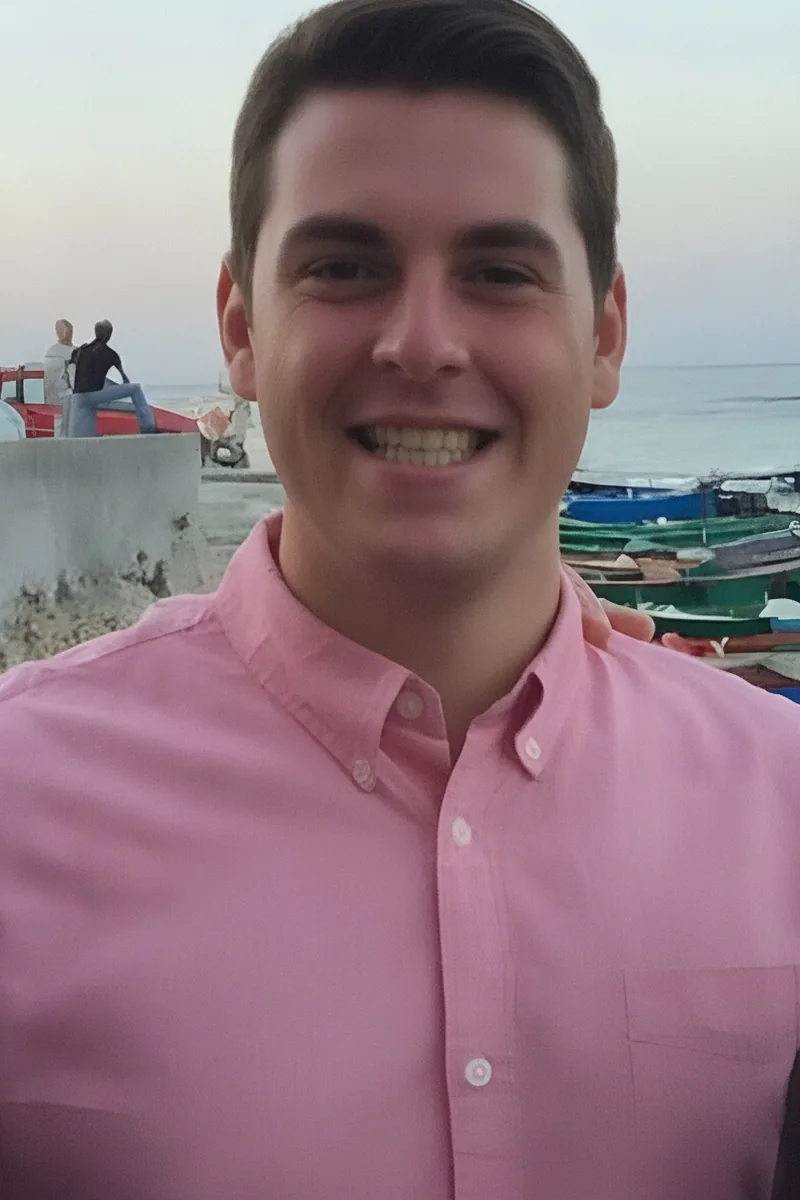
I am pursuing a career in dentistry/oral surgery and will be beginning dental school at Boston University this fall. For this reason I recently took the DAT, which I am capable of assisting you with as well. During my undergraduate education, which I completed this past December, I worked in my school's tutoring center, helping my peers succeed in mathematics and science courses. Outside of my academic life, I am a big sports fan and I mostly follow the New York sports teams. For fun, I like to play basketball and golf with my friends. I am looking forward towards getting to know you and helping you with your academic needs.
Mechanical engineering at Rice means Aleksey has been solving thermodynamic cycles, heat transfer problems, and differential equations for years — the exact mathematical toolkit that p-chem throws at students in a chemistry wrapper. He breaks down topics like entropy, enthalpy, and phase equilibria by treating them as engineering problems first, then layering in the molecular-level chemistry that gives each variable its meaning. Rated 5.0 by students.
Thermodynamic state functions, quantum mechanical models, and kinetic rate laws all converge in Physical Chemistry, and most students need someone who can bridge the math and the chemistry simultaneously. Abismael's chemical engineering training put him through the full gauntlet — partial differential equations applied to heat transfer, Gibbs free energy calculations for phase equilibria, statistical mechanics. He explains each derivation from multiple angles and tests understanding with problems designed to be harder than what shows up on the exam.
Pursuing a dual Ph.D./Pharm.D. at UConn with graduate work in medicinal chemistry means Xhesika encounters the thermodynamic and kinetic formalism of p-chem as daily working tools — calculating drug stability, modeling reaction pathways, predicting how molecular interactions shift with temperature and pressure. She teaches derivations like Maxwell relations and Clausius-Clapeyron by tying each variable back to the pharmacological systems where she actually uses them, so the math carries chemical weight instead of feeling like abstract symbol-pushing.
Biochemistry lab work and a dual bachelor's in arts and biochemistry mean Andrew has already applied the thermodynamics, kinetics, and quantum mechanical concepts that make p-chem brutal — calculating free energy changes in enzyme systems, modeling reaction rates at the molecular level. He unpacks the heavy calculus in derivations by keeping one foot in the real chemistry, so a partition function or a phase diagram reads as a description of molecular behavior rather than an exercise in pure math. Rated 4.9 by students.
This is Jacob's home turf. He earned his Ph.D. in Physical Chemistry from UC Berkeley and now conducts research at Northwestern, so topics like quantum mechanics, statistical thermodynamics, and spectroscopy are part of his everyday work. He walks students through the math-heavy derivations that make p-chem notoriously difficult, connecting each equation back to the physical picture it describes.
Kirby's biochemistry degree at Michigan meant grinding through the thermodynamics and kinetics that sit at the heart of p-chem — Gibbs free energy calculations, equilibrium derivations, and the statistical mechanics of molecular systems were baked into her upper-level coursework. She breaks down the calculus-heavy formalism by keeping each variable tied to the chemical reality it represents, so a daunting derivation like a Clausius-Clapeyron equation reads as a description of phase behavior rather than an abstract math exercise. Rated 4.9 by students.
Between biochemistry, organic chemistry, and physical chemistry, Samantha sits at the intersection where biology meets the math-heavy formalism of thermodynamics and kinetics — she understands both the molecular systems and the derivations that describe them. She breaks apart intimidating topics like Gibbs free energy or chemical equilibria by tying each variable back to the biological and chemical processes students already recognize from earlier coursework. Rated 5.0 by students.
Eight years as a chemistry professor at Trinity College meant Maria taught p-chem repeatedly — not just lecturing on thermodynamic state functions and quantum mechanical models, but sitting with students in office hours untangling the specific derivation step where they got lost. That Ph.D.-level command of the subject, combined with a 5.0 rating, reflects someone who knows exactly which Maxwell relation or partition function integral is about to cause trouble and can rework it on the spot.
Pre-med coursework at Rice plus dual degrees in environmental sciences and ecology meant Daniel was solving energy balance problems and applying thermodynamic reasoning to natural systems well before encountering p-chem's formal derivations. His lab technician work at Rice keeps the quantitative skills sharp — setting up calculations involving enthalpy, equilibrium, and kinetic models is part of the daily routine, not a distant textbook memory.
Testimonials
Because the right Physical Chemistry tutor makes all the difference.
Average Session Rating – Based on 3.4M Learner Ratings
Other San Juan Tutors
Related Science Tutors in San Juan
Frequently Asked Questions
Varsity Tutors matches San Juan students with expert Physical Chemistry tutors for 1-on-1 instruction. We pair each student with a tutor based on their specific needs, learning style, and goals.
Whether you need homework help, exam prep, or want to get ahead, our Physical Chemistry tutors are ready to help.
Common challenges include gaps from earlier material, difficulty with specific concepts, and trouble applying learning to new problems. These issues can snowball quickly in Physical Chemistry.
A tutor identifies where you're stuck, fills in gaps, and provides targeted practice. The 1-on-1 format means you get help exactly where you need it.
Tutors work with your student's actual coursework—homework assignments, class notes, and upcoming tests. This keeps tutoring directly relevant to what's happening in the classroom.
When you share information about your student's school and curriculum, we can match you with a tutor who has relevant experience.
All tutors complete background checks, credential verification, and teaching evaluation. Many of our Physical Chemistry tutors hold advanced degrees or have years of teaching experience.
You can review tutor profiles to find someone with the right background for your student's level and needs.
Many students see improved grades within a few weeks, along with better understanding of Physical Chemistry concepts and more confidence tackling challenging material.
Tutors track progress and adjust their approach to ensure continued improvement.
Most students benefit from 1-2 sessions per week. More frequent sessions help if your student is significantly behind or has an important exam coming up.
Your tutor can recommend a schedule based on your student's specific situation and goals.
Tutoring is purchased in packages of hours, with rates varying by tutor experience. Varsity Tutors offers several options to fit different budgets and needs.
You can discuss pricing during your consultation to find what works best.
Your tutor will assess where your student is, discuss goals, and start working on priority areas. Most students bring current homework or upcoming test material to focus on.
By the end, you'll have a clear sense of how the tutor can help and a plan for moving forward.
Let’s find your perfect tutor
Answer a few quick questions. We’ll recommend the right plan and match you with a top 5% tutor.