Award-Winning Reading Tutors
serving York, PA
Reading
Tutors in York
Private 1-on-1 tutoring, weekly live classes for academic support, test prep & enrichment, practice tests and diagnostics, and more to elevate grades and test scores.
Based on 3.4M Learner Ratings
UniversitiesSchools & Universities
DeliveredHours Delivered
ProficiencyGrowth in Proficiency
Who needs tutoring?
No obligation. Takes ~1 minute.

Strong readers don't just decode words — they predict, question, and make inferences as they move through a passage. Kirstie builds those active reading habits by teaching annotation strategies and context-clue techniques tailored to each student's level. Her liberal arts training means she's comfortable working with fiction, nonfiction, and everything in between.
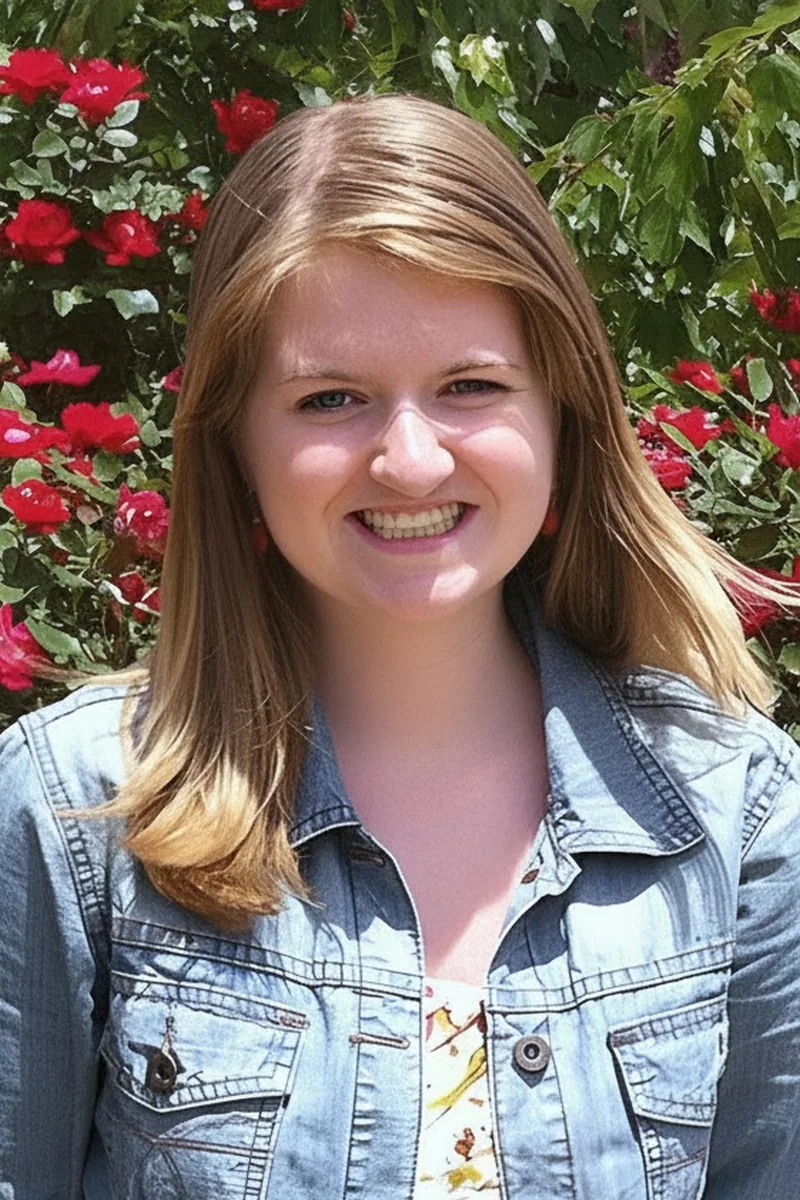
Getting through a dense passage isn't about reading every word at the same speed — it's about knowing when to skim, when to slow down, and how to track an author's argument across paragraphs. Hannah, who holds degrees in both History and English alongside an MFA in Creative Writing, teaches active reading strategies that translate directly to stronger comprehension and annotation skills.
At Penn State's Writing Center, Hannah worked with everyone from non-native English speakers to honors students, and the common thread was always reading comprehension — understanding what a text says before you can respond to it. She teaches active reading strategies like annotation, summarization, and identifying an author's purpose, skills that pay off across every subject a student encounters.
Stronger reading starts with knowing what to do when a passage doesn't make sense on the first pass — how to identify the main claim, track an author's reasoning, and distinguish key details from filler. Rebecca, who scored a 1540 on the SAT, applies those same analytical instincts to teach active reading strategies that work across fiction, nonfiction, and standardized test passages.
Building real reading comprehension means going beyond "what happened" to "why does this matter" — identifying an author's argument, recognizing tone shifts, and connecting ideas across paragraphs. Eliza teaches active annotation strategies that turn passive reading into a conversation with the text. Her dual focus on economics and German at Penn required constant close reading across very different kinds of material.
Years of coaching students through standardized reading passages and teaching literature in the classroom gave William a two-pronged approach: he builds speed and strategy for timed assessments while also strengthening the deeper comprehension skills — identifying an author's purpose, tracking an argument's logic, making inferences from context — that transfer to every subject. Rated 4.7 by students.
A Comparative Literature background means Winnie learned to read across languages, traditions, and centuries — pulling meaning from texts that don't hand it to you. She breaks down strategies for annotation, inference, and tracking an author's argument so students can tackle dense passages with real confidence.
Breaking down a dense passage quickly is a skill Sarah sharpened across two disciplines — parsing mathematical proofs and analyzing literary texts at Penn. She teaches active reading strategies like annotation, identifying argument structure, and distinguishing main claims from supporting detail. Whether the material is a standardized test passage or a challenging textbook chapter, the core techniques are the same.
Strong reading comprehension comes down to knowing what to do when a passage doesn't make sense on the first pass — how to identify a main argument, track shifts in tone, and distinguish evidence from opinion. Daniel's humanities background means he's spent years unpacking dense academic texts, and his college teaching experience taught him how to make those strategies explicit and repeatable for students at any level.
As a multilingual scholar who reads dense academic texts in multiple languages, Chang understands what makes reading difficult — and what makes it click. He breaks down strategies for tackling challenging passages, from identifying main arguments and supporting evidence to recognizing how tone shifts and structural cues signal meaning, especially for students building fluency in English.
Most math-heavy students treat reading as something they're either naturally good at or not — Samuel's 1590 SAT proves that analytical thinkers can be precise, strategic readers too. He approaches passages the way he'd approach a proof: breaking down the structure, identifying what each paragraph actually contributes, and teaching students to extract an author's argument with the same rigor they'd use to solve an equation.
Strong readers don't just decode words — they track arguments, question assumptions, and notice how an author's choices shape meaning. Daniel's anthropology training sharpened his ability to read texts critically across genres, and he brings that analytical habit to everything from close-reading exercises to standardized-test passages.
Julie breaks reading comprehension into concrete, teachable skills: identifying main ideas, making inferences from context clues, and distinguishing an author's purpose from their tone. As a Special Education English teacher with a master's in Urban Education, she knows how to pinpoint exactly where a reader is losing the thread and build targeted strategies from there.
A master's in Reading/Writing/Literacy means Meg has studied the actual mechanics of how comprehension develops — not just what students should read, but how they process meaning as they move through a text. She uses that training to dig into the specific spot where a reader stalls, whether it's making inferences, holding onto information across paragraphs, or adjusting pace when the material shifts from narrative to argument. Her English background also means she can pull from a deep bench of genres to keep sessions engaging.
Whether the challenge is decoding dense academic prose or simply building the stamina to get through longer texts, Jennifer adapts her approach to what each reader actually needs. Her background in theatre directing required her to analyze texts at every level — from individual word choices to overarching themes — and she uses that layered reading strategy to teach comprehension, inference, and critical thinking skills.
A chemistry master's degree means Madhura spent years decoding dense, jargon-heavy texts where misreading one sentence derails the whole experiment — a skill she now channels into teaching students how to pull meaning from unfamiliar passages and track an author's logic across paragraphs. Her high school teaching and SAT/ACT coaching background gives her a clear read on where comprehension habits break down, especially for students transitioning from simple narratives to more demanding nonfiction. Rated 4.7 by students.
Editing Penn State's undergraduate literary magazine Kalliope and publishing poetry in outlets like Poetry Quarterly and The Houston Literary Review means Silvi has spent years reading with a writer's eye — noticing how sentence rhythm, word choice, and structure shape meaning before a reader even realizes it. She brings that same attention to tutoring sessions, teaching students to slow down and trace how a paragraph builds its point rather than skimming for surface-level answers. Her social work background also gives her a knack for tailoring reading strategies to each learner's particular sticking points.
Decoding a reading passage is part vocabulary, part strategy, and part confidence. Mahika teaches students to identify main ideas, make inferences from context clues, and distinguish between what a text says and what it implies. Her own love of reading — she lists it among her favorite hobbies — means sessions never feel like a chore.
Strong readers don't just decode words — they track arguments, question assumptions, and notice how structure shapes meaning. Patrice developed these analytical reading habits at the University of Chicago's rigorous Core Curriculum and now spends her teaching career showing high school students how to engage actively with complex texts across fiction, nonfiction, and poetry.
Aleksandar tackles reading comprehension by teaching students to identify what a passage is actually arguing before they try to answer questions about it. His approach — annotating for structure, distinguishing main ideas from supporting details, and paraphrasing key sentences — comes from years of digesting dense scientific literature at UPenn and translating it into plain language.
Strong readers don't just decode words — they track arguments, anticipate structure, and question what they're reading in real time. Adrianne teaches these active reading strategies explicitly, showing students how to annotate for main ideas, identify an author's purpose, and synthesize information across complex texts.
Whether a student is decoding their first chapter book or struggling with reading comprehension on standardized passages, the underlying challenge is usually the same: connecting words on a page to meaning. Emma teaches active reading strategies — annotation, prediction, questioning — that turn passive readers into engaged ones. Her Master's in Education means she can pinpoint whether the gap is vocabulary, fluency, or inference and address it directly.
Whether a student struggles with reading comprehension passages on standardized tests or just zones out halfway through a chapter, the fix usually starts with active reading strategies — annotation, summarizing paragraphs in the margins, identifying an author's purpose before diving into details. Ciarra's K–12 teaching and mentoring experience means she's adapted these techniques for every reading level.
Training for both PK-4 General Education and PK-8 Special Education certificates means Zora has learned to adapt reading instruction for kids whose needs look nothing alike — a first grader still building phonemic awareness and a fifth grader who decodes fine but can't summarize a paragraph. Her background in Applied Developmental Psychology sharpens that flexibility, giving her a framework for understanding why a particular reading skill stalls at a particular age rather than just drilling the skill harder.
An economics major at Penn with minors in neuroscience and healthcare management, SriSaiSuhita regularly toggles between dense quantitative papers and narrative-heavy case studies — a range that sharpened her ability to adapt how she reads depending on what's in front of her. She teaches that same flexibility to students, breaking down how to adjust pace, spot key details, and recognize when a paragraph is building an argument versus just providing background. Rated 5.0 by students.
Strong readers don't just decode words — they track an author's argument, anticipate where a passage is headed, and distinguish main ideas from supporting detail. Noelle's English training at Vassar sharpened exactly these skills across fiction, nonfiction, and academic texts. She teaches students to annotate actively and ask targeted questions that turn passive reading into genuine comprehension.
Strong readers don't just decode words — they track an author's argument, notice shifts in tone, and connect evidence to claims. Annie developed her approach to reading instruction through after-school literacy programs where she worked with young people across age levels and skill sets. She unpacks passages by teaching students to annotate actively, identify structure, and distinguish main ideas from supporting details.
Tutoring third graders at an under-resourced charter school in Philadelphia taught Natalie something most college students don't learn — how to make a page feel less intimidating to a kid who's already decided they can't do it. She breaks reading into small, concrete tasks: finding the main idea in a single paragraph, using picture clues, retelling a scene in the student's own words before moving on. Her economics background at Hamilton also means she's comfortable coaching older students through nonfiction passages where following an author's logic matters as much as vocabulary.
Years of analyzing dramatic texts have made Nick especially good at teaching active reading — the kind where you're annotating, questioning the author's choices, and tracking arguments rather than just moving your eyes across the page. He connects strategies like identifying tone shifts and summarizing paragraphs in the margins to measurable improvements in comprehension and speed.
Cognitive science training means Cameo studied how the brain actually processes language — how working memory handles new vocabulary, why attention drifts mid-paragraph, and what makes certain texts harder to decode than others. She applies that knowledge practically, teaching readers to monitor their own comprehension in real time and catch the moment meaning starts slipping away. Rated 5.0 by students.
Coordinating clinical research at Penn Medicine means Karen spends her days parsing study protocols and patient data where misreading a single line can derail an entire trial — a habit of precision she brings directly into reading sessions. Her experience as a special needs tutor at Drexel sharpened her ability to break comprehension into concrete, repeatable steps, especially for students who need each skill isolated before it all comes together. Rated 4.9 by students.
Strong reading comprehension comes down to knowing what to do when a passage doesn't click on the first pass — how to identify a main claim, track an author's reasoning, and distinguish supporting evidence from filler. Jacob breaks down these active-reading strategies explicitly, drawing on his experience teaching both scientific and literary texts. He's a good fit for students who can decode words just fine but struggle to synthesize meaning across paragraphs.
I'm very good at building trust with children. I worked as a camp counselor for 5 years with ages 9-18, and I've helped a lot of kids find their confidence and achieve things that they thought were impossible. I've also been working one on one helping students improve their writing since I was in high school. I started helping 4th graders with their writing portfolios at my old elementary school when I was fifteen, and in college I did a teaching internship there and at my old high school.
Four years of GED tutoring taught Walter something most reading tutors learn the hard way: comprehension struggles are rarely about intelligence and almost always about strategy. He teaches students to annotate actively, identify an author's purpose before getting lost in details, and build the kind of close-reading habits that transfer across every subject.
Strong readers don't just decode words — they track an author's argument, anticipate shifts in tone, and distinguish main ideas from supporting details. Alexander spent years as an instructional assistant working with students across grade levels on exactly these comprehension strategies. He's particularly effective at teaching students to annotate actively and ask questions of a text rather than passively scanning it.
An avid reader with a Science in Society degree, Howe approaches reading instruction by connecting texts to the questions students already care about. Whether the challenge is close reading for inference, identifying an author's rhetorical strategy, or simply building stamina with longer passages, Howe breaks the process into concrete skills that build real comprehension.
Memorizing Shakespeare soliloquies for fun and studying Religion in college means Joshua has spent years with texts that reward careful, layered reading — passages where surface meaning and deeper intent pull in different directions. He teaches students to sit with that complexity, picking apart how word choice, structure, and context work together to build meaning rather than racing to finish a page.
Between art history scholarship and legal casework, Nate has spent years extracting meaning from dense, unfamiliar texts — and he brings that same toolkit to reading instruction. He teaches active annotation strategies and shows students how to identify an author's argument, track evidence, and distinguish main ideas from supporting detail.
An anthropology degree means Zoe spent years reading ethnographies, field studies, and cultural analyses where understanding context and authorial perspective isn't optional — it's the entire point. She brings that same interpretive mindset to reading sessions, teaching students how to pick up on what a writer is doing structurally and why certain details matter more than others. Rated 4.8 by students.
Studying economics at Wharton means Lachlan spends most of his week buried in dense, argument-heavy texts — policy papers, case studies, editorial columns where every claim needs to be weighed against the evidence behind it. He brings that same critical eye to reading sessions, teaching students how to separate an author's main point from supporting detail and how to spot when a passage is trying to persuade rather than inform.
Testimonials
Because the right Reading tutor makes all the difference.
Average Session Rating – Based on 3.4M Learner Ratings
Other York Tutors
Related English Tutors in York
Frequently Asked Questions
Varsity Tutors matches York students with expert Reading tutors for 1-on-1 instruction. We pair each student with a tutor based on their specific needs, learning style, and goals.
Whether you need homework help, exam prep, or want to get ahead, our Reading tutors are ready to help.
Common challenges include gaps from earlier material, difficulty with specific concepts, and trouble applying learning to new problems. These issues can snowball quickly in Reading.
A tutor identifies where you're stuck, fills in gaps, and provides targeted practice. The 1-on-1 format means you get help exactly where you need it.
Tutors work with your student's actual coursework—homework assignments, class notes, and upcoming tests. This keeps tutoring directly relevant to what's happening in the classroom.
When you share information about your student's school and curriculum, we can match you with a tutor who has relevant experience.
All tutors complete background checks, credential verification, and teaching evaluation. Many of our Reading tutors hold advanced degrees or have years of teaching experience.
You can review tutor profiles to find someone with the right background for your student's level and needs.
Many students see improved grades within a few weeks, along with better understanding of Reading concepts and more confidence tackling challenging material.
Tutors track progress and adjust their approach to ensure continued improvement.
Most students benefit from 1-2 sessions per week. More frequent sessions help if your student is significantly behind or has an important exam coming up.
Your tutor can recommend a schedule based on your student's specific situation and goals.
Tutoring is purchased in packages of hours, with rates varying by tutor experience. Varsity Tutors offers several options to fit different budgets and needs.
You can discuss pricing during your consultation to find what works best.
Your tutor will assess where your student is, discuss goals, and start working on priority areas. Most students bring current homework or upcoming test material to focus on.
By the end, you'll have a clear sense of how the tutor can help and a plan for moving forward.
Let’s find your perfect tutor
Answer a few quick questions. We’ll recommend the right plan and match you with a top 5% tutor.